

Thinking about web page design rates in Australia? You'll find they can start from around $3,500 for a simple site and climb to well over $50,000 for a complex, custom-built platform. These aren't just random numbers; they reflect the level of strategy, the complexity of the features, and the expertise needed to build something that genuinely performs. Getting your head around what drives these costs is the first step to making a smart investment.
Demystifying Web Page Design Rates
Ever gathered a few quotes for a new website and found yourself staring at prices that are worlds apart? It’s a common scenario that leaves a lot of business owners scratching their heads. The reality is, a website's price tag is a direct reflection of its power as a business tool.
Many people fall into the trap of seeing a website as just a digital brochure, but that’s selling it short. A well-built website is your hardest-working employee—a 24/7 sales engine that works around the clock to attract customers, generate leads, and build your brand. The real difference between a cheap website and a strategic one is its ability to deliver a genuine return.
What Are You Really Paying For?
When you invest in professional web design, you're not just buying a pretty layout. You're funding a strategic process that goes far deeper than what you see on the screen. Think of it like building a custom home versus buying a flat-pack kit. Both give you a roof over your head, but one is designed specifically for your lifestyle, built with better materials, and engineered to last.
Your investment covers a few critical areas that are the bedrock of its long-term success:
- Strategic Planning: This is the deep dive into your business goals, target audience, and competitors. It’s about creating a solid blueprint before a single line of code is written.
- Custom Design and User Experience (UX): It’s about crafting an intuitive, engaging interface that feels unique to your brand and guides visitors smoothly towards taking action.
- Technical Development: This means clean, efficient code and the right technical features to make sure your site is fast, secure, and doesn't buckle under pressure.
- Content and SEO Foundations: Building a site that’s not just ready for today's search engines but is also structured for the future of AI-powered search.
Ultimately, understanding the true cost for website creation means shifting your mindset. Instead of asking, "How much does a website cost?" the better question is, "What value will this digital asset bring to my business?" This guide will help you figure that out.
Exploring Different Web Design Pricing Models
To get your head around web page design rates, you first need to understand how agencies and designers actually charge for their work. It's a bit like building a house—different builders will quote the project in different ways. Web designers are the same, using a few core models, each with its own pros and cons.
Getting a grip on these models is the key to finding a partner and a payment structure that fits your business goals and, just as importantly, your budget. You’ll mainly come across three structures: fixed-price projects, hourly rates, and monthly retainers. Each one is suited to a different kind of project, from a simple brochure website to a complex, evolving digital platform. If you want to see how other service providers bill their clients, you can explore various pricing models from different industries for comparison.
The Fixed-Price Project Model
Think of a fixed-price project like building a house from a detailed blueprint. Before a single nail is hammered, you agree on the exact scope, features, and the final cost. This model gives you certainty and predictability, which is why it's a popular choice for businesses that have a really clear idea of what they need.
A local restaurant needing a standard five-page website with a menu, gallery, and contact form is a perfect example. The scope is crystal clear, the deliverables are understood, and both you and the agency know exactly what’s expected.
- Best for: Projects with a well-defined scope and clear deliverables.
- Advantage: You know the total cost upfront, making budgeting a breeze.
- Consideration: Be warned—any changes or additions outside the original agreement, often called "scope creep," will almost always come with extra costs.
The Hourly Rate Model
Now, imagine you’re restoring a classic car. You might have a plan, but you know unexpected issues could pop up. You might also decide to add some custom features along the way. This is where an hourly rate model is brilliant. You simply pay the designer or developer for the actual time they put into your project.
This approach offers maximum flexibility, making it ideal for complex projects where the full scope isn't known from the get-go or for ongoing development work. If you decide halfway through to add a sophisticated booking system or integrate a custom CRM tool, an hourly model handles these changes easily without needing a whole new contract.
Industry data shows that professional agency builds in Australia, which often use a hybrid or fixed model, sit comfortably in the $5,000-$12,000 range for established small to medium businesses.
The Monthly Retainer Model
Finally, the monthly retainer is like having a dedicated property manager for your building. Instead of a one-off project, you pay a consistent monthly fee for ongoing services. This isn't just about keeping the lights on; it’s about making sure your digital asset is maintained and continuously improved to get the best possible performance.
A retainer is perfect for businesses that see their website as a living, breathing marketing tool, not just a static brochure. For a deeper dive into how these pricing structures work in the real world, check out our guide on website design pricing.
Services under a retainer often include things like:
- Regular security updates and performance checks
- Ongoing search engine optimisation (SEO)
- Content updates and blog management
- Adding new features or making strategic tweaks
This model turns the client-agency relationship into a true long-term partnership focused on one thing: sustained growth.
Key Factors That Influence Web Page Design Rates
The final number on your quote is never just pulled from thin air. Several key components work together to determine the total investment, much like the price of a car is shaped by its engine size, custom features, and build quality.
This is where the difference between a cheap website and a value-driven one becomes obvious. A low price tag often means compromises on these critical elements, leading to a digital presence that simply doesn't perform when it matters most.
Let's unpack the main drivers behind web page design rates so you know exactly what you're paying for.
Custom Design vs Template-Based Approaches
One of the biggest factors in your quote is the design approach. Think of it as the difference between buying a suit off the rack and having one custom-tailored.
-
Template-Based Design: This is your "off the rack" option. We start with a pre-built template and customise it with your branding, colours, and content. It's faster and less expensive because the foundational structure is already there. The trade-off? Its rigidity can limit functionality and make it tough to create a truly unique user experience.
-
Custom Design: This is the bespoke suit. The design is built from the ground up, centred around your specific business goals, target audience, and brand identity. It involves a deep discovery process, wireframing, and creating a unique user interface (UI) that is both visually striking and highly functional. It requires a larger upfront investment, but a custom design always delivers a superior, more flexible result.
A custom design allows for a much more thoughtful approach to the user journey. For a deeper understanding of how this impacts visitor engagement, you can learn more about what user experience design is and why it's so vital for business success.
Your Content Management System (CMS) Choice
The "engine" that powers your website is its Content Management System, or CMS. This is the platform that lets you manage, edit, and publish content without ever needing to write code. Your choice of CMS has a direct impact on cost, complexity, and what your site can do.
For example, a platform like WordPress is incredibly flexible and powers over 43% of all websites on the internet. It can be adapted for anything from a simple blog to a complex corporate site, but this versatility means development costs can vary widely. On the other hand, a system built specifically for eCommerce offers robust sales features right out of the box, which naturally influences its pricing structure.
The Number and Complexity of Pages
It might seem obvious, but the sheer size of your website plays a major role in the final price. A simple five-page "brochure" website for a local tradie will naturally cost less than a 50-page site for a national manufacturing company.
But it's not just about the number of pages—it's about their complexity. A basic "About Us" page is straightforward. In contrast, a service page for a law firm might require intricate layouts, embedded forms, and secure document portals, all of which add to the design and development time.
Special Features and Integrations
Advanced functionality is where costs can really start to scale. These are the specialised tools that turn a simple website into a powerful business machine. Each feature requires expert development, configuration, and testing to ensure it works seamlessly.
Common examples that drive up web page design rates include:
- eCommerce Functionality: Adding shopping carts, payment gateways, and inventory management systems.
- Booking and Reservation Systems: Essential for businesses like restaurants or consultants, requiring integration with calendars and payment processors.
- Customer Portals: Secure, login-protected areas for clients to access private information, common for law firms or financial services.
- Third-Party API Integrations: Connecting your website to other software you use, such as a Customer Relationship Management (CRM) platform or marketing automation tools.
SEO and AI-Ready Content Strategy
Finally, a modern website is incomplete without a solid foundation for visibility. This is no longer an optional "add-on" but a core part of the build process itself. Foundational Search Engine Optimisation (SEO) ensures your site is structured correctly so Google can find and rank your pages.
Furthermore, an AI-ready content strategy involves structuring your information so it can be easily understood and served by AI-powered search engines and large language models (LLMs). Investing in this from the start gives your website longevity, ensuring it won't become invisible as search technology evolves. This kind of strategic foresight is a hallmark of a high-value web design project.
Typical Web Design Price Ranges by Industry
Knowing the theory behind web design rates is one thing, but it all clicks when you see how those costs apply to real-world businesses here in Australia. Pricing isn’t a simple pick-list; a website’s features, goals, and complexity are completely tied to its industry.
A local restaurant has wildly different needs than a national law firm or an eCommerce fashion brand. To give you a real feel for what to budget, let's walk through some pricing scenarios for different Australian industries.
Rates for Restaurants and Hospitality
For a local Gold Coast restaurant, the website is its digital front door. The main goals are pretty straightforward: tempt diners with mouth-watering photos, present an easy-to-read menu, and make booking a table a breeze.
A typical project for a restaurant involves a 5 to 7-page website. You'd be looking at key features like a high-quality photo gallery, an interactive menu (or at least one that's easy to download), and an integrated online reservation system. For a professional, custom-built site with these elements, a restaurant should budget between $5,000 and $9,000. This investment gets you a design that captures the restaurant's unique vibe and functionality that helps both customers and staff.
This chart breaks down where that investment goes, covering the core components that add up to a professional website.
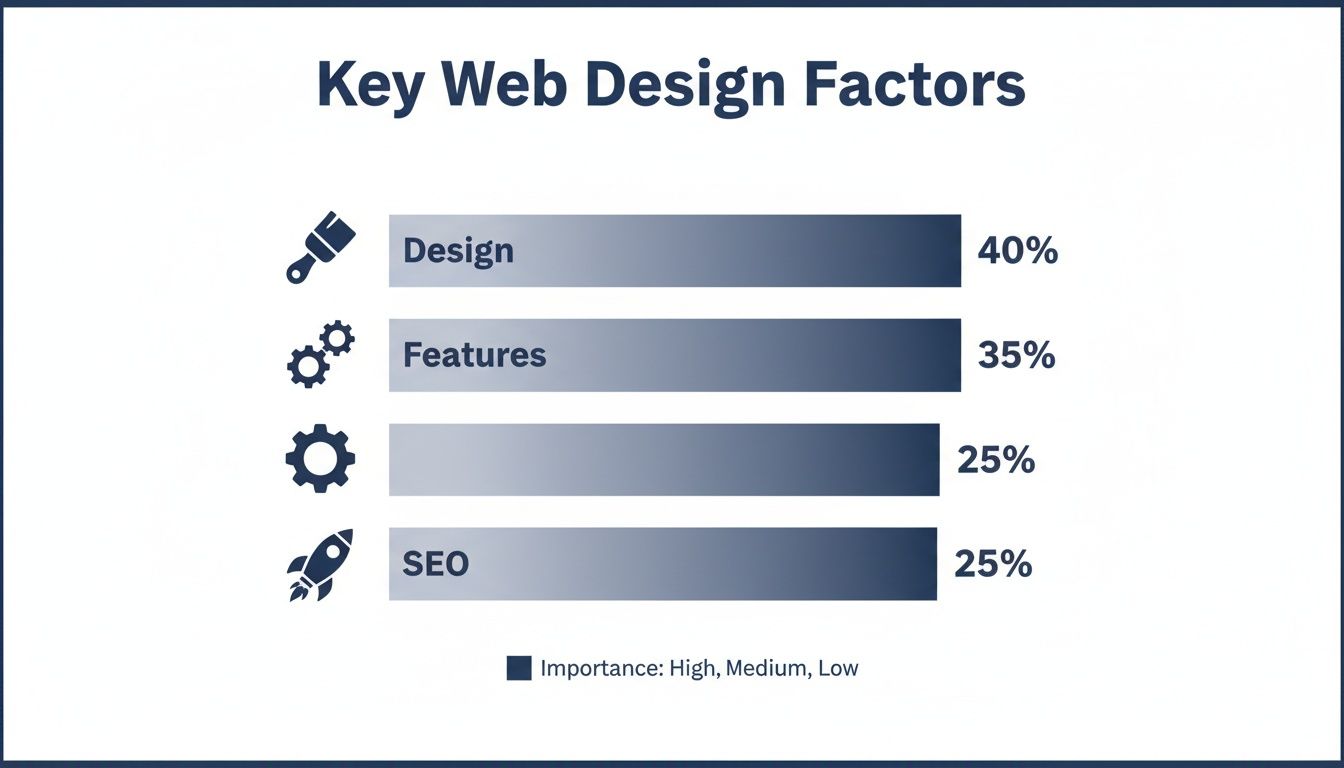
As you can see, the cost is balanced between creating a unique design, building in those essential features, and making sure the site is set up for search engines right from the start.
Pricing for Law Firms and Professional Services
A mid-sized law firm needs a website that screams authority, professionalism, and trust. This site has to do more than just provide a contact form; it must act as a resource for potential clients, explaining complex services in a way that’s easy to understand.
For a professional services firm, a 10 to 15-page website is a solid starting point. This would typically include detailed service pages, partner bios, a blog or insights section to showcase expertise, and a strong SEO foundation to pull in specific types of legal enquiries. The investment for a site of this calibre usually falls between $9,000 to $15,000, reflecting the need for a highly secure, professional, and content-heavy platform that builds instant credibility.
Costs for Trades and Construction Businesses
For a tradie, a website is a lead-generation machine. Plain and simple. Its job is to show off quality workmanship, build trust with potential customers, and make it incredibly easy for them to ask for a quote.
A high-performing website for a plumber, electrician, or builder generally sits in the $6,000 to $11,000 range. At this price point, you’re getting the essentials done right:
- Project Galleries: Clean, visually impressive galleries to display completed work.
- Service Pages: Clear, detailed pages for each specific service you offer.
- Quote Request Forms: Custom forms designed to capture all the important job details upfront.
- Client Testimonials: Reviews and ratings placed front-and-centre to build social proof.
If you’re in this space, you might find our guide on construction company website design useful, as it dives deeper into what your industry really needs.
eCommerce Rates for Retail and Fashion
Jumping into online sales adds a whole new layer of complexity. For a small retail or fashion store looking to sell online for the first time, the entire focus is on creating a smooth and secure shopping experience from start to finish.
Industry benchmarks show that a small eCommerce site built on a popular platform with up to 50 products will typically start between $8,500 and $15,000. This covers critical eCommerce functionality like payment gateway integration, product page setup, and a secure checkout process. Investing in a professional build is worth it from day one. In fact, businesses that spend $9,997-$14,997 on custom WordPress sites often see 3-4 times better conversion rates than those sticking with basic templates.
How to Get an Accurate Quote and Maximise Your Budget
Getting a reliable quote that actually matches your project needs is the first step to a successful website build. Think of it like giving an architect a detailed wishlist before they start drawing up blueprints for your house. The more specific you are, the more accurate the initial cost estimate will be, which saves you from nasty surprise expenses down the road.
To get the best web page design rates, you need to hand your potential agency a clear, detailed project brief. This isn't just a list of pages; it's a strategic document that lays out your vision and what you need the website to do for your business. Without that clarity, agencies are left guessing, and that often leads to padded quotes to cover all the unknowns.
Crafting a Winning Project Brief
Your brief should be a sharp snapshot of your business and what you want the website to achieve. Honestly, it’s the single most important tool you have for getting an accurate price.
A strong brief includes:
- Your Business Goals: Are you trying to generate leads, sell products directly, or cement your brand as the go-to expert in your industry?
- Target Audience Profile: Who are your ideal customers? What are their frustrations, and how will your new website solve their problems?
- Must-Have Features: List the absolute essentials, like an online booking system, a client login area, or full eCommerce capabilities.
- Inspirational Websites: Show them examples of websites you love. Just as importantly, explain what you like about their design, how they work, or the user experience.
Getting this prep work done not only locks in accurate pricing but also helps you dodge scope creep—that dreaded process where new features get added mid-project, blowing out both budgets and timelines. For a structured approach, our website planning checklist can walk you through every critical detail.
Smart Strategies to Optimise Your Budget
Maximising your budget isn’t about finding the cheapest option; it’s about making every dollar work towards your business goals. The cheapest quote is rarely the best value in the long run. It often leads to poor performance, missed opportunities, and a costly redesign a year or two later.
Instead, focus on smart investments and strategic compromises that don't cut corners on quality. Here are a few actionable tips to make your budget work harder:
-
Prepare Your Own Content: Having your text, images, and videos ready to go before development starts can cut costs significantly. Agencies often bill for content creation or heavy editing, so getting this sorted upfront is a major saving.
-
Launch in Phases: You don't need every single bell and whistle on day one. Prioritise the core functions that will deliver the biggest business impact first. You can always add more advanced features in a second or third phase as your business grows and starts generating revenue.
-
Prioritise High-Impact Features: Funnel your investment into the elements that will directly drive your goals. For an eCommerce store, that’s a flawless checkout process. For a tradie, it's a dead-simple quote request form.
Ultimately, being a well-prepared client builds a foundation of trust and collaboration from the get-go. It shows you’re serious about your investment and allows an agency to step up and become a real strategic partner. In Australia, professional web design is a significant investment; first-year totals can easily exceed $35,000 when you factor in hosting, maintenance, and essential content creation. This makes careful planning and budgeting an absolute must for getting a strong return.
Our Approach to Value Beyond the Price Tag
When you're looking at web page design rates, it’s easy to get fixated on the initial quote. But the real value of a website isn't what it costs today; it's what it delivers for your business months and years down the track. At Titan Blue, we’re all about building that long-term value, creating something that pays for itself many times over.
We've been in this game for over 25 years, so we’ve seen countless digital fads come and go. That experience has taught us one massive lesson: trust and longevity are earned through solid performance, not just a flashy design. We don’t build websites that just look good; we build custom-engineered marketing machines designed to make your business grow.
More Than a Vendor—a Strategic Partner
We believe the best work comes from a real partnership. Our process always starts with a deep dive into your business. We want to understand your goals, who your customers are, and what challenges you're facing. This lets us build a site that’s not just an online brochure but a core part of your business strategy.
Our goal is simple: create a platform laser-focused on conversion. Every little detail, from the way a user moves through the site to the placement of call-to-action buttons, is planned out to turn visitors into customers. That strategic thinking is what separates a high-performing website from one that just sits there.
Future-Proofing Your Digital Presence
Technology never sits still, so a website has to be built for tomorrow, not just for today. We specialise in creating digital platforms that are not only optimised for current search engines but are primed for what’s coming next. A huge part of this is building a rock-solid technical SEO foundation and implementing Answer Engine Optimisation (AEO).
So, what does that actually mean for you?
- Better Visibility: Your site will be structured in a way that search engines like Google can easily understand, helping you climb the rankings.
- Ready for AI Search: We organise your content so that new AI-powered platforms and Large Language Models (LLMs) can find your business and present it as a trusted source of information.
- A Strategy That Lasts: This forward-thinking approach protects your investment, making sure your website stays relevant and powerful for years.
Choosing Titan Blue isn't just a transaction; it's an investment in a durable digital strategy. We're dedicated to helping Australian businesses win, whether you're a local restaurant on the Gold Coast or a national manufacturing firm. We mix our deep local know-how with a national reach to deliver results that actually matter.
Ultimately, web page design rates should be about the long-term value and return you get. We build websites defined by performance, reliability, and a clear path to growth—turning your digital presence into your most valuable asset.
Frequently Asked Questions About Website Costs
Even with a detailed guide, a few specific questions always pop up when it comes to budgeting for a website. Here are some straightforward answers to the queries we hear most often about web page design rates.
How Much Does a Simple Business Website Cost in Australia?
For a professionally built, simple business website here in Australia, you should plan to invest between $5,000 and $12,000.
This price point gets you a custom-designed site with around 5-10 pages, foundational SEO, and the essentials like a contact form and gallery. It’s the sweet spot that avoids the headaches of cheap templates and gives you a quality digital asset built to perform from day one.
How Long Does It Take to Build a Website?
The timeline really comes down to the size and complexity of the project. A straightforward website for a small business can typically be designed and launched in 4 to 8 weeks.
But if you're looking at a larger site with custom features like eCommerce, booking systems, or complex third-party integrations, you could be looking at anywhere from 3 to 6 months or even longer. Keeping the project on schedule is a two-way street—clear communication and getting content over to your developer promptly makes a huge difference.
Are There Ongoing Costs After My Website Is Built?
Yes, launching your website is just the beginning. Think of it like buying a car; you still need to pay for fuel and registration to keep it on the road. There are a few recurring costs to factor into your annual budget to keep your site online, secure, and running smoothly.
These ongoing expenses usually include:
- Website Hosting: This is the rent you pay for your website's home on the internet. It's typically billed monthly or annually.
- Domain Name Renewal: Your website's address (your .com.au) needs to be renewed every one or two years to keep it yours.
- Maintenance Plans (Optional but a very good idea): Regular software updates, security checks, and backups are non-negotiable for protecting your investment. Most agencies offer monthly plans that give you peace of mind.
To streamline communication and efficiently address common client queries about website costs, web design businesses might consider leveraging AI-powered customer support solutions.
Why Shouldn't I Just Use a Cheap Website Builder?
While DIY website builders look like an easy way to save money, they often come with hidden costs. The biggest one? The cost of your own time. You’ll sink hours into learning the platform, fighting with templates, and trying to fix issues that a developer could solve in minutes.
Beyond the time suck, these platforms are notorious for poor SEO, limited customisation that stops your brand from truly standing out, and scalability issues that will hold you back as you grow. A professional, strategy-first build delivers a far better return by creating a unique, high-performing asset designed specifically to hit your business goals.
Ready to invest in a website that delivers lasting value and proven performance? At Titan Blue Australia, we build custom digital strategies that help businesses like yours grow. Contact us today for a transparent quote.
Make Titan Blue a preferred source in Google
One click tells Google to surface our articles more often in Top Stories, AI Overviews and AI Mode.
Solar Installer Website Design Australia: The 2026 Guide
How solar installer websites in Australia should show CEC accreditation, real install proof and AI-ready…

Hotel & Hospitality Website Design Australia: 2026 Guide
Hotel and hospitality website design in Australia explained: booking flow, schema, AEO and what actually…

Restaurant Website Design Australia: The 2026 Guide
What a restaurant website in Australia needs: HTML menus, bookings, GBP sync, schema, and AI-ready…