Stay ahead with the latest tips, trends, and insights from the Titan Blue team , straight from the studio in Broadbeach.


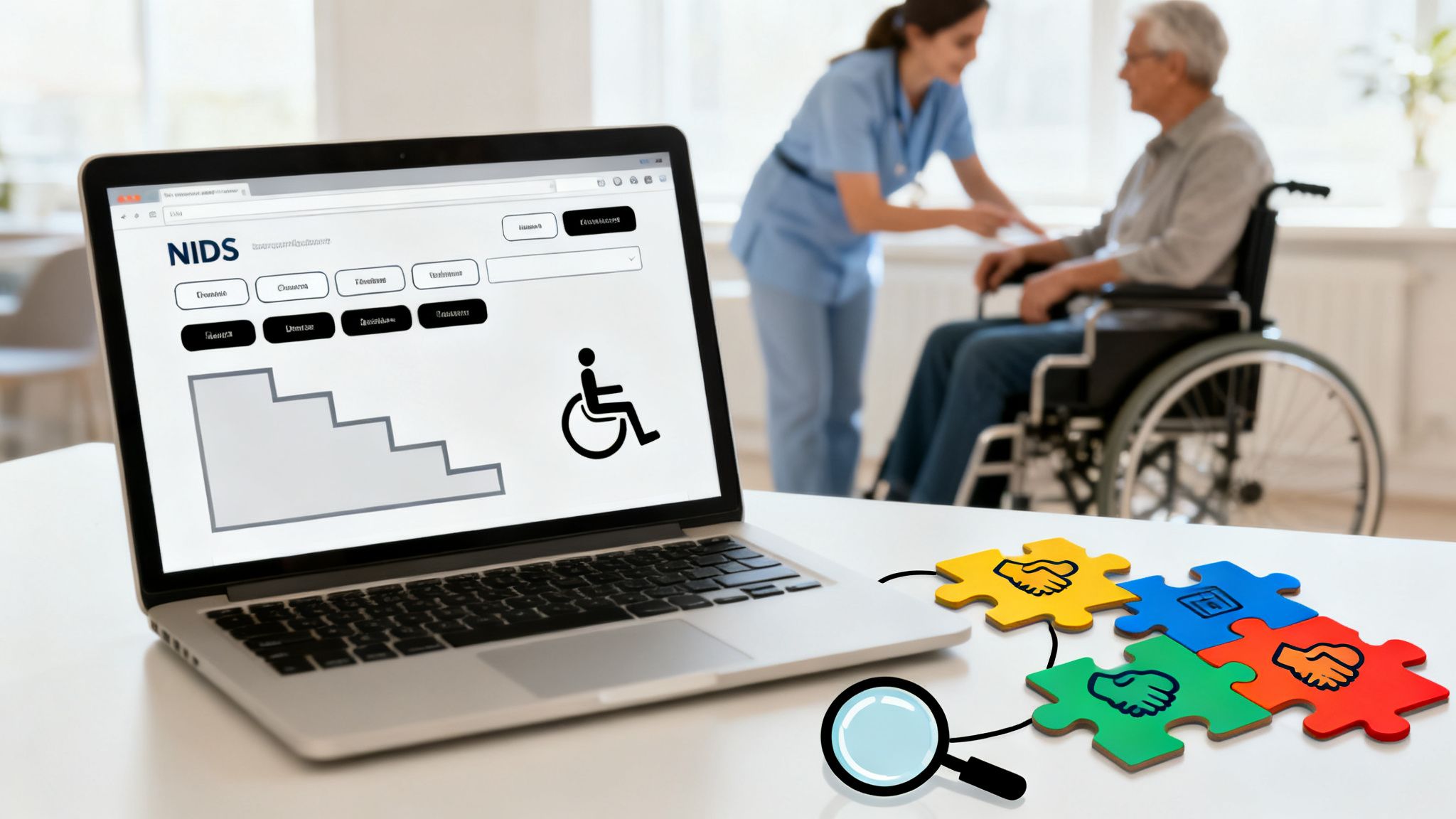
For NDIS providers, a great website isn't just about looking professional. It's about creating a space that’s instantly welcoming, trustworthy, and incredibly easy for participants, families, and support coordinators to use. This is more than a digital brochure—it’s a critical tool for building confidence and connecting with new clients from the very first click.
Why Your Website Is Your Most Important Business Asset
Think of your website as the digital front door to your organisation. For most potential clients and their families, it’s the very first time they'll interact with you. It’s the online equivalent of your physical office or clinic.
A confusing, outdated, or hard-to-navigate site is like a clinic with no ramps, unclear signage, or phones that just ring out. It pushes people away before they even get a chance to see the amazing support you offer. On the other hand, a thoughtful, professional website welcomes everyone. It works around the clock, 24/7, to provide vital information, answer common questions, and guide visitors to take that next step.
Standing Out in a Growing Market
The NDIS market is booming, and that means competition is fierce. The number of registered providers shot up by 3.6% in just one year to over 20,000, all vying to connect with 739,414 active NDIS participants. In a space this crowded, a professional website isn't just a "nice-to-have"—it's a matter of survival.
This intense competition means a generic or poorly built website will simply get lost in the noise. Your site is the single best platform you have to show what makes you different and why a participant should choose you.
A well-crafted digital presence helps you hit several crucial goals at once:
- Builds Instant Credibility: It signals professionalism and a commitment to quality care, reassuring families that they’re dealing with a reputable, trustworthy provider.
- Attracts Your Ideal Clients: Through clear, targeted messaging, your site can connect you with the specific participants who will benefit most from your unique services.
- Reduces Your Admin Load: By offering clear answers to frequently asked questions and providing simple online intake forms, a good website can seriously streamline your internal processes.
- Acts as Your Central Hub: It’s the single source of truth for your services, contact details, and values, ensuring your message is consistent everywhere.
Ultimately, investing in quality web design and development is an investment in the long-term health and growth of your organisation. It’s the most powerful tool you have to communicate your mission, build trust in the community, and secure your place in an increasingly competitive field.
Building Trust with Accessible and Compliant Web Design
For an NDIS provider, trust isn’t just a nice-to-have; it’s the currency your entire organisation runs on. Long before a participant or their family reads a single word about your services, your website is making a first impression. A clunky, inaccessible, or non-compliant website sends a powerful, unintentional message: that you might not fully grasp the needs of your community. It can erode trust before you’ve even had a chance to build it.
On the flip side, a website built from the ground up with accessibility and compliance in mind speaks volumes. It shows respect and empathy from the very first click. This is where professional web design for NDIS providers goes beyond simple aesthetics and becomes a direct reflection of your core values. It’s about creating a digital space where everyone feels seen, understood, and genuinely welcome.
Think of it like this: a well-designed website acts as a central hub, working to attract new clients, build that all-important trust, and help you stand out from other providers.
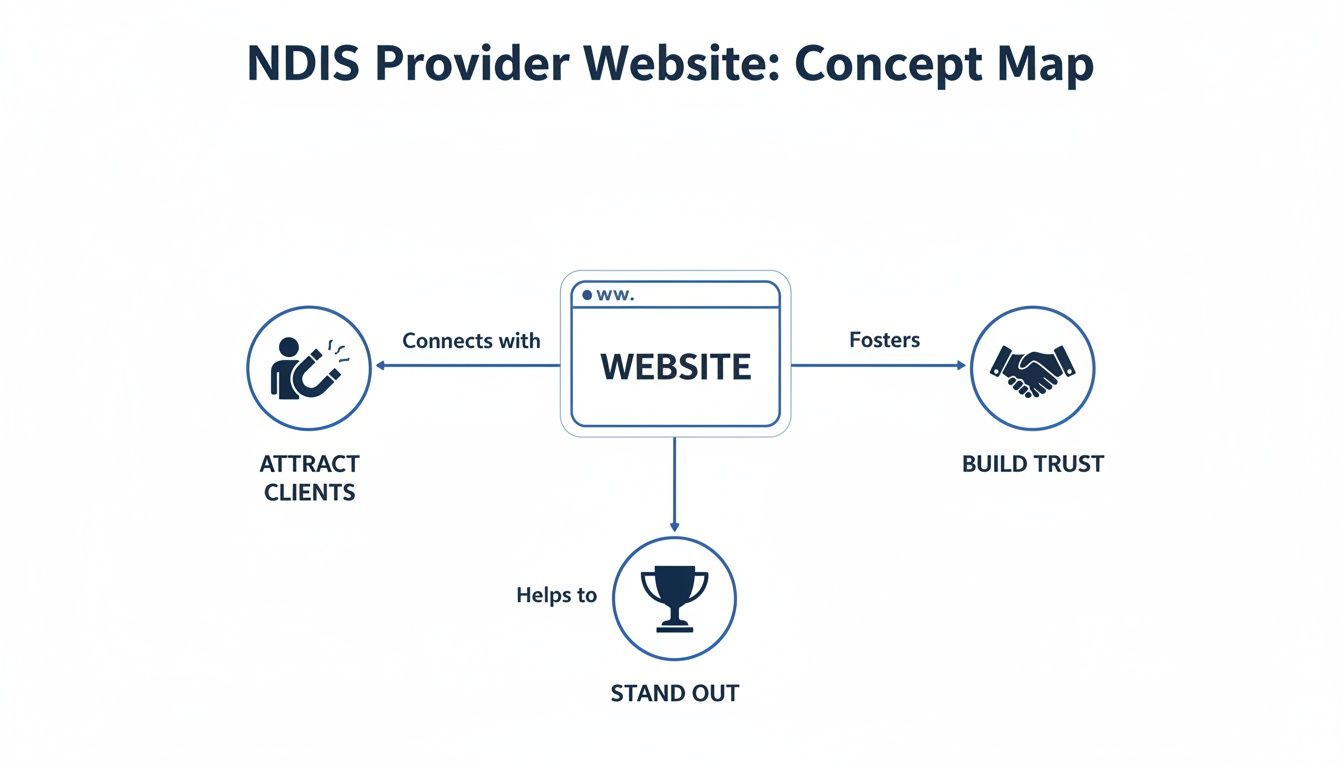
As the map shows, these three functions are all interconnected. They all stem from having a single, high-quality digital home base.
Understanding WCAG as a Framework for Respect
The Web Content Accessibility Guidelines (WCAG) can seem like a daunting technical checklist, but it’s much more helpful to see them as a practical framework for showing respect to your audience. Following these standards isn’t just good practice; it's a key part of upholding your obligations under the Disability Discrimination Act 1992. It ensures your digital front door is open to absolutely everyone, regardless of their ability.
To create a truly intuitive and positive online experience, you also need a solid grasp of user experience design. These principles go hand-in-hand with accessibility, focusing on making every visitor's journey seamless and stress-free.
An accessible website isn't just for a small fraction of users. The truth is, the improvements you make for accessibility create a better, easier experience for every single person who lands on your site.
Making Accessibility Tangible
So, what does accessibility actually look like in practice? It’s not some abstract concept. It comes down to thoughtful design choices that have a real-world impact on how people interact with your website. These features aren’t just optional extras; they are fundamental to good design.
Here are a few core examples of accessibility in action:
- Descriptive Alt Text for Images: This is simply a short, written description of an image that screen reader software reads aloud. For a user with a visual impairment, this text turns a meaningless graphic into useful information, describing everything from a photo of your facility to a diagram of a service process.
- High-Contrast Colour Schemes: For someone with low vision or colour blindness, text on a low-contrast background can be completely unreadable. Ensuring a strong contrast between your text (e.g., dark grey) and your background (e.g., white) makes your content legible for a much wider audience.
- Keyboard-Only Navigation: Many people with motor disabilities can't use a mouse and rely on a keyboard or other assistive devices. A site with keyboard-friendly navigation lets users move logically through menus, links, and forms with the 'Tab' key, ensuring they can get to everything without hitting a wall.
By prioritising these features, you are actively removing barriers and showing a genuine commitment to inclusivity. That single act builds more trust than any marketing slogan ever could.
Ultimately, a truly accessible website is an inherently more user-friendly one. The principles of clear navigation, readable text, and logical structure improve the experience for every visitor, from a support coordinator researching options on their desktop to a family member seeking information on their phone.
If you want to dive deeper, our team has put together an in-depth guide covering the core concepts of accessible web design. Embracing these standards isn’t just about ticking a compliance box; it's about proving that your organisation is truly dedicated to supporting every member of the community you serve.
Designing a Website That Converts Visitors into Clients
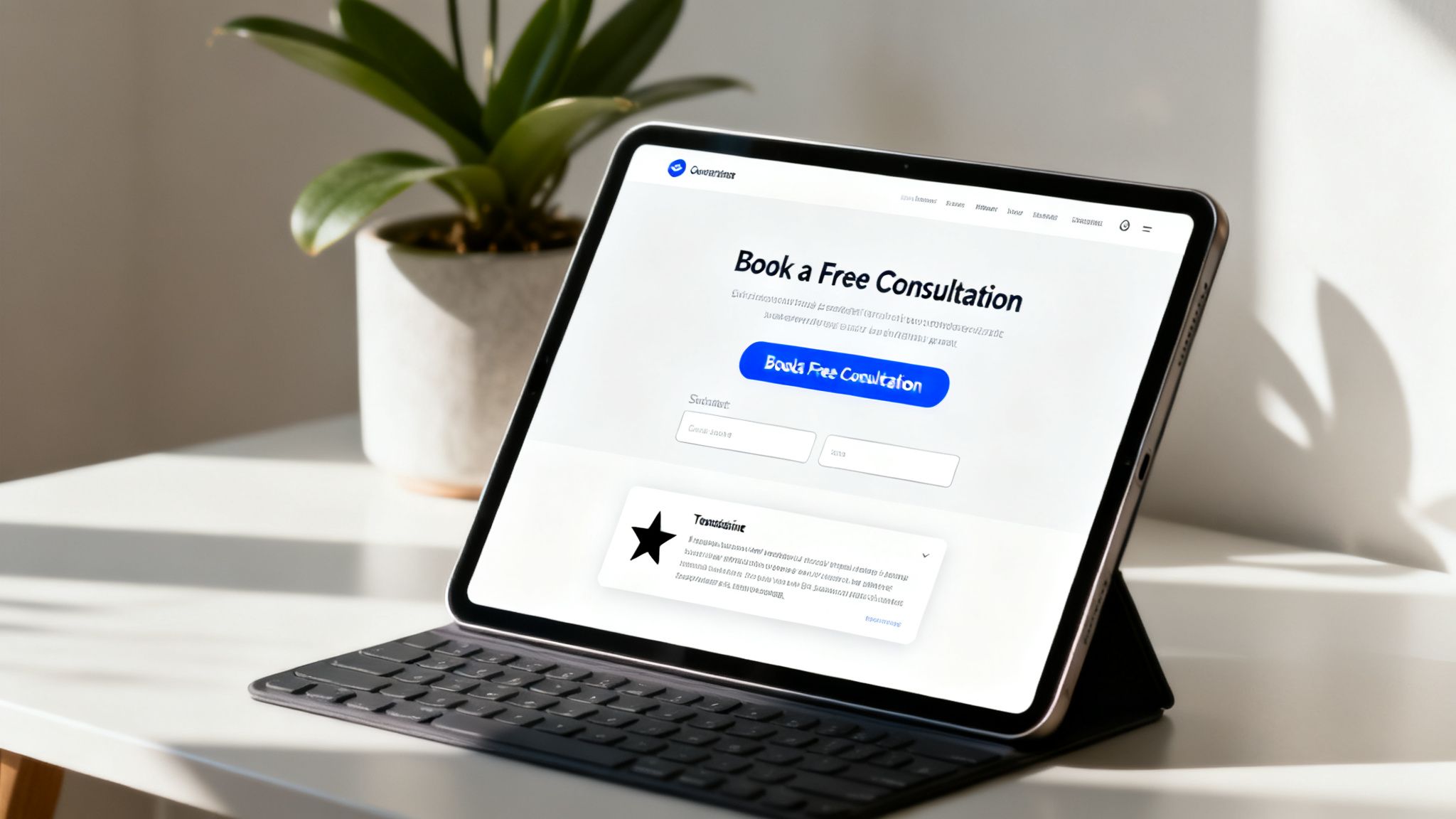
In a sector grappling with serious operational and financial pressures, your website can't afford to be a passive online brochure. It needs to be an active, hardworking member of your team—one that’s dedicated to turning curious visitors into genuine client enquiries. This is where conversion-centric web design for NDIS providers shifts from a simple expense to a powerful strategy for sustainable growth.
A "conversion" is just that moment a visitor takes the next step. It could be filling out an enquiry form, calling your office, or downloading a service guide. Your website’s main job is to make that journey as simple and intuitive as possible.
The NDIS sector is navigating a tough financial climate. Sustainability is a massive concern, with 34% of NDIS providers reporting losses and another 18% just breaking even, according to recent NDS data. A website designed to convert becomes a cost-effective lifeline, generating a steady stream of new leads without needing a huge, ongoing advertising budget. That’s a crucial advantage when so many are worried about simply sustaining their services.
Creating Clear Pathways to Action
The best NDIS websites guide visitors effortlessly towards their goals. They don't force people to hunt for information or guess what to do next. This is all about using clear, strategic design to prompt action.
Think of your website like a guided tour. Every single page should have a clear purpose and an obvious next step. A visitor reading your "Occupational Therapy" page should be gently nudged towards a button that says "Book a Consultation" or "Learn About Our Approach."
This clarity doesn't just make for a better user experience; it directly feeds your intake pipeline. It’s what turns a passive reader into an active lead.
Building Social Proof with Testimonials
Trust is everything in the NDIS community. One of the fastest ways to build it online is by letting current participants and their families share their positive experiences. We call this social proof.
Strategically placed testimonials and success stories do more than just add a bit of personality to your site. They provide genuine, third-party validation that you deliver on your promises. They answer the silent question every visitor has: "Can I really trust this provider to support me or my loved one?"
Here are a few powerful ways to showcase social proof:
- Direct Quotes on Service Pages: Put a relevant testimonial right on the page describing that specific service.
- A Dedicated "Success Stories" Section: Create a space to share more detailed stories or case studies that highlight the incredible outcomes you help create.
- Video Testimonials: There's nothing quite like hearing directly from a happy family. It's authentic and builds an immediate emotional connection.
Streamlining Intake with Smart Forms
Your contact and intake forms are the final, critical step. A clunky, long, or confusing form is a major roadblock that can make potential clients give up at the last second. Simplicity is everything.
An effective intake form is designed with the user in mind. Only ask for what's absolutely essential for that first contact. You can always gather more details later.
A well-designed website does more than just generate leads; it pre-qualifies them. By providing clear information upfront and asking targeted questions in your intake forms, you ensure that the enquiries you receive are from people who are a genuine fit for your services, saving your administrative team valuable time.
This focus on clear calls-to-action, social proof, and streamlined forms turns your website into a reliable engine for client acquisition. Of course, this all has to be supported by compelling content, which you can learn more about in our guide to website copywriting services. It’s a methodical approach that lightens your admin workload while helping your organisation grow for the long haul.
How Local SEO Helps You Connect with Participants
Having a brilliant, accessible website is a fantastic first step, but it’s only half the battle. If local families and support coordinators can't find you when they search online, even the best website won't generate the enquiries you need.
This is where Local Search Engine Optimisation (SEO) becomes your most powerful tool.
Think of local SEO as the digital equivalent of putting up clear, helpful signposts all over your community. It’s the process of making your website highly visible to people actively searching for NDIS services right in your specific area. When a parent in Parramatta searches for "occupational therapy for children," you want your practice to be the first one they see.
This isn't about trying to reach everyone in Australia; it’s about strategically positioning yourself as the go-to provider for your local community. For NDIS providers, whose services are almost always location-based, this targeted approach is absolutely essential for growth.
Mastering Your Google Business Profile
Your Google Business Profile (GBP) is the cornerstone of your local SEO strategy. This is the free listing that appears in Google Maps and the "Local Pack" results right at the top of a search page. It’s often the very first interaction a potential participant has with your organisation.
Optimising your GBP is non-negotiable. It acts as a mini-website right on the search results page, offering crucial information at a glance.
To make your profile work for you, make sure it’s completely and accurately filled out with these details:
- Your Primary Service Category: Choose the most accurate one, like "Disability Services and Support Organisation."
- All Relevant Services: List every single service you offer, from "Support Coordination" to "Speech Pathology." Don't leave anything out.
- Your Physical Address and Service Areas: This tells Google exactly where you operate, which is critical for showing up in those "near me" searches.
- High-Quality Photos: Show off your facilities, your team, and the welcoming environment you’ve created. Real photos build instant trust.
- Consistently Positive Reviews: Encourage happy families to leave reviews. This builds immense social proof and gives your ranking a serious boost.
Targeting Location-Specific Keywords
To connect with local searchers, you need to speak their language. This means getting inside their heads and using the exact words and phrases they use when looking for support. The key is to combine service keywords with location keywords.
For instance, instead of just targeting a broad term like "NDIS provider," a much smarter strategy is to focus on phrases that reflect how real people actually search.
A well-optimised website doesn't just rank for its business name; it ranks for the problems it solves. Your goal is to appear as the solution at the exact moment a participant or caregiver is looking for help in your area.
Start creating dedicated pages or blog posts around terms like:
- 'Behaviour support Wollongong'
- 'Support coordination Geelong'
- 'Paediatric occupational therapy Adelaide'
- 'NDIS plan management in Brisbane'
By weaving these hyper-local phrases into your website's service pages, titles, and blog posts, you send a powerful signal to Google that you are the most relevant local authority for that specific need. If you're looking for more ways to improve your visibility, our complete guide to local SEO for businesses offers additional strategies.
Creating Genuinely Helpful Local Content
Beyond all the technical stuff, the best way to win at local SEO is to become an indispensable resource for your community. This means creating content that answers the real questions and addresses the specific challenges local families face when navigating the NDIS.
Think about what your ideal client is worried about. What information would make their journey just a little bit easier? Your blog is the perfect place to provide these answers.
You could write posts about local NDIS-friendly events, explain how to prepare for a planning meeting in your state, or create a guide to accessible parks in your council area. This type of content does two things brilliantly: it establishes you as a caring, knowledgeable authority, and it naturally incorporates the local keywords that will attract the right audience.
This approach ensures you’re not just visible—you’re trusted.
Using Your Website as a Powerful Recruitment Tool
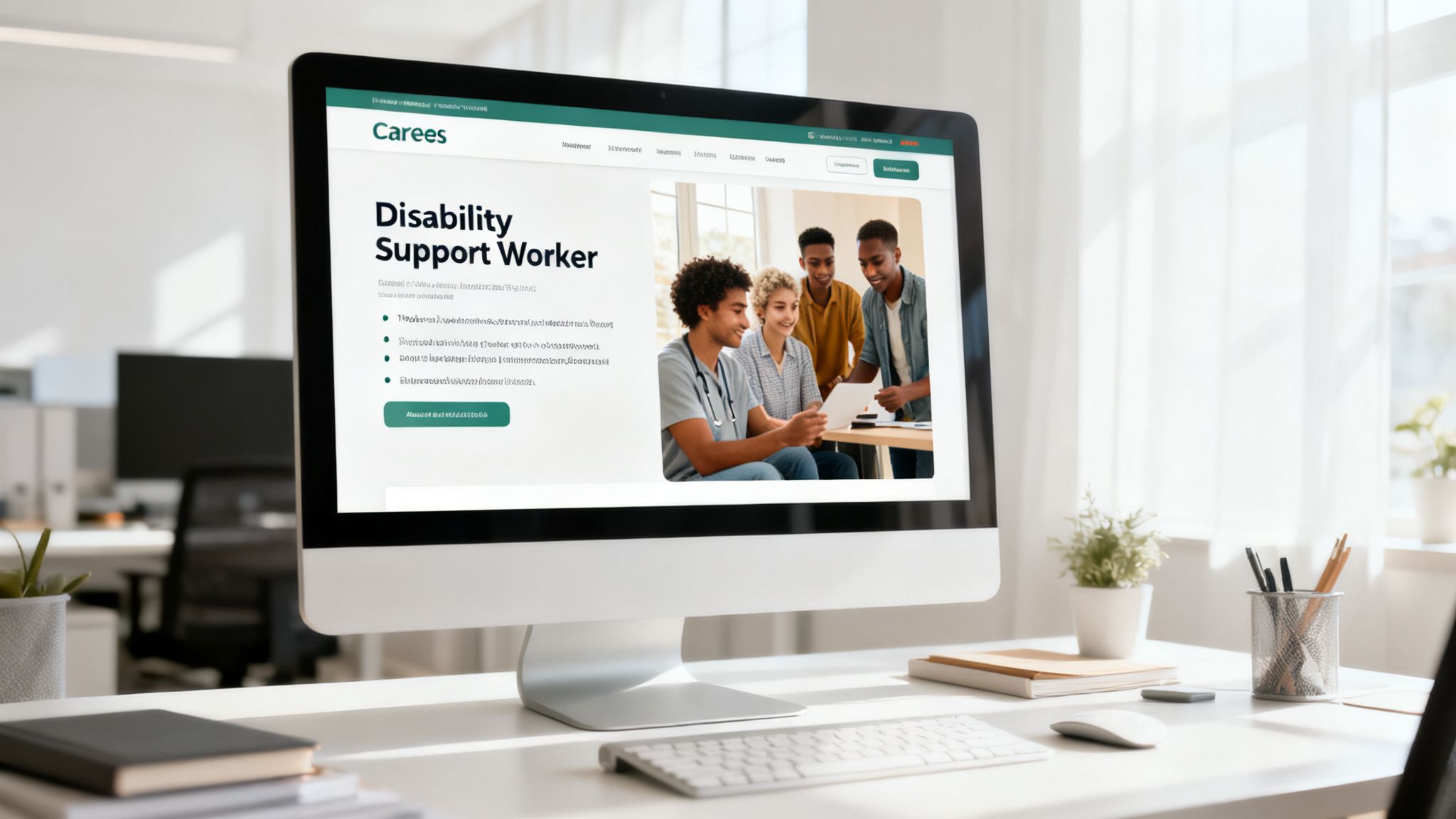
It’s easy to think of your website as a space just for participants and their families. But in an industry grappling with a critical workforce shortage, your website needs to pull double duty. It must also be a powerful magnet for attracting skilled, passionate, and dedicated staff.
Thinking of your website as a primary recruitment channel isn't just a good idea—it's a strategic necessity. The sector is navigating huge hiring difficulties, with a staggering 78% of providers reporting major challenges in finding support workers. This isn't a minor inconvenience; it means providers often can't meet the demand for their services. You can get a deeper look at these workforce trends in this Productivity Commission report.
A website that actively draws in talent gives you a massive advantage in a competitive market. It’s time to move beyond a simple list of job openings.
Showcase Your Organisational Culture
Top-tier candidates aren't just looking for a paycheque. They want to find a workplace where they feel valued, can grow, and see themselves making a genuine difference. Your website is the perfect platform to show them exactly what it's like to be part of your team.
Your 'Careers' section is your chance to sell your organisation to prospective employees. It’s where you bring your culture, values, and the real-world impact of your work to life.
Use this space to tell your story. Share photos from team events, highlight employee achievements, and feature authentic testimonials from your current staff. This isn't corporate fluff; it's an authentic glimpse into your organisation’s environment that helps you connect with people who are the right cultural fit.
Consider building out this section with elements like:
- Your Mission and Values: Go beyond the services you offer. What’s the bigger purpose that drives your organisation every single day?
- Team Spotlights: Put a face to the name. Introduce some of your team members and share their stories and what they love about their work.
- Benefits and Perks: Think beyond salary. Talk about professional development opportunities, wellness programs, and what makes your workplace uniquely supportive.
Your 'Careers' page should make a potential applicant think, "This is a place where I could see myself thriving." It’s about creating an emotional connection that a standard job board listing simply can't match.
Optimise Your Job Descriptions for Search
Just like you use SEO to attract participants, you need to use it to attract qualified job seekers. When people look for work, they turn to search engines first. Your vacancies have to show up when they do.
This means writing job descriptions packed with the specific, searchable keywords that a potential applicant would actually use. Step into their shoes—what would a disability support worker or an allied health professional type into Google?
Start integrating phrases like:
- 'Disability support worker jobs'
- 'Behaviour support practitioner roles'
- 'NDIS occupational therapist vacancy'
By including these kinds of keywords along with your location, you dramatically increase the odds of your roles being discovered by the right people at the right moment. Strong content writing on your website is crucial for both attracting clients and recruiting staff.
This approach transforms your website into a 24/7 recruitment engine, helping you build the strong, capable team you need to deliver exceptional support.
Choosing the Right Tech to Support Your Growth
Your website’s technology stack is its engine. It powers everything from daily content updates to your long-term growth. Choosing the right tools isn’t about chasing trends; it's about picking a reliable foundation that your team can actually use, simplifies your operations, and grows with you. A smart setup means your web design for NDIS providers works today and is ready for whatever comes next.
At the heart of it all is your Content Management System (CMS). Think of a CMS as the simple dashboard where your team can update text, add new services, or publish a blog post without needing to know a single line of code.
For most NDIS providers, WordPress is a fantastic choice. It’s incredibly flexible and has a massive community building tools specifically for accessibility and security. Its friendly interface means even non-technical staff can easily manage content, keeping your site fresh without calling a developer for every little change.
Key Integrations to Make Life Easier
A great website does more than just sit there and look pretty; it automates tasks and makes your life easier. By connecting your site to the other software you already use, you can cut down on admin headaches and create a smooth, professional experience for clients and staff. These connections turn your website into an active part of your daily workflow.
Focus on tools that solve real problems for your organisation:
- Secure Intake Forms: Link your website forms directly to your Client Management System (CRM). New participant details land exactly where they need to, securely and instantly, with no more manual data entry.
- Online Scheduling Systems: Let participants, families, or support coordinators book consultations right on your site. The appointment automatically syncs with your team's calendars, ending the back-and-forth emails.
- Client Management Software Connections: A direct link between your website and your core software ensures there’s one single source of truth for all client information.
Measuring What Actually Matters with Web Analytics
You can't improve what you don't measure. Web analytics tools like Google Analytics give you the real story on how people find and use your website. Understanding this data is absolutely essential for making smart decisions and proving that your website is worth the investment.
This isn't about getting lost in complicated reports. It's about tracking a few key numbers that tell you if you're on the right track.
Start by keeping an eye on these essentials:
- Visitor Numbers: How many people are actually visiting your site each month? Is that number growing?
- Traffic Sources: Where are they coming from? Are they finding you on Google, clicking from social media, or typing your address in directly?
- Engagement Rate: Are people sticking around to read your content, or are they leaving almost immediately?
- Contact Form Submissions: How many real client enquiries is your website bringing in?
By checking in on this data regularly, you’ll quickly see what’s working and what isn't. This knowledge gives you the power to tweak your content, improve the user experience, and make sure your website is a powerful engine for your organisation's growth.
Common Questions About NDIS Web Design
Diving into a new website project can bring up a lot of questions. We get it. This final section tackles the most common queries NDIS providers ask us, giving you clear, straightforward answers to help you move forward with confidence.
How Much Does a Professional NDIS Website Cost?
The honest answer is: it varies. The cost of a professional web design for NDIS providers depends entirely on what you need it to do. A simple, template-based site might start in the low thousands, whereas a fully custom-built website with complex features like a client portal or an integrated booking system will be a more significant investment.
The key is to stop thinking of it as an expense and see it for what it is: an investment in a critical business asset. A great website generates leads, cuts down on admin time, and builds your reputation 24/7, delivering a strong return over its lifetime. Your best bet is always to get a detailed quote based on your unique goals.
How Long Does It Take to Build an NDIS Website?
Typically, you can expect an NDIS website build to take anywhere from four to twelve weeks. This timeframe is influenced by a few things: the complexity of the design, the number of pages you need, and how quickly you can get content and feedback back to your design partner.
A straightforward "brochure-style" website can be launched relatively quickly. However, a more comprehensive project with custom features, detailed service pages, and integration with your CRM will naturally need more time in development to make sure every detail is perfect.
Am I Legally Required to Have an Accessible Website?
Yes, absolutely. Under the Disability Discrimination Act 1992, Australian organisations have a legal duty to provide equal access to information and services. This responsibility extends directly to your digital presence, which means your website must be accessible to people with disabilities. Following the Web Content Accessibility Guidelines (WCAG) is the globally recognised standard for meeting this requirement.
An accessible website isn't just about legal compliance; it's a powerful statement about your organisation's commitment to inclusivity. It shows participants, families, and support coordinators that you are dedicated to serving every single member of the community.
Can I Update the Website Myself After It Is Built?
Of course. A professionally built website should empower your team, not create a dependency on a developer. Most modern sites we build use a Content Management System (CMS) like WordPress, which has a really user-friendly interface. This means your staff can easily jump in and make updates—like adding a new blog post, updating service info, or posting a job opening—without needing any technical skills.
At Titan Blue Australia, we don’t just build websites; we create hardworking digital assets for NDIS providers. If you're ready to create an online presence that builds trust, attracts the right clients, and truly supports your growth, we're here to help. Contact us today for a free consultation.

How to Choose a Web Designer on the Gold Coast
Choose a web designer on the Gold Coast with confidence. Compare strategy, process, performance and…

Web Development Gold Coast: Build for Growth and AI Search
Web Development Gold Coast: fast, secure, conversion-ready websites built for customers, Google and AI search.…

Gold Coast Web Design: What Makes a Website Work?
Gold Coast web design should attract the right people, answer their questions, earn trust and…