


Last updated:
Gone are the days when real estate marketing was just about getting a property listed. Today, it’s about building a smart, always-on system that brings clients to you. It’s a mix of hyper-local visibility, sharp social media, and clever tools that guide potential buyers straight to your door (and your listings). In a crowded market, this is no longer optional—it’s how you win.
The New Blueprint for Real Estate Marketing

As we look at the Australian property market in 2026, it's crystal clear that the old playbook is broken. A generic "list it and they will come" attitude just gets lost in the digital noise. Success now hinges on a coordinated strategy that meets buyers exactly where they spend their time—online.
Think of it like this: old marketing was a printed street directory, but modern marketing is a live GPS. It doesn't just show the destination; it actively guides people on the fastest, most efficient route to your properties and your brand.
Building Your Marketing Machine
This guide breaks down how to build this powerful system. We're focusing on combining a few key pieces to create a marketing machine that works for you 24/7. The essentials are:
- Hyperlocal SEO: Owning the search results in your specific suburbs, so you’re the first agent high-intent local buyers find.
- Smart AI Tools: Using artificial intelligence to create better content and get more done, without working longer hours.
- Compelling Social Media: Building a real community and showcasing properties to a handpicked audience on the platforms they scroll through every day.
Putting these pieces together helps you attract, engage, and convert clients in a seriously competitive field.
The move online isn't just a trend; it's a complete takeover. Consider that 95% of real estate agents in Australia now use social media to market their listings. And it works—properties featuring video content pull in a huge 403% more inquiries.
Plus, with 89% of home buyers starting their search on a mobile device, mastering local SEO is what gets you found in those crucial 'near me' searches. To get a better feel for the numbers, you can explore more on these real estate marketing statistics and see what’s driving the market.
Winning Your Suburb with Hyperlocal SEO
In real estate, your biggest asset has always been your local knowledge. But just knowing the best streets and school catchments isn't enough anymore. The real game-changer is translating that expertise into digital dominance through hyperlocal SEO.
This isn’t about broad, generic marketing. It’s about becoming the undisputed online authority for your specific patch. Think of yourself as the most trusted local guide, but for anyone searching online. When someone wants to know about the new cafe, commute times, or property values in your suburb, your name should be the first one they find.
This tight geographic focus is what separates the agents who thrive from the ones who just get by.
Become the Digital Mayor of Your Suburb
Your journey to becoming the go-to agent online starts with your digital shopfront: your Google Business Profile (GBP). For many potential clients, this is the very first interaction they'll have with your brand. An empty or outdated profile is like having a shop with no sign on the door—it screams unprofessional.
To really own your space, your GBP needs to be more than just a name and number. It needs to be a rich, living resource. A winning profile includes:
- High-Quality Photos: Don't just stop at a headshot. Show off your team, your office, happy clients at settlement, and even local landmarks to visually tie your brand to the suburb.
- Frequent Updates: Use Google Posts to share new listings, drop quick market insights, or link to your latest blog post about the neighbourhood. Keep it fresh.
- Reviews, Reviews, Reviews: Actively ask for and respond to every single review. This social proof is gold for building trust with people who haven't met you yet.
- Q&A Section: Don't wait for people to ask. Proactively fill out the Questions & Answers section with the common queries you get every day about buying and selling in your area.
This level of detail does more than just inform clients; it signals to Google that you are a highly active and relevant authority in that specific location. The result? Google is far more likely to show you in the coveted local search results.
Create Content That Speaks to Locals
Next, you need to create content that targets the exact phrases buyers and sellers are typing into Google. Forget vague terms like "houses for sale." You need to get inside their heads and think about the real questions they have.
These specific, detailed search terms are called long-tail keywords, and they are pure gold for hyperlocal SEO.
For instance, a family looking to move won't just search for "homes." They’ll search for things like "family homes near Broadbeach schools" or "quiet streets in Mermaid Waters." When you create content that directly answers these questions, you’re not just getting traffic—you’re getting high-intent traffic from people who are much closer to making a decision.
Start building your content around these local pillars:
- Neighbourhood Guides: Go deep. Create detailed articles or videos covering local parks, shopping centres, public transport, and new developments.
- School Spotlights: Parents are a huge driver of the market. Create in-depth profiles of local schools, covering everything from catchment zones to special programs.
- Lifestyle Content: You’re selling a lifestyle, not just bricks and mortar. Write about the best local coffee shops, dog-friendly parks, or weekend activities in the area.
This approach positions you as a valuable resource, not just another salesperson. To ensure your local presence dominates search results and attracts motivated buyers and sellers, explore a comprehensive Realtor Search Engine Optimization Playbook.
Voice Search and the Future of Local SEO
The way people search is changing, thanks to mobile phones and smart speakers. In 2026, hyperlocal SEO is completely transforming real estate marketing in Australia. Neighbourhood-specific keywords are driving high-intent traffic that converts 4 times better for listings with optimised content.
With 90% of Aussie home buyers starting their search online and 69% using mobile devices, optimising for conversational, voice-based searches is no longer optional. People are asking questions like, "Hey Google, what are the best spots for solar installations near Broadbeach?" Your content needs to provide the answer.
To capture this traffic, your content must be structured to answer questions directly. Use headings that pose a question and provide a clear, concise answer immediately below. This makes it easy for search engines to pull your content into featured snippets and voice search results.
By mastering your Google Business Profile, creating laser-focused local content, and optimising for how people actually talk, you turn your website into a magnet for qualified local leads. This hyperlocal focus ensures that when someone searches for property in your suburb, you’re the first and most credible result they find. For a deeper dive into the fundamentals, check out our guide on what local SEO is and how it works.
Crafting Listings That Convert Clicks to Clients
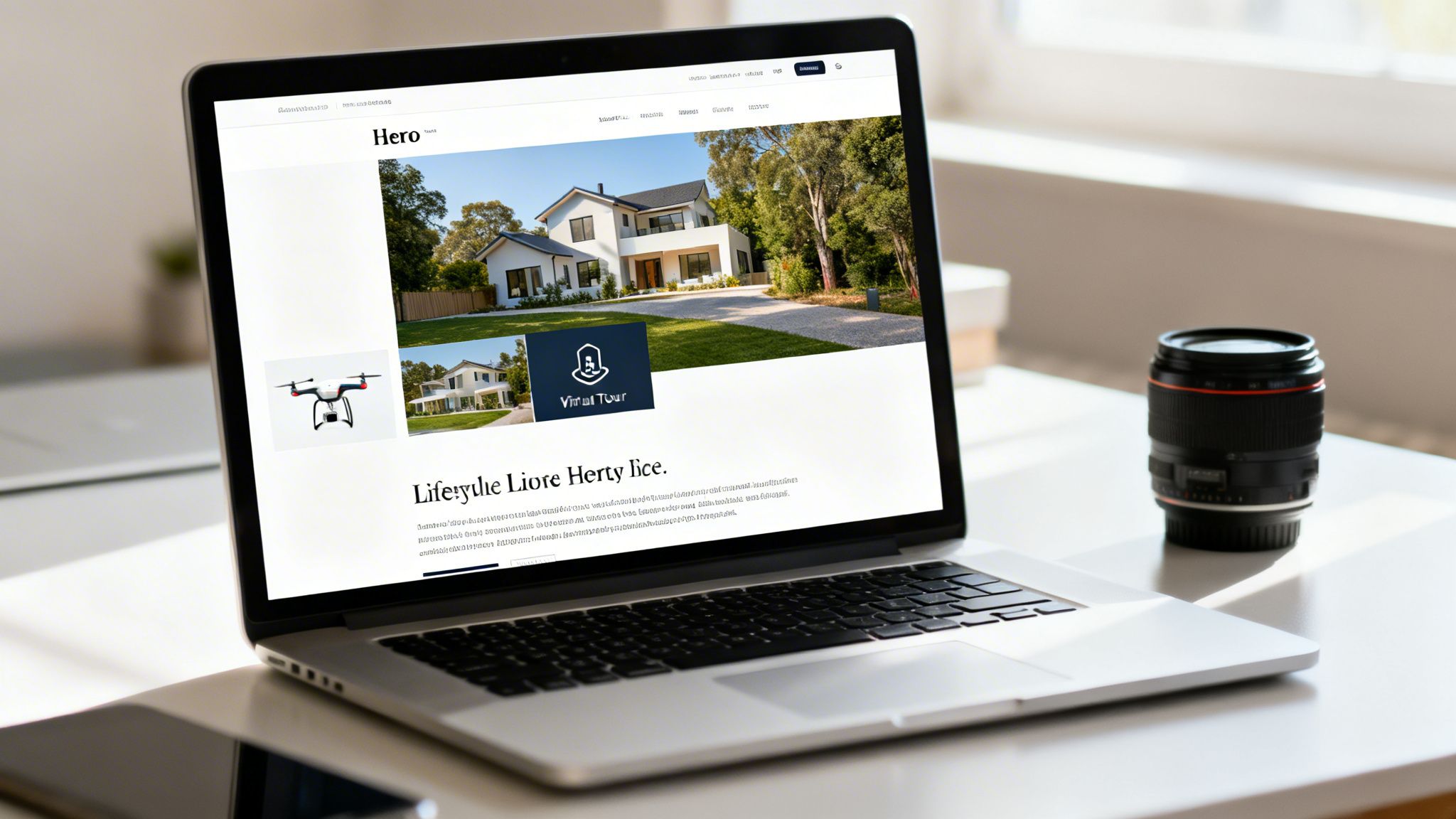
Let's be honest: your property listing is no longer a digital version of the newspaper classifieds. It's your most powerful sales tool in today's online real estate world. This is the exact moment a casual browser decides to become a serious buyer. To really succeed here, you need to stop thinking of listings as simple ads and start treating them as compelling digital experiences that get people to act.
This isn't about just listing the number of bedrooms and bathrooms anymore. It's about creating an irresistible combination of immersive visuals that spark an emotional connection, copy that sells a lifestyle, and a clean design that makes it easy for a buyer to get in touch. Nail these elements, and your listing will do the hard work of bringing qualified buyers right to you.
The Power of Visual Storytelling
First impressions are made in a split second, and online, your visuals are everything. Before a buyer even considers walking through the front door, they need to be able to picture themselves living in the home. Professional photography is the absolute minimum standard, but the best agents know they need to go a step further.
Static images just don't cut it anymore. Today's buyers are savvy, and they expect to see a property from every angle. Using a mix of media is how you capture—and keep—their attention.
- Professional Photography: This is non-negotiable. Hire a pro who knows how to shoot real estate. They understand light, angles, and how to make a home look its absolute best.
- Drone Footage: If you're selling a property with a great block of land, incredible views, or unique architecture, drone shots give a 'wow' factor that a standard photo just can't deliver. It provides a perspective that helps sell the whole package.
- Virtual Tours: 3D walkthroughs are a game-changer. They put the buyer in control, letting them explore the home on their own terms. This level of engagement is fantastic for filtering out tyre-kickers and attracting genuinely interested parties.
And don't forget the first photo is the hook. To make sure your property grabs attention instantly, you might want to think about how you can boost your home's value through thoughtful front yard landscape design. A stunning kerb appeal shot can be all it takes to make someone click.
Writing Descriptions That Sell a Dream
Once your amazing photos have done their job, it's up to the property description to seal the deal. This is where you sell a lifestyle, not just bricks and mortar. So many agents fall into the trap of just rattling off features: three beds, two baths, double garage. While that info is necessary, it doesn’t create any excitement.
You need to tell a story. Help buyers imagine what their life would be like in that home.
The real secret is shifting from a dry list of features to a vivid story about the benefits. Don't just say "large backyard." Paint a picture: "a sprawling backyard perfect for weekend barbecues, with plenty of room for the kids and dog to run wild."
That small change in language is what separates average real estate marketing from great real estate marketing. It connects the property's assets to a buyer's dreams, making the home feel like it's already theirs.
Designing Listings for Action
The final piece of the puzzle is a clean, intuitive design. A cluttered or confusing listing page will make someone click away in frustration, no matter how beautiful the photos are. Your listing page—and your entire website, for that matter—needs to be built with the user in mind. For a deeper dive into what a high-performing site looks like, our post on award-winning real estate website designs has some great insights.
Here are the key design elements that drive action:
- A Clear Call-to-Action (CTA): Make it dead simple for a buyer to take the next step. "Request an Inspection" or "Contact Agent" buttons need to be big, bold, and impossible to miss.
- Mobile-First Design: The vast majority of people are house-hunting on their phones. If your listings look clunky or are hard to navigate on a small screen, you're losing leads.
- Fast Load Times: Nobody is going to wait for slow-loading photos or a clunky virtual tour. Make sure all your media is optimised to load quickly, so you don't lose an impatient buyer.
When you bring together incredible visuals, storytelling copy, and a user-friendly design, you create listings that do more than just provide information. They inspire, they connect, and most importantly, they turn clicks into clients.
Engaging Buyers on Social Media and Paid Ads
Social media gives you a direct line to buyers, both active and passive. But for real estate, a winning strategy is about much more than just posting your latest listings. The real goal is to turn your social media pages from digital noticeboards into genuine community hubs.
You need to build a brand that people actually want to follow, even when they’re not in the market to buy or sell.
When you consistently put out content that’s genuinely useful, you build trust and authority. This keeps your agency top-of-mind, so when someone in your network is ready to make a move, you’re the first person they call. It’s about playing the long game, not just chasing the next sale.
Building Your Content Pillars
A strong social media presence is built on consistency. Instead of posting at random, you should base your content around a few core “pillars.” This gives you a steady stream of material and keeps your feed balanced and interesting for different parts of your audience.
Your content pillars should be a mix of these key areas:
- Stunning Property Showcases: Go way beyond basic photos. Think high-quality video walkthroughs, "before and after" reels of a quick renovation, or a carousel post that tells a home's story room by room.
- Local Community Highlights: Position yourself as the go-to local expert. Post about that great new cafe that just opened, share details on upcoming community events, or talk about your favourite local park. It shows you’re invested in the area, not just in transactions.
- Client Success Stories: Nothing sells you better than a happy client. With their permission, post a photo with the new homeowners and share a short, heartfelt testimonial. This is incredibly powerful social proof.
- Educational Market Insights: Break down all that complex market data into simple, digestible information. Create a clean graphic explaining recent interest rate moves or film a quick video discussing clearance rates in your suburb.
This balanced approach makes sure your feed appeals to everyone, from potential sellers curious about the market to buyers trying to find their perfect neighbourhood.
Running Hyper-Targeted Ad Campaigns
Organic social media is for building your community, but paid advertising is where you get surgical. Platforms like Facebook and Instagram have incredible tools that let you put the right property directly in front of the right person. This ensures your ad spend is working as hard as possible.
Forget just boosting a post to a general audience; modern real estate ads are all about data.
The real power of social media advertising is in its targeting. You can go far beyond basic demographics to reach people based on their online behaviour, their interests, and even how similar they are to your existing clients.
For example, instead of just targeting an age group in a certain postcode, you can serve your ads to people who have recently visited major property portals, looked at mortgage calculators, or interacted with other real estate pages. This is how you find people who are genuinely motivated.
Maximising Your Ad Spend
To get the best return from your budget, you need a clear plan. There are two main types of audiences you should be focusing on to make your real estate marketing both efficient and effective.
-
Custom Audiences: This is your "warmest" audience. Here, you can upload a list of past clients or website visitors and create ads just for them. A killer tactic is retargeting, which shows ads to people who have already visited your website. For instance, you can show an ad for a specific listing to someone who viewed that exact property on your site but never made an enquiry.
-
Lookalike Audiences: This is where the magic really happens. The platforms can analyse the traits of your best customers (like a list of past sellers) and then go find new people who have similar demographics and online behaviours. It's a seriously powerful way to discover high-quality leads who are very likely to be interested in what you offer.
To put this into practice, you could dedicate a portion of your budget to lead generation ads on Facebook, targeting a Lookalike Audience based on your database of past clients. At the same time, you'd run a smaller, ongoing retargeting campaign to bring people back who have already browsed your site.
Mastering these ad strategies is a core skill for any modern agent. You can dive deeper into the specifics with an expert Instagram ads agency in Australia. By combining community-focused organic content with data-driven paid ads, you create a complete system for attracting buyers at every stage of their journey.
Building Your Automated Client Nurture System
Getting a lead is a great first step, but it’s really just the start of the conversation. In real estate, the real money is made in the follow-up. This is where an automated client nurture system becomes your most valuable asset, making sure no opportunity ever falls through the cracks.
Think of this system as your round-the-clock digital assistant. It works tirelessly to make sure every single person who shows interest is contacted quickly and personally. This frees you up to handle the big-ticket items—like closing deals and managing client relationships—while your system takes care of that crucial first contact.
The heart of this entire operation is your Customer Relationship Management (CRM) system. It’s far more than a digital contacts list; it’s the engine that drives the entire client journey, from the first click to the final handshake.
The Anatomy of an Automated Nurture System
A well-built system moves leads smoothly from one stage to the next, building trust at every step. It generally relies on three core parts working in sync.
- Effective Lead Capture Forms: These are your digital front doors. Placed on your website, landing pages, and social media ads, they must be simple and inviting. Make it easy for potential clients to share their details in exchange for something valuable, like a property guide or an inspection request.
- Automated Email & SMS Follow-ups: This is where the magic really kicks in. As soon as a lead hits your CRM, a pre-written sequence of communications can be triggered automatically. This guarantees instant contact while the lead’s interest is at its absolute peak.
- Smart Task Creation for Agents: Automation isn’t about replacing the human touch; it’s about making it more effective. The system can create tasks and ping agents at the perfect moment, like prompting a personal phone call after someone has opened several emails or revisited a listing.
This diagram shows a simple view of how social media efforts feed into your wider marketing system.
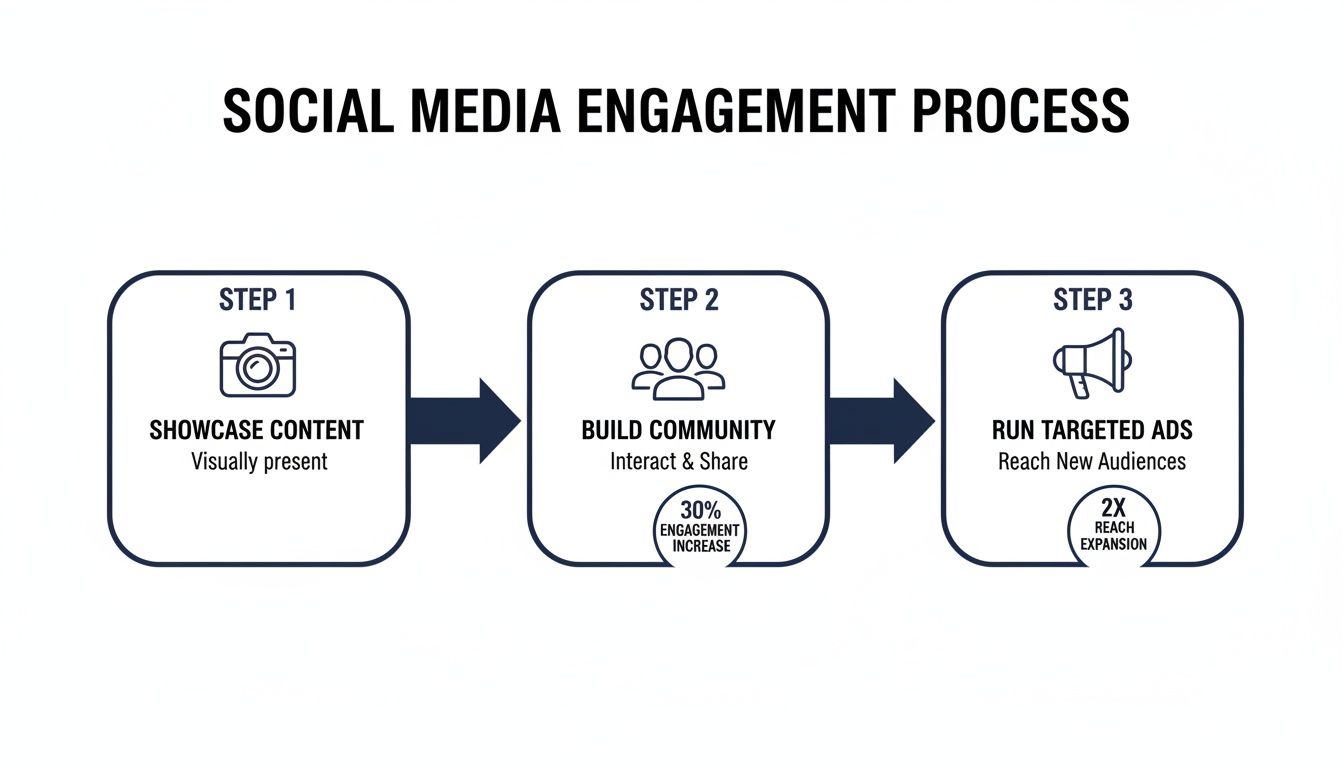
The flow from showcasing properties to building community and running targeted ads creates multiple entry points for leads to enter your nurture system.
A Sample Workflow in Action
Let’s walk through a real-world example to see how this all clicks together. Imagine a potential buyer, Sarah, sees your sponsored Instagram ad for a family home in her target suburb.
-
Capture: Sarah taps the ad and lands on a simple page. She fills out a form to download the brochure. The second she hits "Submit," her details are funnelled straight into your CRM and tagged as a "New Buyer Lead" from Instagram.
-
Automated Nurture: Within two minutes, an email lands in Sarah’s inbox. It’s personalised, thanks her for her interest, attaches the brochure, and includes links to three other similar properties on your website. That immediate, relevant response makes a huge first impression.
-
Agent Alert: At the same time, the CRM flags this as a high-intent lead and assigns it to an agent. A task pops up on their dashboard with all of Sarah's details: "Call Sarah within 24 hours."
-
Personal Follow-Up: The next day, the agent calls Sarah. This isn’t a cold call. They already know exactly which property she’s keen on and what similar listings she's seen. The conversation is warm and informed, positioning the agent as a helpful expert, not just another salesperson.
This seamless process makes Sarah feel valued from the very first interaction. There are no dropped balls, no missed emails, and no awkward cold calls. It’s a professional experience that builds instant trust and dramatically boosts the chances of converting that lead into a client. If you want to dig deeper into this, you can learn more about how marketing automation works in our dedicated article.
By automating the initial stages of lead engagement, you standardise your service quality. Every lead gets the same A-grade treatment, regardless of how busy you are, creating a consistently professional brand experience that sets you apart.
Measuring Your Marketing and Proving ROI
Marketing without tracking your numbers is just expensive guesswork. You're spending money, but are you actually getting closer to a signed contract? To turn your marketing budget from an expense into a genuine investment, you need to measure what matters and figure out your return on investment (ROI). This isn't about getting buried in spreadsheets; it's about getting real clarity.
By zeroing in on the right numbers, you can see exactly what’s working, what’s a waste of money, and where your next dollar will have the biggest impact. It’s how you stop hoping for results and start making smart, data-backed decisions that actually grow your GCI.
Key Metrics to Track From First Click to Final Sale
To get the full story, you need to look at the numbers from every stage of a client's journey. Think of it like this: you need to know how many people saw your sign (awareness), how many walked through the door (engagement), and how many made an offer (conversion). Each metric tells a different part of the story.
Get started by tracking these essential Key Performance Indicators (KPIs):
- Website Traffic Sources: Where are your visitors even coming from? Knowing if they found you through a Google search, clicked from Facebook, or typed your website in directly shows you which of your channels are pulling their weight.
- Cost Per Lead (CPL): This one is crucial. How much are you actually spending on ads to get a single person to pick up the phone or fill out an enquiry form? This tells you how efficient your campaigns really are.
- Email Open & Click-Through Rates: You're sending out all those market updates and new listing alerts, but is anyone actually opening them? These rates show how engaged your database is with your follow-up.
- Enquiry to Sale Conversion Rate: This is the big one. Of all the enquiries you generate, what percentage actually turn into a listing or a sale? This metric reveals the true quality of the leads your marketing is bringing in.
Creating a Simple Monthly Report
You don't need a crazy-complicated dashboard to keep your finger on the pulse. A simple monthly report is more than enough to give you the insights you need to steer the ship, helping you spot trends and jump on opportunities before they pass you by.
Your report only needs to answer three simple questions: What did we do? What happened? And what should we do next? This structure keeps you focused on action, not just staring at numbers. Pulling this all together can feel a bit overwhelming at first, but a good template makes it a straightforward process. For a great head start, check out this guide on creating a marketing report template.
When you consistently measure your performance, you move from just hoping for a good quarter to actually engineering it. You can finally prove the financial impact of your marketing efforts and invest with confidence in the strategies that fuel real growth.
Frequently Asked Questions
When it comes to digital marketing in real estate, it's easy to get lost in the noise. We get asked a lot of the same questions by agents trying to build a solid strategy, so we've put together the answers to the most common ones right here.
How Much Should I Budget for Digital Marketing?
A solid starting point is to set aside 5-10% of your gross commission income (GCI) for all your marketing efforts. If you're just starting out, don't try to do everything at once. Focus your initial budget on the absolute essentials: a professional website and a perfectly optimised Google Business Profile. These are your digital foundations.
Once those are in place, you can direct the rest of your funds toward activities that generate immediate buzz. Think professional photography and targeted social media ads for your key listings. Start with a smaller ad budget, track your cost per lead like a hawk, and then pour more money into the campaigns that are actually delivering.
What Is the Most Important First Step for a New Agent?
For any new agent, the single most crucial job is to dominate your local patch online. Your first move should be to claim and meticulously fill out your Google Business Profile, making sure to list every service area and specialisation. This is the fastest path to showing up when locals search for an agent.
At the same time, you need to be creating content that’s laser-focused on your suburb. This could be anything from blog posts breaking down local school catchments to quick videos on community events or a guide to the best coffee spots. This builds your authority and proves you're the go-to expert, ensuring that when someone searches "real estate agent in [Your Suburb]," your name is the one they find and trust.
Should I Do All My Real Estate Marketing Myself?
It’s definitely possible to handle a lot of the marketing yourself, especially when you’re building your brand. Things like daily social media posts, writing property descriptions, and engaging with your local community online are tasks you can—and should—manage. It’s what builds an authentic connection.
But in the long run, a hybrid approach almost always wins.
While you handle the daily community engagement and content, think about partnering with a digital specialist for the more technical stuff—like SEO, complex paid ad campaigns, and website maintenance. This frees you up to focus on what actually makes you money: listing, negotiating, and closing deals.
This smart division of labour means you can concentrate on your high-value, client-facing work, confident that your marketing engine is running efficiently in the background.
At Titan Blue Australia, we build digital marketing strategies that deliver real results for businesses across Australia. If you're ready to grow your business with a proven partner, get in touch with our team today.
Make Titan Blue a preferred source in Google
One click tells Google to surface our articles more often in Top Stories, AI Overviews and AI Mode.

Best Dental Website Design Agencies in Australia: 7 Compared
Best dental website design agencies in Australia 2026: seven compared on dental proof, booking, AHPRA…

Childcare Centre Website Design Australia: The 2026 Guide
Childcare centre website design Australia: show hours, ages and enrolment as text so parents and…

Electrician Website Design Australia: The 2026 Guide
Electrician website design Australia: what to build, what we found on eight Gold Coast electrician…