

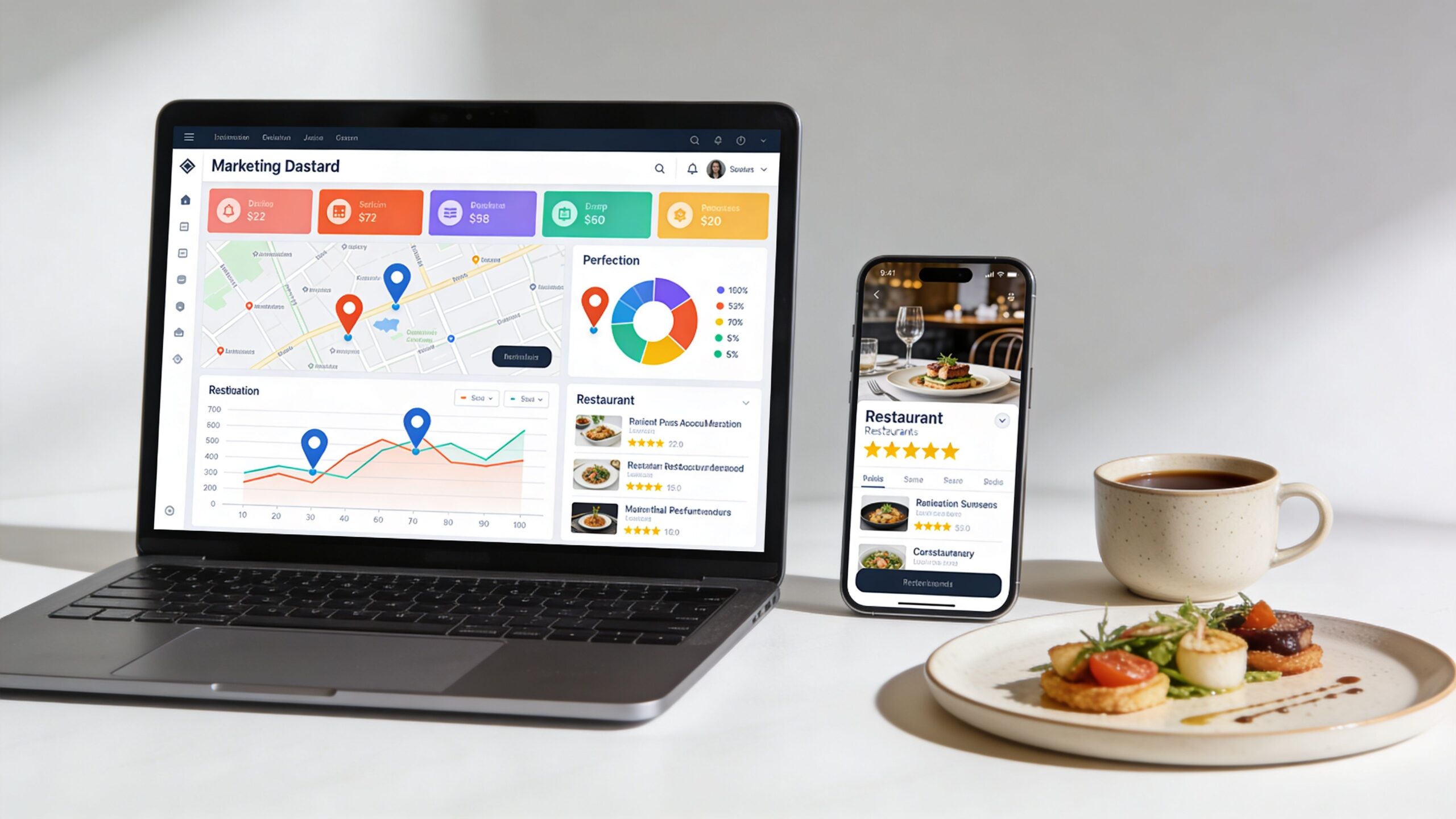
Last updated:
You’re probably dealing with a familiar mix of pressure and noise.
Bookings dip midweek. Delivery fees eat margin. Staff are flat out on service, so marketing gets pushed to “when there’s time”. Meanwhile, your restaurant still has to show up in Google, Maps, Instagram, email inboxes, and now AI-generated answers when someone asks, “Where should I eat tonight?”
That’s why a workable digital marketing strategy for restaurants has to do more than make your venue look good online. It has to bring the right diners in, remove friction from booking or ordering, and give you a system you can maintain.
The restaurants that win online don’t always have the biggest budgets. They usually have cleaner fundamentals. Their website works on mobile. Their Google Business Profile is active. Their menu is easy to read. Their ads target the suburbs that matter. Their email list isn’t neglected. And increasingly, their content is structured so AI search tools can understand and recommend them.
This is the blueprint I’d use if I were rebuilding a restaurant’s digital presence today in the Australian market.
Your Foundation A Digital Audit and Customer Blueprint
Most restaurant marketing problems start before the first ad runs.
If your website is clunky, your menu is hard to read, your trading hours are inconsistent, or your online profiles send mixed signals, every dollar you spend gets weaker. Before you add campaigns, fix the leaks.
Audit what you control first
Start with the internal side. That means every asset your team owns and can change quickly.
Review these areas in order:
-
Website basics
Check whether a first-time visitor can do three things within seconds: view the menu, book a table, or place an order. If any of those actions are hidden, slow, or confusing, your site is underperforming. -
Mobile experience
Open the site on your own phone. Don’t test it like an owner. Test it like a hungry customer standing on a footpath deciding where to eat. Can you tap the phone number, see the menu without pinching and zooming, and access directions instantly? -
Tracking setup
Many restaurants run campaigns without clean attribution. Make sure enquiries, bookings, clicks to call, menu views, and online orders are being tracked somewhere useful. If they aren’t, you’ll end up making budget decisions on gut feel. -
Brand consistency
Compare your logo use, tone of voice, food imagery, offer language, and booking links across your site, socials, listings, and email footer. If each channel feels like a different business, customers hesitate.
Practical rule: If your team has to explain how to use your website, the website needs work.
A customer journey map helps here because it shows where people stall, bounce, or abandon the process. This guide on customer journey mapping for businesses is useful if you want to trace the path from first search to booking or repeat visit.
Audit what the public sees
The external audit is about your footprint. From it, people form opinions before they ever taste your food.
Look at:
-
Google Business Profile presence
Are your hours current? Are photos recent? Does your listing reflect your actual dining experience or an outdated version of it? -
Review pattern
Don’t just look at star ratings. Read the comments for operational themes. Slow service, noise, portion size, parking confusion, and wait times all affect marketing performance because they shape conversion. -
Third-party listings
Your name, address, phone number, menu links, and booking links need to match across directories, apps, and social profiles. -
Search appearance
Google your venue name, cuisine, and suburb. Then search the way diners search, such as “best brunch near me” or “family restaurant Broadbeach”. Check what appears, what doesn’t, and which pages deserve improvement.
Build a useful customer blueprint
Generic audience notes don’t help. “Women aged 25 to 45” is not a strategy.
A restaurant needs to know what its best customers do:
- When they search
Lunch decision-makers behave differently from Saturday night diners. - Why they choose
Convenience, occasion, atmosphere, speed, dietary fit, price confidence, and parking all matter. - What they compare
Menu variety, visual appeal, booking ease, review quality, and location cues usually drive shortlisting. - What pushes them back
Birthday offers, event nights, loyalty rewards, seasonal menus, and reminders tied to habits.
Write out two or three customer types based on buying behaviour, not broad demographics. One might be the weekday office lunch crowd. Another might be couples choosing a venue for a planned dinner. A third might be families searching for easy booking and a clear kids’ menu.
That blueprint becomes the filter for every channel decision. If a tactic doesn’t help one of those customer groups discover you, choose you, or return, it probably doesn’t belong in your plan.
Dominate Local Search and Future-Proof with AI Answers
Friday, 6:15 pm. A couple in Southbank asks Google where to book a gluten-free Italian dinner nearby. They do not browse ten restaurant sites. They scan the map pack, read a few reviews, and increasingly get an AI-generated summary that narrows the choice before the click even happens. If your venue is missing key detail, Google and other answer engines fill that gap with someone else.
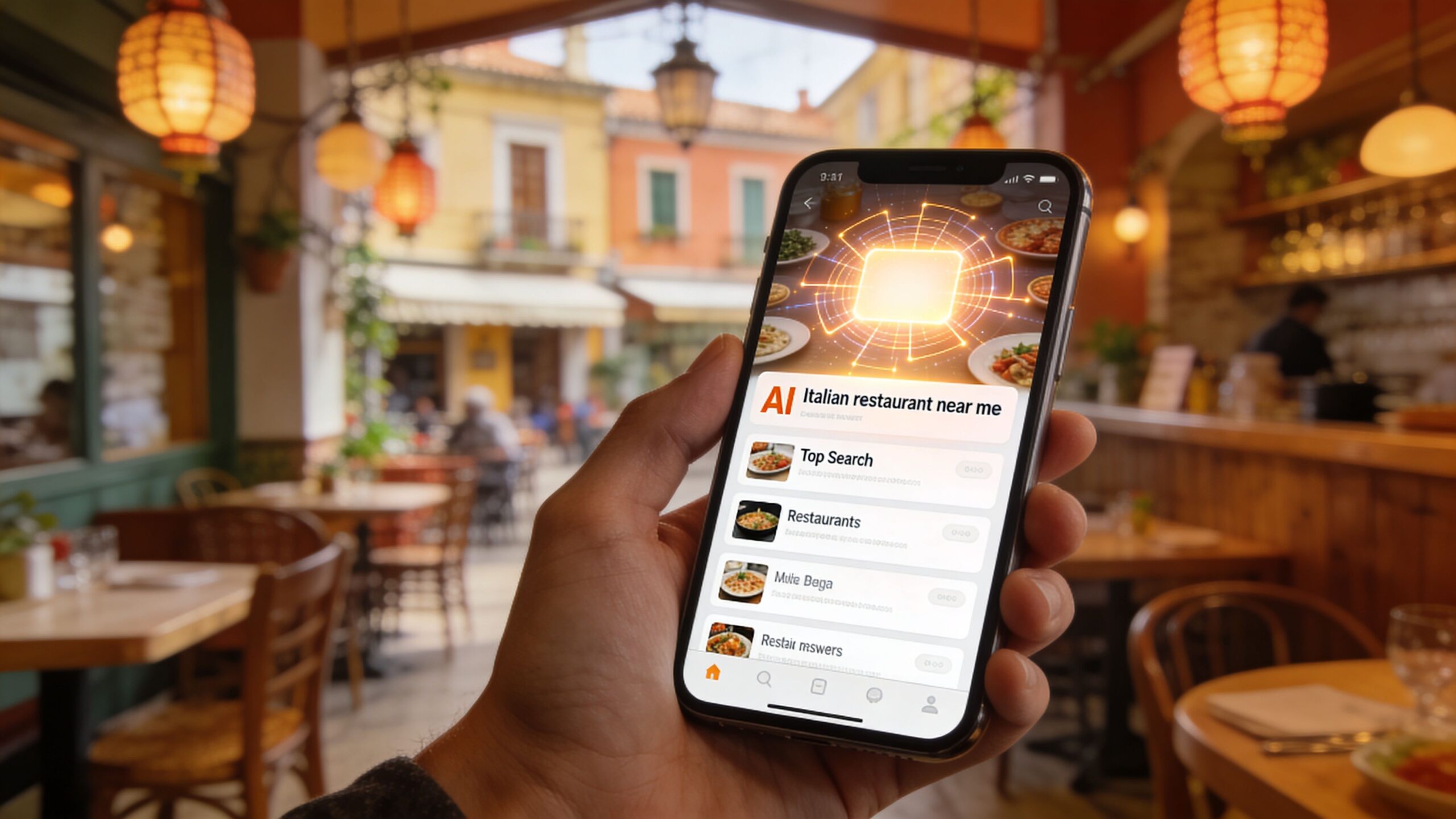
For Australian restaurants, local search now has two jobs. It still needs to win visibility in Google Maps and the local pack. It also needs to feed clean, trustworthy information into AI-driven results, including Google’s Search Generative Experience and other large language model responses. Operators who treat those as separate channels usually create gaps in both.
Get your Google Business Profile working properly
Google Business Profile is still the strongest local discovery asset for most venues. It influences map visibility, shapes first impressions, and gives Google current signals about what your restaurant offers, where you serve, and why someone should choose you.
The basics matter because diners use your profile to make fast decisions. Outdated hours, weak photos, missing attributes, or unanswered reviews create hesitation at the exact point of intent.
Focus on work that changes outcomes:
- Keep commercial details accurate
Name, address, phone, booking URL, menu URL, business categories, service options, and trading hours need to stay current across Google and every major citation source. - Upload photos that answer buying questions
Show signature dishes, portions, interior mood, frontage, outdoor seating, bar setup, function spaces, accessibility, and parking cues where relevant. - Use Google Posts for real demand windows
Promote set menus, event nights, seasonal offers, holiday trading hours, and high-margin occasions such as Mother’s Day, EOFY functions, or Valentine’s bookings. - Manage reviews like an operations channel
Reply promptly, address complaints with specifics, and reinforce strengths customers mention often, such as service speed, dietary flexibility, or atmosphere.
If you want a broader checklist that complements this approach, these Local SEO best practices are worth reviewing because they reinforce the fundamentals that local businesses often skip.
AI search rewards structure, clarity, and proof
Traditional restaurant SEO focused on rankings and clicks. That still matters. The difference is that answer engines now summarise, compare, and recommend before a user ever reaches your site.
According to Bastion’s 2025 piece on digital marketing for restaurants and AI search, 15% of Google AU searches use SGE, and 68% of Australian hospitality queries are zero-click. The same article notes that many restaurant sites still fail to provide structured FAQ content, clear dish and pricing information, and schema markup that helps machines interpret what the venue offers.
That gap is where Australian restaurants can gain ground.
A venue with strong reviews but poor structure may still rank for its own name. A venue with clear entities, crawlable menu content, location context, dietary details, and well-marked FAQ content has a better shot at appearing in AI summaries for broader discovery searches such as “best date night restaurant in Fitzroy” or “Sydney restaurant with vegan and gluten-free options.”
What AEO looks like on a restaurant site
Answer Engine Optimisation works best when it is built into the same system as local SEO. It is not a side project. It is the discipline of making your restaurant easy for search engines and AI systems to interpret, trust, and cite.
For restaurants, that usually means:
- Create FAQ content based on real questions
Cover dietary options, corkage, parking, kitchen closing time, group bookings, accessibility, private dining, and child-friendly details by location where relevant. - Publish your menu as indexable text
PDFs can still exist for design and print purposes, but dishes, prices, dietary labels, and descriptions should also appear as crawlable page content. - Use schema markup with intent
Restaurant, Menu, MenuItem, Offer, FAQ, Review, and LocalBusiness schema help search systems connect your brand, cuisine, suburb, and service attributes. - Answer key questions high on the page
State what you serve, where you are, who you suit, and how to book without forcing users or machines to dig. - Write for natural language search
Diners ask full questions now. Your content should match the way they speak and search.
A useful starting point is this guide to generative engine optimisation for modern search visibility. It explains the technical and content layer required to improve citation potential in AI-generated results.
Where restaurants lose visibility
I see the same pattern across hospitality sites. The menu lives in a PDF. Function information sits in an image gallery. Dietary details are buried on Instagram. Suburb relevance is implied, not stated. The Google Business Profile says one thing, the website says another, and third-party listings say something else again.
Search engines can work around some of that. AI systems are less forgiving because they rely on consistency and clear structure to assemble an answer they can trust.
The practical fix is to connect the assets. Your Google Business Profile should reflect current trading conditions and offer types. Your website should explain the venue in plain language. Your schema should label the details machines need. Your reviews should reinforce the claims you make. In a competitive Australian metro or tourism-driven area, that joined-up setup is often the difference between being shortlisted and being skipped.
Optimise Your Digital Front Door Your Website and Menu
A restaurant website isn’t a brochure. It’s a staff member that never clocks off.
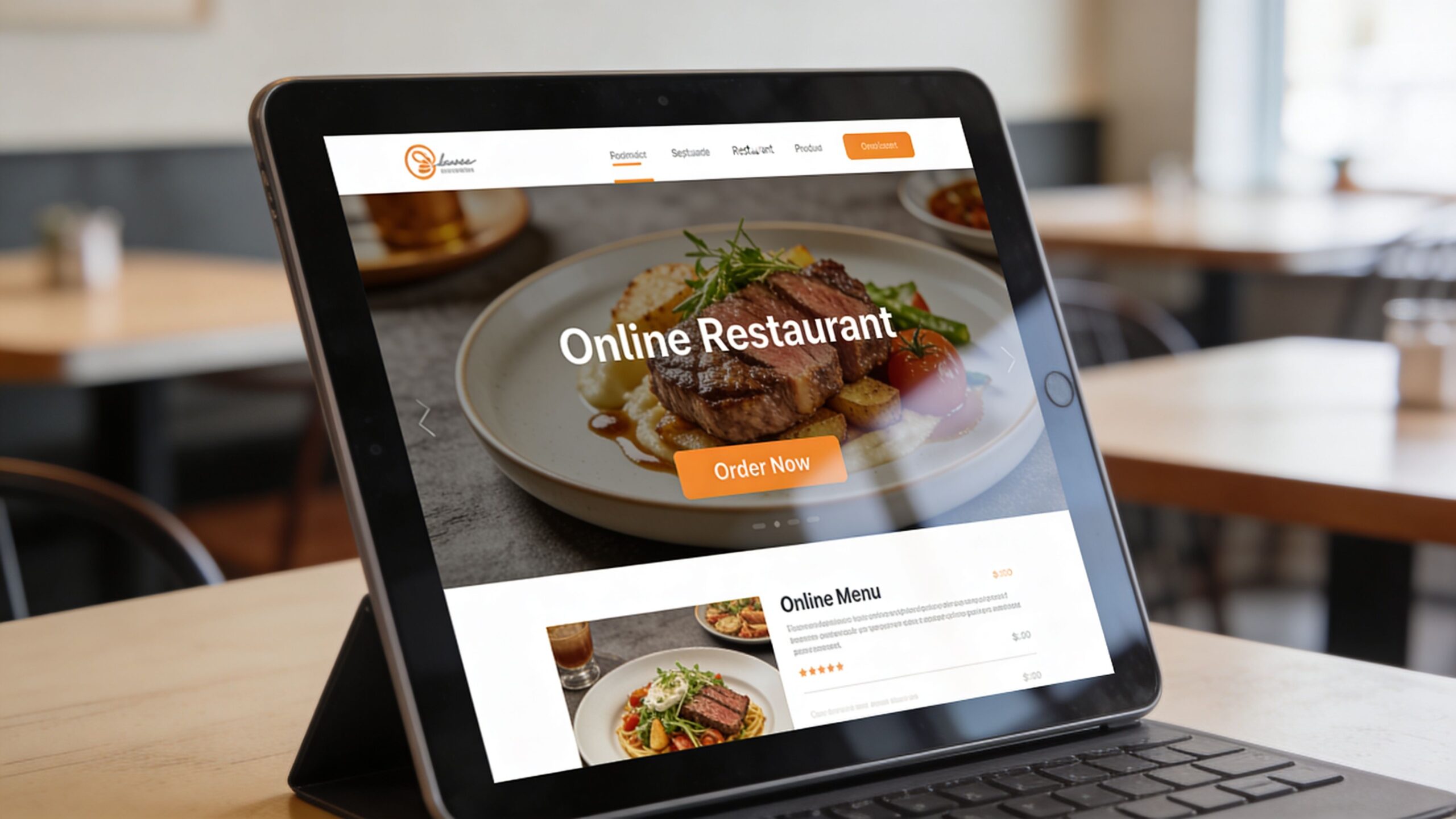
When it works, it attracts searchers, answers questions, and converts intent into bookings or orders. When it fails, it creates friction at the exact moment someone is ready to act. That’s expensive, especially on mobile.
According to Get Kard’s restaurant marketing analysis, outdated or poorly designed websites can cause the loss of up to 60% of potential bookings, and 45% of high-value customers now place orders through restaurant mobile websites.
Give the homepage a real job
Your homepage doesn’t need to say everything. It needs to do the highest-value jobs fast.
For most venues, those jobs are:
- Confirm what you are
Cuisine, location, service style, and atmosphere should be obvious immediately. - Guide action
Make booking, ordering, and menu access visible above the fold. - Reduce uncertainty
Show opening hours, parking or location cues, dietary options, and key trust signals.
If the first screen is dominated by vague brand language and a giant image slider, the site is serving the owner, not the diner. Restaurants don’t need mystery online. They need clarity.
Build the menu for phones, not desktop nostalgia
A surprising number of restaurant menus are still hard to use because they were designed as print assets and pushed online with no adaptation.
That approach breaks down quickly. Small text, PDF-only menus, slow load times, and awkward scrolling all make ordering and booking less likely.
A strong digital menu should do this well:
- Use text-based menu sections so search engines and AI tools can read them
- Show prices clearly because hidden pricing creates hesitation
- Include dietary markers where relevant
- Keep category labels simple so users can scan quickly
- Support tapping, not zooming on mobile screens
If your team also publishes recipe-style or feature content around signature dishes, this perfect recipe page template is a helpful reference for page structure and readability. The lesson applies beyond recipes. Clear content hierarchy improves both user experience and discoverability.
Operational test: Hand your phone to someone who has never visited your venue. Ask them to find a mains price, book a table, and check whether you cater to their dietary needs. Watch where they pause.
Remove friction from bookings and ordering
A booking tool or ordering platform should feel integrated, not bolted on.
The biggest issues I see are broken mobile flows, confusing redirects, and too many steps between intent and confirmation. If users leave your site for a third-party page that looks unrelated, trust drops. If they need to hunt for availability or re-enter basic details repeatedly, drop-off increases.
Prioritise these fixes:
- Keep booking buttons persistent on mobile
- Link directly to the correct reservation or ordering state
- Pre-select obvious details where possible
- Use clear confirmation messages and follow-up communications
- Make phone contact easy for higher-intent diners who still want human reassurance
Your website should also support the wider search ecosystem. If menu content, private dining options, catering pages, or event details are buried, you reduce both user conversion and search visibility.
Restaurants planning a rebuild should look closely at how restaurant website design can support conversion and visibility. The strongest sites aren’t just attractive. They’re organised around customer decisions.
The best sites inform without slowing people down
You don’t need endless copy. You need the right information in the right places.
That usually means a lean homepage, a strong menu experience, location and contact details that are impossible to miss, and purpose-built landing pages for real buying situations such as private dining, takeaway, events, or group bookings.
Good design sets the mood. Good structure closes the booking.
Engage Diners with Strategic Social Media and Ads
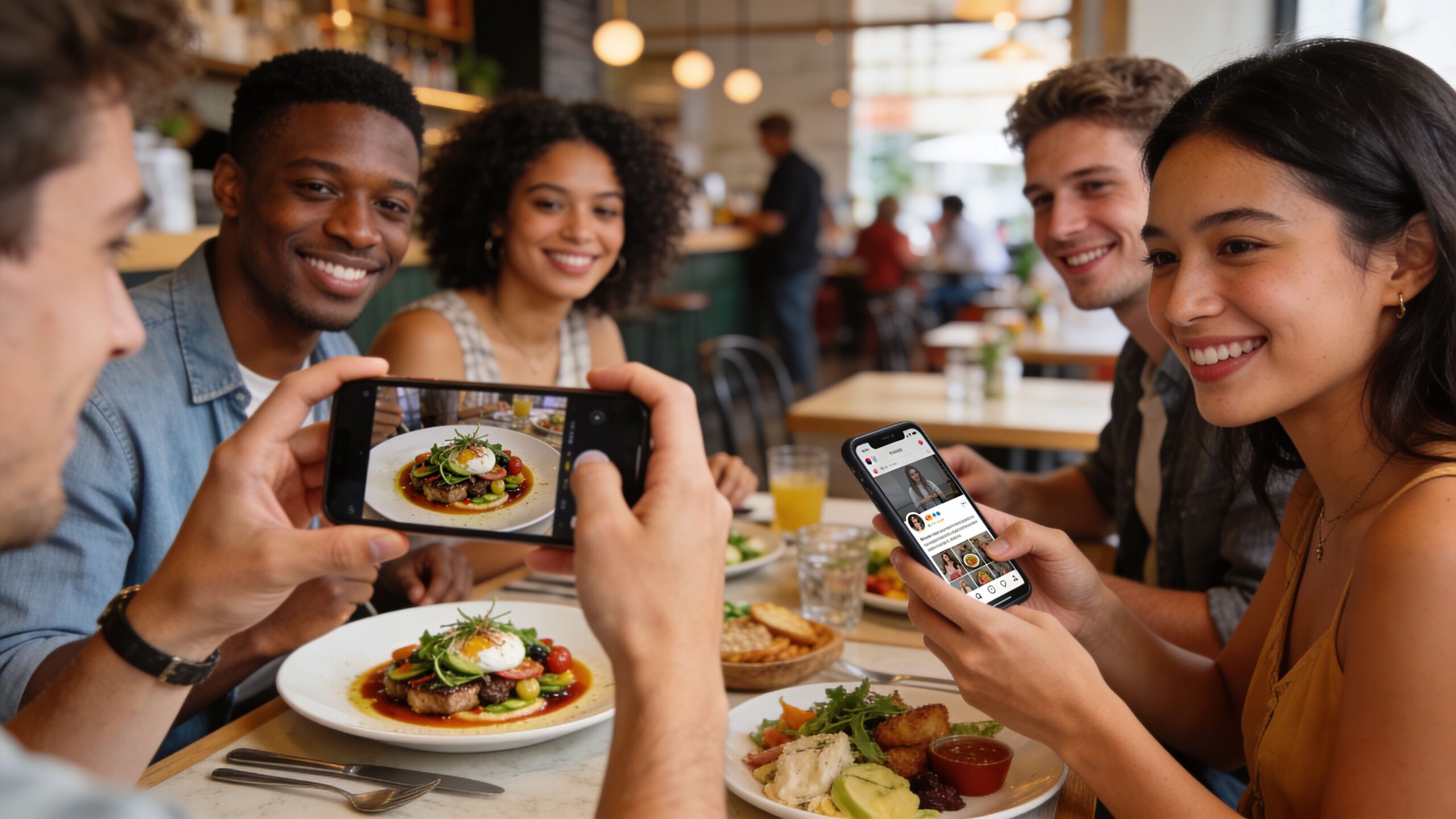
Friday lunch is half full. A few tables are posting your food, but your own channels have been quiet for a week, your latest Reel has no clear offer, and the private dining enquiry you wanted never came. That is how social underperforms in restaurants. The venue is good. The marketing is disconnected from the booking outcome.
Social media should do three jobs at once. It should keep the venue visible, give people a reason to choose you now, and supply fresh assets that strengthen how you appear across Google, Maps, and AI-generated answers. In Australia, that last point matters more each quarter. Google’s AI Overviews and other answer engines pull from signals that suggest a venue is active, relevant, and well understood. Social content helps create those signals when it is tied back to real occasions, locations, menu items, and customer proof.
Build content pillars around booking intent
Random posting burns time because it has no job to do. A better system is to assign every piece of content to a clear pillar and a commercial purpose.
A practical mix looks like this:
- Food desire content
Signature dishes, cocktails, specials, chef finishes, and table shots. This gets attention fast. - Service and atmosphere
Room energy, pacing, lighting, music, and the experience of being there. This helps people picture the night. - People and credibility
Chef commentary, staff moments, supplier stories, media mentions, awards, and customer reactions. This builds trust. - Occasion-led content
Date night, pre-show dining, long lunch, birthdays, group bookings, Sunday sessions, and private events. This turns vague interest into a reason to book. - Customer perspective
Reposts, testimonials, and short-form User-Generated Content (UGC) videos. These often carry more weight than polished brand creative because they feel closer to a real recommendation.
The trade-off is simple. Highly polished content can look premium but take too long to produce. Fast, phone-shot content is cheaper and often performs better, especially on Instagram and TikTok, but it still needs clear framing, good lighting, and a point. The sweet spot for most restaurants is a repeatable mix of planned hero content and quick reactive content captured during service.
Publish with search and answer engines in mind
Restaurants often treat social, Google Business Profile, and search visibility as separate tasks. They overlap.
If your team is already capturing dishes, drinks, room shots, events, and customer moments for Instagram, use those assets across Google Business Profile as well. Fresh photos, event updates, seasonal menu changes, and short posts about occasions all help confirm that the venue is active and relevant. They also create more machine-readable clues about what your restaurant is known for, which matters for AEO and AI search visibility.
For example, a generic post about a steak special does little beyond filling the feed. A stronger version names the suburb, the day, the offer window, and the dining occasion. That gives humans more context and gives search systems more structured meaning. Over time, this supports visibility for prompts such as “best date night restaurant in Surry Hills” or “private dining Italian restaurant Melbourne CBD”.
This short video is worth watching if your team needs a reset on what consistent restaurant content should look like in practice.
Use paid social to push proven messages, not guesswork
Paid social works when it amplifies something that already has traction. Organic response gives you a cheap testing ground. Use it.
Start with posts that earned saves, shares, profile visits, comments with intent, or direct enquiries. Then match the campaign to the commercial goal. A campaign to fill Tuesdays should not look like a campaign for wedding enquiries. Different audience, different promise, different landing page.
Use paid social for outcomes like:
- Promoting a new offer or service window
- Filling quieter lunch or midweek periods
- Driving bookings for event-led nights
- Retargeting people who watched your videos or visited key pages
- Keeping your venue visible inside a tight local radius
Good restaurant ad targeting is usually narrower than owners expect. A broad audience can produce cheap reach and weak sales. A tighter audience around drive-time catchments, interest signals, lookalikes from past customers, and recent site visitors usually produces better booking intent.
Creative also needs a direct path to action. If the ad promotes bottomless brunch, send people to the brunch booking state. If it promotes private dining, send them to the enquiry page with capacity, menus, and key details already visible. Social gets expensive when the click lands in the wrong place.
Restaurants that want a clearer framework for content planning, creative production, and campaign setup should review this guide to restaurant social media marketing.
Social content should shorten the distance between interest and a booking. If it does not change behaviour, it is just decoration.
Build Lasting Loyalty with Email and Paid Search
Friday night is full. Tuesday lunch is quiet. The owners I speak with usually want more new customers, but the faster win is often sitting in their own database.
Restaurants grow profit through repeat visits, stronger visit frequency, higher average spend, and timely reactivation. Email, SMS, and paid search each play a different role in that system. Used together, they turn one visit into a second, third, and fourth.
Email still earns its place
Email remains one of the lowest-cost retention channels for hospitality. Astral reported restaurant email open rates between 18.5% and 20.2%, with a click-through rate of 2% and a click-to-open rate of 10.5% in its 2025 restaurant digital advertising benchmarks.
Those numbers matter because email reaches people who already know your venue. They have booked, ordered, asked a question, joined Wi-Fi, or signed up for offers. The job is not broad awareness. The job is to give the right person a reason to return.
The strongest restaurant email programs usually share four traits:
- Segmentation based on behaviour
Dine-in regulars, takeaway customers, function leads, and lapsed guests need different messages. - A clear commercial trigger
Seasonal menu change, quieter service period, event night, birthday, or loyalty milestone. - One obvious action
Book a table, order dinner, view the menu, reserve an event spot. - A matching destination
A lunch offer should land on the lunch booking state or menu, not the homepage.
This is also where AI starts to matter. Good email content gives you tested subject lines, offers, and customer questions that can feed broader messaging. If people keep clicking on “best pre-theatre dinner near Southbank” or “gluten-free set menu”, that language belongs on your site, in your FAQ content, and in the answer-focused pages that support AEO visibility.
If you are building this properly, practical guidance on email marketing for restaurants can help tie list growth, segmentation, and send timing back to revenue.
SMS and loyalty work best with restraint
SMS gets attention fast, which is exactly why it needs discipline.
Use it for timing-sensitive prompts. A reminder for a special event, a limited booking window, a same-day table release, or a birthday offer can work well. Constant discount texts train customers to wait for deals and reduce margin. I have seen venues damage a strong brand that way in less than a quarter.
Loyalty should also reflect customer behaviour, not just transactions. Reward visit frequency. Recognise milestones. Bring back guests who have gone quiet. Give regulars first access to events or seasonal experiences. That approach is more useful than sending the same generic offer to every subscriber once a week.
A practical rule is simple. If the message is not tied to a habit, a date, or a clear buying signal, do not send it.
Paid search captures demand close to the booking decision
Paid search serves a different purpose from paid social. Social keeps the venue visible and creates interest. Search captures people who are already looking for a place to eat, book, or order.
For restaurants, campaign structure matters more than volume. Separate search intent by service type and margin. “Italian restaurant Surry Hills” is not the same search as “private dining Sydney CBD” or “woodfired pizza takeaway near me”. Each needs its own ads, keywords, and landing page.
Strong setups usually include:
- Suburb, cuisine, and intent-led keyword groupings
- Separate campaigns for dine-in, takeaway, events, and high-value occasions
- Location, call, menu, and booking-focused assets
- Remarketing lists for previous website visitors
- Conversion tracking tied to bookings, calls, or redeemed offers
Many campaigns falter here. The ads are fine, but the tracking is weak. If a customer clicks an ad, checks the menu, then books by phone, that needs to be counted. If not, the account will overvalue cheap clicks and undervalue the terms that drive real revenue.
Paid search also supports AI search readiness in a less obvious way. Search query reports show the exact language diners use before they book. That language is useful for ad copy, yes, but it is also useful for AEO. It helps shape FAQ sections, menu copy, and suburb-specific pages that answer the kinds of questions Google’s AI Overviews and LLMs look for, especially around cuisine, dietary needs, opening hours, booking suitability, and local relevance in Australian searches.
What actually works
The reliable model is connected, not complicated.
A diner finds the venue through search. They visit a page built for that intent. They book, enquire, or join the list. Then they receive follow-up based on what they did and what they are likely to want next. Over time, that creates lower acquisition pressure and better return from every channel.
Restaurants usually lose money when these channels operate in isolation. Google Ads runs without proper conversion tracking. Email goes to the full list with no segmentation. Loyalty exists, but no one uses the data. The result is wasted spend and weak retention.
The fix is usually straightforward. Capture intent cleanly. Track the action that matters. Follow up with relevance.
Your 90-Day Digital Marketing Action Plan
A 90-day plan works best when it matches how diners choose a restaurant.
In week one, a customer might discover you through Google Maps, an AI Overview, Instagram, or a friend’s message. In week four, they compare menus, check trading hours, scan reviews, and decide whether booking feels easy. By week eight, the question shifts from reach to efficiency. Which channels are creating bookings, higher-value orders, repeat visits, and stronger suburb-level visibility.
That is why the plan needs sequence. Fix the assets that influence every touchpoint first. Then publish with intent. Then spend with discipline.
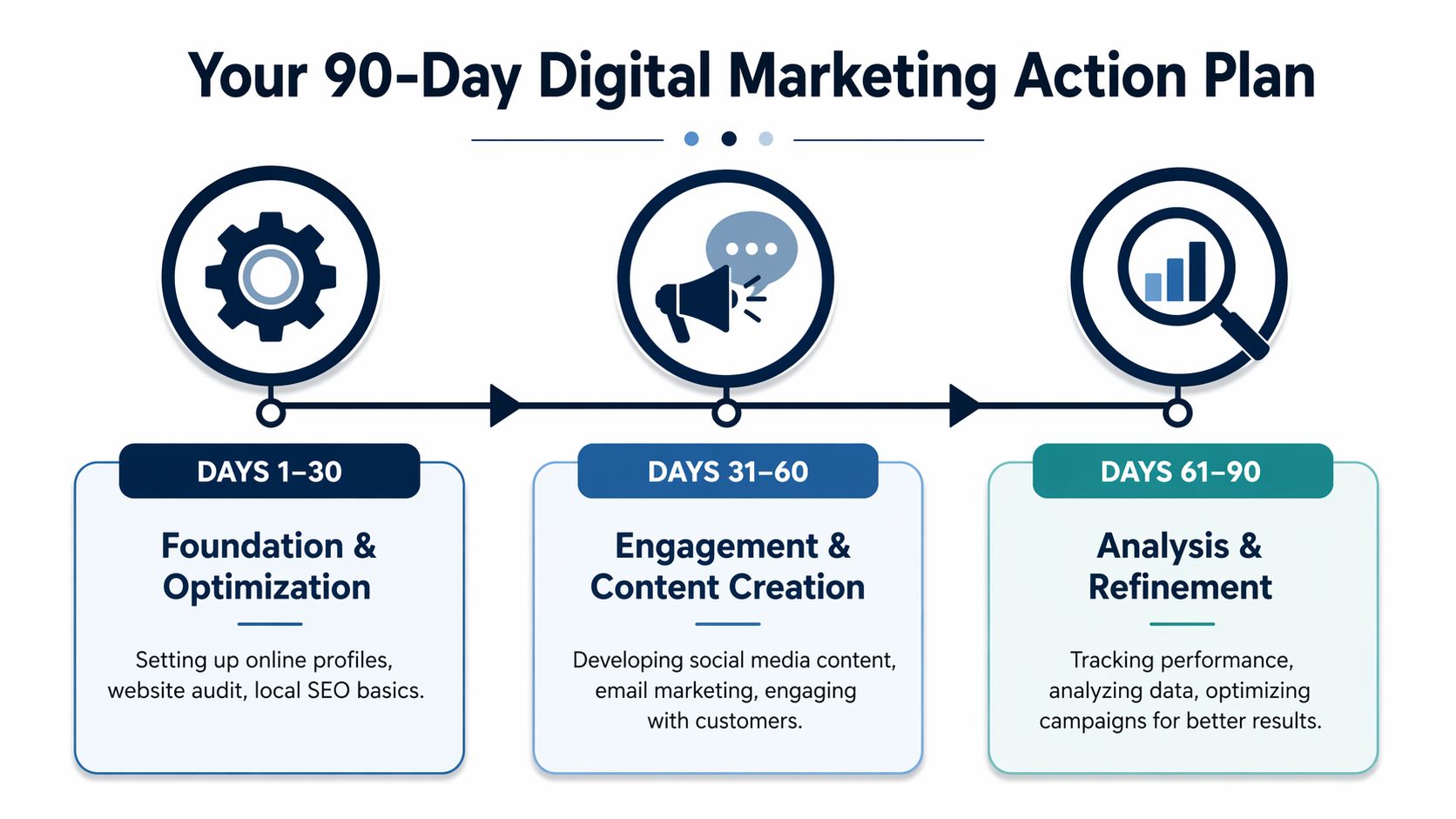
Days 1 to 30 Foundation and optimisation
The first month is about removing friction. If the menu is hard to read on mobile, the booking path is clunky, or your business details vary across platforms, every later campaign becomes more expensive.
Focus on the assets that shape both local search performance and AI answer visibility in Australia.
Priorities:
- Audit your website for mobile usability, booking flow, ordering flow, menu readability, and conversion tracking
- Clean your Google Business Profile including categories, hours, imagery, menu links, and review responses
- Standardise business details across listings and social platforms
- Map your customer types by buying behaviour and visit intent
- Prepare FAQ content for common search and AI-answer queries
Suggested budget allocation:
- Website and conversion fixes
- Local search setup
- Tracking and analytics
- Creative asset preparation
KPIs to watch:
- Menu views
- Booking clicks
- Call clicks
- Direction requests
- Review volume and review quality trends
Days 31 to 60 Engagement and content creation
Month two is where consistency starts to matter.
Restaurants often post plenty of content but publish very little that helps a diner choose. The stronger approach is to create content that answers real decision questions. What is popular on the menu. Is the venue family-friendly. Can the kitchen handle gluten-free requests. Is it good for date night, group dining, or quick takeaway. Those are social content topics, but they also support AEO because they mirror the phrasing used in AI-led search experiences.
Actions to complete:
- Launch content pillars across social channels
- Upload fresh images and updates to Google Business Profile on a recurring schedule
- Create email capture points on the website and in-venue where appropriate
- Set up core email automations such as welcome, birthday, or re-engagement flows
- Publish structured FAQ and menu content that supports AEO and local search visibility
Suggested budget allocation:
- Content creation and scheduling
- Email setup
- Light paid promotion of proven organic content
KPIs to watch:
- Engagement quality on social posts
- Email list growth
- Open and click performance
- Website visits from social and email
- Enquiries for specific offers or events
Days 61 to 90 Analysis and refinement
The final month is where the plan becomes commercial.
At this point, the restaurant should have cleaner tracking, stronger local signals, and content that answers common dining questions. Now paid activity can do its job properly. Use search campaigns to capture high-intent demand in your trading radius, then compare keyword themes against booking quality, phone calls, and order value. Some terms drive volume but weak margin. Others bring fewer leads and better tables. That trade-off matters.
Move into controlled optimisation:
- Launch local Google Ads campaigns with a tight geo-targeted radius and high-intent keywords
- Add remarketing for past site visitors
- Track offline outcomes wherever possible, including phone bookings and in-venue conversions
- Pause weak creative and weak keywords
- Refine landing pages based on user behaviour and campaign intent
Suggested budget allocation:
- Paid search
- Remarketing
- Ongoing content and email
- Reporting and optimisation
KPIs to watch:
- Cost per booking or enquiry
- Return visit indicators
- Branded search lift
- Conversion rate by landing page
- Offer redemption and booking quality
A strong 90-day plan gives you proof, not just activity. By the end of the cycle, you should know which messages bring in locals, which pages support AI-generated answers, which channels create repeat business, and where to increase spend with confidence.
If your restaurant needs a sharper digital marketing strategy for restaurants that covers website performance, local SEO, AEO, paid media, and long-term growth, Titan Blue Australia can help. With more than 25 years in digital and a strong focus on AI search readiness, Titan Blue works with Australian businesses that want practical strategy, not marketing fluff.
Make Titan Blue a preferred source in Google
One click tells Google to surface our articles more often in Top Stories, AI Overviews and AI Mode.

ChatGPT GPT-6 Search Upgrade: What It Means for Australia
OpenAI rolled out GPT-6 to ChatGPT on 7 October 2026 with faster search. Here is…
Best Dental Website Design Agencies in Australia: 7 Compared
Best dental website design agencies in Australia 2026: seven compared on dental proof, booking, AHPRA…

Childcare Centre Website Design Australia: The 2026 Guide
Childcare centre website design Australia: show hours, ages and enrolment as text so parents and…