What Is the Real Cost for Website Creation in Australia
Alright, let's get straight to it. You're wondering what the real cost for website creation is here in Australia. For a professional, custom-built website that actually works as a business asset, a small business should be looking to budget somewhere between $5,000 and $12,000.
This isn't like buying something off a shelf with a fixed price tag. Think of it as investing in your digital shopfront—the place where customers find you, trust you, and buy from you.
Unpacking Your Website Investment
The final number on any quote comes down to one simple question: what do you need your website to do? Is it just a place for people to find your phone number, or is it an e-commerce machine selling products 24/7?
This guide is your roadmap. We’ll break down every single factor that shapes the final cost, from the initial design ideas right through to the ongoing work that keeps your site humming along.
A properly built website becomes your hardest-working employee. It generates leads, builds your brand, and works for you around the clock. Making a smart, informed investment right now is one of the most important things you can do for your business's future.
Typical Price Ranges in Australia
In the Australian market, there's a pretty clear pricing structure for professional websites. Agencies will typically charge between $5,000 and $12,000 for a standard business site.
For most small businesses—think restaurants, local retail shops, or trades—that sweet spot usually lands between $5,000 and $8,000.
If you're after a straightforward, professional 5-page informational website that includes a custom design, is mobile-friendly, and has basic on-page SEO built-in, you should expect to invest between $3,000 and $7,000.
Sifting through different quotes can feel like a lot. To help you get a handle on it all, you can find a comprehensive guide on how much you need to build and manage your website that breaks down all the potential costs.
Why a Clear Budget Matters
Setting a realistic budget from day one helps you focus on what actually matters. Instead of asking, "How cheap can I get this done?", the better question is, "What do I need my website to achieve for my business?"
That simple shift in thinking makes all the difference. It ensures you're putting money towards features that deliver a real return.
Here are a few key things to think about for your budget:
Custom Design and Branding: Do you need a completely unique look to stand out from the crowd, or will a well-customised template do the job for now?
Functionality Needs: Are you going to need features like online booking systems, customer logins, or a full e-commerce store?
Content and SEO: Who's going to write the words, find the images, and make sure the site is set up so Google can actually find it?
Getting your head around these elements is the first step to a successful project. We’ve put together a detailed breakdown of all the factors influencing your website design cost in Australia to help you prepare.
What You’re Actually Paying For
Ever looked at a website quote and wondered where all the money actually goes? It's a fair question. The final number isn’t just for one single thing; it’s for a whole team of specialists bringing different skills to the table. A great way to think about it is like building a house.
The total cost isn’t just for the finished home. It’s for the architect’s vision, the builder’s labour, the interior designer’s touch, and even the real estate agent who makes sure people can find your new address. Each part is separate, yet absolutely essential for the project to succeed.
Your Architectural Blueprint And Design
First up is the design. Think of this as your architectural blueprint and interior styling all in one. It’s what dictates how your website looks, feels, and guides visitors from one page to the next. A bad design is like a house with a bizarre layout—people get lost, frustrated, and quickly head for the exit.
You could go for a pre-designed template, which is a bit like buying a project home. It's faster and cheaper, but it probably won’t capture your brand's unique personality. On the other hand, a custom design is like hiring an architect to create something truly bespoke, making sure every single element is built around your business goals and customer needs. This tailored approach is often a major factor driving the initial cost.
To really get your head around the numbers, it helps to look at the various pricing models for web services. Different providers structure their costs in different ways, so this helps you compare apples with apples when you're looking at quotes.
The Construction And Development Phase
Next, we have development. If design is the blueprint, then development is the actual construction. This is where skilled developers take the visual concepts and turn them into a fully functional, interactive website using code. It's the framework, the plumbing, and the wiring that makes everything work behind the scenes.
The complexity here can vary wildly. A simple, informational website is like building a small, single-storey home—pretty straightforward. But if you start adding features like an online booking system, a customer portal, or e-commerce functionality, you're essentially adding extra floors, smart home tech, and a swimming pool. Every new feature requires more complex code and a lot of testing, which naturally pushes up the development time and cost.
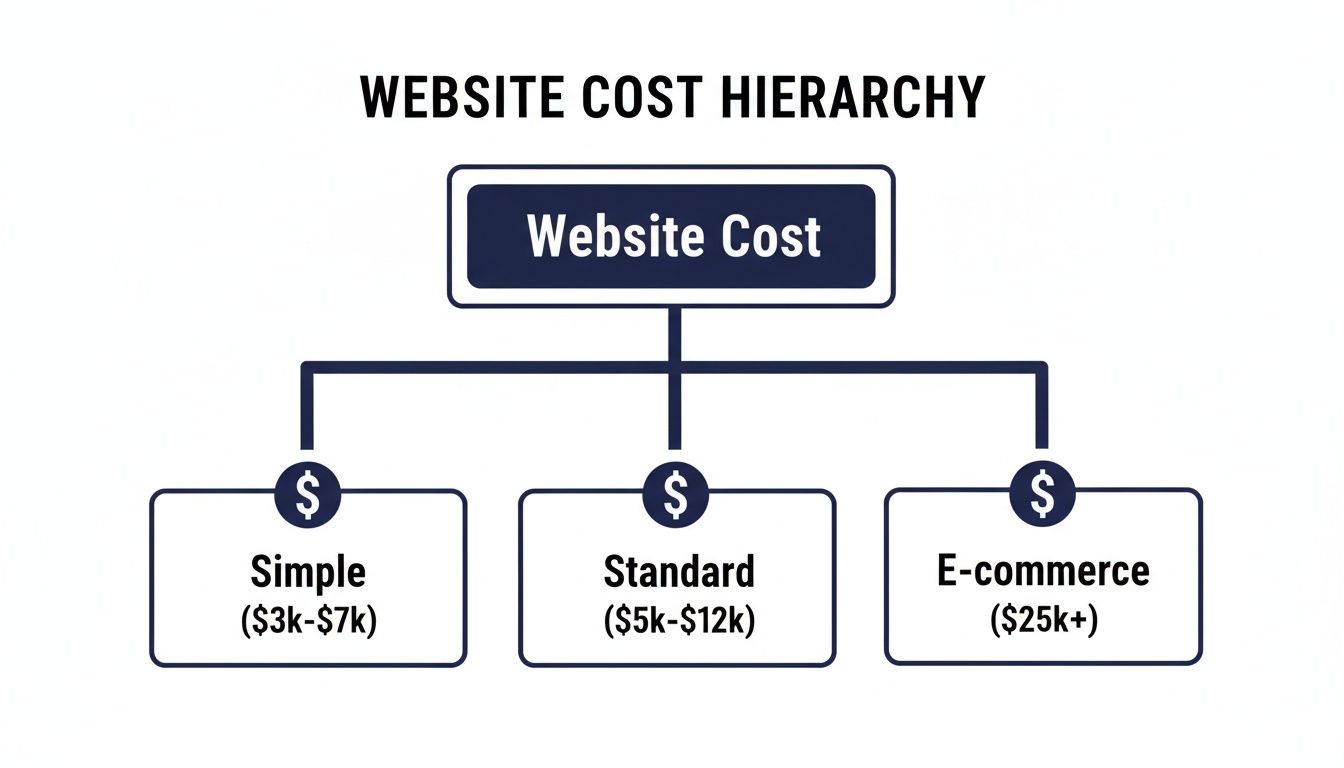
This chart gives you a ballpark idea of the typical cost ranges based on website complexity here in Australia.
As you can see, the investment ramps up significantly as you move from a basic online brochure to a full-blown e-commerce store.
Furnishing Your Site With Quality Content
Once the house is built, you need to furnish it. This is your content. It covers everything from professional photography and videos to the persuasive text on each page. Without quality content, your beautiful new website is just an empty shell.
Effective content creation involves a few key things:
Copywriting: Writing clear, compelling text that reflects your brand, speaks directly to your ideal customer, and nudges them to take action.
Photography and Videography: High-quality visuals are proven to grab attention and boost engagement. Stock photos might do the job in a pinch, but professional imagery tells a much more powerful brand story.
Information Architecture: This is all about organising your content in a logical, intuitive way so that visitors can easily find exactly what they’re looking for.
This stage is absolutely crucial because your content is what does the heavy lifting of turning visitors into customers. Investing in professional content makes sure your message is clear, trustworthy, and actually works. You can get a feel for how we combine all these elements by checking out our expert web design and development services.
Ensuring People Can Find Your Address
Finally, what’s the point of a stunning new home if nobody knows the address? This is where Search Engine Optimisation (SEO) comes into play. SEO is the process of making your website visible and easy to find on search engines like Google. It’s the digital version of having prime real estate with a massive, clear sign pointing right to your front door.
A website without SEO is like a billboard in the desert. It might look great, but if no one sees it, it serves no purpose. Effective SEO ensures your investment reaches the right audience.
This isn’t a one-and-done task, either. It involves technical setup, digging into keyword research to figure out what your customers are actually searching for, and creating content that answers their questions. It’s a foundational piece of the puzzle that ensures your website doesn’t just sit there, but actively goes out and attracts potential customers.
Choosing Your Path to a New Website
When you decide it's time for a new website, you're standing at a fork in the road. There are three main paths you can take, and your choice will directly shape not just the upfront cost, but also the time you'll need to sink in and the quality of the final result.
Getting your head around these options is the first step to aligning your budget with your actual business goals.
The first path is the do-it-yourself (DIY) route. This is where you roll up your sleeves with a website builder and try to piece it all together. It’s often sold as the cheapest option, but what you save in dollars, you pay for in time.
With this approach, you're suddenly the designer, developer, copywriter, and project manager, all rolled into one. While modern tools have made this path more accessible than ever, it comes with a steep learning curve and, more importantly, creative and technical limits that can seriously hold your business back.
The DIY Approach
The main drawcard for the DIY path is its low initial cost. You'll typically pay a monthly subscription fee for the platform, which can look incredibly affordable on the surface. But you've got to look past the sticker price.
This path demands a huge investment of your most valuable asset: your time. Research shows that business owners can burn dozens, if not hundreds, of hours just learning the platform, designing pages, sourcing images, and writing content. That’s all time stolen from running your business.
Best For: Hobbyists, brand-new startups with next-to-no budget, or anyone who just needs a simple online placeholder, fast.
Key Challenge: The creative and functional ceiling is low. You’re boxed in by the platform’s templates and features, which makes it tough to stand out or add specialised functions as your business grows.
Working with a Freelancer
The second option is to hire a freelancer. This is a popular middle-ground that offers a big jump in quality from the DIY route without the comprehensive overheads of a full agency. You get to work one-on-one with a specialist, like a web designer or developer.
This approach gives you access to professional skills, leading to a much more polished and unique website. The cost is generally more manageable than an agency’s, as freelancers don't have the same overheads. It's a way to get a custom solution built just for you.
The catch? The responsibility of managing the whole project lands squarely on your shoulders. You’ll need to coordinate everything, provide crystal-clear direction, and handle all the communication yourself. Another potential hurdle is long-term support; if your freelancer gets swamped with other projects or moves on, you could be left high and dry when you need updates or run into issues.
A freelancer can be the perfect fit for a well-defined project with a clear scope. But for a website that’s meant to be a core, evolving business asset, relying on a single person can introduce some serious long-term risks.
Partnering with a Digital Agency
The third path is partnering with a digital agency. This is the all-in-one solution for businesses serious about growth, who see their website as a critical long-term investment. An agency doesn't just build a website; they deliver a strategic digital asset built for performance.
When you hire an agency, you're not just getting a designer or a developer; you’re getting an entire team. This usually includes strategists who dig into your market and business goals to create a digital roadmap, designers who craft a custom user experience that reflects your brand, developers who build a robust and secure website, and marketers and SEO specialists who make sure your site is built to be found by customers from day one.
The higher investment reflects this integrated approach. The focus shifts from just 'building a website' to achieving measurable business outcomes like generating leads, driving sales, and building brand authority. An agency provides that crucial strategic oversight, a diverse skill set, and a long-term partnership, ensuring your website keeps delivering value as your business evolves.
How Advanced Features and E-commerce Drive Up Website Costs
Moving beyond a simple brochure website is where your investment starts to climb—but so does the potential for a serious return. A basic website is like a digital business card; it tells people who you are. Adding advanced features, on the other hand, transforms it into your hardest-working employee.
Think about what these features actually do. An online booking system lets a tradie’s customers schedule jobs anytime, day or night. A secure client portal gives a law firm a confidential space to share sensitive documents. A product configurator allows a manufacturer’s customers to build their dream item right before their eyes.
Each of these functions requires custom development, rigorous testing, and seamless integration. It's this specialised work that directly adds to the final price tag.
The Leap to E-commerce
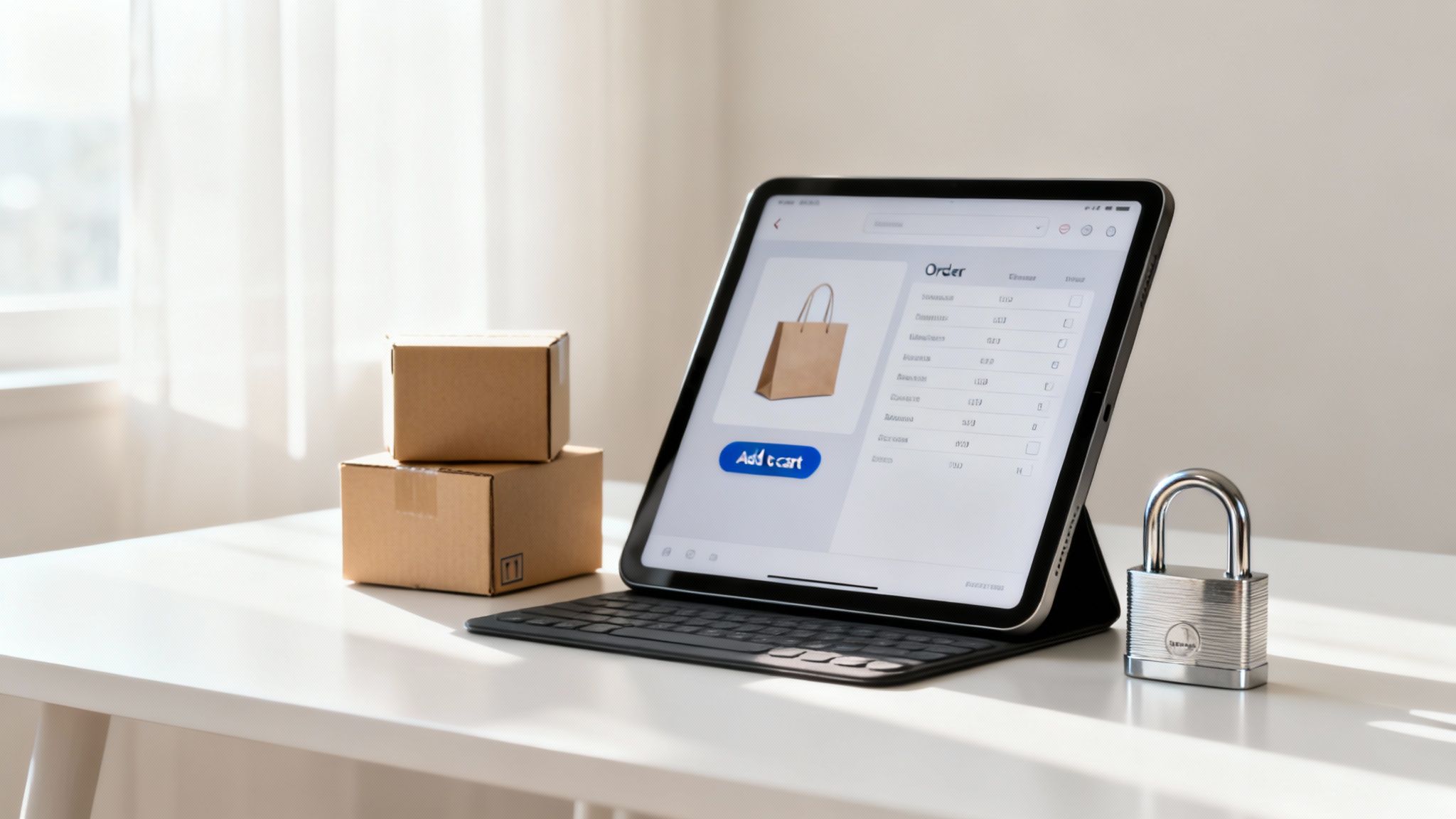
The single biggest jump in complexity and cost comes with e-commerce. Building an online store is a whole different ball game to just adding a ‘Contact Us’ page. You’re not just displaying information; you’re creating an entire digital retail ecosystem that needs to run securely and efficiently, 24/7.
This involves a stack of critical components that must work together flawlessly:
Secure Payment Gateways: You need to integrate trusted systems like Stripe or PayPal to handle transactions safely, protecting both your business and your customers.
Inventory Management Systems: Your website must accurately track stock levels in real time to prevent overselling and manage reordering.
Customer Account Functionality: Customers expect to create accounts, view past orders, and save their details for next time.
Shipping and Logistics: The system needs to calculate shipping costs, generate labels, and talk to your delivery partners.
Each layer adds to the development time and technical skill required, which is why a robust e-commerce site is a substantial investment. If you're heading down this path, our guide to e-commerce web design is a great place to start.
Breaking Down E-commerce Development Costs
An e-commerce website sits in a much higher investment tier in the Australian market. Building a platform that can handle sales effectively involves a significant amount of engineering. Industry research shows development and engineering make up the lion's share of e-commerce budgets. Costs for a minimum viable product (MVP) start from around AUD $38,750 and can climb to over $620,000 for enterprise-level solutions, often requiring 7-15+ months of development time.
Investing in a custom e-commerce platform isn't just about selling online. It’s about building a scalable revenue engine that grows with your business and perfectly serves your customers.
Why Custom Features Cost More
Sure, you can find off-the-shelf plugins that add basic functions. But for businesses with unique processes, they often fall short. This is where custom features really shine—they are built from the ground up to solve a specific business problem.
Imagine a construction company needing a project portal where clients can log in to see progress photos and approve change orders. Or a fashion retailer wanting a virtual try-on feature. These aren't standard, out-of-the-box functions. They require dedicated development to design, build, test, and maintain.
This tailored approach ensures the feature perfectly slots into your workflow, elevates the customer experience, and gives you a real competitive edge. While the upfront cost is higher for these customisations, the long-term ROI from improved efficiency and happier customers often makes it a no-brainer.
Budgeting for Your Website After Launch
Launching your website is a huge milestone, but it's the beginning of the journey, not the final destination. To make sure your new digital asset continues to perform and deliver value, you need to budget for its ongoing operational costs.
These aren't hidden fees; they are essential investments that protect your initial outlay and fuel future growth. Thinking about these ongoing costs from the start is a crucial part of understanding the total cost for website creation, turning your site from a one-time expense into a dynamic business tool that continuously works for you.
Core Operational Costs to Plan For
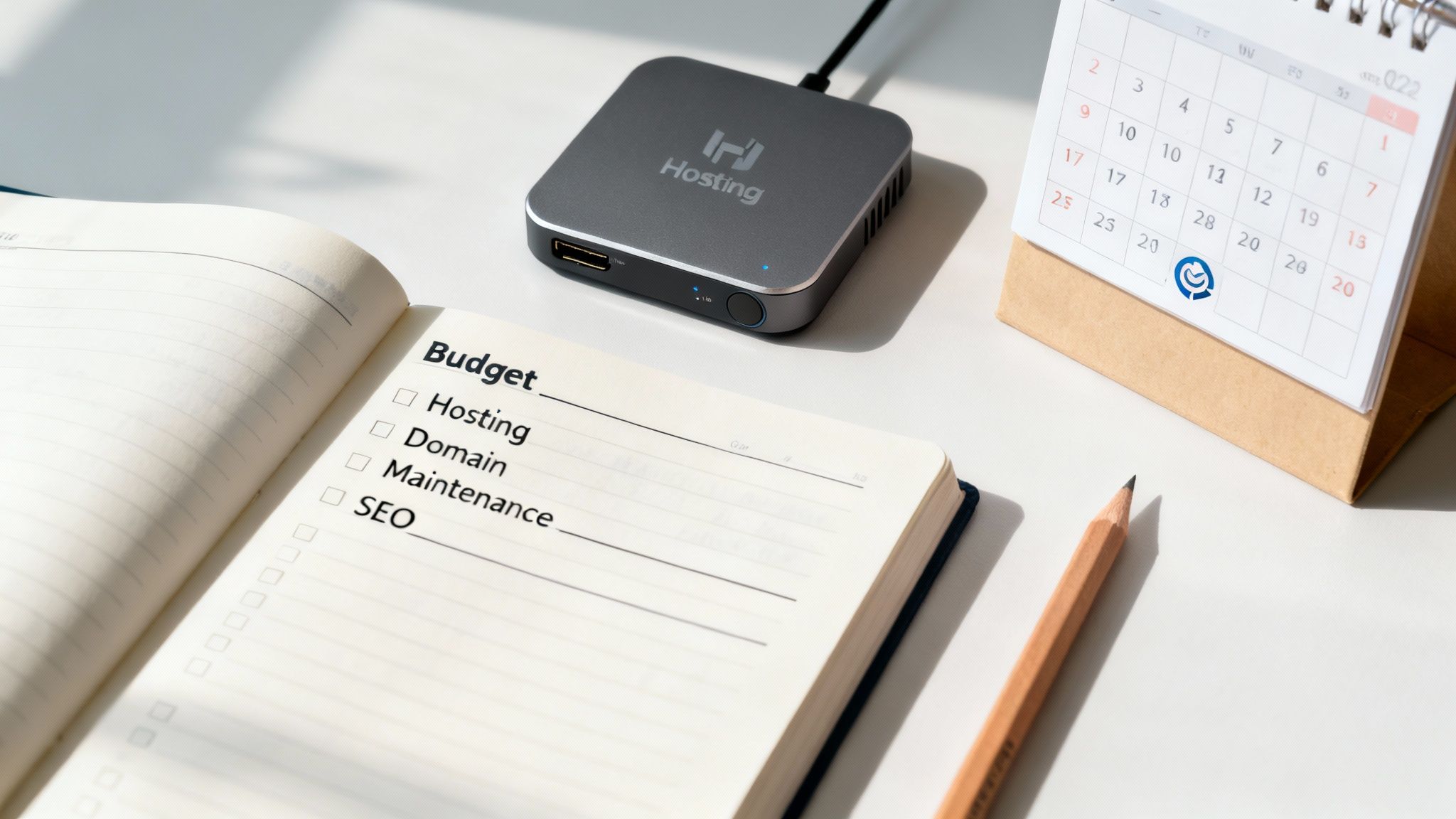
First up is website hosting. Think of this as the rent you pay for your website's home on the internet. Without hosting, your site has nowhere to live, and nobody can access it. Hosting costs can vary quite a bit, depending on the traffic your site gets and the resources it needs to run smoothly.
Next is your annual domain name renewal. This is the small fee you pay to keep your unique web address (your .com.au, for example). Letting this expire is like losing the deed to your property; someone else could snap it up, and all your brand equity would be lost in an instant.
These two are the bare minimum, but for any business that relies on its website, the next two are just as critical.
A website launch is like opening a new physical store. You wouldn't just unlock the doors on day one and walk away. It needs ongoing upkeep, security, and promotion to attract customers and run smoothly.
Investing in Protection and Growth
A website maintenance retainer is one of the most important ongoing investments you can make. This is essentially an insurance policy for your site. It covers critical security updates, software patches, bug fixes, and technical support to shield your website from hackers and ensure it runs like a well-oiled machine.
Proactive care stops small issues from blowing up into costly emergencies down the track. For a clear idea of what this involves, you can explore the details of a professional website maintenance package.
Finally, there's ongoing SEO and content marketing. If your website is the engine, then SEO and content are the fuel that makes it go. This is the work that keeps you visible in search results, attracts new visitors, and builds your authority in your industry.
This investment typically involves things like:
Regular Content Creation: Publishing blog posts or articles that answer your customers' questions and position you as an expert.
Technical SEO: Continuously optimising your site's performance to keep up with search engine standards.
Link Building: Earning links from other reputable websites to boost your site's credibility and search ranking.
Budgeting for these four key areas ensures your website doesn't just launch and stagnate. It allows your site to remain secure, functional, and, most importantly, a consistent source of leads and revenue for your business.
Shifting Your Focus from Cost to Investment
Let's talk about the way most businesses approach the cost of website creation. Too often, it’s seen as just another expense to be minimised. But a professionally built website isn't a line item on a spreadsheet; it's one of the most powerful investments your business can make.
Think of it as your 24/7 salesperson, your digital storefront, and the very foundation of your brand online. Viewing it this way completely changes the conversation from "how much will this set me back?" to "what will this earn me?".
A strategic website delivers a real, tangible return on investment (ROI). It works around the clock to bring in qualified leads, drive sales, and build rock-solid credibility with your target audience.
From Digital Brochure to Revenue Engine
So, what does that look like in the real world? A construction company could land a major contract because their online portfolio professionally showcased their expertise and past projects. A consulting firm can attract high-value clients who find them through well-written, problem-solving blog posts.
A website is a direct investment in the sustainable growth and success of your business. It's the engine that powers your digital presence, working for you long after the initial build is complete.
This is where the upfront cost connects directly to business results. A cheap website might tick a box, but a strategic one becomes a primary driver of revenue and opportunity.
Aligning Your Budget with Business Goals
In Australia, the level of investment you make is often directly tied to the business outcomes you can expect. For instance, a basic online presence might start around $4,000, while a conversion-focused website designed specifically for lead generation typically ranges from $4,000 to $6,000.
For sites needing custom, feature-rich functionality, the investment can easily climb past $15,000. If you're working with a professional agency on a custom-developed startup MVP, that figure can jump to between $40,000 and $70,000. While cheaper options are out there, they often come with poor functionality and performance, as you can see from these Australian website cost insights.
This shows a clear link: what you invest directly influences what your website can achieve. A higher initial investment usually translates into a more powerful platform for lead generation and sales.
A well-planned website is more than a digital footprint; it's a core part of your entire business strategy. When you build a site with clear goals, it becomes an active asset, not a passive expense, integrating seamlessly with your sales process and marketing efforts.
By connecting all the dots, you can see how the numbers on a quote translate into real-world business growth. To get the most out of your budget, a digital marketing consulting approach ensures every dollar you spend is working towards a measurable goal.
Some Questions We Hear All The Time
When you’re thinking about a new website, a few key questions always come up. Getting straight answers is the best way to cut through the noise and plan your budget with confidence. Let's walk through some of the most common queries we get from business owners just like you.
One of the first things everyone wants to know is, "How long will this actually take?" The honest answer is: it depends entirely on how complex the project is. A clean, straightforward website built to share information can often be up and running in 4-6 weeks.
But if we're building something more involved, like a full e-commerce platform with all the bells and whistles, you’re looking at a timeline of 3-6 months, sometimes longer. The biggest thing that keeps a project moving? Quick feedback, content, and approvals from your end at each stage.
Will I Be Able to Update My Own Website?
This is a big one, and the answer is a definite yes. We build our websites on user-friendly systems like WordPress for a reason—so you can take control of your day-to-day content.
We'll give you all the training you need to feel comfortable adding a new blog post, tweaking some text, or swapping out an image. This setup gives you the power to manage your message, while we handle the technical heavy lifting like maintenance and security behind the scenes.
A website should empower your business, not create a technical bottleneck. The goal is to give you control over your content while providing expert support for the underlying technology.
Is a Custom Design Really Worth the Extra Cost?
We get this question a lot, especially when there are so many cheap templates out there. Think of it like buying a suit. A template is like grabbing one off the rack—it's fast and affordable, but it’s never going to fit your business perfectly. It’s made for everyone, which means it’s perfect for no one.
A custom design, on the other hand, is the tailored suit. It’s measured and crafted from scratch to fit your specific brand, connect with your ideal customers, and achieve your unique business goals. It delivers a far better user experience, makes a stronger brand impression, and gives you a rock-solid foundation to grow on.
Ready to invest in a website that delivers real results? The team at Titan Blue Australia has been building high-performance digital assets for Australian businesses for over 25 years. Let's discuss how we can help you grow. Find out more at https://titanblue.com.au.
Titan Blue is your go-to digital partner for smart, results-driven solutions. We blend strategy, creativity and tech to grow your brand and get real results fast.