A Modern Guide to Dental Web Design That Wins Patients
Dental web design isn't just about making a pretty website. It's the strategic process of building an online presence that looks professional, actively pulls in new patients, and plugs right into your practice's daily workflow. Think of it as your hardest-working employee—one that works 24/7 to build trust, generate leads, and even help manage patient flow.
Why Your Website Is Your Most Important Digital Asset
Picture your dental website as the digital front door to your practice. These days, almost every patient's journey starts with a Google search, making your site the very first interaction they have with your clinic. A clunky, outdated, or unprofessional site is like having a messy, disorganised reception area. It creates a terrible first impression and can turn potential patients away before they ever get a chance to speak with your team.
On the flip side, a modern, professional website builds instant credibility. It acts as a welcoming and efficient front office, assuring visitors they’ve found a high-quality, trustworthy healthcare provider. That initial trust is the foundation for getting new patients in the door, and it's no longer just a "nice-to-have." Strategic dental web design is now the core engine for practice growth.
The Financial Impact of a Strong Digital Presence
The shift to finding patients online isn't just a trend; it's a measurable business reality. By 2025, Australia’s Dental Services industry was worth an estimated AUD 14.8 billion across roughly 20,980 businesses. With the number of practices growing at a compound annual rate of 3.8% between 2020 and 2025, the competition is getting fierce.
In a market this crowded, even a small increase in new patients from your website can mean a significant boost to your revenue. You can explore more about the dental industry's growth on ibisworld.com.
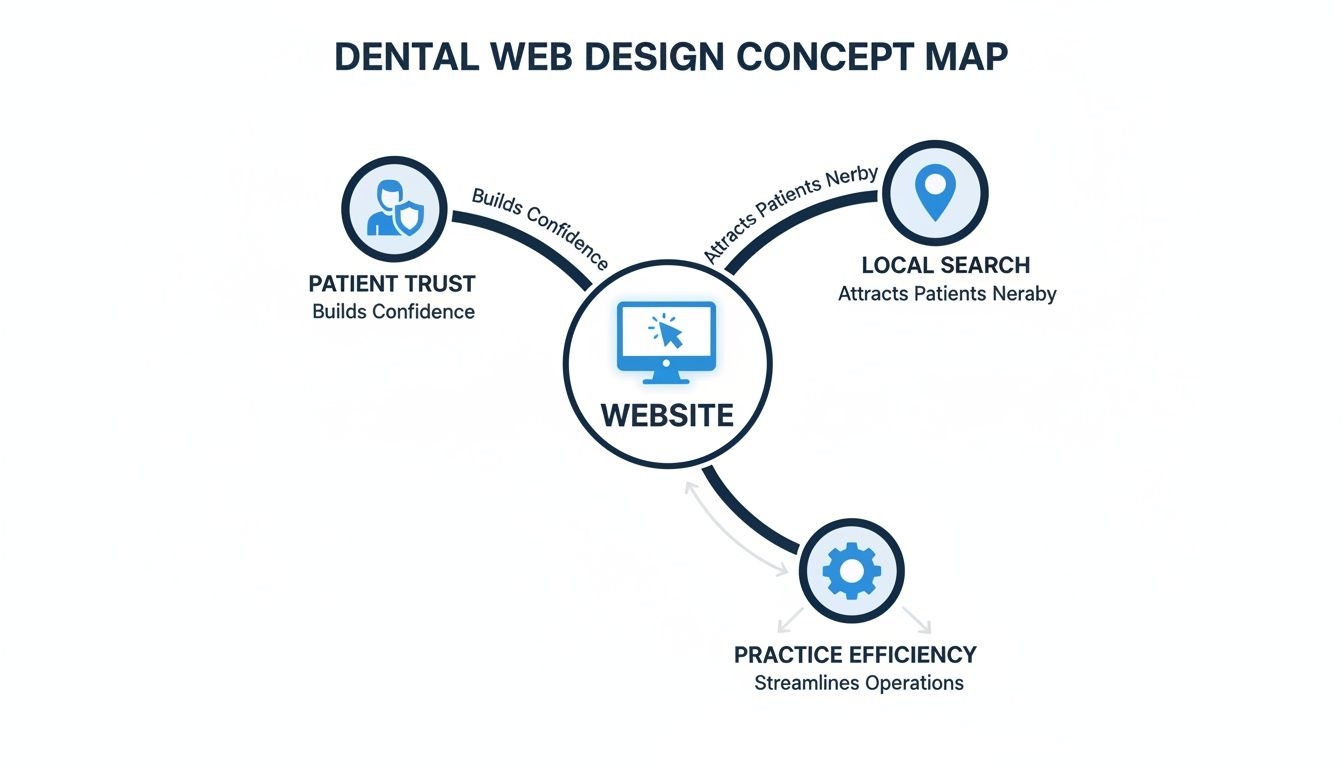
This is a breakdown of the three core functions a modern dental website has to nail.
As you can see, an effective website has to balance patient trust, local search visibility, and operational efficiency to really deliver results.
The Three Pillars of Modern Dental Web Design
Throughout this guide, we'll break down the key pillars that hold up a successful online presence, turning your site from a simple online brochure into a growth machine.
Here’s a sneak peek at what we’ll cover:
Building a Patient-Centric Experience: We’ll look at how to create a welcoming digital space with intuitive navigation and branding that connects with your ideal patient.
Achieving Visibility in Local Search: A great website is useless if no one can find it. We’ll dive into the essentials of getting your practice showing up at the top of local search results.
Integrating Your Site into Practice Operations: Discover how your website can save your team hours of admin time by automating tasks like appointment bookings and patient form submissions.
Designing a Patient-Centric Digital Experience
Your dental website is so much more than a digital business card; it’s the online front door to your clinic. Think of it as your digital waiting room. A physical waiting room that’s clean, calming, and easy to navigate instantly puts patients at ease. Your website needs to do the exact same thing.
This is where a patient-centric approach to dental web design becomes non-negotiable. It’s all about creating an online space that feels just as welcoming and professional as your actual practice. That means moving past cookie-cutter templates to build a visual identity that truly captures your brand and connects with the patients you want to attract.
Translating Your Brand into a Visual Identity
Your brand is your practice's personality. It’s the feeling patients get from your team, the care you provide, and the values you stand for. A great website takes that feeling and translates it into colours, fonts, and images.
For instance, a clinic specialising in paediatric dentistry would likely use bright, playful colours and friendly illustrations. On the other hand, a practice focused on high-end cosmetic work might go for a sleek, sophisticated design with elegant fonts and polished photography. The goal is to create a visual language that immediately says, "You're in the right place."
Colour Palette: Use colours that reflect the mood you want to create. Blues and greens often feel calm and trustworthy, while crisp whites and light greys suggest a clean, professional environment.
Imagery: Forget generic stock photos. Authentic photos of your team, your clinic, and your actual patients (with permission, of course) build trust instantly. They make your practice feel real and human.
Typography: Fonts should be clean, modern, and easy to read. A clear font hierarchy is also key—it guides the visitor's eye to the most important information on the page, just like a good brochure.
The Blueprint for an Effortless User Experience
Once you've nailed the look and feel, the next step is making sure the site is dead simple to use. This is the heart of user experience (UX) design, a field dedicated to making technology intuitive and even enjoyable. For a potential patient—who might already be feeling a bit anxious—a confusing website is a massive turn-off.
An intuitive site structure isn’t just a nice-to-have; it’s a must. Patients need to find what they’re looking for, whether it’s information on a specific treatment, your clinic’s address, or how to book an appointment, in just a few clicks. This is all about clear, logical navigation. To get a better grasp of the fundamentals, you can learn more about what user experience design entails and how it influences visitor behaviour.
A great dental website anticipates a patient's questions and provides clear, easy-to-find answers, which in turn reduces friction and builds confidence at every step of their digital journey.
Guiding Patients with Clear Calls-to-Action
Every single page on your website should have a purpose and guide the visitor toward a specific next step. You do this with effective Calls-to-Action (CTAs). These are the prompts—usually buttons or links—that tell people what to do next.
Vague or hidden CTAs are missed opportunities. They need to be prominent, impossible to misunderstand, and action-focused.
Some of the most effective CTAs for a dental website include:
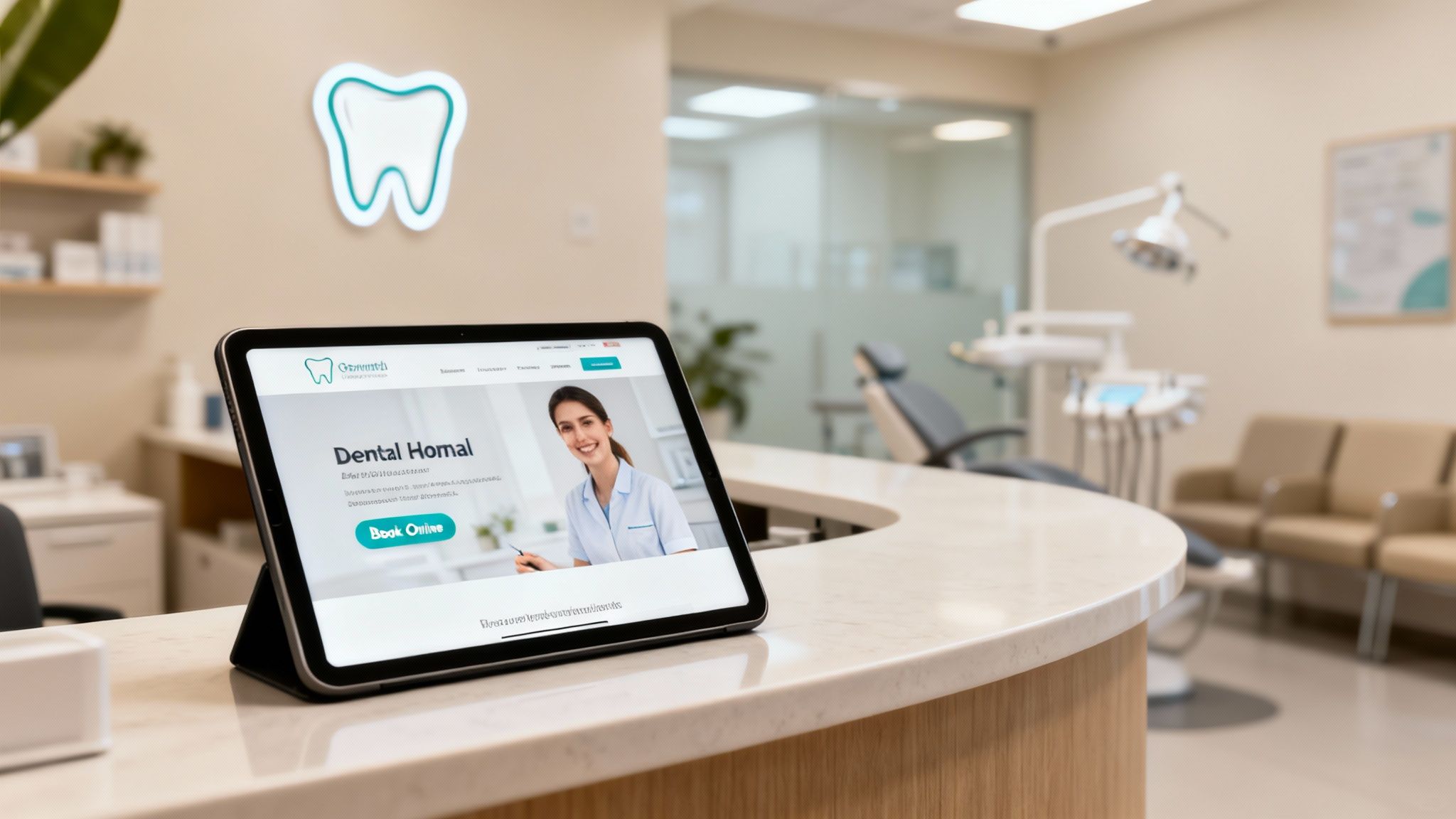
Book Online: This is the gold standard for a modern practice, giving patients the convenience they expect.
Call Us Now: A clickable phone number, especially on mobile, is crucial for patients who’d rather speak to a person.
Request an Appointment: A simple form for patients to fill out, which your team can then follow up on.
View Our Smile Gallery: This encourages people to see the quality of your work, building social proof and trust in your skills.
Your website is more than just its looks; it’s a powerful tool for building trust and delivering a fantastic patient experience from the very first click. To dig deeper into this, you can explore various strategies to improve patient satisfaction. Ultimately, by combining a strong brand identity with a flawless user experience and clear guidance, your website can turn casual browsers into loyal, long-term patients.
Achieving Local Visibility with SEO and Mobile-First Design
A beautiful website is a great start, but its real value is measured by how many local patients it brings through your door. If people in your suburb can’t find you when they search for a dentist, your digital investment just isn’t working hard enough. This is where the technical side of things becomes crucial—specifically, local search engine optimisation (SEO) and a mobile-first design.
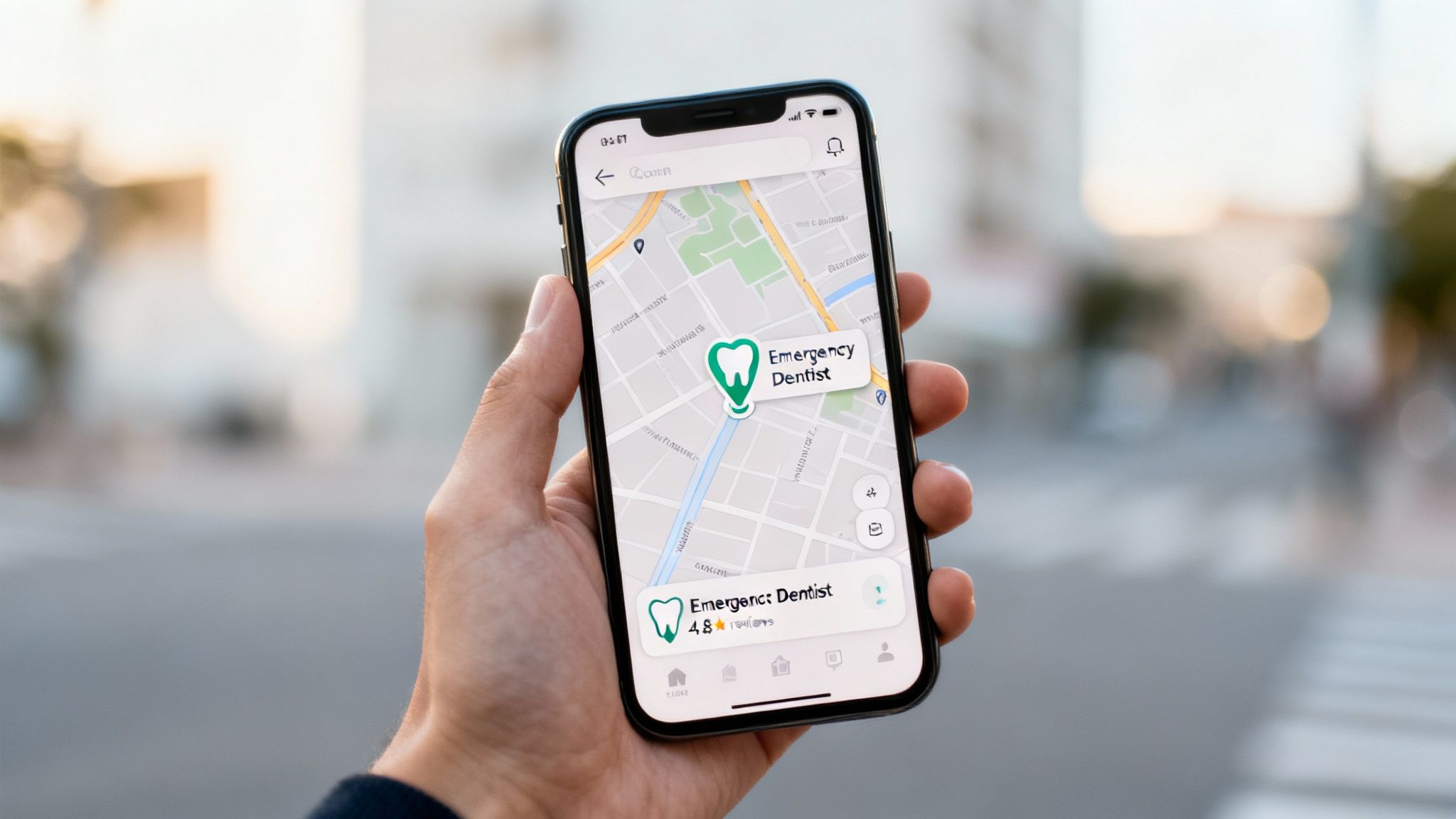
Picture this: someone chips a tooth at lunch. Their first instinct is to grab their phone and search "emergency dentist near me." In that split second, your practice needs to be right there at the top of the results. Getting that immediate visibility is the whole point of local SEO for dentists.
Why Mobile-First Design Is Non-Negotiable
That patient searching on their phone isn’t an exception; it's the rule. The vast majority of patients now use their smartphones to find and research dental practices. Because of this, search engines like Google now prioritise the mobile version of your site when ranking results—a concept known as mobile-first indexing.
This means your website must be designed for the small screen first and then adapted for desktop, not the other way around. A mobile-first approach ensures snappy load times, easy-to-tap buttons, and simple navigation on any device.
By the mid-2020s, patient behaviour in Australia had already shifted heavily towards mobile, making a mobile-first strategy essential. Projections show that by 2025, mobile devices will completely dominate dental-related searches. Features like "near me" results and click-to-call give a huge advantage to mobile-friendly sites.
Mastering Your Local SEO Foundations
Local SEO is the art of making your practice pop up in location-based searches. It’s all about sending clear, consistent signals to search engines that you’re the best and most relevant dentist in a specific geographical area.
There are three pillars to getting this right:
Google Business Profile (GBP) Optimisation: Your GBP is that info box appearing in Google Maps and on the right of search results. It’s arguably your most powerful local SEO asset. A fully optimised profile needs your correct address, phone number, hours, services, high-quality photos, and a steady stream of positive patient reviews.
NAP Consistency: This stands for Name, Address, and Phone number. These three details must be identical everywhere your practice is listed online, from your website to directories like Yelp or Yellow Pages. Any inconsistencies will confuse search engines and hurt your local ranking.
Location-Specific Service Pages: Don’t just have a generic "Cosmetic Dentistry" page. Get specific. Create pages like "Teeth Whitening in Bondi" or "Dental Implants Parramatta." These hyper-local pages are incredibly effective at capturing patients searching for specific treatments in their neighbourhood.
You should think of local SEO as giving Google a perfectly clear map and a glowing recommendation for your practice. The more accurate and consistent your information is, the more confidently it will recommend you to nearby patients.
To really dig into these strategies, it's worth exploring our complete guide on SEO for dentists, which takes a much deeper dive.
Beyond the Basics: Advanced Local Strategy
Once your foundations are solid, you can push your local visibility even further. This includes earning backlinks from other local businesses or community websites, which act like local votes of confidence.
Another great tactic is creating blog content that answers questions relevant to your community, like "Choosing a Family Dentist in the Gold Coast." This signals your local authority and expertise. To really supercharge your efforts, consider integrating some of the best AI tools for digital marketing into your workflow.
By combining a mobile-first design with a meticulous local SEO strategy, you’ll transform your website from a passive online brochure into an active patient-attraction machine. You’ll become the first choice for patients right in your area.
Creating Content That Connects with and Converts Patients
If your website's design is the first handshake, your content is the conversation that follows. It’s what builds genuine trust, calms nerves, and convinces a potential patient that you’re the right choice for them. Think of it as the voice of your practice—it needs to be clear, reassuring, and an expert guide.
So many dental websites make the classic mistake of being little more than a digital brochure—just a list of services and a phone number. To actually turn visitors into bookings, your site needs to be a valuable resource. It has to anticipate what a patient is thinking and answer their questions before they even have to ask.
Go Beyond Basic Service Lists
Simply having a page titled "Dental Implants" just doesn't cut it anymore. A patient exploring this option is swimming in questions: How long does it take? Is it painful? What’s the recovery really like? And the big one—how much will it cost?
Your service pages need to be detailed, jargon-free guides that walk someone through the entire journey. This approach does more than just inform; it shows you understand their concerns and have the expertise to handle them. That’s how you build real trust before they even pick up the phone.
A truly effective service page should include:
A Clear Explanation: Break down the procedure in simple, easy-to-follow language.
Benefits for the Patient: Focus on the outcomes that matter to them, like a confident smile or the ability to enjoy their favourite foods again.
What to Expect: Outline the entire process, from the first consultation to the final result. No surprises.
Answers to FAQs: Tackle common questions head-on to reduce any hesitation or uncertainty.
The Power of a Practice Blog
A blog is easily one of the most powerful tools for connecting with patients on a human level. It’s your chance to answer the exact questions people are typing into Google every single day, like "Is a root canal painful?" or "How can I whiten my teeth safely at home?"
Every post is an opportunity to showcase your knowledge and compassionate approach. When you provide a thoughtful, comprehensive answer, you’re not just creating content—you’re positioning your practice as a trusted authority. This is the cornerstone of modern dental marketing. If you need a hand getting this off the ground, professional website and content writing services can help build a strategic framework for your blog.
Your website's content should do more than just inform; it must also reassure. By addressing patient concerns head-on with empathy and expertise, you make the decision to book an appointment feel safe and logical.
Build Credibility with Social Proof
Nothing speaks louder to a potential patient than the positive experiences of others. Weaving authentic social proof into your website is non-negotiable for building credibility and turning a curious visitor into a confirmed booking. It’s where you let your happy patients do the selling for you.
For dental practices, two types of social proof work exceptionally well:
Patient Testimonials: Feature genuine quotes and reviews directly on your homepage and relevant service pages. This provides immediate reassurance to anyone new to your practice.
Before-and-After Galleries: For any cosmetic, orthodontic, or restorative work, a visual gallery is incredibly compelling. It offers tangible proof of your skills and helps patients visualise what’s possible for their own smile.
By building a content strategy around education, empathy, and solid proof, your website transforms from a static online listing into an indispensable resource. It becomes a tool that nurtures patient confidence and consistently drives new bookings for your practice.
Integrating Your Website into Practice Operations
A high-performance dental website does more than just fill your appointment book; it should become a core part of your practice's daily workflow. Think of it as a digital team member that works around the clock, taking the administrative weight off your front desk and streamlining how your clinic runs.
This is where your website design moves beyond just marketing and becomes a powerful management tool. The goal is to automate the routine tasks, freeing up your team to focus on the patients who are right there in the clinic. When your website can handle new patient registrations and appointment bookings on its own, you save a huge amount of time, reduce human error, and create a much smoother experience for everyone.
This shift isn't just a nice-to-have; it's quickly becoming a key business strategy. We're seeing a clear trend of Australian dental clinics investing more in digital tools to manage their practices more efficiently. A recent survey showed that many practices are prioritising digital capability to respond to changing economic pressures. A website is no longer just a marketing expense—it’s a central part of your business operations.
Streamline Your Schedule with Online Booking
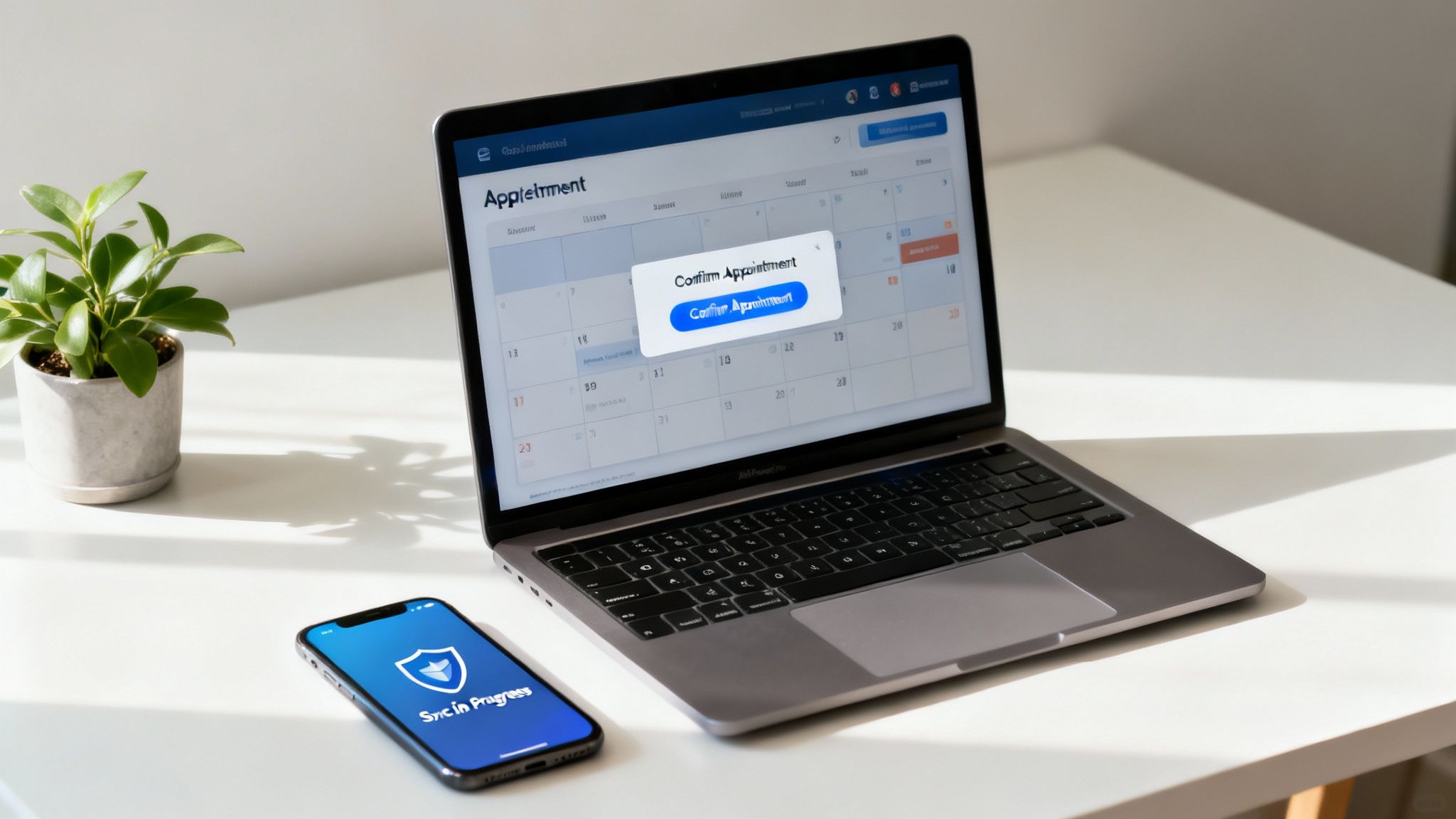
One of the most powerful integrations you can make is an online booking system that syncs directly with your practice management software. This isn't just a basic "request an appointment" form. It's a live, interactive calendar that empowers patients to book their own appointments 24/7.
This is a massive drawcard for busy patients who prefer to manage their lives online, often after your clinic has closed for the day. For your practice, it means fewer phone calls, no more email tag trying to find a suitable time, and a serious reduction in admin work.
The key benefits are pretty clear:
Reduced No-Shows: Automated appointment reminders via SMS or email are a simple but effective way to make sure patients remember their visit.
Improved Efficiency: Your calendar fills up automatically, letting your front office team concentrate on providing great in-person care.
Enhanced Patient Experience: Giving patients the freedom to book anytime, from any device, is exactly what modern consumers expect.
Go Paperless with Digital Patient Forms
Another game-changer is using digital patient forms. Instead of asking new patients to show up 15 minutes early to juggle a clipboard and pen, you can let them handle all the paperwork online from the comfort of their own home.
These secure forms can be automatically sent out the moment a new patient books their first appointment. The information they enter is then fed directly into your patient management system, getting rid of the tedious and error-prone task of manual data entry. It’s a simple switch that speeds up the check-in process and creates a far more professional first impression.
Ensuring Security and Performance
Of course, integrating these powerful tools requires a rock-solid technical foundation built on security and performance. Protecting sensitive patient data isn't just good practice; it's a legal requirement under Australian privacy laws. Your website absolutely must be secure, with strong measures in place to prevent any data breaches.
A website that is slow, buggy, or insecure will destroy patient trust in a heartbeat. For this reason, high performance and robust security are the bedrock of a professional online presence that patients feel confident using.
On top of that, the website itself needs to be fast and reliable. A booking page that takes forever to load or a glitchy patient form will only frustrate people and likely cause them to give up entirely. Consistent upkeep is crucial to make sure all your integrations are running smoothly and the site stays protected from new threats. Investing in a professional website maintenance package is a smart move to protect your digital asset and ensure it continues to operate as a seamless extension of your practice.
Answering Your Key Questions About Dental Web Design
Investing in a new website for your dental practice is a big decision, and it’s natural to have a lot of questions. From costs and timelines to the features that really matter, getting clear answers is the first step to making sure your new digital home delivers a genuine return. We’ll walk through the most common and critical questions dentists ask to help guide your strategy.
How Much Should I Expect to Invest in a Dental Website?
The cost of a professional dental website can vary quite a bit. A basic, template-driven site might only set you back a few thousand dollars, but a fully custom build with advanced features—like integrating with your practice management software—will naturally represent a more significant investment.
But here’s a better way to think about it: instead of focusing only on the upfront price, view your website as a long-term investment in your practice’s number one marketing and patient-booking tool. The right website isn’t an expense; it’s an engine for growth.
Think about the value it will generate. A well-built site that brings in just a handful of new high-value patients—people looking for cosmetic work, implants, or orthodontics—can deliver an impressive return, and fast. The conversation should be about the value and new patient revenue it creates, not just the initial number on the invoice.
How Long Does It Take to Build a New Dental Website?
Typically, building a new dental website from the initial discovery meeting to launch day takes somewhere between 8 to 16 weeks. This window can shift depending on a few key things that shape the project’s complexity and pace.
The final timeline really boils down to a few variables:
Design Complexity: A completely custom-designed site with unique features and functionality will naturally take longer than a site built using a pre-existing template.
Content & Asset Creation: If you need brand new content written for your service pages, professional photos of your clinic and team, or video production, these will add to the overall schedule.
Feedback & Revisions: How quickly you and your team can provide feedback on design mock-ups, content drafts, and development previews plays a massive role in keeping the project on track.
A clear, structured process managed by a professional agency is the best way to keep your website project on schedule. Great communication and timely feedback from your end are the secret ingredients for a smooth ride.
Can I Update the Website Myself After It’s Built?
Yes, absolutely. Any modern dental website should be built on a user-friendly Content Management System (CMS), with WordPress being one of the most powerful and popular choices out there. Think of a CMS as the control panel for your website, designed to be intuitive for people who aren’t tech-savvy.
This puts the power in your hands. You and your admin staff can easily handle routine updates without ever having to touch a line of code. Simple tasks like adding a new team member’s bio, updating your clinic’s hours, or publishing a new blog post become straightforward.
It’s crucial that whichever agency you partner with includes comprehensive training as part of the deal. They should walk you through the dashboard and show you exactly how to manage the most important parts of your new site, giving you full control.
What Are the Most Important Features for a Dental Website?
Beyond a clean, professional look and a design that works on mobile, certain features are non-negotiable for a dental website built to turn visitors into patients. These aren't just shiny add-ons; they are fundamental tools that directly drive bookings and create a seamless journey from the first click to the final appointment.
Here are the most critical features your website must have:
Obvious Contact Points: This means highly visible click-to-call buttons that work perfectly on mobile and simple contact forms on every single page. Don't make potential patients hunt for a way to reach you.
Integrated Online Booking: A system that lets patients see your real-time availability and book their own appointments is a modern must-have. For peak efficiency, this should sync directly with your practice management software.
Detailed Service Pages: Don't just list what you do. Create in-depth pages for each service that explain the procedure, its benefits for the patient, and what they can expect during their visit.
A Trust-Building 'About Us' Page: Introduce your dentists, hygienists, and support staff with professional photos and short bios. This humanises your practice and is one of the quickest ways to build trust.
Flawless Mobile Experience: Your website has to look and work perfectly on every device, from smartphones and tablets to desktops. This is essential for both user experience and your Google ranking.
These core features are the backbone of a successful dental website, transforming it from a simple online brochure into a hardworking, patient-generating machine.
A strategically designed website is the cornerstone of modern practice growth, but it requires expertise to get right. Titan Blue Australia has over 25 years of experience in creating custom websites that not only look professional but are engineered to attract new patients and streamline operations. If you're ready to build a website that delivers measurable results, connect with our team to start your project. Learn more at https://titanblue.com.au.
Titan Blue is your go-to digital partner for smart, results-driven solutions. We blend strategy, creativity and tech to grow your brand and get real results fast.