


Last updated:
Digital marketing consulting is about bringing in an external expert to diagnose, strategise, and execute your online marketing. It’s about turning broad business goals into a clear, actionable plan. Really, it's an investment in a specialist who brings an outside perspective to fix hidden weaknesses and build a roadmap for measurable growth.
What a Digital Marketing Consultant Really Does
Forget the vague job titles and confusing buzzwords for a moment. At its core, a digital marketing consultant is a specialist architect for your business's online presence. Think of them less as a temporary advisor and more as a seasoned guide who doesn't just hand you a map—they walk the trail with you to make sure you get where you're going.
Their role goes way beyond just giving advice. A true consultant becomes an active partner, embedding themselves in your team to drive real results. They bring an objective, expert viewpoint that’s often impossible to find when you're caught up in the day-to-day running of the business.
The Diagnostic Phase: Your Strategic Starting Point
Every successful partnership begins with a thorough diagnosis. Before a single new campaign is launched or a piece of content is written, a consultant needs to dive deep into your existing digital footprint. This isn't just a quick look; it's a comprehensive audit designed to uncover what’s working, what isn’t, and—most importantly—why.
This diagnostic process involves:
- Performance Analysis: Digging into your website analytics, SEO rankings, and social media engagement to pinpoint drop-off points and missed opportunities.
- Competitive Review: Sizing up what your key competitors are doing well. This is how you find gaps in the market that your business can own.
- Audience Insight: Using hard data to truly understand who your ideal customers are, where they hang out online, and what triggers them to take action.
This initial audit lays the foundation. It provides the data needed to build a strategy that’s actually tailored to your unique spot in the market, preventing guesswork and ensuring every move is backed by solid evidence.
Designing the Blueprint for Growth
Once the weaknesses and opportunities are laid bare, the consultant shifts into the role of an architect. They use the insights from the diagnostic phase to design a custom blueprint for growth. This is much more than a simple to-do list; it’s a cohesive plan where every single element works in harmony.
To see how this all comes together, you can explore our detailed guide on what a digital marketing strategy is and how it functions.
This blueprint will typically outline:
- Clear Goals: Defining specific, measurable outcomes, like increasing lead generation by 25% or slashing customer acquisition costs.
- Channel Strategy: Picking the right platforms—whether it’s SEO, social media, or email—that will actually reach your target audience effectively.
- Content and Messaging Pillars: Nailing down the core themes and messages that will connect with your customers and build your brand's authority.
Ultimately, the goal of digital marketing consulting is to create a sustainable engine for growth. It’s not about delivering a short-term sugar hit. It’s about building a system that creates lasting momentum, ensuring your business stays competitive and visible for years to come.
Navigating Modern Digital Marketing Services

The digital marketing world is a crowded place, filled with countless services all promising the world. A good consultant cuts through that noise. They focus only on the strategies that actually move the needle for Australian businesses, whether you’re a law firm in Melbourne or a manufacturing plant in Perth.
It’s about picking the right tools for the job, not just using every shiny new toy available. And at the heart of any solid strategy is one simple concept: visibility. If your customers can't find you, nothing else matters. That’s where modern Search Engine Optimisation (SEO) comes into play, and it’s evolved far beyond just stuffing keywords onto a page.
Evolving Beyond Keywords with Advanced SEO
These days, effective SEO is a sophisticated game of understanding what your customers are really looking for and where they are. It’s about answering their specific questions, not just ranking for generic terms. This is absolutely critical for businesses like local retailers or tradies, where showing up in local searches translates directly into phone calls and foot traffic.
This shift isn't just a trend; it's a fundamental change in how businesses operate online. In fact, Australian businesses are ramping up their SEO spend, with the industry projected to hit AUD $1.5 billion by 2025. It’s a clear sign that strong search visibility is no longer a luxury—it’s essential for growth. You can dig into the numbers with these Australian SEO and content marketing statistics.
A modern digital marketing consulting approach zeros in on a few core SEO pillars:
- Local SEO Dominance: Getting your business to pop up in Google Maps and "near me" searches—a vital channel for any service-based industry.
- Technical Website Health: Making sure your site is fast, mobile-friendly, and structured in a way that search engines can easily understand and rank.
- Authority Building: Earning high-quality, relevant links from other trusted websites, which signals to Google that you’re a credible source.
Future-Proofing for AI Search and AEO
The next wave of search is already here. With AI assistants and tools like ChatGPT becoming mainstream, people are asking questions in full sentences, not just typing in keywords. This demands a new strategy called Answer Engine Optimisation (AEO).
AEO is all about structuring your website’s information so AI tools can easily find it, understand it, and serve it up as a direct answer. A forward-thinking consultant ensures your business isn't just visible on Google today, but is also positioned to be the go-to source for the AI search engines of tomorrow.
The goal is simple: when someone asks a question related to your industry, your business should be the source of the answer. This builds immense authority and positions you miles ahead of competitors who are still stuck in the old way of thinking.
Building Your Brand with Content and Social Media
While SEO and AEO get you found, it’s strategic content and social media that build your brand and turn casual searchers into loyal customers. These services shouldn't operate in silos; they work together to tell a consistent story that connects with your ideal audience.
For instance, a law firm might use in-depth blog posts to build its reputation as an expert, while a fashion retailer uses a visually-driven platform like Instagram to show off its products. Smart businesses also look for ways to work more efficiently, using tools for things like Instagram comment automation for growth to manage their community without spending all day on their phone.
A cohesive digital marketing plan makes sure all these pieces are perfectly aligned. You can learn more about how we pull this together by exploring our social media marketing service. Ultimately, a consultant's job is to orchestrate these different services into a single, powerful strategy that connects you with customers and drives your business forward.
Measuring the Real-World Impact on Your Business

So, how do you know if hiring a digital marketing consultant is actually paying off? Let’s be honest, a spike in social media likes feels good, but it doesn’t directly pay the bills. The real test of success is drawing a straight line from your marketing efforts to the numbers that actually matter to your bottom line.
A good consultant will immediately shift the conversation away from these "vanity metrics." Instead, they'll zero in on your Return on Investment (ROI). It's all about using hard data to show how a smart digital strategy is driving real, measurable business growth.
Beyond Likes and Clicks to Real Business Metrics
The whole point of digital marketing should be to move the needle on key business drivers. Forget getting bogged down in surface-level stats; the focus has to be on metrics with a direct financial impact.
Here are the kinds of numbers that truly tell the story:
- Customer Acquisition Cost (CAC): How much are you spending to bring in a new customer? A winning strategy will see this number consistently go down.
- Lead-to-Conversion Rate: Of all the enquiries you get, how many actually become paying customers? Nudging this percentage up is a massive lever for growth.
- Customer Lifetime Value (CLV): What's the average revenue a customer brings to your business over their entire relationship with you? Great marketing attracts higher-value customers who stay loyal.
- Return on Ad Spend (ROAS): For every single dollar you pump into advertising, how many dollars in revenue do you get back? This is the ultimate proof of a profitable campaign.
To get a clear picture of these crucial figures, tools like Google Analytics are non-negotiable. Grasping the basics is your first step, and you can learn more about the power of Google Analytics in our in-depth guide. This data is the bedrock of any solid consulting partnership, giving you the clarity needed to make smart decisions.
Industry-Specific Scenarios Illustrating Tangible ROI
The impact of a sharp digital marketing strategy looks different from one industry to the next, but the end goal is always the same: measurable growth. Let's walk through a couple of real-world scenarios for Australian businesses.
Take a Gold Coast restaurant. Success isn't about website traffic; it's about bums on seats on a quiet Tuesday night. A targeted strategy might focus on local SEO to show up in "restaurants near me" searches, paired with a social media campaign pushing a mid-week dinner special.
The real measures of success here would be:
- A 30% increase in online bookings for weeknights.
- A noticeable jump in phone calls that can be traced directly back to their Google Business Profile.
- A lower CAC because more customers are finding them organically instead of through expensive third-party booking apps.
Now, picture a national manufacturing firm headquartered in Sydney. They don’t need thousands of website visitors. They need a handful of high-value B2B leads each quarter. Their consulting strategy would be built around creating expert content that establishes them as an industry authority, pushed through channels like LinkedIn to reach key decision-makers.
Here, success is measured by:
- Generating 5-10 qualified leads a month via their website's contact form.
- An uptick in proposal requests from their target industry sectors.
- Tracking how many of those online leads turn into major supply contracts, proving a crystal-clear ROI.
A crucial aspect of determining the effectiveness of digital marketing efforts is precisely measuring social media ROI, allowing businesses to understand their tangible returns from specific channels.
With Australian businesses investing more and more into online channels, tracking this return has never been more critical. Social media advertising spend alone is tipped to hit AUD $7.5 billion in 2025, a huge slice of the total digital ad pie. When you're spending that kind of money, you absolutely need to know what you're getting back. This financial reality is exactly why a professional, data-driven digital marketing consulting approach is a must for any business serious about growth.
How to Choose the Right Consulting Partner
Picking a digital marketing consultant is one of the most important decisions you'll make for your business. This isn't just about hiring someone to run your ads; it's about finding a strategic partner who will genuinely integrate into your business and drive real, tangible growth.
The right choice can unlock completely new streams of revenue. The wrong one? It's a fast track to wasted time, money, and a whole lot of frustration.
To get this right, you need to look past the slick sales pitches and properly evaluate what a potential partner brings to the table. The goal is to find someone who not only has the technical chops but also gets your industry's unique challenges and is committed to a transparent, performance-focused relationship. It's about choosing a genuine partner, not just another supplier.
Verifying Their Experience and Results
First things first, you need to scrutinise their track record. A reputable consultant will have a portfolio bursting with real, verifiable results and case studies that show how they've solved actual business problems.
Don't let yourself be swayed by vague promises of "more traffic." You need to see cold, hard evidence of their impact on the metrics that actually matter to your bottom line.
When you're digging into their past work, focus on these key areas:
- Industry Relevance: Have they worked with businesses like yours? A consultant with deep experience in the Australian manufacturing sector will understand the B2B sales cycle worlds better than someone who has only ever worked with retail e-commerce.
- Specific Case Studies: Ask for the nitty-gritty details. A solid case study won't just talk about strategy; it will outline the problem they faced, the plan they put in place, and the specific, measurable results they delivered. Think things like a 40% reduction in Customer Acquisition Cost (CAC) or a 60% increase in qualified leads.
- Client Testimonials and References: Testimonials on a website are a decent starting point, but don't stop there. Ask if you can speak directly with a few of their current or past clients. This is your chance to get an unvarnished take on their communication, transparency, and overall effectiveness.
Asking the Right Questions in Your First Meeting
That initial consultation is much more than a simple meet-and-greet—it's an interview. This is your opportunity to dig deep and see if their approach actually lines up with your long-term goals. A consultant who knows their stuff will welcome tough questions and give you clear, straightforward answers.
Walk into that meeting prepared with a list of strategic questions that test their expertise and how they're thinking about the future. Good questions go beyond "what do you do?" and get to the heart of "how do you do it?" and "why?"
Try asking questions like these:
- "Can you show me a case study that's relevant to my industry?" This puts their specific experience on the spot and shows if they can deliver results for a business like yours.
- "How are you adapting your strategies for emerging AI search trends and Answer Engine Optimisation?" Their answer will tell you immediately if they're ahead of the curve or stuck in the past.
- "What does your reporting process look like, and how often will we connect?" This question sets clear expectations around communication and transparency right from the get-go.
A consultant's true value isn't revealed in what they promise, but in the clarity and confidence with which they explain their process. They should be able to connect every single action they propose back to a specific business outcome you actually care about.
At the end of the day, finding the right partner comes down to a balance of proven expertise, clear communication, and a genuine commitment to seeing you succeed. By taking this structured approach, you can confidently select a digital marketing consultant who will feel like a true extension of your team and help you achieve sustainable, long-term growth.
What to Expect from the Consulting Process
Bringing a digital marketing consultant on board can feel like a big move, but a clear, structured process takes all the guesswork out of it. It’s a journey that moves methodically from deep discovery right through to long-term performance tracking.
This isn't about jumping straight into launching campaigns. It's a deliberate approach designed to build a solid foundation first. This ensures that when we do execute, every dollar spent and hour invested has a clear purpose. Let's pull back the curtain on how a successful engagement usually unfolds.
The Initial Deep-Dive and Strategy Blueprint
The first step is easily the most important: the deep-dive audit. Before a single new idea is put on the table, a consultant needs to thoroughly analyse your entire digital footprint. We’re talking about scrutinising your website's technical health, evaluating your current SEO performance, and getting a real handle on your social media presence and what your competitors are up to.
From this audit, a proper strategy is born. This isn't some generic template; it’s a custom blueprint outlining specific, measurable goals, defining your target audiences, and detailing the exact channels we'll use to reach them. This groundwork ensures the plan is built on hard data, not just assumptions.
This visual guide shows the key stages in selecting a consultant, covering the essential qualities to look for, questions to ask, and the final partnership agreement.
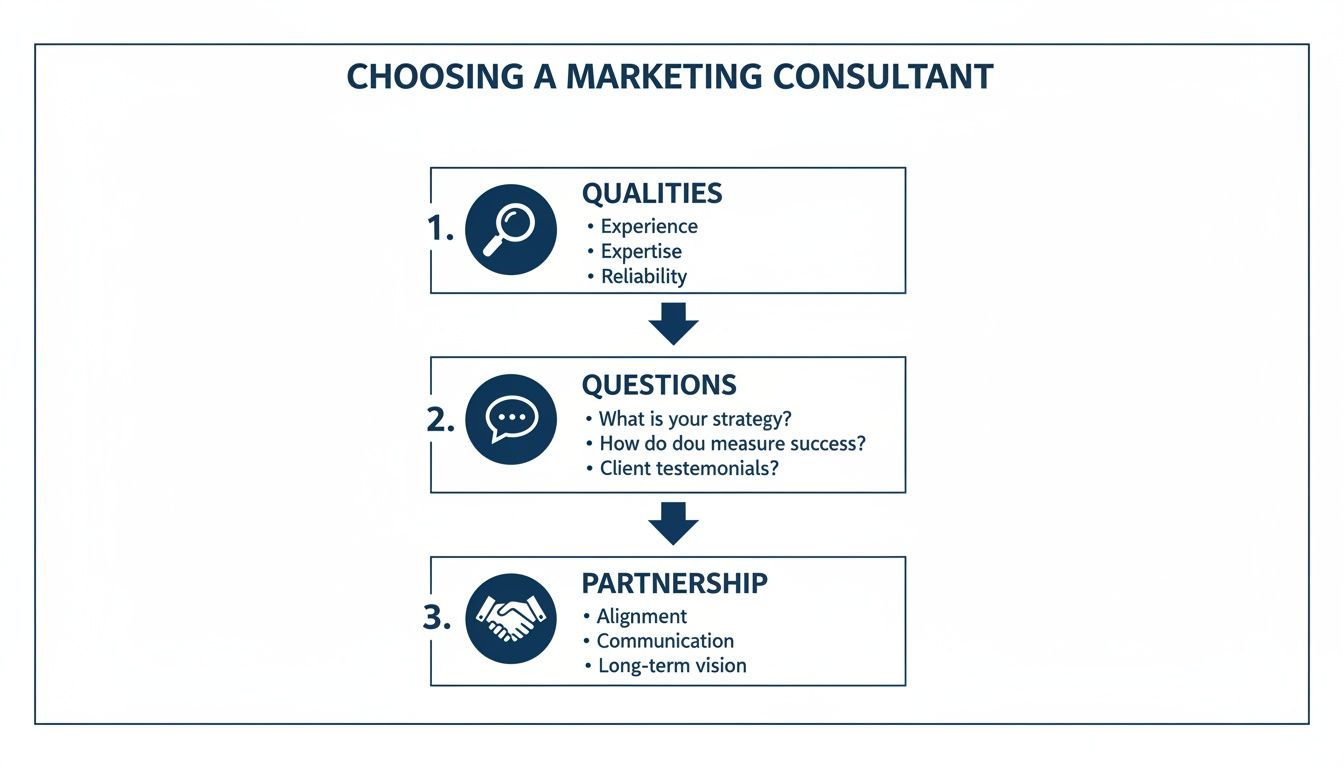
Following a structured process like this helps make sure you find a partner who is aligned with your business from day one.
Implementation and Ongoing Analysis
With a clear strategy locked in, it’s time for implementation. This is where the plan comes to life, whether that means launching new SEO campaigns, creating content, or managing your social media channels. A good consultant manages this entire process, coordinating all the moving parts and making sure everything stays on track.
But the job isn’t done once a campaign goes live. The final, ongoing phase is all about performance analysis and reporting. This involves a continuous cycle of:
- Constant Monitoring: Keeping a close eye on key metrics like website traffic, conversion rates, and lead quality in real-time.
- Regular Reporting: Providing clear, easy-to-digest reports that show you what’s working and what isn’t. No jargon, just results.
- Strategic Adjustments: Using that data to refine the strategy and optimise campaigns for better results over time.
This constant loop of implementation, analysis, and refinement is what truly drives sustainable growth. We offer transparent digital marketing consultations to walk you through exactly how this would apply to your business.
Understanding Common Pricing Models
Finally, it’s important to get your head around how digital marketing consulting services are typically priced. This transparency helps you plan your budget and choose a model that actually fits your business needs.
The two most common structures you’ll come across are:
- Monthly Retainer: You pay a fixed fee each month for an agreed-upon scope of ongoing work. This model is perfect for long-term strategies like SEO and content marketing because it provides consistent effort and allows for a deep, collaborative partnership.
- Project-Based Fee: You pay a one-off fee for a specific, defined project with a clear start and end date, like a website redesign or a comprehensive digital audit. This works best if you have a specific, short-term goal in mind.
Discussing these options upfront means you can have an informed conversation about budget, timelines, and expected outcomes, building trust right from the start.
Frequently Asked Questions About Digital Consulting
Jumping into the world of digital marketing consulting can bring up a lot of questions, especially for Australian business owners trying to make a smart investment. We get it. Below, we’ve answered some of the most common queries to give you the clarity you need to move forward.
How Long Until I See Real Results?
This is always one of the first questions, and the honest answer is: it depends. Quick wins are definitely possible, especially with paid advertising campaigns where you might see a jump in leads within the first month.
However, for the stuff that builds long-term, sustainable growth—like Search Engine Optimisation (SEO)—patience is everything. It typically takes a good three to six months to see meaningful movement in search rankings and organic traffic. Why? Because building genuine authority and trust with search engines is a gradual process, not an overnight fix.
A good consultant will be upfront about this, setting clear and realistic expectations from day one. They'll outline short-term milestones and long-term goals so you know exactly what to expect and when.
Is My Small Business Ready for a Consultant?
A lot of small business owners think digital marketing consulting is just for big corporations with massive budgets. That's a common myth. The reality is that the best consulting services are scaled to fit where you are right now, both in your growth stage and your budget.
You might be ready for a consultant if:
- You’re making consistent revenue but have hit a frustrating growth plateau.
- You simply don't have the time or the specific in-house skills to manage digital marketing properly.
- You know you need to invest in marketing to grow but have no idea where to start to get the best return.
A consultant can kick things off with a single, high-impact project, like nailing your local SEO, and then expand into a broader strategy as your business grows. It’s all about finding the right fit, not having the biggest budget.
Consultant vs In-House Marketer: What Is the Difference?
Choosing between an external consultant and an in-house marketer is a huge strategic decision. An in-house employee gets deeply embedded in your company culture, which is great, but a consulting agency brings a completely different set of advantages to the table.
The biggest advantage of a consultant is the sheer breadth of expertise. Instead of relying on one person’s skills, you get access to an entire team’s collective knowledge across SEO, content, paid ads, and emerging AI trends.
An external partner also brings a fresh, objective perspective. They're free from the internal biases that can sometimes kill new ideas. Plus, they’ve seen and solved similar problems for dozens of other businesses, which means they come armed with proven strategies and a data-driven mindset focused on one thing: delivering measurable results for you.
It’s Time to Build Sustainable Digital Growth
Partnering with a digital marketing consultant isn't just another business expense; it’s a foundational step for any business serious about real, lasting success. It’s about ditching the short-term tactics and random campaigns that never seem to go anywhere. Instead, you'll be building a powerful, cohesive engine designed to attract the right customers and drive consistent growth for years to come.
This guide has walked you through the whole process, from what a consultant actually does to picking the right one for your business. The main takeaway is simple: in today's complex online world, expert guidance isn’t a luxury. It’s a requirement for success. You need a partner who can build a strategy that works now and is ready for whatever comes next.
Building Your Foundation for Tomorrow
A strong digital presence is built on a strategy that covers all the bases—from foundational SEO to the future of AI search. It’s no longer enough to just get a good ranking on Google. You also have to be the trusted source of answers when potential customers ask questions to AI assistants like ChatGPT or Google’s AI Overviews.
This forward-thinking approach is what separates the businesses that thrive from those that just get by. It takes a deep understanding of your audience, a real commitment to creating valuable content, and the technical skill to make sure you’re visible everywhere your customers are looking. It's a big job, but the rewards are massive.
A true digital partnership is about more than just running a campaign. It’s about building a sustainable asset for your business—your online reputation, your visibility in search, and the direct line you have to your ideal customers.
Take the Next Step with Confidence
If you’re ready to stop guessing and start implementing a proven strategy built specifically for your Australian business, the next logical move is a direct conversation. A dedicated digital partnership can uncover opportunities you never knew existed, make your marketing spend far more efficient, and deliver the tangible results you need to see.
It all starts with a single, focused chat about your unique goals and challenges. This is your chance to see what a dedicated team can really do for your business.
Ready to unlock your business's full potential? Titan Blue Australia has been helping Australian businesses grow for over 25 years. Schedule a complimentary, no-obligation strategy session with our experts today and discover what a true digital partnership can do for you.
Make Titan Blue a preferred source in Google
One click tells Google to surface our articles more often in Top Stories, AI Overviews and AI Mode.

Best Dental Website Design Agencies in Australia: 7 Compared
Best dental website design agencies in Australia 2026: seven compared on dental proof, booking, AHPRA…

Childcare Centre Website Design Australia: The 2026 Guide
Childcare centre website design Australia: show hours, ages and enrolment as text so parents and…

Electrician Website Design Australia: The 2026 Guide
Electrician website design Australia: what to build, what we found on eight Gold Coast electrician…