Digital marketing guide for Australian businesses 2026
Australian local businesses face unprecedented digital competition in 2026, with over 90% of consumers researching products and services online before making purchasing decisions. Whether you’re a cafe in Brisbane, a boutique in Melbourne, or a tradesperson on the Gold Coast, establishing a strong digital presence is no longer optional. This comprehensive guide walks you through proven digital marketing strategies including SEO optimisation, effective website design, and targeted advertising campaigns that drive measurable results for local Australian businesses.
Local search optimisation helps customers find your business when they need your services most
Website design builds trust
A professional, mobile-friendly site converts visitors into paying customers
Targeted ads accelerate growth
Platforms like Google Ads and Meta deliver precise audience reach with trackable ROI
Analytics guide decisions
Regular performance monitoring reveals what works and where to invest your marketing budget
Continuous optimisation wins
Adapting to trends and refining campaigns ensures sustained competitive advantage
Understanding the digital marketing landscape for local businesses
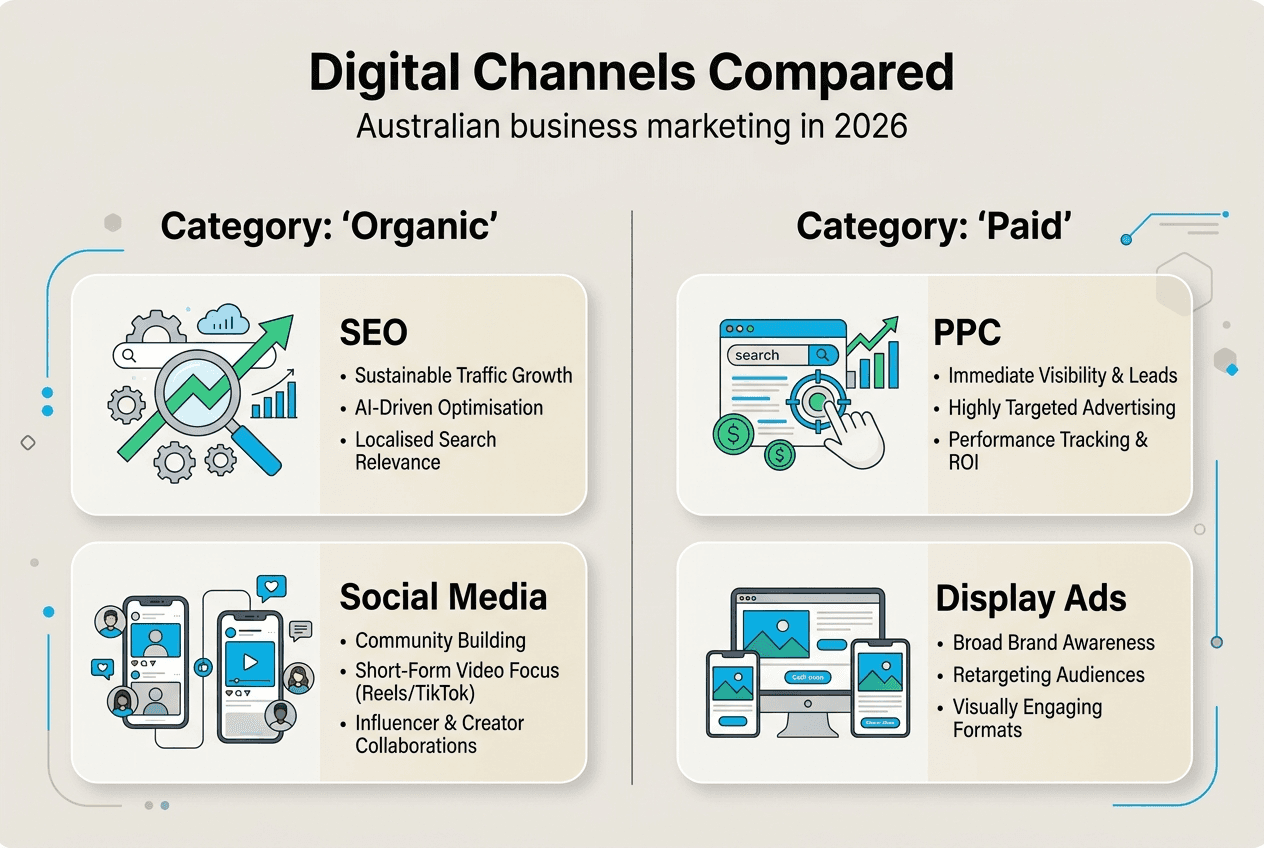
Digital marketing encompasses all online strategies businesses use to connect with customers, including search engine optimisation, website development, social media engagement, and paid advertising. For Australian local businesses in 2026, these components work together to create visibility, build credibility, and drive sales in an increasingly crowded marketplace.
The competitive landscape has intensified dramatically. Small businesses now compete not only with local rivals but also with national chains and online-only retailers who invest heavily in digital presence. Customers expect to find detailed information, reviews, and easy contact options within seconds of searching. Businesses without optimised digital touchpoints simply become invisible to potential customers actively seeking their services.
Search engine marketing remains a foundational method to attract local customers effectively. When someone searches for “plumber near me” or “best coffee Gold Coast,” search engines prioritise businesses with strong local SEO signals, quality websites, and relevant content. This integration of organic and paid search strategies determines which businesses capture customer attention at critical decision moments.
Australian local markets present unique challenges including geographic targeting complexities, varying regional customer behaviours, and budget constraints that prevent matching larger competitors’ advertising spend. Regional businesses must be strategic, focusing resources on channels delivering the highest return rather than spreading efforts too thin across every platform.
Digital marketing channels comparison
Channel
Primary benefit
Main consideration
Local SEO
Long-term organic visibility
Requires 3-6 months for results
Google Ads
Immediate targeted traffic
Ongoing cost per click
Social media
Community engagement and brand building
Time-intensive content creation
Email marketing
Direct customer communication
Needs existing contact database
Website optimisation
Foundation for all digital efforts
Initial design and development investment
Key challenges specific to Australian local businesses include:
Managing marketing budgets that compete with larger national brands
Targeting specific geographic areas without wasting ad spend on irrelevant locations
Creating content that resonates with local culture and customer expectations
Balancing multiple digital channels whilst maintaining day-to-day business operations
Staying current with rapidly evolving platform algorithms and best practices
Preparing your business for a successful digital marketing strategy
Before launching campaigns, establish clear, measurable marketing goals aligned with your business growth objectives. Vague aspirations like “get more customers” fail to provide direction or accountability. Instead, set specific targets such as “increase website enquiries by 40% within six months” or “generate 25 qualified leads monthly through Google Ads.” These concrete goals enable you to allocate budget effectively and measure genuine progress.
Understanding your local target audience transforms marketing from guesswork into strategic communication. Research your ideal customers’ demographics, online behaviours, pain points, and preferred platforms. A tradie targeting homeowners aged 35-55 requires completely different messaging and channels than a boutique targeting fashion-conscious millennials. Digital marketing tips emphasise that clear objectives and knowing your target audience shape efficient and focused campaigns.
Choosing appropriate digital marketing tools determines your ability to execute and measure strategies effectively. Essential platforms include:
SEO tools like Google Search Console and analytics platforms for tracking organic performance
Website builders or content management systems enabling easy updates and mobile optimisation
Advertising platforms including Google Ads Manager and Meta Business Suite for campaign creation
Email marketing software for customer communication and automated follow-ups
Social media scheduling tools to maintain consistent presence without constant manual posting
Digital marketing requirements overview
Tool category
Estimated monthly cost
Key benefit
SEO platform
$50-$200
Keyword research and ranking tracking
Website hosting
$20-$100
Reliable site performance and security
Email marketing
$30-$150
Automated customer nurturing
Ad management
Variable (ad spend)
Targeted customer acquisition
Analytics suite
Free-$300
Data-driven decision making
Pro Tip: Prioritise digital channels based on where your customers actively spend time and make purchasing decisions. A local restaurant benefits more from Google Maps optimisation and Instagram than LinkedIn, whilst a B2B consultancy should focus on LinkedIn and search engine visibility. Start with two or three channels you can execute well rather than attempting everything simultaneously and delivering mediocre results across the board.
Budget constraints shouldn’t paralyse action. Begin with free tools like Google Business Profile, organic social media, and basic SEO improvements. As you generate returns, reinvest profits into paid advertising and advanced tools that accelerate growth. Many successful local businesses started with minimal digital investment, focusing on execution quality over budget size.
Executing effective digital marketing tactics: SEO, website design and advertising
Implementing core digital marketing strategies requires systematic execution across three foundational areas. Follow these steps to build an integrated approach that drives measurable results for your local business.
Optimise website content for local SEO keywords and mobile users. Research location-specific search terms your customers use, such as “electrician Surfers Paradise” or “yoga classes Bondi.” Incorporate these naturally throughout your website content, page titles, and meta descriptions. Ensure your site loads quickly on mobile devices, as SEO marketing is crucial for local visibility and driving quality organic traffic. Claim and optimise your Google Business Profile with accurate information, photos, and regular posts to dominate local search results.
Design or update your website focusing on user experience and conversion elements. Your website serves as your digital shopfront, and visitors form opinions within three seconds of landing. Implement clear navigation, prominent contact information, and compelling calls-to-action on every page. Professional web design combines aesthetic appeal with functional elements like click-to-call buttons, contact forms, and service descriptions that guide visitors toward becoming customers. Include customer testimonials and case studies that build trust and demonstrate your expertise.
Set up targeted advertising campaigns on platforms matching your audience. Google Ads captures customers actively searching for your services, delivering high-intent traffic ready to convert. Social media advertising on platforms like Facebook and Instagram builds brand awareness and targets specific demographics, interests, and behaviours. Start with modest daily budgets, test different ad variations, and scale investment in campaigns delivering positive ROI. Search engine marketing enables precise targeting and immediate visibility whilst you build organic rankings.
SEO vs PPC advertising comparison
Factor
SEO (organic)
PPC (paid ads)
Time to results
3-6 months
Immediate
Ongoing cost
Content and optimisation
Per-click charges
Sustainability
Long-term compounding
Stops when budget ends
Click-through rate
Higher trust from users
Lower but more targeted
Best for
Building authority
Quick lead generation
Pro Tip: Website speed directly impacts both SEO rankings and advertising conversion rates. Compress images, minimise unnecessary plugins, and use reliable hosting to ensure pages load within two seconds. Conduct monthly SEO audits checking for broken links, outdated content, and new keyword opportunities. These small ongoing improvements compound over time, delivering significantly better performance than one-off optimisation efforts.
Integration across channels amplifies results beyond what isolated tactics achieve. Your Google Ads should direct traffic to optimised landing pages. Social media posts should drive followers to valuable website content. Email campaigns should reinforce your SEO-targeted messaging. This cohesive approach creates multiple touchpoints that guide customers through awareness, consideration, and decision stages of their buying journey.
Measuring success and refining your digital marketing approach
Tracking digital marketing performance separates profitable strategies from wasteful spending. Identify key performance indicators aligned with your business goals, including website traffic volume, traffic sources, conversion rate, cost per acquisition, and return on ad spend. These metrics reveal which channels deliver results and where adjustments are needed.
Google Analytics provides comprehensive insights into website visitor behaviour, showing which pages attract attention, where users exit, and which traffic sources convert best. Set up conversion tracking for critical actions like form submissions, phone calls, and online purchases. Review these metrics weekly during campaign launches, then shift to fortnightly or monthly analysis once strategies stabilise.
Common mistakes sabotage otherwise sound digital marketing efforts. Ignoring mobile traffic means missing over 70% of local searches conducted on smartphones. Neglecting content updates signals to search engines that your site lacks relevance, causing rankings to decline. Failing to respond to online reviews damages reputation and discourages potential customers. Set calendar reminders for regular maintenance tasks preventing these costly oversights.
Practical optimisation techniques that improve campaign performance include:
A/B testing ad headlines, images, and calls-to-action to identify highest-converting variations
Refining keyword targeting based on actual search terms triggering your ads
Updating website content to address frequently asked customer questions
Improving page load speed by optimising images and removing unnecessary scripts
Expanding successful campaigns whilst pausing underperforming ad sets
Creating retargeting campaigns to re-engage website visitors who didn’t convert initially
Regular monitoring and optimisation of digital marketing campaigns ensure sustained growth and return on investment. Markets evolve, competitors adjust strategies, and customer behaviours shift. Businesses treating digital marketing as a set-and-forget activity watch results deteriorate whilst adaptive competitors capture market share.
Adapting to market changes and digital trends maintains competitive advantage. Algorithm updates from Google and social platforms can dramatically impact visibility overnight. New advertising features provide early adopters with cost advantages. Emerging customer preferences create opportunities for businesses monitoring industry developments. Dedicate time monthly to learning about platform updates, competitor activities, and industry best practices.
Interpret metrics within business context rather than chasing vanity numbers. A thousand website visitors means nothing if none become customers. A 2% conversion rate generating profitable sales outperforms a 5% conversion rate on unprofitable services. Focus relentlessly on metrics connecting directly to revenue and business growth, adjusting strategies based on financial outcomes rather than superficial engagement statistics.
Discover Titan Blue’s digital marketing services for your business
Navigating digital marketing’s complexities whilst running your business demands expertise, time, and constant adaptation. Titan Blue specialises in delivering customised digital marketing solutions for Australian local businesses seeking measurable growth without the overwhelm of managing campaigns independently.
Our integrated approach combines expert SEO optimisation, conversion-focused web design, and targeted advertising campaigns tailored specifically for your industry and local market. We understand the unique challenges facing Gold Coast and Australian businesses, from regional targeting precision to maximising limited marketing budgets against larger competitors.
Whether you need comprehensive SEO marketing to dominate local search results, professional web design that converts visitors into customers, or strategic guidance implementing digital marketing best practices, our team delivers results-driven solutions aligned with your growth objectives. Let’s discuss how a tailored digital marketing strategy can transform your online presence and accelerate business growth in 2026.
FAQ
How can I start digital marketing for my local business?
Begin by setting clear, measurable goals such as increasing enquiries by a specific percentage or generating a target number of monthly leads. Understand your ideal customer’s demographics, behaviours, and preferred platforms to focus efforts where they’ll deliver maximum impact. Use available digital marketing guides to build an effective foundation, starting with free tools like Google Business Profile and basic website optimisation before expanding into paid advertising as you see returns.
What are the most effective online advertising platforms for Australian businesses?
Google Ads remains the leading platform for capturing high-intent customers actively searching for your services, delivering immediate visibility and measurable results. Facebook and Instagram advertising excel at building brand awareness and targeting specific demographics, interests, and local areas. Platform effectiveness depends on your specific audience; research where your ideal customers spend time online and test campaigns on those channels first. Consider SEO marketing strategies alongside paid advertising for sustainable long-term growth.
How important is website design in digital marketing success?
Website design is absolutely critical, serving as the foundation where all digital marketing efforts direct potential customers. A professionally designed, mobile-optimised site builds immediate trust, communicates your value clearly, and guides visitors toward taking action through strategic calls-to-action and intuitive navigation. Poor website design undermines even the most effective SEO and advertising campaigns, as visitors leave within seconds if they encounter slow loading, confusing layouts, or unprofessional presentation. Quality web design directly impacts conversion rates and return on your entire digital marketing investment.
How long does it take to see results from digital marketing?
Paid advertising through Google Ads or social platforms can generate immediate traffic and leads within days of launching campaigns. SEO and organic strategies typically require three to six months before delivering significant results, as search engines need time to crawl, index, and rank your optimised content. The most successful businesses implement integrated strategies combining quick-win paid advertising with long-term SEO investments, creating both immediate revenue and sustainable organic growth that compounds over time.
What budget should a local business allocate to digital marketing?
Most successful local businesses invest 7-12% of gross revenue into marketing, with digital channels receiving the majority of this allocation. Start with whatever budget you can sustain consistently, even if modest, focusing on one or two high-impact channels rather than spreading resources too thin. As campaigns prove profitable, reinvest returns to scale successful strategies. Many businesses begin with $500-$1500 monthly for combined SEO, website maintenance, and modest advertising spend, adjusting based on results and business growth objectives.
Titan Blue is your go-to digital partner for smart, results-driven solutions. We blend strategy, creativity and tech to grow your brand and get real results fast.