So, how long does SEO really take to work for an Australian business?
Let's cut to the chase. You can expect to see some genuine, meaningful movement within 3 to 6 months. But the kind of results that actually drive your business forward—we're talking consistent leads and sales—often take between 6 and 12 months to really kick in.
Setting Realistic SEO Expectations
Think of SEO like planting a tree, not flipping a switch. You wouldn’t plant a sapling and expect it to provide shade overnight, and the same principle applies here. The first few months are all about preparing the soil and nurturing the roots underground.
This foundational work is critical, even if you don't see much happening on the surface. It involves a deep dive into the technical side of your site, strategic keyword research, and optimising your website’s structure so search engines like Google can actually understand what you're all about.
Why SEO Is a Long-Term Investment
SEO is a long-term investment in your most valuable digital asset: your website. It’s not a quick fix for overnight traffic. As the roots of your strategy take hold, your website starts to grow steadily, eventually becoming a strong, permanent fixture in search results. Having a clear timeline from the start helps you know exactly what to expect.
This isn't just our opinion; it's a recognised timeframe in the Australian SEO landscape. A massive poll by Ahrefs involving around 4,300 users confirmed that most campaigns take 3 to 6 months to show results. Established websites often see progress a bit faster because they already have some authority, whereas brand new sites might take closer to a year to build the necessary trust with Google.
This patient approach builds sustainable growth that pays dividends for years. Unlike paid ads that vanish the moment you stop paying, a well-optimised site keeps attracting customers organically. Getting your head around this from day one is the key to a successful partnership and hitting your goals.
What to Expect on Your Journey
Your SEO journey isn't a straight line; it's broken into distinct phases, each with its own milestones. It's an ongoing process of refinement and adaptation, not a set-and-forget task.
Here’s a quick overview of what the investment looks like:
Initial Groundwork: The first few months are all about audits, competitor analysis, and fixing any technical gremlins. This is where we build a solid base for future growth.
Building Momentum: Next, the focus shifts to creating high-quality content and earning authoritative backlinks. This signals to Google that your site is a credible, trustworthy resource.
Accelerated Growth: Finally, as your authority grows, you'll see more significant ranking improvements, a steady climb in organic traffic, and a measurable impact on your bottom line.
Each step is a building block for the next. The investment required for this process is detailed in various SEO packages and pricing, which reflect the strategic effort needed to secure a lasting competitive edge.
The Four Pillars That Control Your SEO Speed
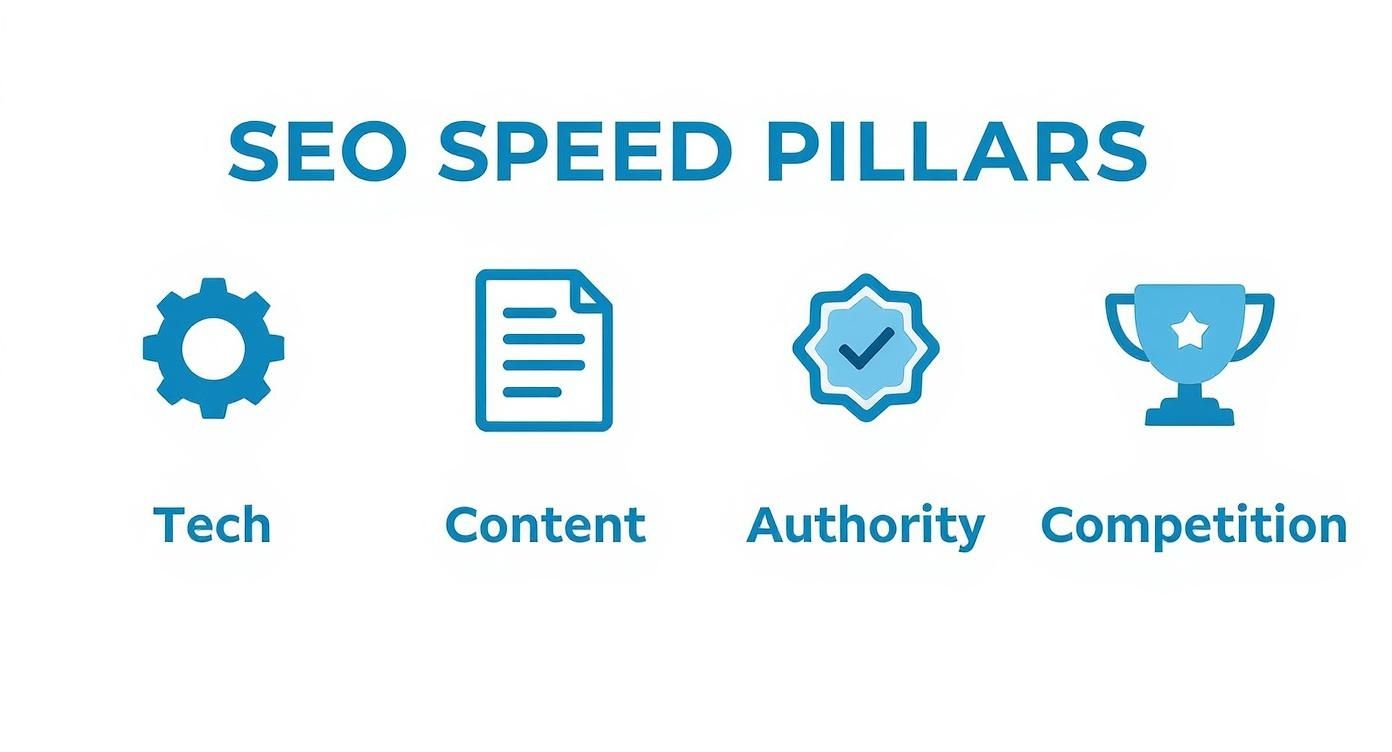
Why does one website race up the search rankings while another seems stuck in first gear? When someone asks, "how long does SEO take to work?", the answer always comes back to four crucial pillars that set the pace for your progress.
Think of it like building a high-performance car. Each pillar is a non-negotiable part of the engine, and if one component is weak, the whole machine will splutter and slow down—no matter how powerful the other parts are. Let's break them down.
Pillar 1: Your Technical Health
Your site's technical health is its engine and chassis. It’s the core foundation everything else is built on. If your site is riddled with technical gremlins, even the most amazing content and powerful backlinks won’t get you where you need to go.
Search engines like Google use automated bots, or "crawlers," to find and understand what your pages are all about. If these crawlers hit roadblocks like broken links, painfully slow loading times, or a confusing site structure, they can't index your content properly. This means your pages might not even show up in search results, regardless of how good they are.
Key parts of your technical health include:
Site Speed: Slow-loading websites frustrate users and get penalised by search engines. In fact, 47% of consumers expect a webpage to load in two seconds or less.
Mobile-Friendliness: With most searches now happening on phones, a responsive design that looks and works perfectly on any screen is non-negotiable.
Crawlability and Indexability: This is all about making sure search engines can easily find, read, and add your website's information to their massive library.
A thorough technical audit is always the first step in a proper SEO campaign. Figuring out what an SEO site audit really finds uncovers the hidden roadblocks holding your website back from its true potential.
Pillar 2: Your Content Strategy
If technical SEO is the engine, then content is the high-octane fuel that powers the journey. Your content strategy is what attracts, engages, and ultimately converts your ideal customers. A few years ago, you could get away with stuffing keywords onto a page, but today, that’s a one-way ticket to failure.
Modern SEO is all about creating content that is genuinely helpful, insightful, and directly answers the questions your potential customers are asking. Google’s algorithms are now smart enough to tell the difference between content that provides real value and content that’s just made for search engines. Creating this kind of quality content consistently is a massive factor in how long SEO takes to work.
How quickly you see results is heavily tied to both the quality and quantity of your content. Using modern techniques and resources, like exploring the Top AI Tools for Content Marketing, can help you create better content, faster.
Pillar 3: Your Authority and Backlinks
Think of authority and backlinks as your website's reputation. Online, a backlink—a link from another website to yours—is like a vote of confidence or a five-star review. When a well-respected, high-authority website links to your content, it sends a strong signal to Google that your site is a trustworthy source of information.
Building a strong backlink profile is a marathon, not a sprint. It takes time and consistent effort, which is one of the main reasons SEO is a long-term game. You just can't rush earning trust. A website with a long history and a healthy, diverse profile of quality backlinks will almost always see results faster than a brand-new site starting from scratch.
Remember, it's not about getting as many backlinks as possible. It’s about getting the right ones. A single link from a respected industry publication is worth far more than dozens of links from spammy, low-quality directories.
Pillar 4: Your Competitive Landscape
Finally, your competitive landscape is like the traffic and road conditions you'll face on your way to the top of the search results. The more crowded your industry is online, the more strategic and patient you’ll need to be to find a clear path forward.
If you're a local plumber in a small town, your journey to page one might be fairly quick. But if you're a law firm in a major city like Sydney or Melbourne, you're up against established players who have been pouring money into SEO for years.
Understanding your competition is vital. By analysing their strengths and weaknesses, you can spot opportunities to get ahead. This could mean targeting less competitive long-tail keywords or creating content that is ten times more comprehensive and valuable than what they’re offering. Knowing who you're up against from the start helps set a realistic timeline for success.
Your Month-by-Month SEO Journey
Starting an SEO campaign can feel a bit like setting sail without a map. You know you want that top spot on Google, but the timeline and the route to get there often feel murky. Let's clear that up by laying out a realistic, month-by-month roadmap so you know what’s happening behind the scenes and which signs point to real progress.
Understanding this journey helps set the right expectations and shows the value being built every step of the way. I often tell clients to think of it like building a house; you can't install the windows before the foundation is poured and the walls are framed. SEO works the same way.
Months 1 to 3: The Foundational Blueprint
The first three months are all about laying the groundwork. This is the architectural planning and foundation-pouring phase of your SEO strategy. It might feel like not much is happening on the surface, but this stage is absolutely critical for any long-term success.
During this period, we're deep in analysis and technical fixes. We run comprehensive audits on your website to find anything holding you back, perform in-depth keyword research to get inside your customers' heads, and start making those crucial on-page improvements.
Key activities and KPIs in this phase include:
Technical SEO Audit: We hunt down and resolve issues like slow page speed, broken links, and mobile usability problems. The main KPI here is a much healthier site score in tools like Google Search Console.
Keyword Research and Mapping: We pinpoint the most valuable keywords for your business and assign them to the right pages. Success is measured by having a complete keyword map for your core pages.
On-Page Optimisation: This involves refining title tags, meta descriptions, and on-page content to align perfectly with your target keywords.
By the end of this phase, your website is a much stronger platform, fully prepped for the next stage of growth.
Months 4 to 6: Building and Gaining Traction
This is where the structure of your new digital presence really starts to take shape. With a solid foundation in place, the focus shifts to building authority and creating high-value content that attracts both users and search engines.
You'll begin to see the first tangible results of your efforts. While you won't be dominating the most competitive keywords just yet, you will notice measurable growth in organic traffic and see more of your target keywords creeping up in the search results. It’s an exciting phase where the initial momentum becomes visible.
The infographic below shows the core pillars that influence how quickly these results appear, from the technical groundwork to your site's growing authority.
As you can see, your technical setup, content quality, site authority, and the competitive landscape all work together to determine how fast your SEO progresses.
During these months, a consistent strategy produces noticeable gains. Data from our own experience with Australian businesses aligns with this timeline, showing an initial visible impact around the 4 to 6-month mark. It's common to see minor ranking shifts in the first month as Google re-crawls pages, followed by traffic increases for low-competition terms in months 1–3, leading to measurable gains in rankings and conversions by months 3–6.
Months 7 to 12: Consolidation and Growth
Welcome to the consolidation phase. By now, your SEO efforts are compounding, and the results are becoming more significant and stable. Your website is no longer just another voice online; it’s starting to become a recognised authority in your niche.
Your rankings for important keywords will become more stable, and organic traffic should be a reliable source of leads and customers. The hard work from the earlier months really pays off here as your site gains Google's trust, making it easier to rank for new content and hold onto your existing positions.
Key milestones to watch for in this period:
Increased Domain Authority: Your site's authority score will have improved, reflecting a stronger backlink profile and greater trust.
Stable Page-One Rankings: You’ll be holding rankings on the first page for a growing number of valuable keywords.
Consistent Lead Flow: Your organic traffic will be converting into a predictable stream of enquiries or sales.
By the one-year mark, a well-executed SEO strategy transitions from a project with a start and end date to an ongoing business asset that continuously drives growth, creating a powerful competitive advantage.
This journey highlights that knowing how long SEO takes is about understanding a progressive process. For those who have just launched a new site, there are also some immediate actions you can take. You can learn more about them in our guide covering the 10 important SEO steps to take after launch. Each phase builds on the last, turning initial efforts into lasting digital success.
Why Patience Is a Requirement for SEO
To really get your head around how long SEO takes, you need to see things from Google’s perspective. That waiting period isn't random; it's a core feature of a system built to give people the most trustworthy and helpful results possible. Understanding the "why" behind the timeline is the first step to building a strategy that actually works.
Imagine Google is the head librarian for the entire internet. Its whole reputation hinges on recommending the best possible "book" (your website) for any given question. A brand-new website is like an unknown author with a freshly printed book. The librarian isn't going to stick it on the front display for everyone to see straight away.
First, a bit of trust needs to be built. The librarian needs to see some positive signals before they’ll even consider making a recommendation.
The Trust-Building Process
Before Google’s algorithms start promoting a new resource, they look for proof that it's credible. This process is deliberately slow, designed to filter out anyone trying to game the system with cheap tricks, low-quality content, or dodgy tactics.
It’s a system that rewards genuine commitment and quality, not shortcuts. Here’s what that looks like in practice:
Positive Reviews (Backlinks): The librarian looks for good reviews from other respected authors. In the world of SEO, these are backlinks from authoritative and relevant websites. Earning these links organically takes time.
A Well-Written Book (Technical SEO): The book itself has to be well-structured, easy to read, and free of errors. This translates to a technically sound website that’s fast, mobile-friendly, and simple for Google to crawl and understand.
Valuable Content (User Engagement): Most importantly, the librarian needs to see that people who read the book find it genuinely useful. Google measures this through user engagement signals, like how long visitors stick around on your site and whether they find what they came for.
This kind of trust isn't handed out overnight. It's earned through consistent effort and a real commitment to quality, which is exactly why SEO demands patience.
An Evolution Towards Quality
This deliberate pace is the result of decades of Google refining its algorithms. Early search engines were pretty easy to manipulate with simple tricks like stuffing keywords everywhere. But Google quickly learned that to keep people using its search engine, it had to prioritise quality.
This history has had a massive impact on SEO timelines, especially in competitive markets like Australia. Google’s constant updates, from the early days of Florida (2003) to the core updates we see today, have increasingly focused on great content and user experience over quick fixes. This is why SEO has become a marathon, not a sprint, demanding persistent effort to build real authority.
The waiting period in SEO isn't a bug; it's a feature. It's Google's way of ensuring that the sites it recommends have genuinely earned their place at the top through quality, authority, and user trust.
This measured approach often clashes with our desire for instant results, which has led to a lot of confusion about how search engines work. Believing you can hit the top rankings in just a few weeks is one of the biggest myths in the industry. It's crucial to separate fact from fiction, which is something we explore further when we look at the most common SEO myths we've debunked.
Ultimately, accepting the timeline is the first step towards building a digital asset that will deliver compounding value for years to come.
How To Build Early SEO Momentum
While SEO is definitely a long game, you don't have to sit around passively waiting for results. A few smart strategies can generate early signals of progress, getting the ball rolling much faster. These aren't shortcuts; they're foundational tactics that secure quick wins while your broader strategy builds traction.
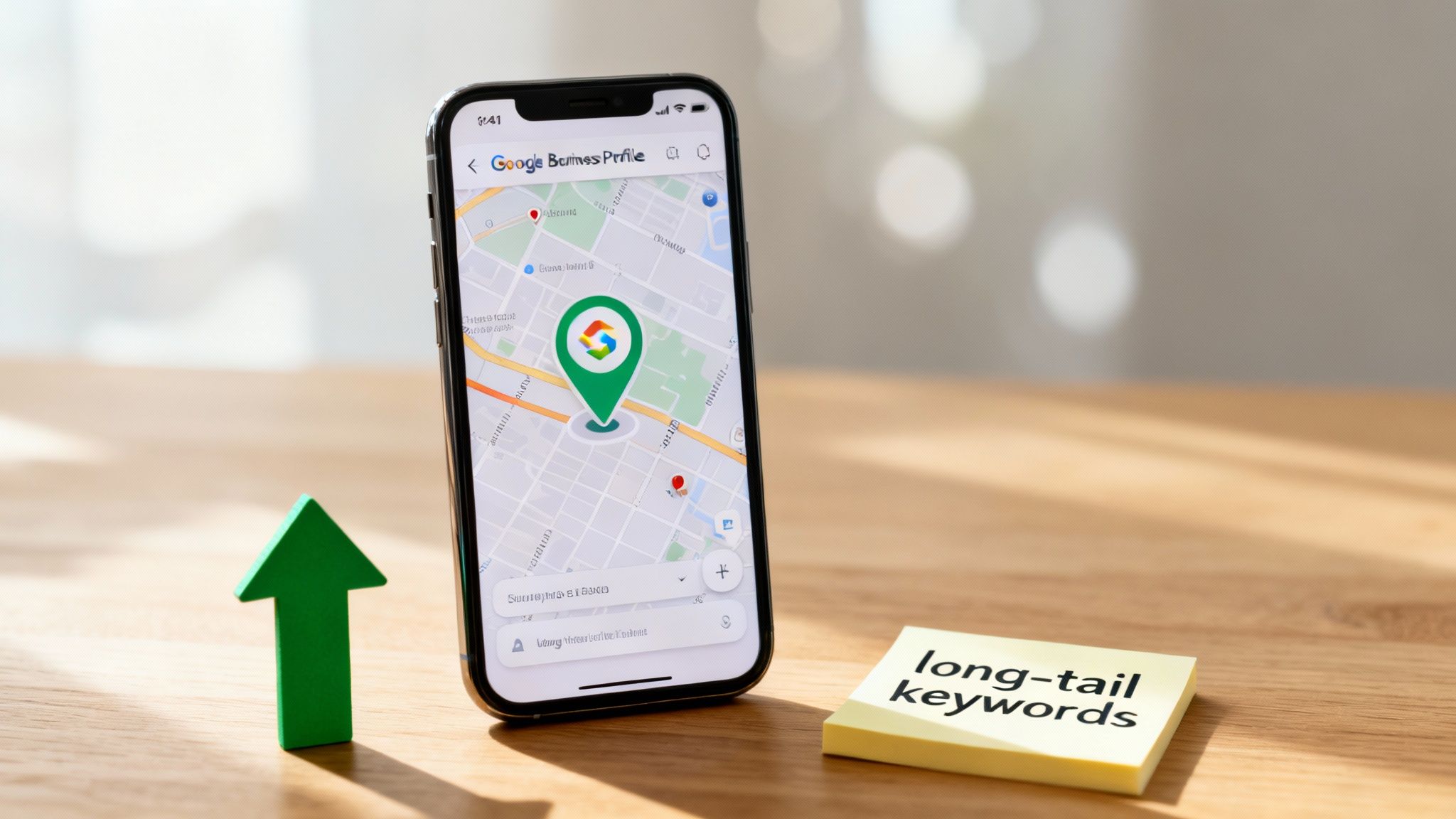
One of the fastest ways to see movement is by properly optimising your Google Business Profile (GBP). For any Australian business with a physical location or service area, a well-managed GBP is your single most powerful tool for immediate local visibility. It puts you right in front of customers on Google Maps and in local search results when they need you most.
But this is more than just listing your address and trading hours. It means actively managing reviews, uploading high-quality photos regularly, and using the Q&A feature to answer common customer questions before they even ask. These actions signal to Google that your business is active and reputable, often leading to a rapid increase in local calls and website visits.
Target High-Intent Long-Tail Keywords
Another powerful strategy is to focus on long-tail keywords. These are the longer, more specific search phrases people type in when they're much closer to making a decision. Think "emergency plumber Broadbeach" instead of the hyper-competitive term "plumber."
Sure, these keywords have lower search volumes, but they're significantly less competitive and attract a much more qualified audience. It's far quicker to rank for these targeted terms than for broad, high-competition keywords, allowing you to start capturing valuable traffic almost immediately.
Here are some quick wins you can implement right away:
Refresh Existing Content: Find a blog post that's doing okay and give it an update with new info, fresh stats, and better images. A simple refresh can often give it a serious ranking boost.
Improve Internal Linking: Go through your key service pages and add links to relevant blog posts and other resources on your site. This helps Google understand your site structure and passes authority between your most important pages.
Answer Questions Directly: Use tools to find common questions your audience asks and create content that answers them head-on. This positions you as an expert and helps you appear in those "People Also Ask" boxes in search results.
Building early momentum isn't just about one-off tasks. It's about creating a consistent flow of valuable information that builds trust and authority over time. A systematic approach to scaling your content marketing efforts ensures that every piece you create contributes to the bigger picture.
Securing these early wins is crucial for morale and momentum. They provide measurable data that proves the strategy is working, building confidence while the more significant, long-term results focused on competitive keywords are still developing.
By combining these tactics, you create a positive feedback loop. Early traffic from your Google Business Profile and long-tail keywords shows Google that your site is valuable, which in turn helps your broader SEO efforts gain traction more quickly. It’s a core part of learning how to increase website traffic sustainably for the long haul.
The Compounding Value of a Patient SEO Strategy
After digging into the timelines and tactics, we land on what might be the most important lesson of all: patience. It’s the one thing that separates fleeting results from lasting, unshakeable success in the world of SEO.
Think of SEO not as another monthly line item on your marketing budget, but as a direct investment into a business asset that works for you 24/7. Your website becomes your digital storefront, always open and always ready to bring customers in the door.
It’s a lot like compounding interest. Those small, consistent efforts you make at the beginning—a blog post here, a technical fix there—might not feel like much. But over time, every piece of content, every backlink, and every on-page tweak builds on the last, creating powerful, exponential growth that your competitors will find almost impossible to catch up with.
The Shift from Expense to Asset
Many businesses get stuck seeing marketing as a cost centre. A patient, strategic approach to SEO completely flips that script. While paid ads bring in traffic one day and disappear the next when you turn off the spend, the authority and rankings you earn through SEO have incredible staying power.
The result is a steady, reliable stream of organic traffic that doesn't depend on how much you’re willing to spend on ads each day.
This approach delivers real, sustainable outcomes:
Unshakeable Brand Authority: When you consistently show up in search results, you become the trusted, go-to leader in your industry.
A Cost-Effective Marketing Engine: Over time, the cost per lead from SEO almost always drops to become significantly lower than other channels.
A Defensible Competitive Advantage: The authority you build over 12 months or more is something a new competitor simply can't buy or replicate overnight.
The key is to adopt a strategic, long-term view. You aren't just trying to rank for a keyword; you're building a durable online presence that will deliver tangible value for years to come.
Understanding how long SEO takes is really about recognising this compounding effect. The initial investment of time and resources is what builds the foundation for an asset that will eventually generate leads, sales, and brand loyalty on autopilot, securing your long-term position in the market.
Your Top Questions About SEO Timelines
Even with a roadmap in hand, it's natural to have a few lingering questions about how long SEO really takes. Let's tackle some of the most common ones we hear, so you can move forward with total confidence.
Can I Get to Page One of Google in a Month?
For any search term worth ranking for, hitting page one in a single month is, frankly, unrealistic—especially for a new website. Think of it this way: Google's job is to show the most trustworthy and authoritative results. Building that kind of trust simply can't be done in 30 days.
Sure, you might see a flicker of movement for some super-niche, low-traffic phrases. But meaningful, page-one visibility for keywords that actually drive business? That's a different ball game. Be very wary of any agency promising results that fast; they’re often using risky shortcuts that can get your site penalised down the track.
Why Is My Competitor Ranking Faster Than Me?
It’s a frustrating feeling, for sure. Seeing a competitor climb the ranks faster than you usually comes down to a few key factors, and figuring them out is the first step to closing the gap.
More often than not, it's one of these reasons:
Domain History: They could be sitting on an older, more established domain. If they've been around for years, they've likely built up a stronger history and a bigger backlink profile that Google already trusts.
Technical Health: Their website might just be in better shape under the hood. Things like lightning-fast page speed, a clean site structure, or flawless mobile optimisation give them a serious edge.
Content Investment: It's also very possible they've been plugging away, consistently creating high-quality, genuinely helpful content for a lot longer than you have.
The best way to know for sure is to run a deep-dive competitor analysis. Once you understand what they're doing right, you can build a smarter strategy to not just catch up, but pull ahead.
Does Paying for Google Ads Help My Organic SEO Rankings?
Straight up, no. Paying for Google Ads has zero direct impact on your organic SEO rankings. Google keeps the two systems completely separate. Your ad spend doesn’t influence how the organic search algorithm sees your site at all.
However, there can be some handy indirect benefits. A solid ad campaign can massively boost brand awareness and get more eyeballs on your site. This extra visibility might lead to more people searching for your brand by name or linking to your content on their own—and both of those are positive signals for SEO. But just running ads won't magically push your organic listings higher.
Ready to build a powerful digital asset that delivers consistent growth for years to come? Titan Blue has been helping Australian businesses achieve long-term success with proven SEO strategies for over two decades. Contact us today to start your journey.
Titan Blue is your go-to digital partner for smart, results-driven solutions. We blend strategy, creativity and tech to grow your brand and get real results fast.