Stay ahead with the latest tips, trends, and insights from the Titan Blue team , straight from the studio in Broadbeach.


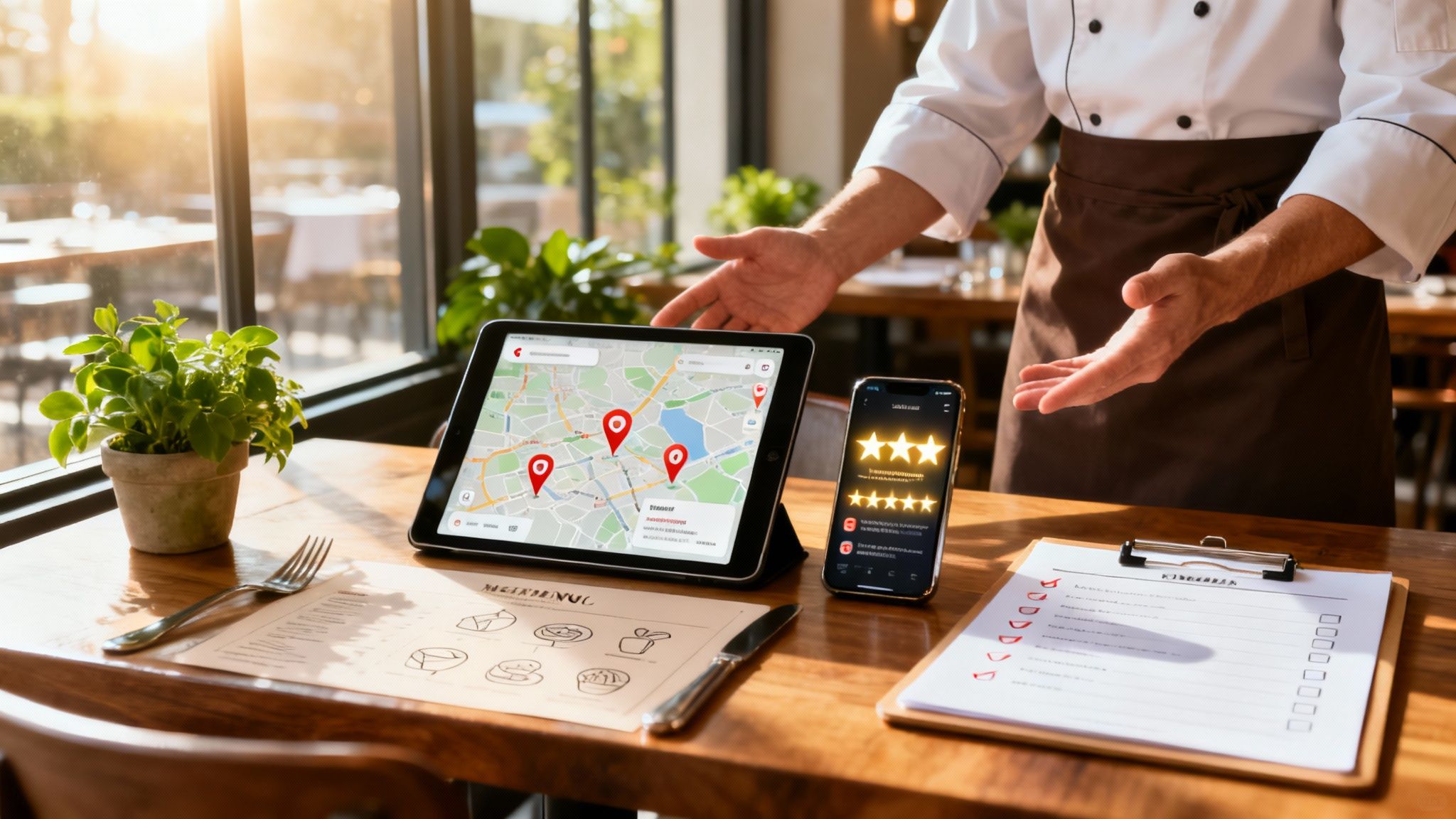
Local SEO for restaurants is pretty straightforward: it’s all about making sure your business pops up when hungry locals search for things like "best tacos near me."
It's how you become the first, most obvious choice for diners who are deciding where to eat right now.
Why Your Restaurant Is Invisible to Hungry Customers
Think about how people find new places to eat these days. They grab their phones and search for exactly what they're craving, right where they are.
If your restaurant doesn't show up at the top of Google Search and Maps, you're basically invisible to your most valuable customers—the ones who are ready to walk in and spend money. You could have the best food in town, but without that digital visibility, you're just handing business over to your competitors down the street.
This goes beyond just having a website. It's about teaching Google who you are, where you are, and why a local diner should pick you over everyone else. This whole process is called local search engine optimisation (SEO), and it's the difference between an empty dining room and a fully booked night. It sends all the right signals to search engines, telling them your restaurant is the best, most relevant answer to a hungry person's search.
The Modern Diner's Journey
The path from a rumbling stomach to a paid bill has completely changed. Today’s diners rely on a quick, simple digital process to figure out where they're going.
This flow shows exactly how a customer's search leads them straight to a restaurant's front door.
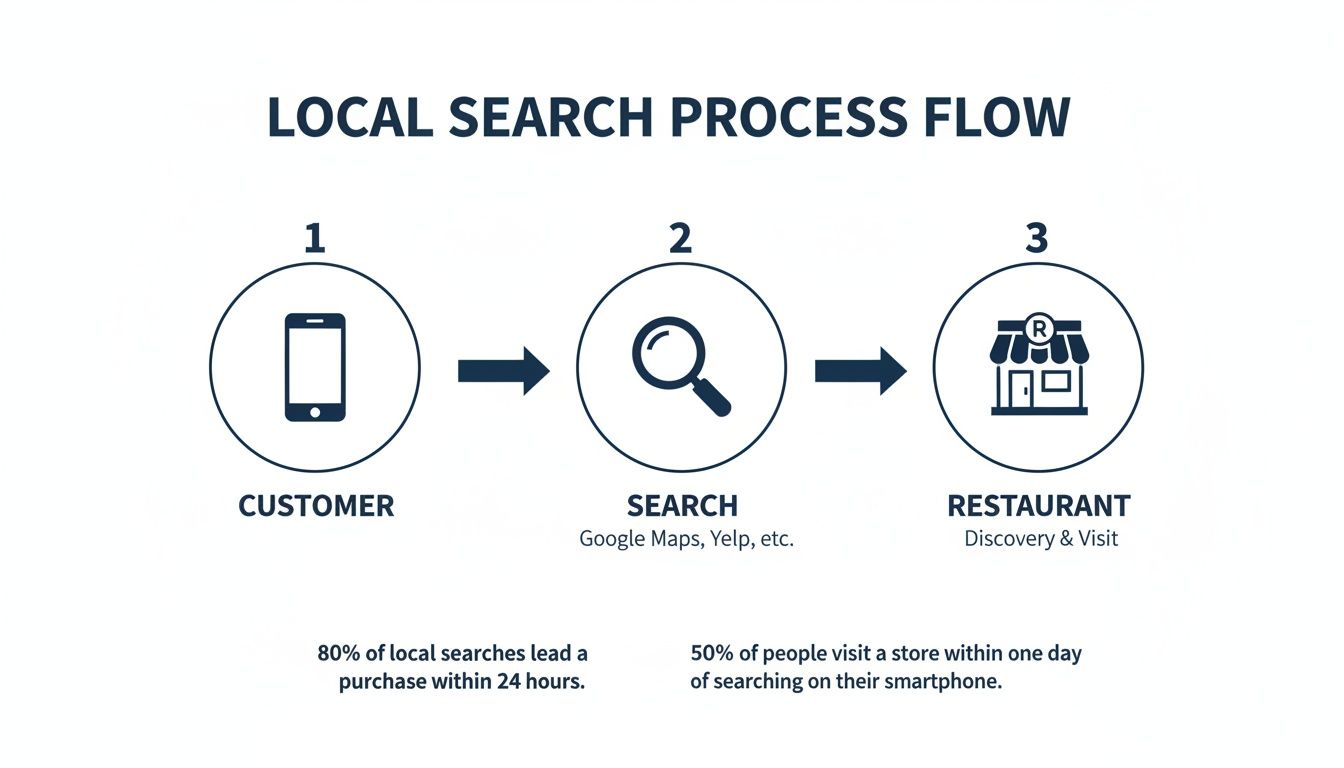
Bottom line: if you’re not showing up and looking good at that "Search" stage, you’re cut out of the running before a customer even thinks about your menu.
Why You Need to Act Now
Ignoring your online presence just isn't an option anymore. A huge chunk of restaurant searches have high local intent, which means people aren't just browsing—they're making immediate decisions.
If you've ever found yourself wondering why is my business not showing up on Google, it’s almost certainly because your local signals are weak or inconsistent. To stop being invisible to hungry customers, you have to put effective local marketing strategies in place to boost your visibility right here in your neighbourhood.
This guide is your playbook. We're going to break down the essential strategies you need to claim the best digital real estate in your area. We'll cover:
- Google Business Profile: How to turn your listing into a customer-attracting machine.
- Menu & Website Optimisation: Making your dishes and details easy for Google to find and understand.
- Reputation Management: Building a five-star reputation that search engines (and customers) trust.
Mastering Your Google Business Profile

Your Google Business Profile (GBP) is way more than just another online directory listing; it's your restaurant's digital front door. For most potential customers, it's the very first interaction they'll have with your brand, showing up right at the top of Google Search and Maps when they're hungry and ready to make a decision.
Think of it as your modern-day shopfront window. A well-kept profile with mouth-watering photos, up-to-date info, and current specials can stop a scroller in their tracks and pull them in. Honestly, getting this right is probably the single most impactful thing you can do for your restaurant's local SEO.
Selecting Categories That Capture Diners
Once you've claimed your profile, the first real job is picking the right categories. This is how you tell Google exactly what you are, which is absolutely critical for showing up in the right searches. Don't just pick one and call it a day.
Your primary category should be broad but accurate—think 'Italian Restaurant' or 'Cafe'. But the real magic happens in the secondary categories. This is your chance to snag those specific, niche searches that customers with high intent are typing in.
For example:
- Italian Restaurant (Primary)
- Pizza Restaurant (Secondary)
- Restaurant with Outdoor Seating (Secondary)
- Family Friendly Restaurant (Secondary)
This setup means you can show up for searches like "pizza place near me" and "restaurants with patios," casting a much wider net. Brainstorm all the unique things about your restaurant and add them as secondary categories to cover all your bases.
Uploading Mouth-Watering Visuals
We all know people eat with their eyes first, and your GBP photos are the first course. High-quality, professional images are non-negotiable here. You'll want a good mix of shots that paint the full picture of the experience you're offering.
Your photo gallery should have:
- Stunning Food Photos: Showcase your hero dishes, plated beautifully under great lighting. Make people hungry just by looking at their screen.
- Inviting Interior and Exterior Shots: Give people a feel for your vibe. Show off your decor, the bar area, and what the front of your building looks like so they can spot it from the street.
- Photos of Staff in Action: Happy, professional staff add a human touch and build instant trust. A shot of your chef plating a dish or a bartender shaking a cocktail works wonders.
Plus, regularly adding new photos signals to Google that you're active and managing your profile, which can give your ranking a nice little boost.
Using Google Posts to Stay Top of Mind
Google Posts are like mini-billboards that sit right on your profile, perfect for sharing timely updates. This feature is a brilliant way to talk directly to potential diners and prove to Google that you're actively engaged.
Use Google Posts to highlight daily specials, promote your weekend brunch menu, announce an upcoming live music night, or even share a link to a new blog post. Every post keeps your profile looking fresh and gives the search engine another signal of your relevance.
Nailing these optimisations is becoming more important every day. So many Australian businesses still haven't fully optimised their Google Business Profiles, which creates a massive opportunity. Restaurants that claim, verify, and diligently update their listings with accurate details, menus, and regular posts can often leapfrog competitors with surprisingly little effort.
The strategy is so effective that industry trackers expect total SEO spending in Australia to hit around AUD 1.5 billion in 2025, as hospitality brands pour more of their budget into capturing local demand. You can explore more about how local search investment translates to customer growth for Australian businesses to see the full picture.
Transforming Your Profile into a Conversion Tool
A fully optimised profile doesn't just inform people—it converts them. By linking directly to your booking and ordering platforms, you turn your GBP from a static listing into a powerful revenue-driving machine.
Double-check that your "Reserve" and "Order" buttons are set up correctly and point straight to the right pages on your website or third-party service. This removes all the friction for the customer, making it ridiculously easy for them to book a table for Friday night or order takeaway while they're on the couch.
To really get your head around how all these pieces fit together, have a look at our comprehensive guide on Google My Business and local SEO. This approach ensures your profile is out there working for your business 24/7.
Optimising Your Website and Menu for Search
So, a hungry diner has found you on Google and clicked through. Great. Now your website has one job: close the deal. This is where your on-site optimisation makes a real, tangible difference, turning a curious visitor into a confirmed booking or a takeaway order.
It’s all about creating a seamless, informative, and lightning-fast experience that convinces both users and search engines your restaurant is the right choice. Think of your website as the central hub for all your local SEO signals. It backs up the information on your Google Business Profile and gives people a deeper look into what makes your place special. Neglecting it is like having a beautiful shopfront that leads to a messy, confusing store.
Solidifying Your Digital Foundation
Consistency is the absolute bedrock of local SEO. Search engines need to see the same core information about your restaurant everywhere online to trust that you’re a legitimate, active business.
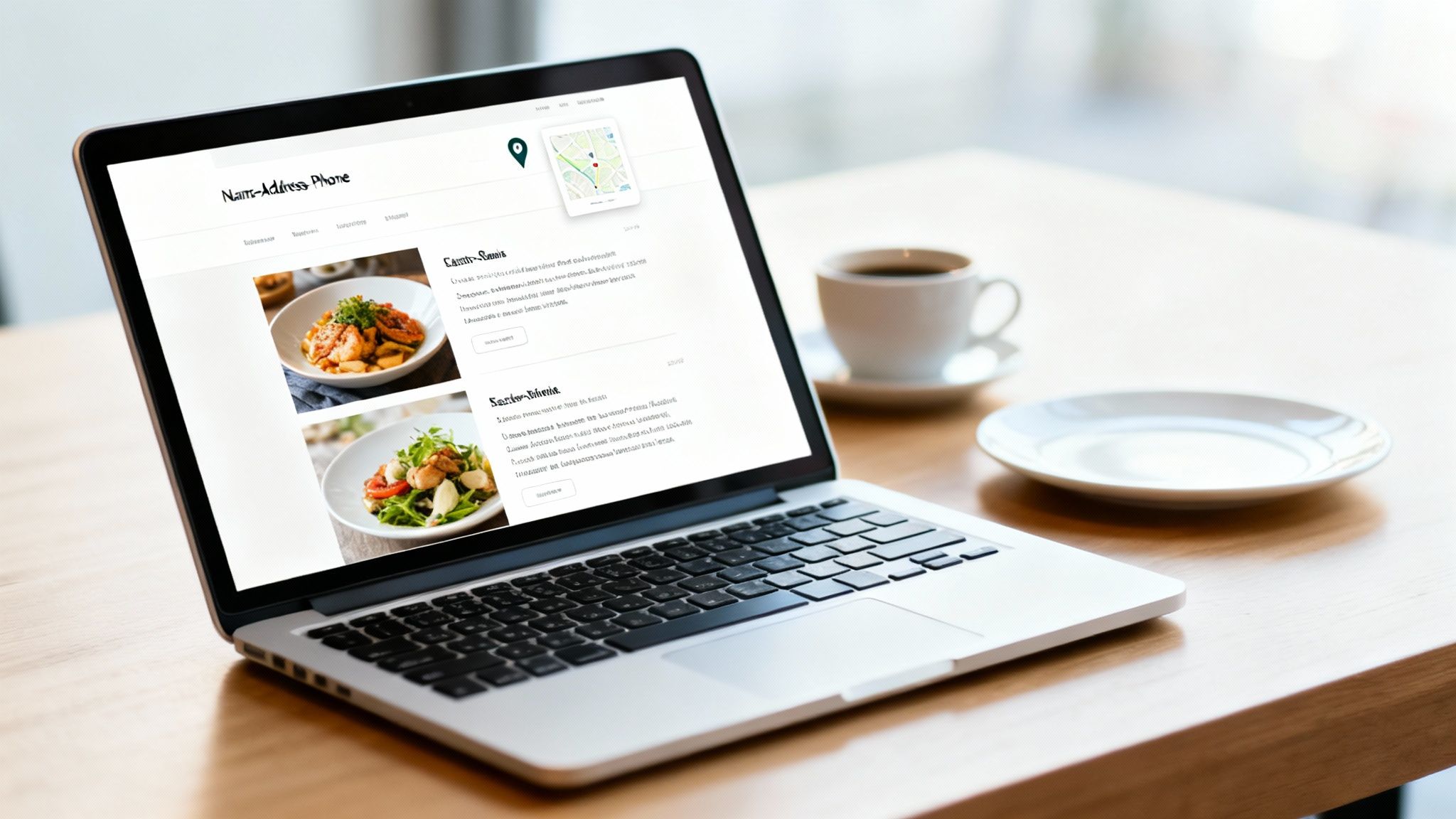
This all starts with your Name, Address, and Phone number (NAP).
Your NAP needs to be identical across your website, Google Business Profile, and any other online directory you're listed on. And I mean identical—no small variations like "St." on one page and "Street" on another. The best place for this info is right in your website's footer and on your contact page, making it dead simple for both customers and Google's crawlers to find and verify.
And here’s a non-negotiable tip: embed a Google Map directly onto your contact page. It's a powerful, direct signal to Google that confirms your physical location and makes it incredibly easy for customers to get directions.
Making Your Menu a Search Magnet
Your menu isn't just a list of dishes; it's one of your most powerful SEO assets. A huge mistake I see restaurant owners make is uploading their menu as a PDF. To search engines, a PDF is practically invisible.
Your menu needs to be a dedicated HTML page on your website.
This simple change allows search engines to read your dish names, descriptions, and prices. When you're writing those descriptions, put yourself in your customer's shoes. What terms would they search for? Weaving in natural, descriptive keywords can help you capture those highly specific searches.
Let's take a Margherita pizza, for example:
- Instead of: "Margherita Pizza – Tomato, mozzarella, basil."
- Try this: "Our classic Margherita is one of the best gluten-free pizzas in Richmond. Made with San Marzano tomatoes, fresh mozzarella, and locally sourced basil on a perfectly crisp, gluten-free crust."
That small tweak helps you show up for searches far more specific than just "pizza." You're directly answering a potential customer's need while also making the dish sound delicious.
Unlocking Your Menu with Schema Markup
To give Google an even clearer picture of what you offer, you need to implement schema markup. Don't let the name scare you; it's just a small piece of code added to your website's backend that explicitly tells search engines what your content is about. For restaurants, the two most important types are 'Restaurant' and 'Menu' schema.
This code helps Google instantly understand details like:
- Your restaurant's cuisine type
- Your price range
- Specific menu items and their descriptions
- Accepted currencies and payment methods
Implementing this structured data can lead to 'rich results' in search, where your dishes, reviews, and opening hours might appear directly on the results page. This makes your listing far more compelling and clickable.
For a deeper dive into creating a site that not only looks great but is technically primed for search, check out our guide on effective website design for restaurants. It covers how to build a digital presence that turns visitors into regulars.
Prioritising Mobile Speed
Let's be real: the vast majority of local restaurant searches happen on a mobile phone. People are often out and about, looking for a place to eat right now. In that context, speed is everything. A website that takes more than a few seconds to load will lose that customer.
A slow menu page is a recipe for a high bounce rate. Hungry customers are impatient. If they can't see what you offer instantly, they'll just hit the back button and click on your competitor.
Use tools like Google's PageSpeed Insights to test your site's mobile performance. It will show you what's slowing things down, like massive images or clunky code. A fast, mobile-friendly website isn't just a nice-to-have; it's absolutely essential for modern restaurant SEO.
Building a Reputation That Attracts Diners
In the restaurant game, your reputation is everything. These days, that reputation lives online. Online reviews are the new word-of-mouth, sending a powerful signal to potential diners and Google alike that your place is a trusted, quality spot.
A constant flow of positive feedback does more than just build trust with customers; it’s a massive ranking factor for Google's local 'Map Pack'. Google wants to show people the best local experiences, and it relies heavily on customer opinions to figure out who deserves those top spots.
This means actively managing your online reputation isn't just a "nice-to-have"—it's a core part of any restaurant's local SEO plan.
Encouraging a Steady Flow of Genuine Reviews
The first step is getting happy customers to actually share their positive experiences. Most are willing, but they often need a simple, convenient nudge. Your job is to make it dead simple for them.
Here are a few tried-and-true methods that work:
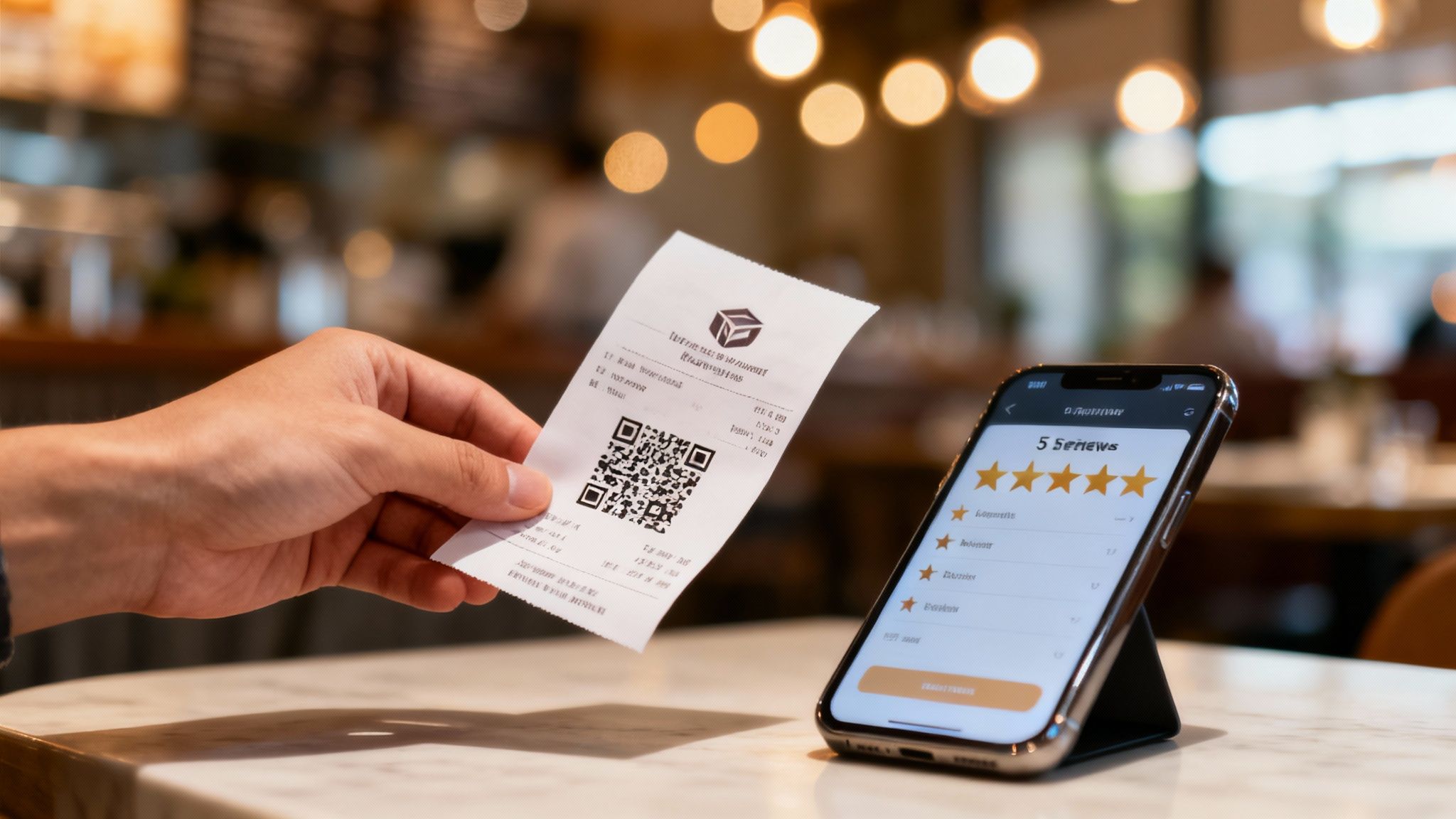
- QR Codes on Receipts and Menus: Pop a small QR code at the bottom of your receipts or menus that links straight to your Google review page. A friendly prompt like, "Loved your meal? Let us know!" is all it takes.
- A Personal Touch from Your Team: Train your staff to spot genuinely happy customers. When a guest is raving about a dish, a simple, "That’s great to hear! We'd be so grateful if you shared that on Google when you have a moment," can work wonders.
- Email and SMS Follow-ups: If you take online bookings or have a loyalty program, a quick follow-up email or SMS the next day is perfect. It catches them while the memory is still fresh and gives them a direct link to click.
For Aussie diners, reviews are a huge deal. It’s often said that 88% of customers check out Google Reviews before trying a local business, and this is especially true for restaurants where trust is everything. Getting even a 20-40% bump in positive reviews can make a real difference to your Map Pack ranking and how many people click through to book or order.
The Art of Responding to Feedback
Just collecting reviews isn’t enough. Responding is where you really build trust and show you care about your customers. It proves to the original reviewer—and every potential customer reading—that you're an engaged owner who values what people have to say.
Your response isn't just for the person who left the review. It’s a public billboard for your brand’s customer service philosophy.
A quick, professional, and personal response is key. It signals to Google that you’re actively managing your profile, which is a great engagement signal for your local SEO. Getting this right is a cornerstone of solid online reputation and Google My Business management.
Crafting the Perfect Response to Positive Reviews
A five-star review is a perfect chance to reinforce that positive vibe and build a real connection. Steer clear of generic, copy-paste replies like "Thanks for your review." They feel robotic.
Instead, get personal:
"Thanks so much for the amazing feedback, Sarah! We're so glad you enjoyed the barramundi—it's one of the chef's favourites, too. We can't wait to see you again soon!"
A response like this works because it:
- Uses their name, making it feel personal.
- Mentions a specific detail (the barramundi), proving you actually read their comment.
- Invites them back, turning a happy customer into a regular.
Navigating Negative Reviews with Grace
Let's be real, a negative review can feel like a punch to the gut. But how you handle it can actually turn a bad situation into a win for your reputation. The number one rule? Never, ever get defensive.
Here’s a simple framework that always works:
- Acknowledge and Apologise: Start by thanking them for their feedback and saying sorry that their experience wasn't up to scratch. "Hi James, thanks for taking the time to share this. We're really sorry to hear your meal wasn't up to our usual standard."
- Show Empathy and Take Ownership: Briefly show you understand their frustration. No excuses.
- Take it Offline: Give them a direct way to resolve the issue. "We take this feedback very seriously and would love a chance to make things right. Could you please get in touch with our manager, David, at [email address] so we can learn more?"
This approach shows every potential customer that even when things go wrong, you handle it with class. To get a better handle on customer feedback, knowing how to download Google Reviews can help you spot patterns and make meaningful improvements to your service over time.
Weaving Your Restaurant into the Local Fabric
Real local SEO for restaurants isn't just about tweaking your own website and profiles. You build true authority when you become a recognised voice in your local community's online conversation. It’s all about creating content and building relationships that weave your restaurant into the digital DNA of your neighbourhood.
This strategy sends a powerful signal to search engines. It shows you're not just a business in a community; you're an active, valuable part of it. This is how you lock in your rankings and start pulling in genuinely local customers who feel a real connection to your brand.
Create Content That Screams "Local"
Your restaurant’s blog is a seriously underrated tool for stamping your local authority. Ditch the generic posts about your specials for a moment and start thinking bigger. How can you create content that serves the wider community and naturally positions your restaurant within it?
Think like a local guide. Your goal is to create resources that people in your area would actually search for and find genuinely useful. This turns your website from a simple menu into a hub of local knowledge.
Here are a few ideas to get the ball rolling:
- Spotlight Your Local Suppliers: Got amazing produce from a farm down the road? Write a blog post about them. Tell their story, include photos of the farm, and maybe even a quick interview with the farmer. It’s authentic, interesting, and hyper-local.
- Be the Neighbourhood Expert: Pull together a guide on the "Best Coffee Shops in [Your Suburb]" or "A Weekend Guide to Exploring [Your Neighbourhood]". Naturally, you’ll mention your place as the perfect spot for lunch or dinner.
- Show You're Involved: If you're part of a local food festival or charity event, do a recap post with plenty of photos. It’s simple, effective proof that you’re an engaged member of the community.
This kind of content is a double-win. It gives potential customers something of real value and creates assets that local bloggers, news sites, and business groups will actually want to link to.
Build Relationships, Not Just Links
In the world of SEO, links from other reputable local websites are like votes of confidence. They tell Google that other established local players trust and endorse your restaurant. Forget sending out mass emails begging for links; that approach is dead.
This is about genuine partnership and community engagement that results in natural, high-quality backlinks.
Think of link building as digital networking. Every partnership you forge in the real world has the potential to become a valuable online signal that boosts your restaurant's authority.
Actionable Ways to Build Local Links
Getting started with local link building is more about creativity and community spirit than it is about technical wizardry. It’s about spotting opportunities for collaboration that are a win-win for everyone involved.
Here are a few practical tactics you can use right away:
- Sponsor a Local Team or Event: This is a classic for a reason. Sponsoring a local kids' sports team, a charity fun run, or a community arts festival is a fantastic way to build goodwill. It almost always results in a link back to your website from the team or event’s official page—a powerful local signal for Google.
- Partner with Nearby Businesses: Team up with a hotel down the street for a 'dine and stay' package. Or what about a 'dinner and a movie' deal with the local cinema? These partnerships create cross-promotional content where it makes perfect sense for both businesses to link to each other.
- Connect with Local Food Bloggers: Find the food bloggers and influencers in your city. Don't just send them a press release; invite them in for a meal on the house so they can experience what you do firsthand. A single positive review on their blog can deliver a high-authority backlink and send a stream of their loyal followers your way.
When you weave your restaurant into the community like this, you're doing so much more than just optimising for keywords. You're building a brand that locals recognise, trust, and genuinely want to support. And that’s the real endgame of any local SEO effort.
Common Questions About Restaurant SEO
Navigating the world of local SEO brings up a lot of questions, especially for busy restaurant owners. You need clear, straightforward answers so you can focus on what actually moves the needle. Let's tackle some of the most common ones we hear.
How Long Until I See Real Results?
It's the first question everyone asks, and the answer isn't black and white. While some changes to your Google Business Profile—like updating your hours or adding fresh photos—can show up almost immediately, seeing a real, measurable jump in traffic and bookings takes a bit of time.
Think of it as building your restaurant's digital reputation. It’s a gradual process, built one great review and one local mention at a time. Generally, you can expect to see meaningful movement in your local rankings and customer actions within three to six months of consistent effort. If you want to dive deeper into the timeline, our guide on how long SEO takes to work breaks down all the factors. The key takeaway? Consistency is far more important than intensity.
Can I Handle This Myself or Do I Need an Expert?
Absolutely. You can definitely tackle the most critical parts of local SEO for your restaurant on your own. Many of the highest-impact tasks don't require any deep technical knowledge.
Here are the fundamentals you can manage in-house:
- Claiming and fully optimising your Google Business Profile.
- Actively managing your online reviews by responding to feedback.
- Ensuring your website information is accurate and up-to-date.
- Posting regular updates and photos to your GBP.
Many restaurateurs handle these core tasks themselves and then bring in an agency later to handle the more technical side, like advanced schema markup or a dedicated link-building campaign to really accelerate growth.
What Is the Single Most Important Task?
If you only have time to do one thing, pour all your energy into your Google Business Profile (GBP). This is your digital storefront on Google Search and Google Maps, and it's where the vast majority of your customers will first find you.
A complete, well-managed profile is the absolute cornerstone of local SEO for any restaurant. Make sure it has accurate hours, fantastic photos, a direct link to your menu, and a steady stream of positive, recent reviews. This is the single most powerful factor in winning a spot in the coveted local "Map Pack."
How Does Social Media Fit into Local SEO?
While your latest Instagram reel isn't a direct ranking factor for Google, an active social media presence has a powerful indirect effect on your local visibility. It's a crucial piece of your overall digital footprint.
A strong social media game helps by:
- Building brand recognition and buzz within your local community.
- Driving traffic back to your website, which is a positive signal to Google.
- Leading to valuable links from local food bloggers or media outlets who discover your content.
Plus, your social profiles often rank for your restaurant's name, giving you more control over your online reputation and what potential customers see when they search for you.
At Titan Blue Australia, we specialise in turning your local presence into your greatest asset. With over two decades of experience, we help restaurants across Australia get found by hungry customers and build a digital reputation that drives real growth. If you’re ready to boost your bookings and stand out from the competition, let’s talk about a strategy that works for you. https://titanblue.com.au

AI Search Strategy Australia: A 7-Step Framework for Getting Found in ChatGPT, Perplexity, and Google AI
A practical 7-step AI search strategy framework for Australian businesses wanting to get cited in…

AI Search Marketing Australia: The Complete Strategy Guide for 2026
AI search marketing means getting your Australian business cited by ChatGPT, Perplexity, and Google AI…

AI Visibility Optimisation Australia: How to Measure, Benchmark, and Grow Your Brand’s Presence in AI Search
AI visibility optimisation helps Australian businesses get cited by ChatGPT, Google AI Overviews, and Perplexity.…