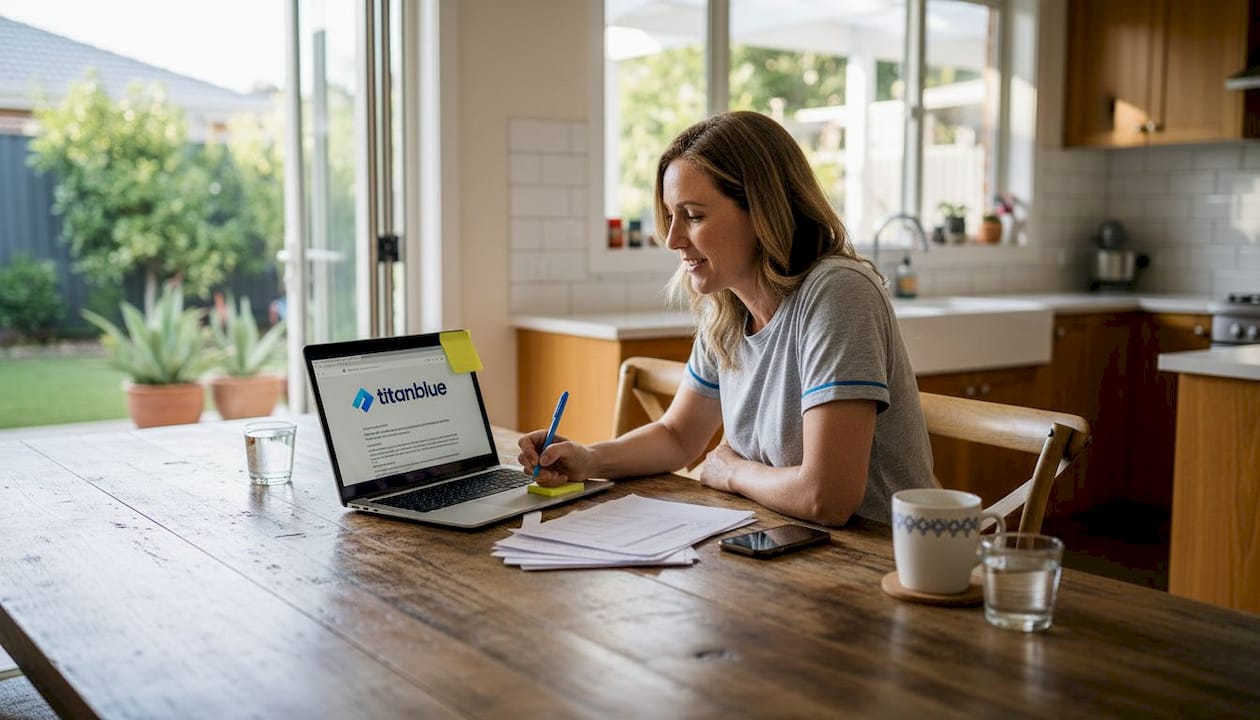
NDIS Web Design Gold Coast: ndis web design gold coast guide for providers
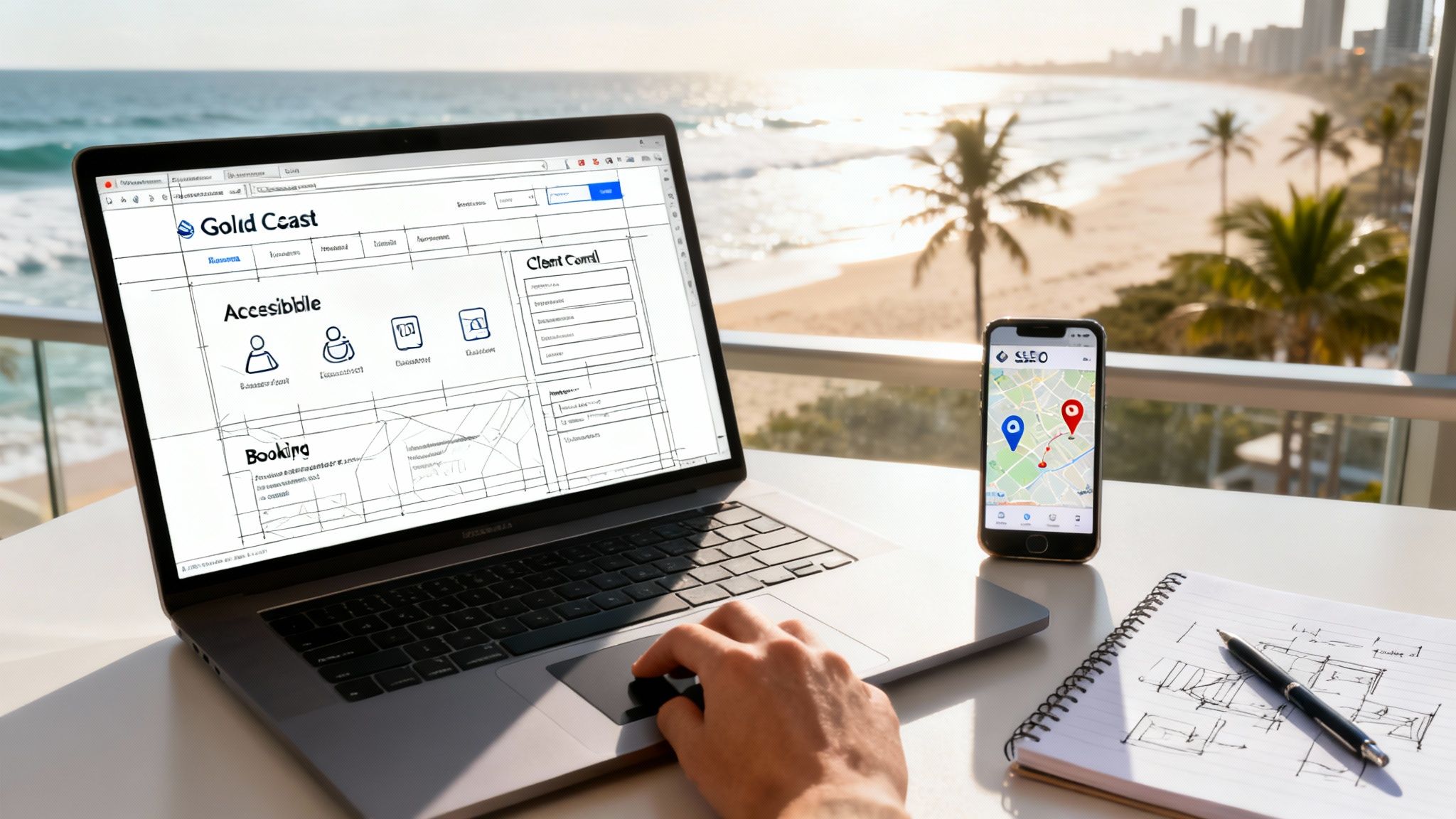
For any NDIS provider on the Gold Coast, a professional website isn't just a nice-to-have; it's your digital front door. It’s often the very first place prospective participants and their families will look to find and size up your services. A purpose-built site doesn't just look good—it builds trust, answers crucial questions, and carves out your space in a competitive local market from the get-go.
Why Your NDIS Service Needs More Than a Basic Website
Your website is the first point of contact for potential participants, families, and support coordinators across the Gold Coast. It’s out there working for you 24/7, offering information and reassurance long before anyone picks up the phone. A generic, off-the-shelf template just can't communicate the specialised care, trust, and credibility that are non-negotiable in the NDIS sector.
Put yourself in their shoes for a moment. A support coordinator is looking for reliable local providers with a very specific skill set. They land on two websites. The first is a basic, one-page site with little more than a phone number. The other clearly outlines services, shares participant success stories, and has a simple contact form. The choice is a no-brainer.
Making the Right First Impression
A well-crafted NDIS website does far more than just list what you do; it creates an immediate connection. It showcases your professionalism and your commitment to accessibility right from the first click. This is your prime opportunity to show you genuinely understand the unique needs of the NDIS community.
A thoughtfully designed online presence can help you:
Build Instant Credibility: It signals that you're a legitimate, professional organisation committed to high standards of care.
Answer Critical Questions: Your site can proactively address common queries about funding, service types, and your team's qualifications, which saves everyone time.
Differentiate Your Practice: In a growing market, a helpful, well-designed website makes you stand out. It highlights what makes your service the right choice for a participant.
Tapping into a Growing Local Market
The National Disability Insurance Scheme has grown significantly in Queensland, and the Gold Coast is no exception. With thousands of NDIS participants in the area, the demand for accessible, high-quality information is huge.
Statistics show that nearly 60% of Australians now research businesses online before making any kind of commitment. That figure is even higher in tech-savvy areas like the Gold Coast. A custom website, properly optimised for local searches, ensures you're visible the moment families are actively looking for support.
This is your most effective tool for attracting new participants, building trust with families, and cementing your reputation as a leading local provider. To see how a targeted approach can attract the right clients, you can learn more about our comprehensive web design services on the Gold Coast.
Building an Accessible and Compliant Digital Foundation
Creating a website that truly serves the NDIS community on the Gold Coast goes far beyond just looking good. It’s all about building a solid digital foundation based on accessibility and compliance, making sure every single visitor feels welcome and can find what they need, hassle-free. This isn't just a technical box to tick; it’s a core part of providing an inclusive, trustworthy service from the very first click.
The absolute cornerstone of this foundation is the Web Content Accessibility Guidelines (WCAG). If you're serious about creating a supportive online space for NDIS participants, then prioritising building accessibility into web development projects from day one is non-negotiable. For NDIS providers, aiming for WCAG AA compliance is the recognised standard. It shows you’re committed to getting this right.
Unpacking WCAG AA Compliance
So, what does AA compliance actually look like in the real world? It boils down to making deliberate design choices so that people with various disabilities can use your site without hitting frustrating barriers. Your NDIS web design needs to be built for your Gold Coast audience, considering how they’ll actually interact with it.
Here are a few practical examples of what this means:
Colour Contrast: Making sure there’s enough contrast between your text and background colours. This is a game-changer for people with low vision who need clear, readable content.
Descriptive Alt Text: Adding simple text descriptions to every image on your site. This allows screen reader software to describe the visuals to users who are blind or have a visual impairment.
Keyboard Navigation: Ensuring your entire website can be used with just a keyboard. This is absolutely essential for people with motor disabilities who can't use a mouse.
By following WCAG standards, your website won’t just meet best practices; it will also demonstrate your dedication to inclusivity, making it easier for all participants to find and use your services without barriers.
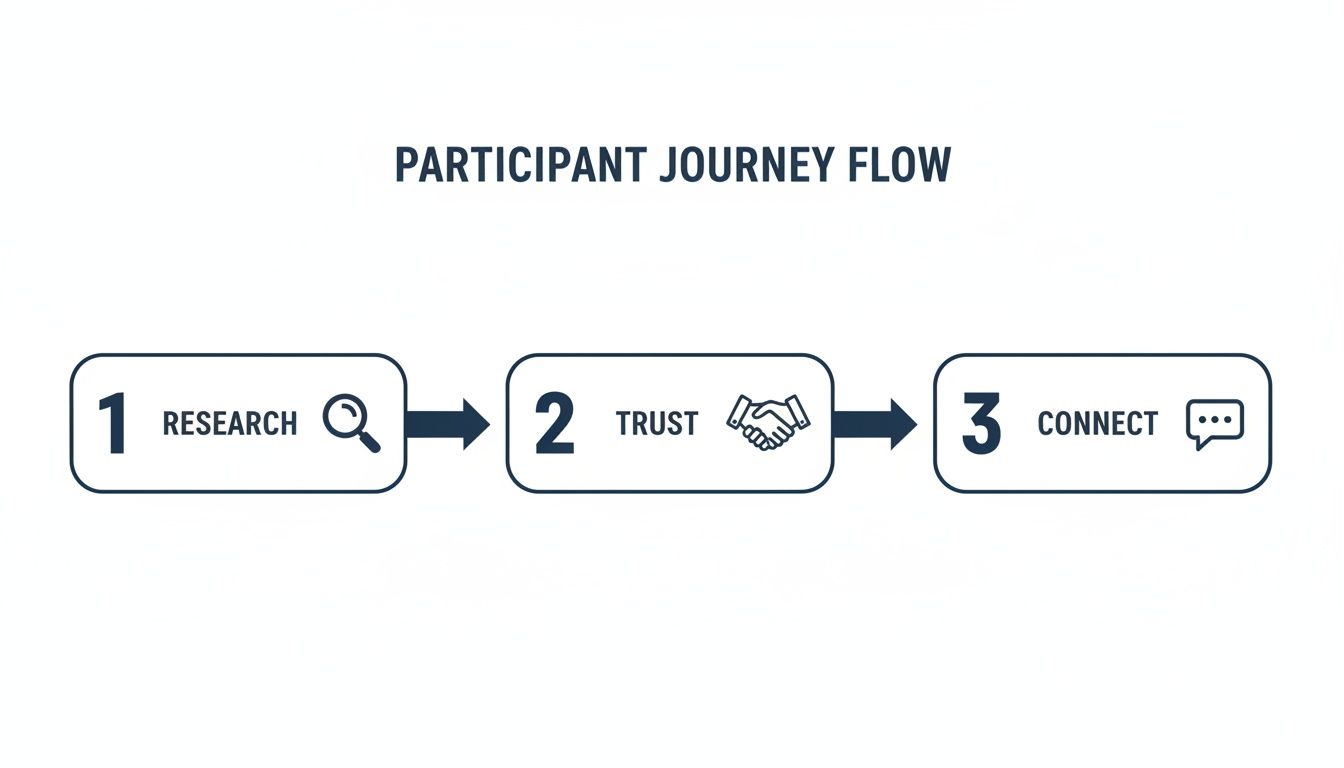
This flow chart breaks down the typical journey a participant or their family takes when looking for NDIS services online.
Every step—from that initial research phase to building trust and finally making contact—depends on a website that is accessible and straightforward to navigate.
Beyond Accessibility: Legal and Ethical Duties
Accessibility is one half of the equation; the other is upholding strict legal and ethical standards with participant information. Building trust is everything in this sector, and that trust begins with being transparent and secure online.
This is even more critical when you consider the incredible diversity of the community you serve. The NDIS supports over 600,000 participants with a wide range of disability types. Official data shows 28% are in the 'intellectual disability' category and 12% are in the 'autism' category. With around 25% of Australians living with a disability, inclusive design isn't just the right thing to do—it's a strategic necessity.
Here are your essential duties:
A Transparent Privacy Policy: You need to clearly explain what data you collect, why you need it, and how you keep it safe. This policy has to be written in plain, simple English and be easy for anyone to find.
Clear Consent Forms: Before you feature any participant testimonials, stories, or photos, you must get explicit, informed consent. Your online forms for this need to be just as simple and accessible as the rest of your site.
Secure Data Handling: Any personal information submitted through your website—from a simple contact form to detailed intake documents—must be encrypted and stored securely to protect participant privacy. No exceptions.
By getting these elements right, you create more than just a website. You build a safe, reliable, and trustworthy digital space for the Gold Coast NDIS community. For a deeper dive into making your site welcoming for everyone, check out our guide on accessible web design.
Designing Features That Genuinely Help Participants and Families
A great NDIS website on the Gold Coast is more than just an online brochure. It needs to be a vital resource that actively helps participants, their families, and support coordinators by cutting through the complexity and providing real clarity. This all comes down to designing features with the user's needs front and centre, turning your site into a tool they can’t do without.
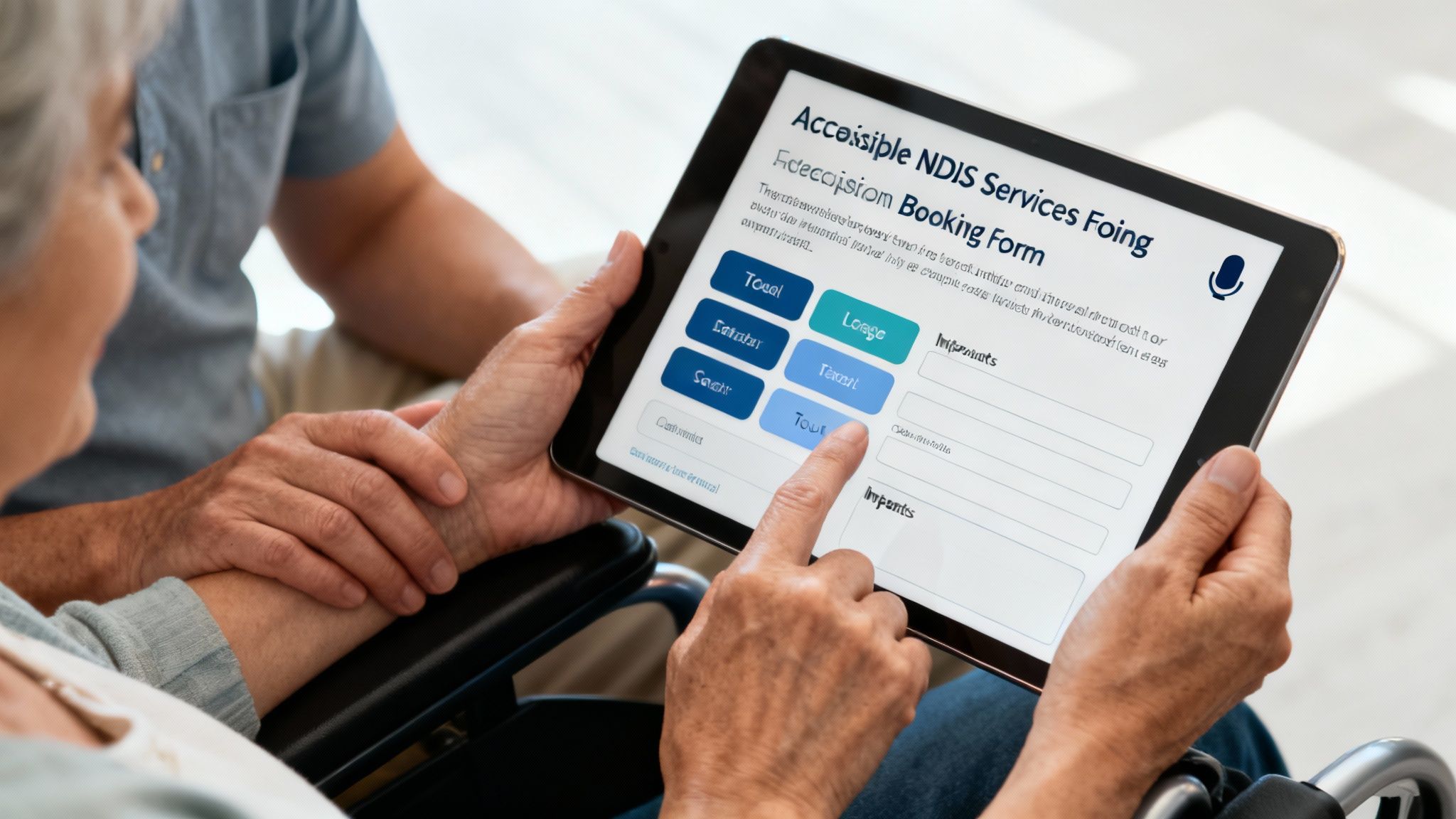
Just think about the relief a parent or support coordinator feels when they can book appointments online without making endless phone calls. A user-friendly booking system is an absolute cornerstone of a helpful NDIS website. It must be intuitive, accessible, and show available times clearly, which lightens the administrative load for both your team and your clients.
Making Onboarding Seamless
Another game-changer is secure, accessible online intake forms. These forms are often the first proper interaction a participant has with your service, so the experience has to be a positive one. They should be built to work seamlessly with assistive tech like screen readers and, crucially, allow users to save their progress.
That small detail can make a world of difference, reducing frustration for individuals who might need a bit more time to gather and enter their information. A well-designed form gathers all the necessary details efficiently, making the whole onboarding process smoother and more respectful for everyone.
Structuring Your Services with Clarity
How you present your services can make or break a user's experience. It's so important to structure these pages logically and directly link your offerings to specific NDIS funding categories. This simple approach removes any guesswork and helps visitors instantly see how your services fit with their NDIS plan.
Here’s a practical way to organise your services for maximum impact:
Use Simple Language: Ditch the industry jargon. Clearly explain what each service involves and who it’s designed for.
Connect to NDIS Categories: Explicitly state the relevant NDIS support categories, like 'Improved Daily Living' or 'Core Supports'.
Highlight Outcomes: Focus on the benefits and potential outcomes for the participant, not just a list of service features.
By clearly mapping your services to NDIS funding, you empower visitors to make informed decisions fast. This kind of transparency is a huge factor in building trust and showing you truly understand the NDIS framework. A clear structure is also essential for other service-based businesses, a principle we often apply when working on projects like childcare web design on the Gold Coast, where clarity for parents is paramount.
Finally, integrating authentic testimonials and detailed case studies provides powerful social proof. These stories really resonate with Gold Coast families and support coordinators looking for a provider they can rely on. Showcasing real-world successes builds confidence and helps potential clients see how your services could make a positive difference in their own lives.
Winning at Local SEO on the Gold Coast
Having a brilliant, accessible website is a huge achievement, but it’s only half the battle. If local participants and their families can't find you when they search online, your digital front door might as well be invisible.
This is where a smart, localised Search Engine Optimisation (SEO) strategy becomes absolutely essential for any NDIS provider on the Gold Coast.
The goal isn't just to rank for broad terms; it's to show up when a potential client is actively looking for your specific services in their neighbourhood. It’s the difference between ranking for "disability support" and being the top result for "NDIS occupational therapist in Robina". That's the search that leads to a phone call.
Optimising Your Google Business Profile
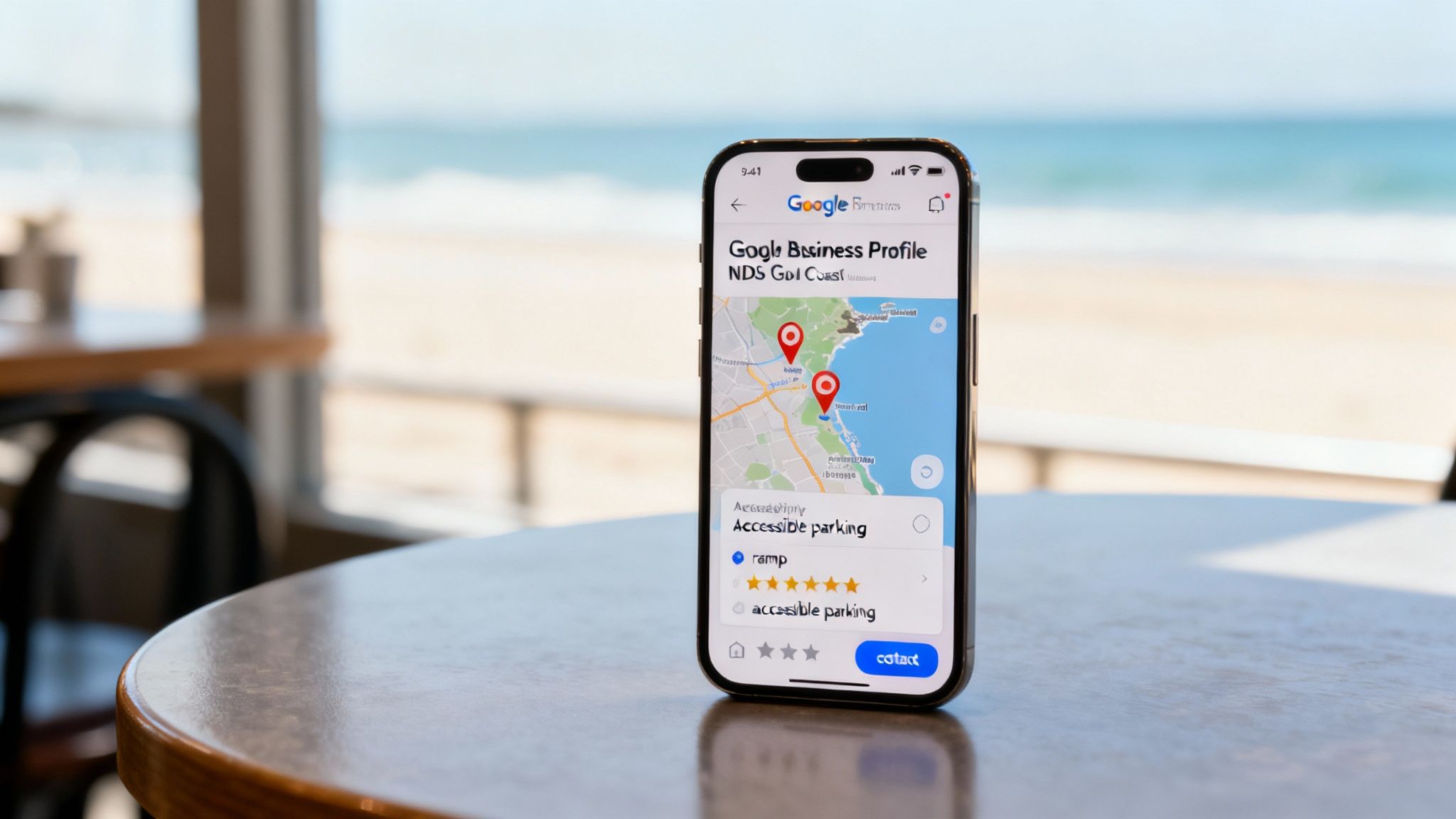
Your Google Business Profile (GBP) is arguably your most powerful local SEO tool. It's that information box that pops up in Google Maps and on the right side of search results, giving people a quick snapshot of your services. For NDIS providers, getting this right isn't just a good idea—it's non-negotiable.
Don't just stop at your address and phone number. Your GBP is your first chance to demonstrate your commitment to accessibility before anyone even clicks through to your website.
Highlight Accessibility Features: Explicitly list details like wheelchair-accessible entrances, accessible parking, and accessible toilets. These are massive trust signals for participants and their families.
Use Gold Coast-Specific Keywords: Describe your services using local suburb names. Instead of just "disability support services," try "disability support services in Broadbeach."
Upload High-Quality Photos: Show, don't just tell. Post clear images of your accessible facilities, your friendly team, and your welcoming space. This helps build immediate confidence.
Your Google Business Profile acts as a digital welcome mat. By providing clear, detailed accessibility information upfront, you remove barriers and show the Gold Coast NDIS community that you understand and cater to their needs.
Weaving Local Keywords into Your Content
To capture those high-intent local searches, you need to speak the same language as your audience. This means naturally weaving Gold Coast-specific keywords throughout your website's content, from your main service pages right through to your blog posts. If you want to dive deeper into this, our detailed guide on crafting a powerful local SEO strategy for the Gold Coast is a great place to start.
Think about the real questions participants and support coordinators are asking. They aren’t just looking for services; they’re looking for answers to specific, local challenges. Creating genuinely helpful blog content that addresses these needs positions you as a trusted local authority.
Consider writing articles like:
"A Guide to NDIS-Friendly Parks and Activities in Southport"
"Navigating NDIS Transport Options in the Tweed Heads and Coolangatta Area"
"How to Find an NDIS Plan Manager on the Gold Coast"
When you create content that provides real value to the local community, you're doing more than just improving your search rankings. You’re building lasting trust with the very people who need your services most.
How to Choose the Right NDIS Web Design Partner
Picking a web design partner is a huge decision for your Gold Coast NDIS service. The right agency won’t just build you a pretty website; they’ll act as a strategic partner who genuinely gets the unique compliance, accessibility, and communication needs of the disability sector. It’s all about finding a team that respects your mission.
A flashy portfolio packed with trendy e-commerce sites means very little here. You need a partner with proven experience in the healthcare or community service space—someone who can show you they know how to create digital environments that are inclusive, secure, and truly helpful for participants and their families.
Asking the Right Questions
When you're vetting potential agencies, you have to dig deeper than surface-level design chat. The answers they give will tell you everything you need to know about their expertise and whether they're a good fit. A solid partner will welcome these questions and have clear, confident answers ready.
Here are the essential questions you need to ask:
Can you show us examples of WCAG-compliant websites you have built? This is non-negotiable. Get them to walk you through a live site and point out the specific accessibility features they've put in place.
How do you ensure participant data remains secure and private? They should be able to speak confidently about data encryption, secure forms, and their grasp of Australian privacy principles.
What is your experience working with NDIS providers or similar service-based organisations? Look for a track record that proves they understand the specific needs of your audience.
Choosing a partner is as much about their process as it is about their portfolio. You should look for a team that prioritises discovery and research, aiming to understand your specific Gold Coast community before a single line of code is written.
Looking Beyond the Launch Date
A great website is a long-term asset, not a one-and-done project. Your relationship with your web design partner shouldn't end the day your site goes live. As your services evolve and digital standards change, you'll need ongoing support to keep your website performing effectively. For a deeper understanding of the entire process, it's helpful to explore the fundamentals of professional web design and development.
Before you sign any contract, make sure you're crystal clear on their long-term support.
What do your ongoing maintenance and support plans include? Clarify if this covers security updates, software patches, backups, and minor content changes.
How will you support us as our services grow or change? Your website needs to be scalable. A good partner will build a flexible foundation that can adapt to new service offerings or features down the track.
Making the right choice here is an investment that pays off for years, ensuring your digital presence remains a powerful, reliable, and welcoming front door for the Gold Coast NDIS community.
Your Top NDIS Web Design Questions Answered
When you're looking at building a new website for your NDIS service on the Gold Coast, it’s completely normal to have a few questions. From timelines and costs to those technical standards you keep hearing about, getting clear answers is the first step toward making a confident decision.
We get asked these questions all the time, so we’ve put together some straightforward answers to help you get started.
How Long Will It Take to Build?
This is usually the first thing providers want to know. A professionally built, accessible NDIS website isn't an overnight job. You should plan for a timeline of around six to ten weeks from our initial chat to the day your site goes live.
This gives us enough time to do things properly—planning, custom design, development, adding your content, and doing all the testing needed to make sure it works perfectly for every user.
What Does It Cost and What About Ongoing Support?
The next big question is always about the investment. Website costs can vary quite a bit, depending on the size of your site and how complex you need it to be. Features like integrated booking systems or secure client portals will naturally affect the price, as will services like content writing. It's also why many NDIS providers ask about how much SEO costs in Australia when budgeting for their Gold Coast web design project, as visibility is just as important as the site itself.
But the initial build is just the beginning. It's essential to plan for ongoing support to keep your site secure, fast, and up-to-date. This isn't an optional extra; it's a critical part of protecting your investment and your participants' data.
Typically, this support includes:
Regular security scans and software updates.
Reliable website backups to prevent data loss.
Performance monitoring to keep loading times fast.
General technical help when you need it.
What Are These Technical and Accessibility Standards?
We often get asked about the technical stuff, especially WCAG 2.1 AA compliance. Think of these as the official guidelines for making a website accessible to people with disabilities. For any NDIS service, meeting these standards isn't just a "nice-to-have"—it's a must.
It involves specific design and coding practices that make your site work seamlessly with screen readers, allow for keyboard-only navigation, and ensure everything is clear and readable for all users.
A compliant website demonstrates your commitment to inclusivity from the first click. It’s about ensuring every potential participant can get the information they need without hitting a roadblock, which aligns perfectly with the core values of the NDIS.
And finally, a question we love to hear: "Will I be able to update the site myself?" Absolutely. A modern website should empower you, not tie you to a developer for every small change. We build on user-friendly platforms like WordPress, which means you can easily update text, add new photos, or post a blog article without any technical skills. We’ll always give you full access and the training you need to feel confident managing your own site.
Ready to build a website that truly serves the Gold Coast NDIS community? Titan Blue Australia combines over 25 years of digital expertise with a deep understanding of local needs to create accessible, compliant, and high-performing websites. Contact us today to start the conversation at https://titanblue.com.au.
Titan Blue is your go-to digital partner for smart, results-driven solutions. We blend strategy, creativity and tech to grow your brand and get real results fast.