A Guide to NDIS Website Development That Attracts Participants
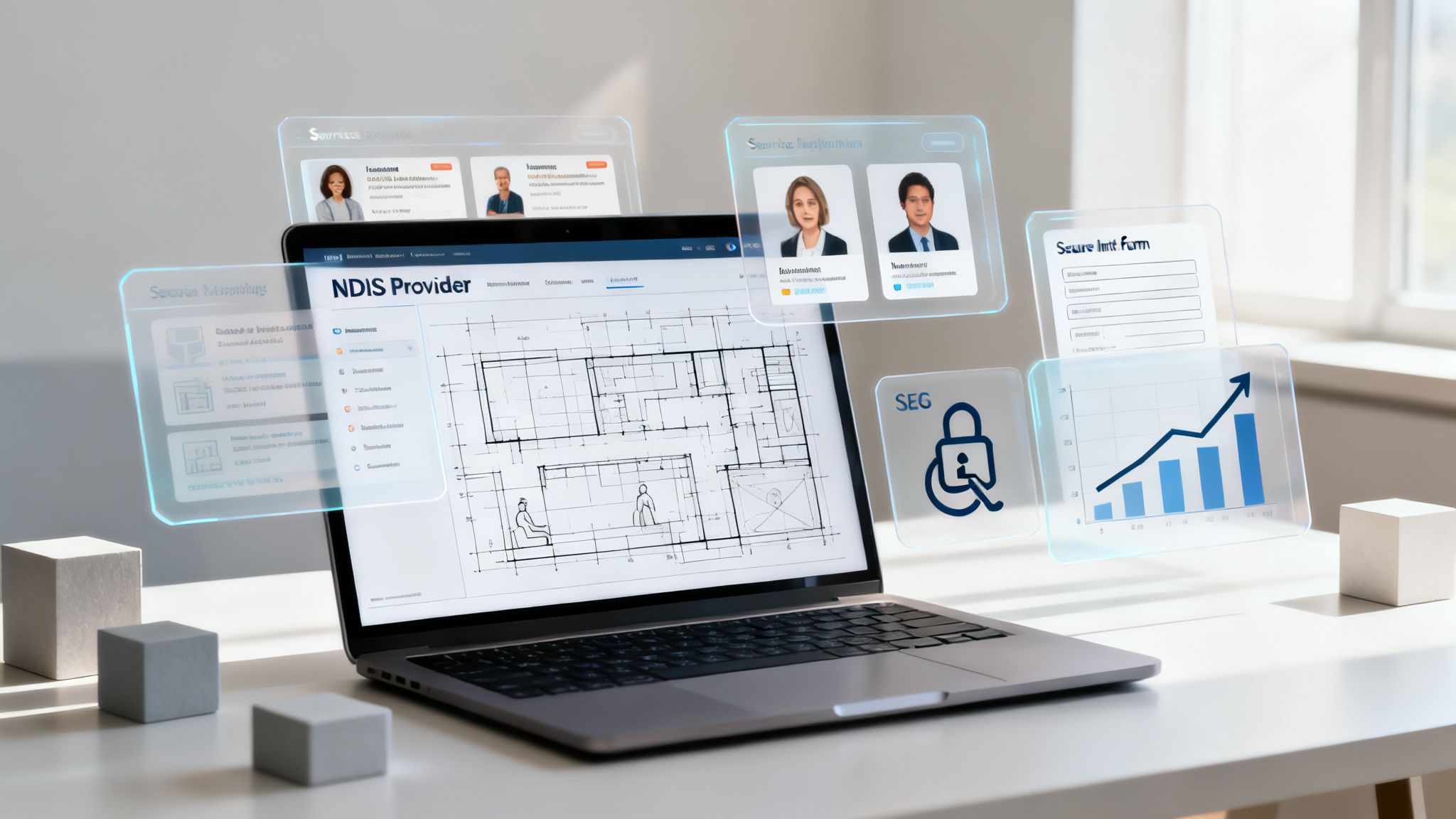
When we talk about building an NDIS website, we’re not just talking about creating another online business page. We’re talking about a purpose-built platform designed from the ground up to be accessible, compliant, and genuinely useful for NDIS participants, their families, and support coordinators. It’s less of a digital brochure and more of a critical tool for service delivery and building trust in the disability community.
Why a Standard Website Fails NDIS Providers
Using a generic, off-the-shelf website for your NDIS organisation is like sending a GP to perform brain surgery. Sure, they’re both doctors, but one lacks the highly specialised skills and tools needed for the job. A standard website might look professional on the surface, but it completely misses the mark on accessibility, clarity, and the trust-building features that are non-negotiable in the NDIS space.
A purpose-built website isn't just a marketing expense; it's a foundational business asset. It’s your number one tool for attracting participants, recruiting quality staff, and showing you’re genuinely committed to the community you serve. In an industry that’s getting more crowded by the day, this specialisation is what will set you apart.
More Than a Digital Front Door
Your website is the central hub where participants and support coordinators make life-changing decisions. It needs to make their journey simpler, not more complicated. A generic site often throws up roadblocks with confusing navigation, inaccessible design, and vague information that leaves people frustrated and clicking away.
A custom NDIS website, on the other hand, is engineered with the end-user’s experience as the top priority. The benefits of this specialised approach are immediate:
Building Instant Trust: A professional, accessible, and compliant website sends a powerful message: your organisation understands and respects the needs of its community.
Simplifying the User Journey: Intuitive design means users can find exactly what they need—from detailed service listings to simple intake forms—without getting lost or overwhelmed.
Establishing Credibility: A well-crafted site positions you as a knowledgeable and reliable authority, making you the clear choice over competitors with outdated or generic online presences.
A Growing Need for Specialisation
The demand for effective digital platforms has never been higher. The NDIS market in Australia is booming, projected to hit a staggering $44.7 billion in 2025, marking a steady 1.6% growth from the previous year. This explosion in the market means providers are competing to connect with over 500,000 participants across the country. You can learn more about the NDIS market trends and see why a tailored online presence is no longer just a nice-to-have.
Ultimately, getting your NDIS website right is about creating an online environment that is inclusive, empowering, and highly functional. It’s a direct investment in your participants' experience and, in turn, your organisation's long-term success.
Understanding Your Accessibility and Compliance Obligations
For an NDIS provider, a website is much more than a marketing tool—it’s a critical piece of your service infrastructure. This means it’s bound by serious legal and ethical standards that ensure every potential participant can access information equally and have their sensitive data protected.
Getting this right isn’t just about ticking boxes. It's about proving your organisation is genuinely committed to inclusivity and trust from the very first click.
If you fail to meet these obligations, you're putting up huge barriers for the very people you’re trying to help. A generic or poorly planned website quickly becomes an obstacle course of digital dead-ends, completely eroding trust before a conversation even begins.
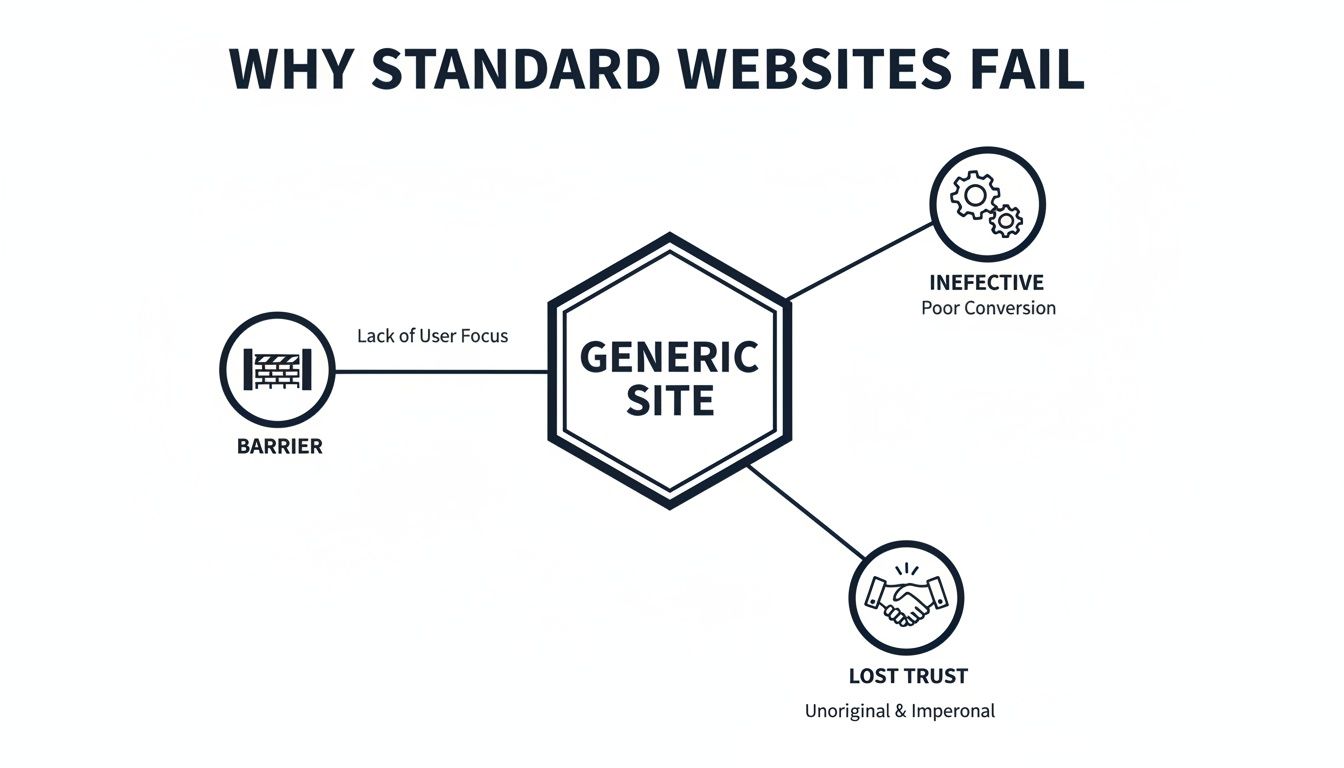
This graphic shows exactly how a standard, off-the-shelf site design leads to barriers, ineffectiveness, and a total breakdown of trust for NDIS participants.
The main takeaway here is that these problems are all connected. An inaccessible website is an ineffective one, and an ineffective one makes participants and support coordinators lose confidence in your services.
Demystifying Web Content Accessibility Guidelines
The Web Content Accessibility Guidelines (WCAG) are the global gold standard for making the web accessible. Don't think of them as a dry list of technical rules. Instead, see them as a practical blueprint for creating a welcoming online space for everyone, no matter their abilities.
Achieving WCAG 2.1 AA compliance is the recognised benchmark in Australia and is non-negotiable for any NDIS website. It simply means your website must be perceivable, operable, understandable, and robust.
Let's break down what these principles actually mean in practice:
Perceivable Content: This is all about making sure information is presented in ways all users can perceive. A classic example is adding descriptive alt text to all your images. For someone with a visual impairment using a screen reader, an image without alt text is just a silent void. Good alt text turns that void into useful information.
Operable Navigation: Everyone must be able to navigate and use your site. This includes ensuring the entire website is usable with just a keyboard, which is vital for people with motor impairments who can't use a mouse.
Understandable Information: The language you use and the way your site functions must be clear and predictable. For example, using a proper heading structure (H1, H2, H3) creates a logical "table of contents" that screen readers use to help people find what they need quickly.
Robust Technology: Your site needs to play nice with a wide range of assistive technologies. This comes down to using clean, standard code so tools like screen readers can interpret your content correctly without hitting errors.
Protecting Participant Privacy a Non-Negotiable Duty
Beyond accessibility, your website must strictly follow the Australian Privacy Principles (APPs). As an NDIS provider, you handle incredibly sensitive personal and health information, making data security a top priority. Your website is often the first place this data is collected, usually through contact or intake forms.
This means your website absolutely must have:
A Clear Privacy Policy: You need an easy-to-find and easy-to-understand policy that explains what data you collect, why you're collecting it, and how you store and protect it. No jargon.
Secure Data Transmission: Any form that collects personal information has to be secured with an SSL certificate. This encrypts the data as it travels from a user's browser to your server, keeping it safe from prying eyes.
Secure Data Storage: Once you've collected that information, it must be stored in a secure environment to prevent data breaches or unauthorised access.
Because NDIS services directly affect a person's health and financial well-being, your website content falls under Google's "Your Money or Your Life" (YMYL) category. This means Google holds it to a much higher standard of accuracy and trustworthiness. Understanding and navigating YMYL compliance for high-stakes content is essential to build the trust you need.
Ultimately, your compliance obligations are a direct reflection of your organisation's values. By putting accessibility and privacy first, you create an online environment that isn't just compliant—it's genuinely respectful and supportive of every individual's needs.
You can dive deeper into creating a fully compliant and effective online platform in our detailed guide to NDIS website design in Australia.
Key Features Your NDIS Website Must Include
Once you've ticked the boxes for legal and accessibility standards, it's time to focus on what makes an NDIS website genuinely useful. Certain features aren't just 'nice-to-haves'; they're the core of your digital front door, directly serving the needs of participants, their families, and support coordinators.
Think of it this way: a website without clear service details is like a pharmacy with unmarked bottles. It’s confusing, frustrating, and ultimately, unhelpful. Your goal is to build a supportive online space that anticipates what your users need and gives them answers before they even have to ask.
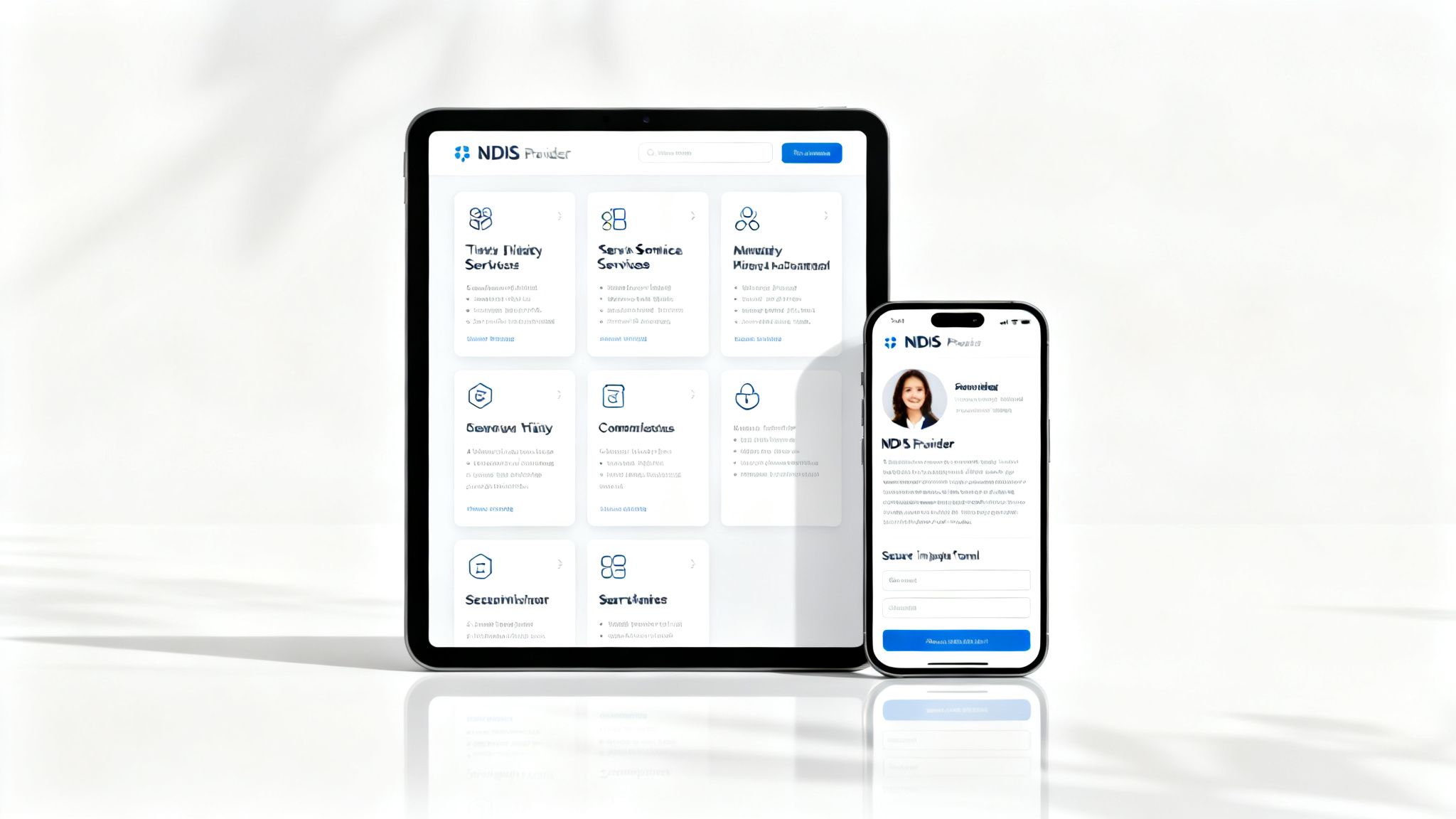
Intuitive Service Listings
The most fundamental job of your website is to explain what you do. So many providers fall into the trap of using vague, jargon-filled descriptions that only create confusion and drive people away. Your service listings need to be the exact opposite—crystal clear and easy to understand.
Imagine a support coordinator juggling several clients. They need to quickly see what you offer, who you help, and where you're located. Giving them that clarity saves them a huge amount of time and empowers them to make faster, more confident decisions.
Your service pages must have:
Simple Language: Ditch the clinical or bureaucratic terms. Describe what the service is and, more importantly, the positive outcomes it helps participants achieve.
Clear Structure: Use headings, short paragraphs, and bullet points. This breaks down information, making it easy to scan and digest.
Specific Details: Include essentials like service locations, age groups you work with, and how the service is delivered (e.g., in-home, community-based, or online).
Authentic Staff Profiles
The NDIS is a deeply personal industry. Participants and their families aren't just buying a product; they're inviting people into their lives. Your website needs to reflect this human connection, and a generic "About Us" page just won't cut it.
Authentic staff profiles are one of the most powerful tools for building trust. Seeing the faces and reading the stories of your team helps to demystify your organisation and make it feel more approachable. This simple feature can go a long way in reducing the anxiety many people feel when looking for new services. There are plenty of great ways to create an engaging NDIS web presence, and our guide on NDIS web design on the Gold Coast offers more ideas to explore.
Simple and Secure Intake Forms
The intake or referral form is often the first real interaction someone has with your organisation. If it's complicated, long, or looks insecure, it can be an immediate deal-breaker, leading to frustration and abandoned forms. Your intake process has to be the opposite: simple, secure, and reassuring.
The design should prioritise the user, especially those who might be using assistive technologies or have cognitive disabilities.
Here’s what to focus on for your forms:
Logical Flow: Only ask for what's absolutely necessary at this stage. Group related questions together and, if the form is long, break it into smaller, manageable steps.
Clear Instructions: Use plain English for labels and add helpful hints for fields that could be confusing, like specifying the date format (DD/MM/YYYY).
Visible Security: Make sure your site uses SSL encryption (the little padlock icon in the browser) and add a short note about your commitment to privacy near the form. This reassures users that their sensitive information is safe.
Confirmation and Next Steps: After someone hits 'submit', they need to see a clear confirmation message. Thank them, and tell them exactly what will happen next and when they can expect to hear from you.
Given the unique needs of NDIS participants, integrating advanced tools can also improve the support you offer. You can learn more about implementing effective conversational solutions with resources on using chatbots for healthcare. Getting these features right is a key part of an NDIS website development process that truly focuses on the user.
Choosing the Right Technology for Your Website
Picking the right tech for your website is a lot like choosing the foundation and frame for a house. Get it right, and you’ve got a stable, flexible structure you can build on for years. Get it wrong, and you’re setting yourself up for costly problems and frustrating limitations down the track. For an NDIS provider, this decision impacts everything from your day-to-day operations to your long-term growth.
The heart of your website's technology is its Content Management System (CMS). Think of a CMS as the control panel for your website. It’s the software that lets your team—even people without any tech skills—add new services, update staff profiles, or post a news article without breaking a sweat.
Finding a User-Friendly Content Management System
For most NDIS organisations, the best CMS is powerful but simple. Your staff shouldn’t have to call a developer just to update a phone number or add a new testimonial. The goal here is empowerment and efficiency.
One of the most widely used and recommended platforms for this is WordPress. Its massive popularity—powering over 43% of all websites on the internet—is no accident. It’s all down to its incredible flexibility and a user-friendly interface that just makes sense.
Here’s why it’s so often a great fit:
Ease of Use: The dashboard is intuitive, letting your team edit pages with an interface that feels a lot like using a word processor.
Extensibility: It has a massive library of plugins, which means you can add new features—like advanced booking systems or client portals—as your organisation grows.
Strong Community Support: Because it’s so common, finding help, tutorials, or a developer to work on your site is always straightforward.
A well-chosen CMS ensures your website stays a dynamic, current resource, not just a static digital brochure that’s out of date the moment it launches.
Connecting Your Website with Essential Tools
Beyond the CMS, your website needs to talk to other software to make your operations run smoothly. These connections are called integrations. Think of them as the plumbing and wiring that make your house functional. They automate tasks and make sure information flows seamlessly where it needs to go, saving you countless hours.
A critical integration for any NDIS provider is with a Customer Relationship Management (CRM) system. When a participant or support coordinator fills out an intake form on your website, a CRM integration can automatically create a new profile, assign it to the right team member, and even schedule a follow-up. This completely eliminates manual data entry, cuts down on human error, and ensures no inquiry ever falls through the cracks.
For a deeper dive into how these elements work together in a professional build, check out our guide on web design and development.
Making the Right Choice for Your Organisation
So, how do you decide what’s right for you? Your decision should be guided by your specific needs, your budget, and what you see on the horizon. Don't just pick what seems popular; choose what actually serves your participants and your team most effectively.
Keep these key factors in mind:
Your Team's Technical Skill: Be realistic about who will be managing the site day-to-day. Choose a system they can use confidently without constant hand-holding.
Your Long-Term Goals: Are you planning to add a secure client portal or online booking down the line? Make sure your chosen platform can support that kind of growth.
Your Budget: While fully custom-built systems offer ultimate control, platforms like WordPress provide a professional, scalable solution that is often far more cost-effective for small to medium-sized providers.
Making a thoughtful decision now prevents the massive headache and expense of having to rebuild your entire website in just a few years. It sets you up for a sustainable, effective online presence that truly supports your mission.
How NDIS Participants Will Find Your Website
So, you’ve built a fantastic website. It’s accessible, packed with useful features, and looks professional. But if participants, their families, and support coordinators can't find it, it's like building an amazing community centre on an unmarked road with no signs.
This is where Search Engine Optimisation (SEO) comes in. Think of it as putting up all the digital signposts that lead people directly to your door.
For an NDIS provider, this isn’t about generic marketing. It’s about connecting with people at the exact moment they need your specific services. When a parent searches for "NDIS speech pathologist for children Sydney," they aren't just browsing; they're on a mission to find help. Your goal is to make sure your website shows up as the most relevant and trustworthy answer.
Targeting the Right Keywords
Good SEO starts with understanding the exact language your audience uses. You need to get inside the head of a support coordinator or a participant and think about what they would type into Google. This means moving beyond broad terms like "NDIS provider" and drilling down into highly specific, intent-driven phrases.
These phrases, known as long-tail keywords, are incredibly valuable. They often include a service, a location, and sometimes even a specific need.
Effective keyword targeting includes phrases like:
'Specialist disability accommodation Melbourne'
'NDIS occupational therapist for adults Perth'
'Support coordination services Brisbane South'
'Adolescent mental health NDIS provider'
When you build your website content around these specific phrases, you attract people who are much closer to making a decision. This focused approach is a core part of a successful NDIS website development strategy, ensuring your message gets to the right people.
The Power of Local SEO
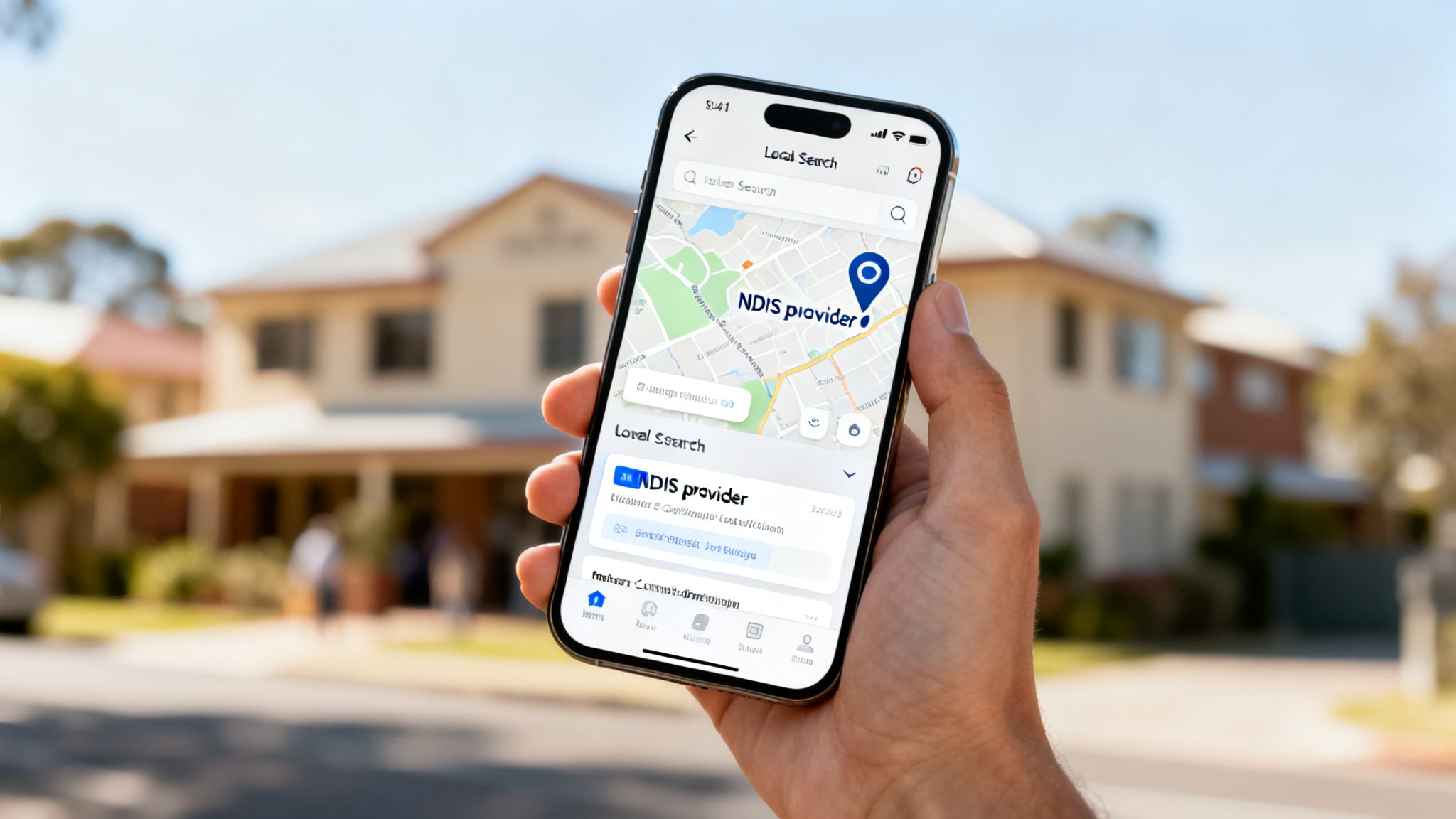
For most NDIS providers, services are delivered within a specific geographical area. This makes local SEO absolutely critical. When someone searches for a local service, Google prioritises businesses that are physically nearby and have a strong, visible local presence.
Your most powerful tool here is your Google Business Profile (GBP). This is the free listing that appears in Google Maps and the "local pack" in search results. A well-optimised profile acts like a digital storefront, giving people essential information at a glance.
To get the most out of your GBP, you need to make sure it’s:
Fully Completed: Fill out every single section—your address, phone number, opening hours, and a detailed description of your services, making sure to use your target keywords.
Kept Current: Regularly post updates about new services, community events, or share helpful articles from your website's blog.
Filled with Reviews: Actively encourage satisfied participants and their families to leave reviews. Positive reviews are a massive trust signal for both potential clients and Google.
Creating Genuinely Helpful Content
Beyond keywords and local profiles, the best way to attract and keep your audience is by creating content that genuinely answers their questions. Think about the common concerns and challenges the NDIS community faces. Your website's blog or resources section is the perfect place to address them.
This type of content does more than just bring in visitors; it positions your organisation as a knowledgeable and compassionate authority. It builds trust long before a person ever fills out an intake form. This strategy is also crucial given the massive growth in the sector. The evolution of NDIS funding, from $4.2 billion in 2016-17 to a market size projected to hit $44.7 billion in 2025, shows just how much opportunity there is for providers who invest in a strong online presence. For more details on this growth, you can discover more insights about NDIS funding trajectories.
If you’re looking to improve your online visibility, our specialised NDIS SEO services can help you connect with more participants. By focusing on targeted, helpful, and locally relevant strategies, your website can become the welcoming and easy-to-find front door your community is looking for.
Budgeting for Your NDIS Website Development Project
Trying to pin down the exact cost of a new NDIS website is a bit like asking, "How much does it cost to build a house?" There’s no single price tag. The final figure really depends on the size, complexity, and specific features you need to get the job done right.
Setting a realistic budget from the start is one of the most important first steps. It helps you make smarter decisions and find a partner who can deliver real value. Remember, a website isn't just an expense; it’s a core piece of your operational infrastructure, handling everything from participant intake to staff recruitment.
What Influences the Cost of an NDIS Website
Instead of a simple price list, it's more helpful to think about the budget in tiers. Each level offers a different degree of functionality and customisation, designed to match NDIS providers at different stages of their growth.
Here’s a breakdown of what you can generally expect:
Foundational NDIS Website (Approximately $3,000 – $7,000): This is the perfect starting point for new or smaller providers. You get a professional, compliant, and accessible online presence without the bells and whistles you don't need yet. This typically covers a custom design for up to 10 pages (like Home, About Us, Services, and Contact), a basic SEO setup, secure intake forms, and a user-friendly CMS like WordPress so your team can handle minor updates.
Comprehensive NDIS Platform (Approximately $8,000 – $15,000): As your organisation grows, your website needs to grow with it. This tier includes everything in the foundational package but adds more powerful features. Think a detailed blog or resources section, advanced accessibility tools, and maybe even integration with your CRM to streamline how you manage enquiries. You’ll also get more in-depth SEO to help you stand out in specific service areas.
Custom Enterprise Solution ($15,000+): Large, established organisations often have complex operational needs that off-the-shelf solutions just can’t meet. A custom build could involve a secure client portal for participants to access their documents, a sophisticated booking system for appointments, or even multi-language support. At this level, the website is built from the ground up to fit your unique processes perfectly.
To get a clearer picture of how these features stack up and affect the final price, you can check out our detailed guide on what a new website costs and what to expect at each investment level.
Understanding Project Timelines
Just like the cost, the timeline for building a quality NDIS website varies. Rushing the process is a recipe for disaster, often leading to costly mistakes down the track and a final product that doesn't actually meet the needs of your participants or your team. A properly structured project ensures nothing gets missed.
Here’s what a typical timeline looks like, broken down into clear stages:
Discovery and Strategy (1-2 Weeks): This is the most critical phase. We dig deep into your organisation’s goals, what your participants need, and the exact features required for success. It’s all about getting the blueprint right before we start building.
Design and Prototyping (2-3 Weeks): Next, we bring the vision to life. We create visual mockups and wireframes to map out the user journey and nail down the look and feel. The goal is to create something that’s not only on-brand but also incredibly intuitive to use.
Development and Content Loading (3-5 Weeks): This is where the approved designs are turned into a fully functional website. Our developers get to work coding, implementing accessibility features, and loading all your content into the CMS.
Testing and Launch (1 Week): Before going live, the site goes through a rigorous testing phase. We check it on different devices, browsers, and screen sizes to hunt down and squash any bugs, ensuring a smooth launch day.
On average, a professional NDIS website project takes between 7 and 11 weeks from kick-off to launch. This timeframe allows for a thoughtful, collaborative process that results in a high-quality, compliant, and effective digital asset for your organisation.
Common Questions About NDIS Website Development
Venturing into building a website for your NDIS organisation can feel like navigating a maze. This final section tackles some of the most common questions we hear from providers, offering clear, straightforward answers to help guide your project.
How Often Should I Update My NDIS Website Content?
Think of your website as a living, breathing part of your organisation, not a static brochure you print once and forget. Your core pages—like services, staff profiles, and contact details—should be reviewed at least quarterly to make sure everything is spot-on.
Your blog or resources section, however, needs more frequent attention. Aim to add fresh, genuinely helpful content at least monthly. This does two things: it shows participants and their families that you're an active, reliable source of information, and it signals to search engines like Google that your site is relevant, which is a huge plus for your search rankings.
Can I Build an NDIS-Compliant Website Myself?
It's tempting to look at DIY website builders. Their low upfront cost seems like a win, but achieving full WCAG 2.1 AA compliance and locking down data security is a serious technical beast. These platforms often don’t have the granular control needed to implement the very specific accessibility features that NDIS participants rely on.
For an NDIS provider, trust and compliance are everything. Investing in a professional agency is simply the safer, more effective path. It ensures your website is built correctly from the very beginning, protecting both your organisation and the people you serve from potential legal headaches and usability nightmares.
What Is the Most Important Element of an NDIS Website?
If you have to nail just one thing, make it clarity. The NDIS journey can already be confusing and overwhelming for participants and their families. Your website’s number one job is to cut through that noise, provide simple answers, and build confidence.
This commitment to clarity should shine through everywhere:
Clear navigation so people can find what they need without a treasure map.
Clear language that skips the industry jargon and speaks directly to your audience.
Clear descriptions of your services that focus on how you help people achieve their goals.
A clear, easy path for someone to pick up the phone or send an email.
How Does a Good Website Help with Staff Recruitment?
Make no mistake, a professional and accessible website is a powerful reflection of your organisation's values. Before a great support worker or allied health professional even thinks about applying, they will absolutely check out your site to get a feel for who you are.
An outdated, clunky, or unprofessional-looking site can be a major red flag for top talent. On the flip side, a fantastic website that showcases your team, celebrates your impact, and demonstrates your commitment to the community can be one of your most powerful recruitment tools.
Ready to build an NDIS website that truly serves your community and grows your organisation? The team at Titan Blue Australia has over two decades of experience creating compliant, accessible, and effective digital platforms for Australian businesses. Get in touch with our team today.
Titan Blue is your go-to digital partner for smart, results-driven solutions. We blend strategy, creativity and tech to grow your brand and get real results fast.