

Last updated:
You’ve probably seen the pattern already. A restaurant on the Gold Coast has a polished menu, decent reviews, and a booking form that works, but the venue photos are dim, inconsistent, and years out of date. A plumbing business has strong word-of-mouth and skilled staff, but its website still relies on supplier images, rushed phone snaps, and awkward team photos taken in the warehouse car park.
In both cases, the business owner usually blames the website, the ads, or the market. Sometimes that’s true. Often, the bigger issue is simpler. The visuals aren’t doing the selling.
Good photography for business isn’t decoration anymore. It’s part of conversion, trust, local visibility, and now AI search readiness. In 2026, your images don’t just sit on a page. They shape whether someone clicks, books, calls, or keeps scrolling.
Why Your Business Is Losing Customers Without Great Photos
Most business owners don’t lose customers because they lack photos. They lose them because the wrong photos send the wrong message.
If your restaurant looks dark and empty online, people assume the atmosphere is flat. If your solar installation business shows cluttered job sites, crooked compositions, or overexposed roof shots, buyers question the quality of the work. If your team page is a mix of mismatched headshots and casual phone images, the brand starts to feel less organised than it probably is.
That matters because online buyers make quick judgments. A strong first impression isn’t fluff. It’s part of the sale.
A 2023 CoreLogic Australia study cited here found that properties and services featuring high-quality images receive 61% more inquiries compared to those with amateur photos. For Gold Coast hospitality venues, that same source says professional imagery translated to a 42% increase in booking conversions.
Those are commercial outcomes, not aesthetic ones.
Poor visuals create friction
A weak image set usually causes three problems at once:
- Trust drops: People assume the business is less established, less detail-oriented, or less current.
- Decision-making slows: Customers can’t clearly see the product, space, team, or quality of work.
- Marketing performance weakens: Ads, landing pages, social posts, and profile listings have less to work with.
This is why some businesses keep redesigning pages when the actual issue is the visual asset library. The layout may be fine. The photos are what’s dragging down the experience.
Practical rule: If your photos make the business look smaller, older, messier, or less credible than it is in real life, they’re costing you leads.
There’s also a brand ageing effect. Even a technically functional website can feel behind the market if the visuals are dated, generic, or inconsistent. If you’re unsure whether that’s happening, this guide on how to tell if website design feels outdated is a useful sense check.
Customers judge the whole business through the photos
They don’t separate the image quality from the service quality. They bundle it together.
That’s why photography for business works best when it’s treated like a core operating asset. The right images help a venue look busier, a trades business look more competent, and a service brand look more established. The wrong ones do the opposite.
Speaking the Visual Language of Your Industry
Each industry has its own visual shorthand. Customers don’t just want “nice photos”. They want the kind of evidence that helps them feel confident buying from that type of business.
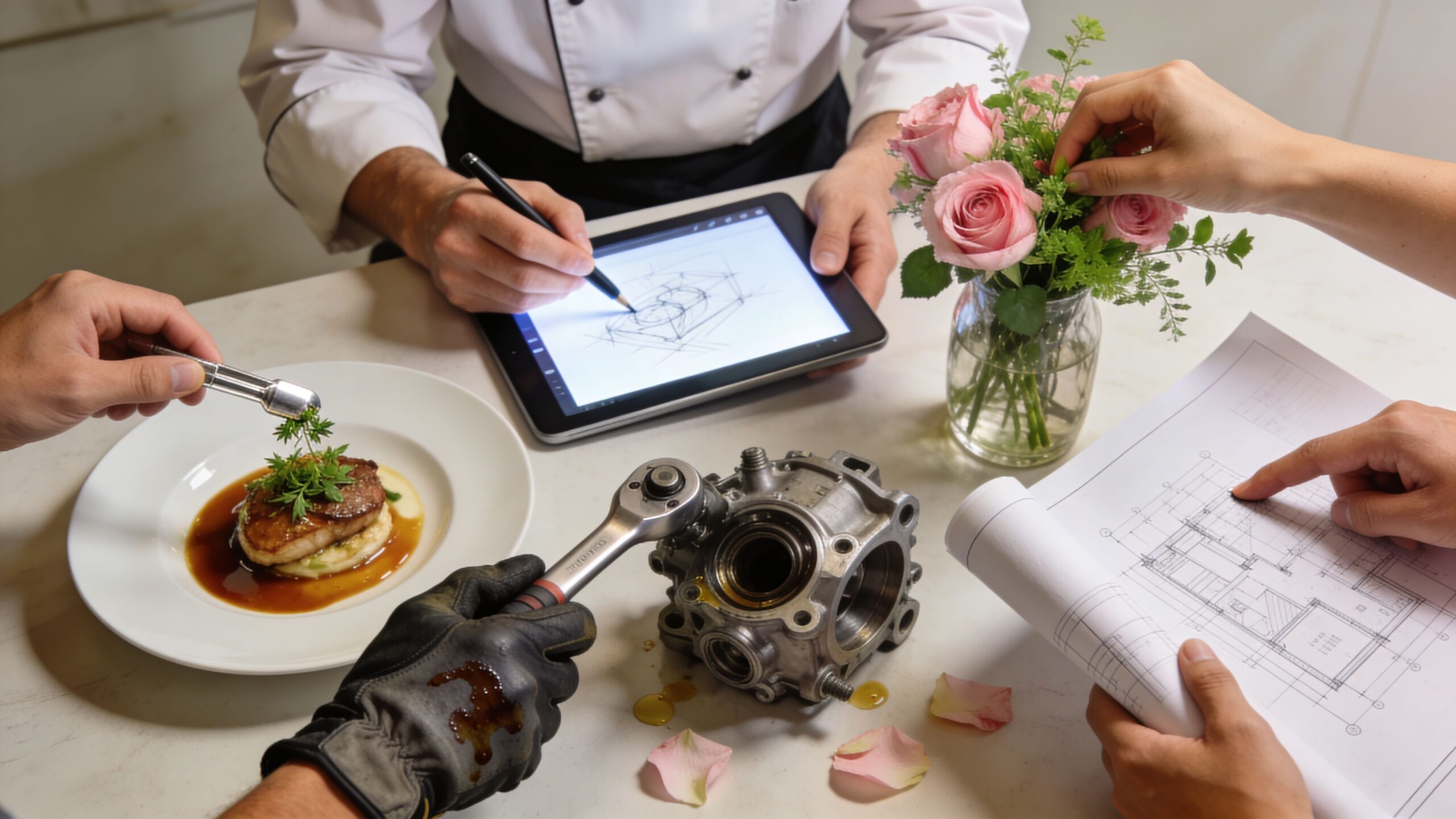
A restaurant customer looks for atmosphere, freshness, service, and social proof. A plumbing or electrical customer looks for competence, neatness, equipment, safety, and finished results. A professional services client looks for credibility, approachability, and consistency.
When the imagery matches those expectations, the business feels familiar in the right way. When it doesn’t, trust drops quickly.
Hospitality needs appetite and atmosphere
Restaurants, cafés, bars, and accommodation venues need more than food close-ups. Buyers want to know what it feels like to be there.
The strongest hospitality image sets usually include:
- Hero food and drink shots that show freshness, texture, and plating without looking over-styled
- Wide venue images that establish mood, layout, and lighting
- Staff-in-action photography showing service, kitchen energy, or bar work
- Booking-driver images such as private dining, signature dishes, outdoor seating, or event spaces
A common mistake is posting only dish photography. That can make the business feel like a takeaway menu rather than a place people want to visit. Hospitality imagery needs range. It should answer both emotional and practical questions.
Trades need proof of process
For plumbers, builders, electricians, solar installers, and construction firms, photography has a different job. It must show control.
That means clean vans, branded uniforms, tidy tools, safe workflow, in-progress site documentation, and finished work that looks deliberate rather than accidental. Customers don’t expect trades imagery to feel glossy. They expect it to feel professional.
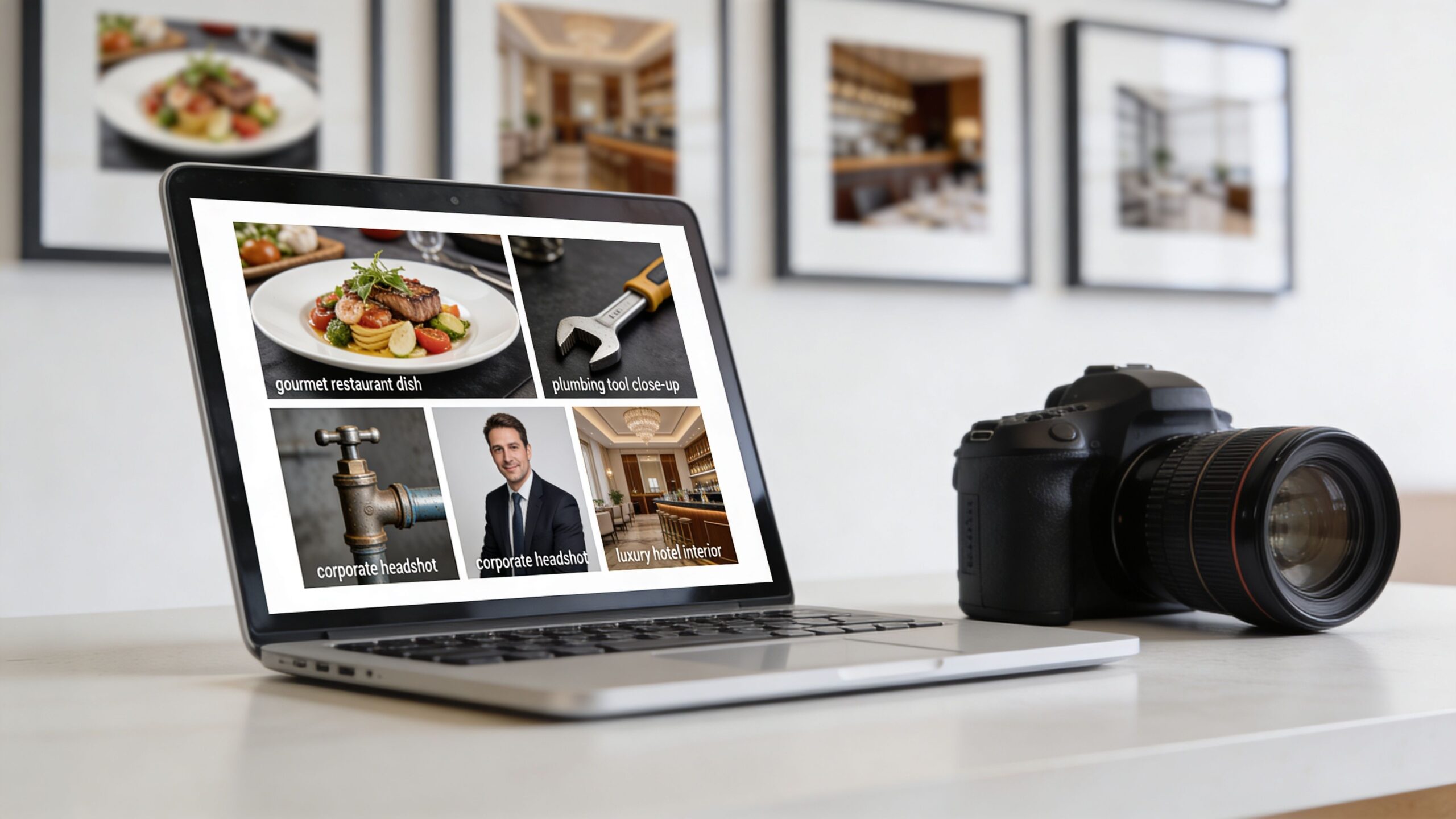
The technical side matters here too. According to MIT Comm Lab’s technical photography guidance, for trades, precise technical photography using controlled depth of field and leading lines can enhance conversion rates by 25-40%. The same source notes that for a close-up of a plumbing fixture, using f/8 on a 50mm lens can keep the branded tool sharp while blurring background distractions.
That’s useful because trades photography often fails in one of two ways. It’s either too messy, with every cable, box, and surface competing for attention, or it’s so staged that it no longer feels real.
Strong trades images show the work clearly, remove visual clutter, and keep the brand cues visible.
For businesses that also need rooflines, development sites, or exterior property context, aerial content can help complete the set. If you’re assessing drone options for property and site coverage, best drones for real estate photography is a practical starting point.
Professional services need consistency
Accountants, consultants, legal firms, clinics, and office-based businesses usually don’t need dramatic imagery. They need reassuring imagery.
That means:
- Headshots that feel current and consistent
- Team photos with the same lighting and editing style
- Office or workspace photography that feels active, not staged
- Detail shots that support brand tone, such as meeting rooms, materials, reception, and technology in use
One weak headshot can pull down the whole page. So can a team gallery where half the staff look corporate and half look casual. Buyers read consistency as competence.
If the visual identity itself is still unclear, photography won’t fix that alone. It works best when tied to a defined brand system, which is why businesses often need both imagery and a stronger strategic brand identity design approach.
Planning Your Photoshoot for Business Goals
A photoshoot without a commercial brief usually produces a folder full of decent images and very little business impact.
The better approach is to work backwards from the outcome you want. If you want more bookings, the images need to reduce hesitation on booking pages. If you want better trade enquiries, the images need to prove job quality, team reliability, and project scale. If you want stronger local search visibility, you need assets that fit your website, Google Business Profile, social content, and service pages.
That shift matters because the industry has matured. The Australian photography services industry grew by 2.1% annually between 2018 and 2023, reaching 4,200 businesses, according to IBISWorld data referenced here. That growth reflects demand, but it also means businesses have more access to photography than ever. Access isn’t the issue now. Planning is.
Start with the business objective
Before anyone picks up a camera, answer a few blunt questions:
-
What’s the commercial goal
More online bookings, stronger quote requests, improved tenders, better recruitment, or a cleaner brand rollout all require different images. -
Where will the photos be used
Homepage hero banners, service pages, Google Business Profile, Meta ads, LinkedIn, proposal documents, signage, and email campaigns all have different cropping needs. -
What action should the viewer take
Book a table, request a quote, call the office, trust the team, or shortlist the business.
Many shoots often falter. The business asks for “brand photos” when it really needs booking-page images, trade proof images, and recruitment assets.
Build the shot list around use, not taste
A strong shot list isn’t just a creative list. It’s a deployment list.
Use categories such as:
-
Website essentials
Homepage hero, service banners, team photos, location shots, proof-of-work images. -
Sales assets
Proposal imagery, capability statement visuals, profile photos for key staff, project case study images. -
Social content
Vertical shots, behind-the-scenes images, tighter crops, and image sequences that can support short campaigns. -
Search visibility assets
Location-based images, service-specific photos, exterior shots, and imagery tied to key business categories.
Working rule: If an image has no intended page, platform, or campaign before the shoot, it usually ends up unused.
Plan orientation and timing properly
Horizontal images still matter for websites, but vertical framing is now essential for stories, reels covers, profile content, and mobile-first placements. A good shoot schedule allows for both, rather than forcing one crop to do everything later.
Timing also affects the result. Restaurants often photograph best before service and again when the room has some life. Trades need jobs that are clean enough to photograph but still active enough to feel authentic. Office-based teams usually need a shooting window that doesn’t disrupt operations.
If you’re organising broader site updates at the same time, a website planning checklist helps keep the imagery brief aligned with the pages being built or refreshed.
DIY Photography vs Hiring a Professional
This decision doesn’t need ideology. It needs honesty.
Some businesses should absolutely start with DIY. Others waste months trying to save money and end up paying twice, once in lost time and again when they finally rebook the shoot professionally. The right choice depends on stakes, complexity, and how often the images need to work across multiple channels.
When DIY is good enough
DIY works best when the subject is simple, the usage is limited, and the brand already has a solid visual foundation.
That usually means:
- quick social updates
- temporary behind-the-scenes content
- simple product shots with stable lighting
- casual team moments that add personality between larger campaigns
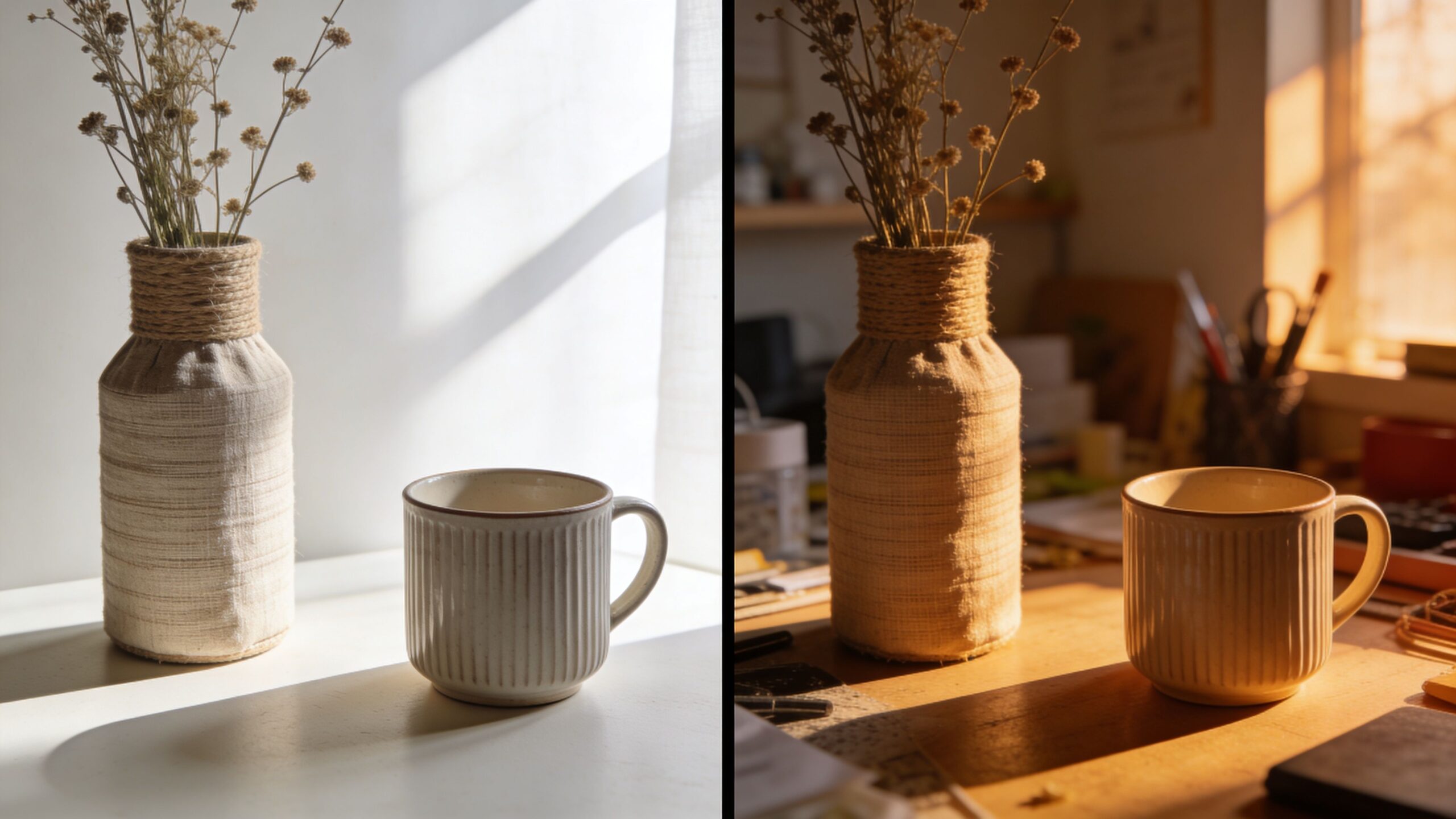
Modern phones are capable, but they still need discipline. Good DIY business photos rely on window light, steady framing, a clean background, and consistent editing. Most failures don’t come from the device. They come from rushed composition and poor light.
A smartphone image can be perfectly fine for a staff lunch post. It’s rarely enough for a homepage hero, campaign ad set, or service page that has to build trust with a first-time visitor.
What you’re actually paying for with a professional
A professional doesn’t just deliver sharper files. They solve problems before they happen.
That includes lighting control, framing, direction, location assessment, workflow speed, post-production consistency, and the ability to get usable images from real working environments. For a trade business, that might mean balancing bright Queensland daylight on a roof while keeping the brand details visible. For hospitality, it might mean making a room look warm and active without making the food look artificial.
There’s also a production efficiency advantage. According to Imagen AI’s business portrait photography guidance, professionals use AI-driven tools that can cut post-production time by up to 96%, reducing culling and editing from 4 hours to 10 minutes for a headshot session. That speed helps deliver assets faster and maintain a more consistent finish across a whole team.
Decision shortcut: If the images need to convert strangers, support paid traffic, or represent the business for more than a few weeks, professional photography usually pays for itself faster than owners expect.
A practical middle ground
For many SMBs, the most sensible model is hybrid.
Use a professional shoot to create the core asset library:
- homepage images
- team headshots
- service-page visuals
- project photography
- branded location shots
Then use in-house content for day-to-day updates between shoots.
This is also where AI tools can play a limited role. For example, if someone needs a quick placeholder profile image for a platform update, an AI headshot generator can be useful. It’s not a substitute for real team photography when trust matters, but it can fill small gaps.
Titan Blue Australia also offers in-house photography and videography as part of broader digital projects, which can make sense when the shoot needs to line up with a website rebuild, SEO rollout, or social campaign rather than sit as a separate job.
Optimising Images for Web Social and AI Search
A great photo can still underperform if it’s uploaded badly.
Many businesses drop the ball. They invest in solid photography for business, then upload massive files with generic names like IMG_4821.jpg, skip alt text, crop the subject poorly on mobile, and wonder why the page feels slow or the image never shows up in search surfaces.
The technical part doesn’t need to be complicated. It just needs to be handled with purpose.
File type and size affect performance
For most website use, compressed web-friendly formats are the right choice. The aim is simple. Keep visual quality high enough to look professional while reducing load time enough to protect the page experience.
A few practical rules help:
- Use web-ready exports for website placements rather than uploading full camera originals
- Choose the format based on use case. Photographic images generally suit compressed formats better than graphics with transparency
- Resize to the container so a small card image isn’t loading a huge desktop file in the background
- Check mobile rendering before publishing, because many business sites look fine on desktop and awkward on phones
If you want a more detailed workflow, this guide on how to optimize images for SEO covers the practical basics well.
Naming and context matter more than most businesses realise
Search engines and AI systems don’t see your image the way a person does. They rely on context.
That means the file name, surrounding copy, page topic, caption usage, alt text, and placement all help define what the image is about. A page about Gold Coast solar installation with a file called solar-panel-installation-broadbeach-roof.jpg gives a clearer signal than DSC00914.jpg.
The same applies to alt text. Good alt text should describe the image plainly and accurately in context. It isn’t a place to stuff keywords. It’s there to support accessibility and help systems understand what’s shown.
Use alt text to describe the actual content and business relevance of the image, not to repeat the page title awkwardly.
AI search rewards organised visual assets
This matters more now because search isn’t just ten blue links anymore. AI-generated answers and answer engines draw on pages that are easier to interpret. Images with strong contextual signals support that.
When a business has:
- well-labelled image files
- relevant surrounding copy
- clear page-service alignment
- consistent branding across images
- fast-loading media
it gives search systems more confidence in what the page represents.
That’s one reason image optimisation now sits inside broader AI search work, not just traditional SEO. If your business is investing in visibility beyond standard rankings, generative engine optimisation is the broader discipline that brings these elements together.
Social crops need their own versioning
One more practical issue. Businesses often try to use the same exported image everywhere.
That usually fails.
A website hero crop may not work for Instagram. A LinkedIn banner crop may cut off the subject’s face. A Google Business Profile image may need cleaner framing than a story post. The answer isn’t to upload random duplicates. It’s to create controlled variants from the same approved master image.
That keeps the brand consistent while letting each platform do its job.
The Art of Repurposing One Great Photoshoot
The smartest businesses don’t squeeze value from a shoot by asking for more photos on the day. They get value by using the same strong images in more places, over a longer period, with better planning.
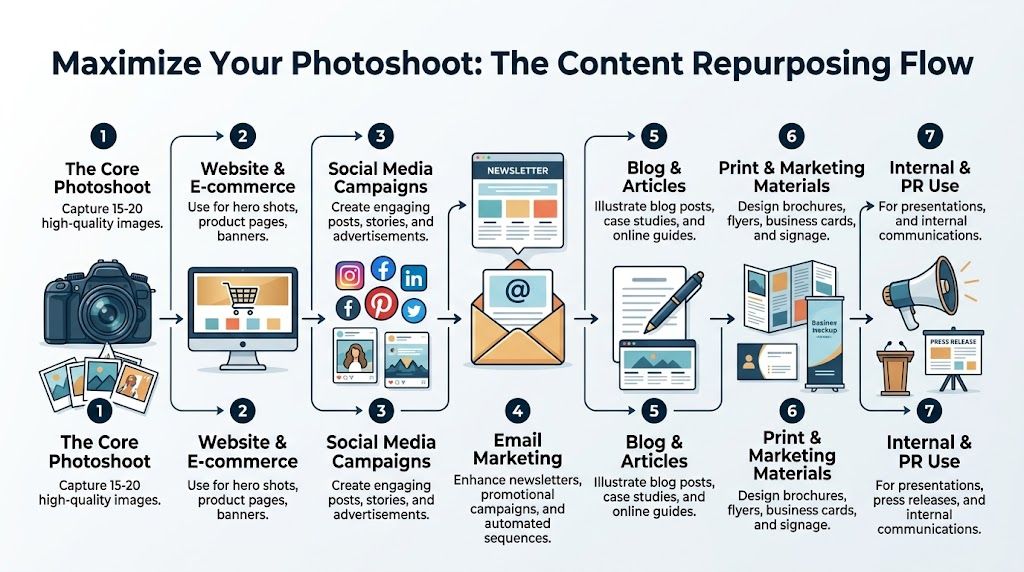
A single photoshoot can supply far more than a homepage refresh. If the image set is broad enough, one session can fuel website updates, email campaigns, social posts, Google Business Profile content, internal documents, recruitment pages, and print material without the brand looking repetitive.
Think in asset families
Instead of thinking about one finished image for one use, think in asset families.
A single hero shot of a restaurant interior might become:
- the homepage banner
- a cropped Google Business Profile update
- a vertical Instagram post
- an email header
- a background image in a function pack
- a press image for local media coverage
A single trade project image can do the same across service pages, quote documents, tender submissions, and social proof posts.
The key is choosing images with enough negative space, clean framing, and subject clarity to survive different crops without losing meaning.
Use the same shoot for different stages of the buyer journey
Repurposing works best when the image library supports different buyer questions.
For example:
-
Top of funnel use
Broad, eye-catching images that introduce the business and create interest. -
Mid-funnel use
Team, process, and environment shots that help people compare providers. -
Bottom of funnel use
Specific project images, close detail work, and trust-building visuals placed near forms, menus, or booking prompts.
That’s why image variety matters more than volume. A folder of near-identical shots creates less marketing value than a smaller library with clear use cases.
One well-planned shoot should give you website assets, campaign assets, and proof assets. If it only gives you “nice photos”, the brief was too narrow.
Build a repeatable content workflow
The businesses that get the most from photography usually connect the shoot to an editorial rhythm.
That can look like:
- publish core website updates first
- cut supporting social assets next
- queue email content from the same library
- update service pages and profile imagery
- drip-feed project and team content over time
If someone on your team handles rollout, a dedicated social content creator workflow can help keep the assets moving instead of letting them sit in a Dropbox folder for six months.
Repurposing isn’t about stretching mediocre work. It’s about extracting the full commercial value from good work.
Measuring the ROI of Your Business Photography
The easiest way to waste money on photography is to treat it as a one-off creative task with no measurement attached.
If the images are meant to drive business outcomes, they need to be tracked the same way you’d track a landing page change, ad creative update, or conversion form adjustment. That doesn’t mean overcomplicating it. It means deciding what success looks like before the new images go live.

Start with the channels where photos do real work
Not every image needs its own spreadsheet. Focus on the touchpoints where visuals directly influence action.
For most SMBs, that means:
- key website pages
- Google Business Profile
- social ads and organic social
- booking or quote landing pages
- capability documents and sales material
One useful benchmark comes from this visual search and photography article, which notes that high-quality photography boosts Google Business Profile impressions by 42% for Gold Coast restaurants. The same source says that only 23% of surveyed Australian businesses track photo-specific conversion uplift, even though 75% of LLMs prioritise visual-rich content for AI Search.
That gap is the opportunity. Most businesses are publishing images. Far fewer are measuring what those images changed.
What to measure in practice
Look for movement in business metrics that photography can reasonably influence.
Use a simple before-and-after approach:
-
Website behaviour
Compare engagement on pages where the imagery changed. Watch form starts, booking clicks, quote requests, and interactions with key calls to action. -
Landing page conversion
If you swap weak visuals for stronger project or product imagery, compare conversion rate over a clean period rather than judging by a few days of traffic. -
Google Business Profile activity
Track profile impressions, direction requests, calls, and website visits after image updates. -
Social content response
Measure saves, shares, comments quality, profile visits, and direct enquiries rather than chasing vanity reach alone.
Set up attribution before the shoot goes live
A lot of ROI tracking breaks when the business uploads new images everywhere at once, changes page copy at the same time, edits the menu or services, and then can’t tell what made the difference.
A cleaner method is to:
- identify the pages and profiles getting new imagery
- note the date of the visual change
- keep other major edits limited where possible
- compare a reasonable period before and after
- annotate changes inside your analytics platform or reporting process
Measurement lens: Don’t ask whether the photos are “better”. Ask whether they improved the behaviour that matters.
Tie visuals to revenue, not just engagement
A busy social post is nice. A booked table, quote request, or qualified enquiry is better.
For restaurants, stronger venue and dish photography may support booking conversions. For trades, finished-project images may increase form submissions from higher-intent users. For service firms, cleaner team and office photography may improve trust at the point of contact.
The more direct the business objective, the easier photography ROI becomes to prove. That’s the significant shift in 2026. Business photography shouldn’t sit in the brand bucket alone. It belongs in the performance conversation.
Frequently Asked Questions About Business Photography
How much should an Australian business budget for professional photography
There isn’t one flat answer because pricing depends on scope. A half-day shoot for a small team is a different job from a multi-location hospitality and trades brief with headshots, interiors, action shots, and post-production for several channels.
The better budgeting question is this. What does the business need the images to do?
If the photos are only for occasional social use, the scope can stay tight. If they need to support a website launch, ongoing campaigns, Google Business Profile, team pages, and sales material, the brief needs more planning, more shooting variety, and more editing. That’s where businesses should expect the investment to rise.
Who owns the photos after the shoot
That depends on the agreement.
Many businesses assume paying for a shoot means they automatically own unrestricted usage rights. That isn’t always true. Some photographers license images for defined business use while retaining copyright. Others provide broader usage terms. The important thing is to clarify this before booking.
Ask directly:
- where can the images be used
- can they be used in paid ads
- can they be cropped or edited internally
- can suppliers or media outlets use them
- are there time limits on usage
If those questions aren’t answered up front, confusion usually appears later when the business wants to reuse the images in a new campaign.
Is a smartphone ever enough for photography for business
Yes, sometimes.
A modern smartphone can be enough for informal content, quick updates, behind-the-scenes posts, and simple internal-use visuals, especially if the lighting is good and the composition is controlled. It’s often the right tool for speed.
It usually isn’t enough when image consistency, lighting control, brand positioning, or commercial conversion matter. Homepage banners, premium service pages, major campaign creative, polished headshots, and technical trade photography generally need more than a phone and good intentions.
How often should a business update its photography
Update it when the business no longer looks like the photos.
That could be after a renovation, rebrand, team change, menu shift, new service launch, vehicle rewrap, office move, or noticeable uplift in the quality of your work. A dated image library creates drag because buyers compare what they see online with what they expect to receive.
If the business has evolved, the photography should catch up.
If your business needs photography that supports website performance, SEO, AI search visibility, and day-to-day marketing use, Titan Blue Australia can help align the imagery with the rest of your digital strategy. From Broadbeach, we work with Gold Coast businesses and brands across Australia on websites, content, search, and visual assets built for commercial use.
Make Titan Blue a preferred source in Google
One click tells Google to surface our articles more often in Top Stories, AI Overviews and AI Mode.

ChatGPT GPT-6 Search Upgrade: What It Means for Australia
OpenAI rolled out GPT-6 to ChatGPT on 7 October 2026 with faster search. Here is…
Best Dental Website Design Agencies in Australia: 7 Compared
Best dental website design agencies in Australia 2026: seven compared on dental proof, booking, AHPRA…

Childcare Centre Website Design Australia: The 2026 Guide
Childcare centre website design Australia: show hours, ages and enrolment as text so parents and…