When you're building a new website, thinking about SEO shouldn't be a box you tick at the very end. It needs to be part of the DNA of the project, right from the initial sketches. This is all about creating a website that is structurally sound for search engines from day one, making sure its technical guts and user experience are working together to get you seen.
Building Your Digital Foundation with SEO
Baking SEO into your process from the first blueprint is just smart business. It helps you dodge expensive redesigns down the track and stops you from missing out on traffic right out of the gate. You end up with a site that not only looks great but is fundamentally built to pull in and keep your ideal audience.
This unified approach also future-proofs your digital asset. It makes it more resilient to the inevitable algorithm changes and gets it ready for discovery in modern AI-driven search engines. Find out more about how our approach to professional web design and development can give your business the visibility it needs to thrive.
Mapping Your Success with SEO-Driven Architecture
Before a single line of code is written, the most critical part of blending SEO in web design is getting the architectural plan right. Think of it as the blueprint for your entire site. It dictates how both your visitors and search engine crawlers find their way around, so it needs to be logical, organised, and intuitive.
Your planning should also map specific keywords to specific pages, giving every piece of content a clear purpose. For a local plumber, this could mean creating dedicated pages for "emergency plumbing Gold Coast" and "hot water system repairs Brisbane." This focused approach has a huge impact on your site’s ability to rank for what actually matters.
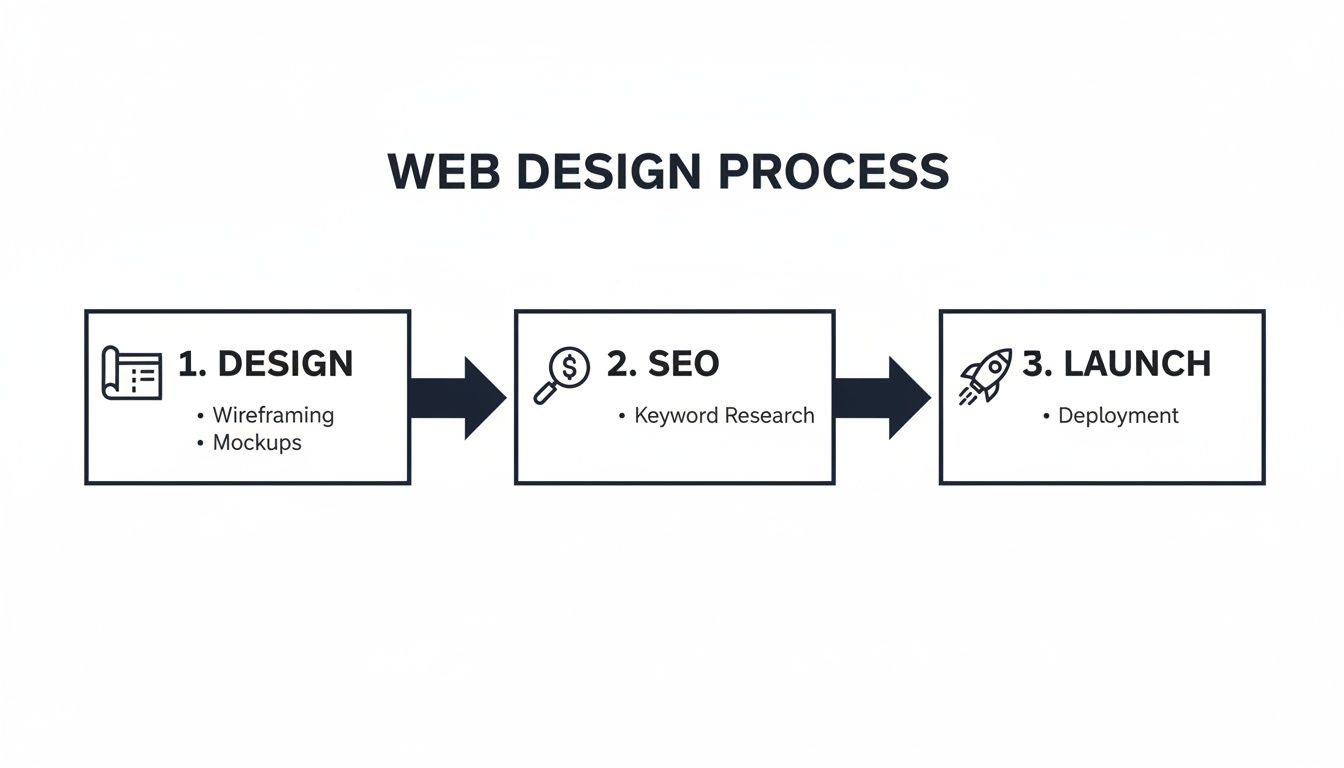
This simple flow shows how design and SEO should work hand-in-hand right from the start.
This process makes it clear that SEO isn't just a box to tick at the end. It's a fundamental step that should inform both the design itself and the final launch strategy.
For Australian small businesses, especially in trades and retail, this local focus is absolutely booming. With 46% of all Google searches in Australia now carrying local intent, having a site architecture built for proximity is vital for turning those clicks into actual customers. You can discover more digital marketing statistics and see just how much this trend is shaping business success online.
2. Crafting On-Page Elements That Search Engines Love
With a solid blueprint in place, you can now get into the nitty-gritty of on-page elements. This is where your SEO in web design efforts really start to show, turning your strategy into tangible, keyword-optimised title tags, meta descriptions, and headers that both search engines and users can understand.
Think of these elements as signposts. They need to be clear, concise, and tell everyone exactly what to expect on the page.
For example, a fashion retailer shouldn’t just have a product page title like "Blue Dress." That’s far too generic. A much better, more specific title would be "Women's Navy Blue Cocktail Dress | Size 8-16 AU." This immediately tells a potential customer everything they need to know and directly matches what they’re likely searching for.
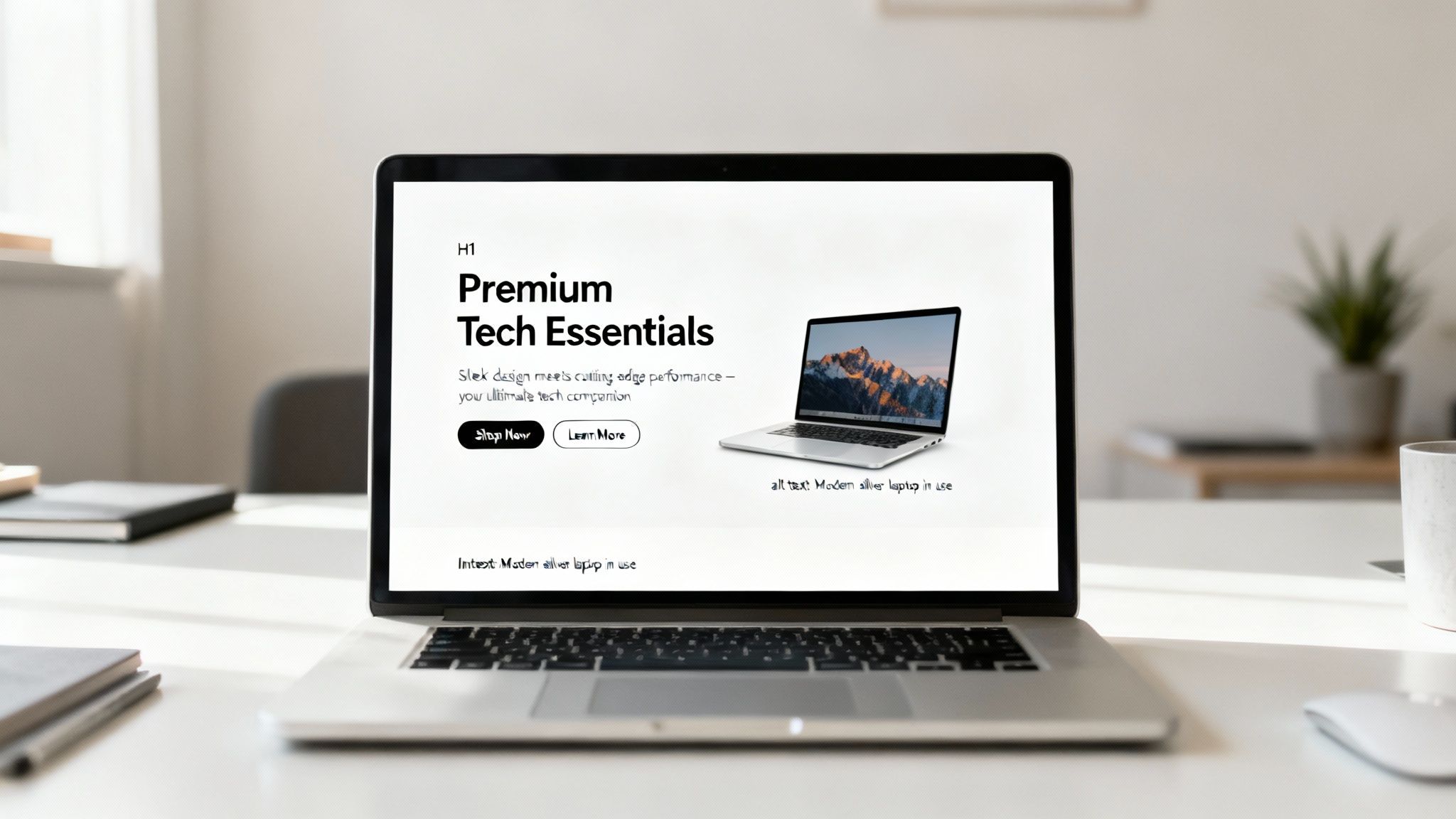
This same logic applies to your images. Don't skip the alt text! Instead of a default filename, use descriptive text like "Builder in high-vis inspecting a Gold Coast construction site." This simple step improves accessibility for screen readers and gives you a shot at ranking in Google Image search.
Tying it all together is a smart internal linking strategy. Good internal links guide users naturally through your site and help spread page authority, signalling to Google which pages are most important. It's amazing how professional content writing on your website can bring all of these crucial elements together seamlessly.
Prioritising Mobile First Design and Technical Performance
Let's be blunt: if your website doesn't work flawlessly on a phone, you're invisible to Google and your customers. We're well past the point of mobile being a secondary thought. Google now uses the mobile version of your site for indexing and ranking, making a slick mobile experience your absolute top priority.
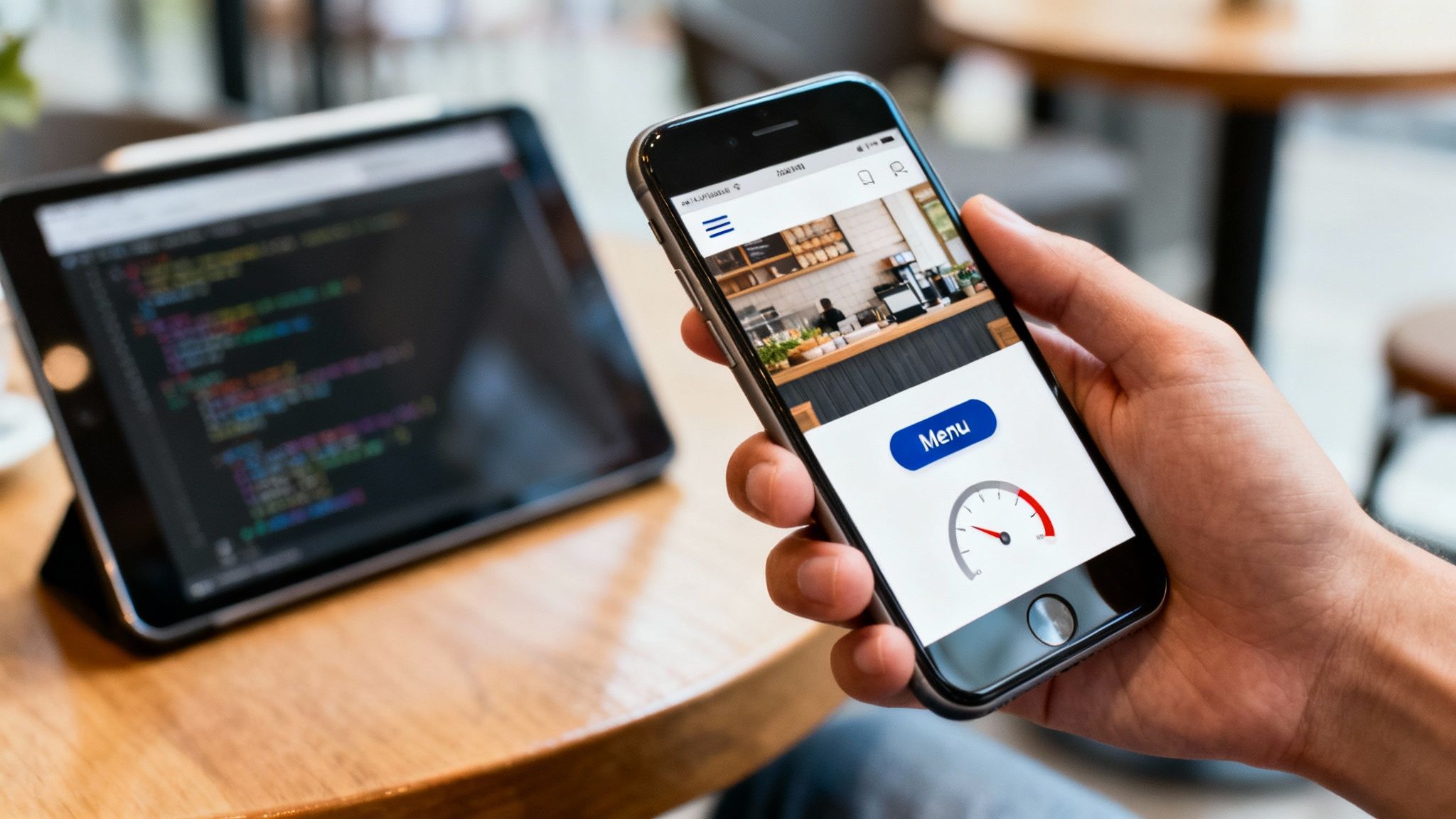
This isn't something you can bolt on later. It needs to be baked in from the very beginning with a responsive layout and clean, efficient code. Think about it from a user's perspective. If a restaurant's website takes forever to load the menu on a phone, potential diners will just close the tab and find somewhere else. That's a lost booking in seconds.
In Australia, this is even more critical. With over 60% of all web traffic now coming from smartphones, a slow mobile site is a direct drain on revenue. Speed isn't just a "nice-to-have"; it's a core business metric.
To really nail this, you need to get familiar with Google's key performance indicators. Understanding What Are Core Web Vitals is essential, as these metrics directly measure the real-world experience your visitors have. This is precisely why a deep understanding of https://titanblue.com.au/mobile-first-indexing-web-design-a-guide/ is so fundamental to modern web design.
7. Enhance Visibility with Structured Data and AI Readiness
Beyond the standard on-page optimisations, you can give your website a serious competitive edge by speaking search engines' language directly. This is where structured data, also known as Schema markup, comes into play.
Think of it as a special vocabulary you add to your site's code. It doesn't change how your site looks to a human visitor, but it gives search engines crystal-clear context about your content.
This extra clarity is often rewarded with rich snippets in search results. You’ve definitely seen them—things like star ratings under a product, event details, or FAQs appearing right there on the search page. For a local retailer, this could mean showing product prices and availability. A law firm could highlight specific legal services and practitioner details.
This isn't just a "nice-to-have" anymore. It's about making your content work harder for you in search results, grabbing attention and increasing click-through rates.
Critically, implementing structured data now prepares your website for the future of search. AI and Large Language Models (LLMs) rely heavily on well-structured information to generate answers. By marking up your content, you're essentially spoon-feeding it to these new systems, making sure your expertise is visible in tomorrow's answer engines.
Frequently Asked Questions About SEO in Web Design
Can I Just Add SEO After My Website Is Built?
You can, but I wouldn't recommend it. Trying to retrofit SEO onto a finished website is a bit like trying to renovate a house's foundation after it's been built. It's clunky, expensive, and you'll never get the same results.
When you weave SEO into the design process from day one, you're building the entire site on a solid, search-friendly framework. The architecture, the code, the user flow—it’s all optimised from the start. This saves a massive amount of time and money down the track and delivers far better, more sustainable results.
How Long Does SEO in Web Design Take to Show Results?
While a professionally designed, SEO-friendly site gives you a massive head start, SEO itself is a long game. It’s not an overnight fix.
Generally, you can expect to see real, meaningful traction in your search rankings within three to six months. Of course, this depends on your industry, competition, and how aggressive your strategy is. If you want a deeper dive, check out our guide on how long SEO takes to work.
Is User Experience Really That Important for SEO?
Absolutely. In fact, these days, you can't have good SEO without good user experience (UX). The two are completely intertwined.
Google’s main job is to give its users the best possible answers, and a big part of that is rewarding sites that are genuinely helpful, engaging, and easy to use. It measures this with signals like Core Web Vitals (how fast your site loads and responds) and mobile-friendliness.
If your site has a poor UX, visitors will leave quickly. This creates a high bounce rate, which is a massive red flag to search engines that your site isn't a quality result.
Titan Blue is your go-to digital partner for smart, results-driven solutions. We blend strategy, creativity and tech to grow your brand and get real results fast.