Hiring a Social Media Management Consultant a Guide for Your Business
A social media management consultant is much more than someone who just posts online. Think of them as a strategic partner, a digital architect who designs the blueprint for your brand’s growth, engagement, and visibility in a very crowded online world. They're the experts who turn your social media from a passive noticeboard into an active, lead-generating powerhouse.
What a Social Media Management Consultant Really Does
It’s a common misconception that a social media consultant just schedules posts and replies to comments. While that’s part of the job, their real value is in the strategy that drives every single action.
Imagine they're the director of a film. They aren’t just holding the camera; they’re responsible for the script, the casting, the set design, and the final edit. Their job is to pull everything together to tell a cohesive and compelling story that gets results.
Their role is to solve real business problems—like brand invisibility, inconsistent messaging, or a lack of leads—by taking a deep dive into your business, your market, and your customers to build a strategy that delivers measurable outcomes.
Core Strategic Responsibilities
A consultant’s work starts long before the first post goes live. They focus on the foundational stuff that guides the entire campaign, making sure every piece of content has a clear purpose. This strategic planning is what separates businesses that are simply on social media from those that are actively using it to grow.
Their main strategic tasks usually involve:
Market and Competitor Analysis: They dig into what your competitors are doing, figuring out their strengths, weaknesses, and where the opportunities are for you to stand out. This research is what informs your unique positioning.
Audience Segmentation: A great consultant doesn't just find your audience; they get to know them. They create detailed profiles of your ideal customers to ensure your content actually connects with the right people, at the right time.
Strategic Blueprint Design: Using all that analysis, they develop a comprehensive social media strategy. This is your roadmap, outlining goals, key platforms, content pillars, tone of voice, and how success will be measured.
Daily Execution and Management
With a solid strategy locked in, the consultant switches gears to the day-to-day execution that brings the plan to life. This is where their creative and technical skills really shine. They manage the entire content lifecycle, from brainstorming ideas to analysing performance, ensuring everything is consistent and high-quality.
You can learn more about how these daily tasks fit into the bigger picture by exploring what social media management truly entails.
Their typical day-to-day activities include:
Content Curation and Creation: This is all about developing engaging content, from eye-catching graphics and compelling copy to short-form videos. A good consultant stays on top of platform changes, like knowing the latest ultimate guide on Instagram video length to get maximum reach.
Community Engagement: This is so much more than just hitting ‘like’ on comments. They actively build a community by starting conversations, managing feedback, and nurturing relationships with your followers to create genuine brand loyalty.
Performance Reporting: A skilled consultant tracks the important metrics and provides regular, easy-to-understand reports. They use this data to fine-tune the strategy, show you the return on your investment, and pinpoint areas for improvement.
The Tangible Business Benefits of Expert Social Media Management
Bringing in a social media management consultant isn’t just another line item in your marketing budget; it’s an investment in real, measurable growth. Their job is to move past vanity metrics like "likes" and follower counts to deliver actual business outcomes that hit your bottom line.
It’s all about turning online chatter into sales and brand visibility into unshakable loyalty. Instead of throwing content at the wall and hoping something sticks, a consultant maps out a clear path to attract, engage, and keep customers. This strategic approach connects every post and campaign back to your core business goals, producing results you can actually see.
Driving Qualified Leads and Sales
One of the biggest wins is a consultant's ability to generate high-quality leads. They get this done by diving deep into who your ideal customer is, then creating content that speaks directly to their needs and solves their problems. This isn't about casting a wide net; it's precision targeting.
This focus ensures your message lands in front of people genuinely interested in what you sell, making them far more likely to become paying customers. For instance, they might run a highly specific Facebook ad campaign targeting users based on their demographics, interests, and online behaviour, funnelling warm leads straight to your sales team.
The growing investment in social media advertising across Australia really underscores its power as a business tool. Projections show ad spend is set to hit AU$7.5 billion in 2025, a jump from AU$6 billion in 2023. This figure is expected to blow past AU$9.1 billion by 2030, which is exactly why you need an expert to maximise your return. You can dig deeper into Australia's social media statistics to get a better sense of the market.
Enhancing Brand Awareness and Authority
In today’s crowded market, just showing up online isn’t enough. A consultant works to make your brand not just visible, but memorable and authoritative. They do this by crafting a consistent brand voice and look that cuts through all the noise.
By consistently sharing valuable, industry-relevant content, they position your business as the go-to resource in your field. This builds trust and credibility with your audience, making it a no-brainer for them to choose you over a competitor when they're ready to make a purchase.
A strong brand presence on social media isn't about being everywhere at once. It's about being present and impactful where your customers are, building a reputation one valuable interaction at a time.
Fostering Genuine Customer Loyalty
Customer loyalty is built on relationships, and a good social media consultant is an expert at nurturing them. They move beyond canned, automated responses to have meaningful conversations that make your customers feel heard and valued.
This focus on community management turns followers into genuine advocates for your brand. When customers have a great experience with you online, they're far more likely to recommend you to their friends, creating a powerful word-of-mouth effect that drives organic growth. A consultant helps you build a community, not just a following.
Freeing Up Your Valuable Time
Perhaps the most immediate benefit is the time you get back. Let's be honest, managing social media effectively is a full-time job. It demands constant monitoring, content creation, community engagement, and strategic planning.
By handing these tasks over to an expert, you can reclaim countless hours every single week. This frees you up to focus on what you do best: running and growing your business. Delegating this to a pro ensures your social media presence stays professional and consistent, even when your attention is needed elsewhere.
How Different Industries Benefit From Social Media Expertise
A one-size-fits-all social media strategy just doesn't cut it. Every industry has its own unique challenges, different audiences, and completely separate goals. A sharp social media management consultant gets this, crafting an approach that fits your specific sector like a glove.
This is about moving past generic advice and building a plan that solves your actual business problems—whether that’s getting more people into your restaurant or landing high-value contracts in the construction industry. The real magic of a consultant is their knack for turning your industry's language and objectives into a social media presence that actually delivers.
Let’s break down how this specialised expertise works across different sectors, turning abstract strategies into tangible business wins.
Driving Foot Traffic for Retail and Hospitality
For businesses that depend on customers walking through the door, like retail stores and restaurants, social media is a game-changer for driving local foot traffic. A consultant knows success here isn't just about posting pretty pictures; it’s about creating a sense of urgency and connecting with the local community.
For a local fashion boutique, this could mean running highly targeted Facebook and Instagram ads aimed at people within a 5-kilometre radius of the shop. The campaign might spotlight a new collection or offer an in-store-only discount, giving nearby shoppers a direct reason to pop in.
A restaurant consultant, on the other hand, would zero in on creating mouth-watering content. Think irresistible videos of chefs plating up signature dishes or running campaigns that showcase photos from happy diners. Their experience in restaurant social media marketing allows them to build targeted campaigns designed to get more dinner reservations and create a loyal local following.
Building Authority for Professional Services
When it comes to professional services like law firms or business consultants, social media isn't a direct sales tool—it's about building trust and establishing authority. The sales cycle is much longer, and clients are looking for credible experts they can rely on. A social media consultant knows to shift the focus from selling to educating.
They might help a law firm create insightful LinkedIn articles that break down tricky legal issues into simple, easy-to-understand advice for their ideal clients. This positions the firm's partners as the go-to experts in their field, building a pipeline of potential clients who already trust their knowledge.
For a B2B firm, a consultant would also focus on:
Showcasing Client Success Stories: Creating detailed case studies that show exactly how the firm solved a specific problem for a client, proving their value.
Hosting Live Q&A Sessions: Organising live video events on platforms like LinkedIn where experts answer common industry questions, building credibility and direct engagement.
Engaging in Industry Discussions: Actively jumping into relevant online groups and forums to share valuable insights and build a solid professional network.
Showcasing Projects for Trades and Industrial Sectors
Industries like construction, manufacturing, and mining often have a hard time seeing where social media fits in. But a strategic consultant knows that platforms like LinkedIn are goldmines for B2B networking and showing off large-scale capabilities.
For a construction company, a consultant could create a content series documenting a major project from the first day on-site to the final handover. Using high-quality drone footage and behind-the-scenes photos, they can weave a compelling visual story that highlights the company’s expertise, safety standards, and project management skills. This kind of content is perfect for attracting corporate partners and big-ticket commercial clients.
Likewise, a manufacturing firm can use social media to showcase its innovation and precision engineering. A consultant might create short, punchy videos of advanced machinery in action or highlight the quality control processes that make the company stand out. This builds brand reputation and opens doors to new business partnerships.
The right social media strategy isn't about what you sell, but the story you tell. For industrial and trade-based businesses, it's about showcasing expertise, reliability, and the scale of what you can achieve.
Key Deliverables and Metrics to Expect from Your Consultant
When you bring a social media management consultant on board, you’re not just paying for a few posts here and there. You're investing in a clear, structured process designed to deliver real, measurable results for your business. A good consultant cuts through the jargon and shows you exactly how their work connects to your bottom line.
Their value shines through in the strategic documents they create, the consistent content they produce, and the detailed performance reports they deliver. This isn't about guesswork; it's about building a predictable engine for growth and keeping everyone accountable along the way.
Foundational Strategic Documents
Before a single post goes live, your consultant should lay out a comprehensive strategic blueprint. This document is your roadmap, ensuring every tweet, reel, and story has a purpose and is perfectly aligned with your business goals.
Think of it like the architectural plans for a house—you wouldn't start laying bricks without them. This plan is crucial for setting clear expectations and making sure everyone is working towards the same vision.
Here’s what you should expect to see:
Social Media Strategy Document: This is the big-picture plan. It details your target audience, core messaging, choice of platforms, and what you’re ultimately trying to achieve. It also defines your brand's unique voice and how you'll stand out from the competition.
Detailed Content Calendar: This is a forward-looking schedule that maps out content themes, specific post topics, formats, and publishing dates. It gives you a clear view of what’s coming up and ensures a steady stream of high-quality, relevant content.
Tracking Performance with Key Metrics
To know if your strategy is actually working, you need to track the right numbers. A seasoned consultant will focus on clear social media Key Performance Indicators (KPIs) that measure what truly matters—not just vanity metrics like follower counts.
These metrics tell the story of how your audience is interacting with your brand and whether those interactions are turning into tangible business results. By keeping a close eye on them, your consultant can fine-tune the strategy, double down on what’s working, and prove the return on your investment.
Important metrics to monitor include:
Engagement Rate: This shows how involved your audience is with your content. It’s calculated by looking at the total interactions (likes, comments, shares) as a percentage of your followers or the post's reach.
Click-Through Rate (CTR): This measures how many people clicked a link in your post to visit your website, a specific landing page, or a product page. A strong CTR means your content is compelling enough to make people take action. To get a better feel for this, you can use our click-through rate calculator and see the numbers for yourself.
Conversion Rate: This is the ultimate measure of success. It tracks how many people completed a desired action—like making a purchase, filling out a form, or signing up for a newsletter—after clicking through from social media.
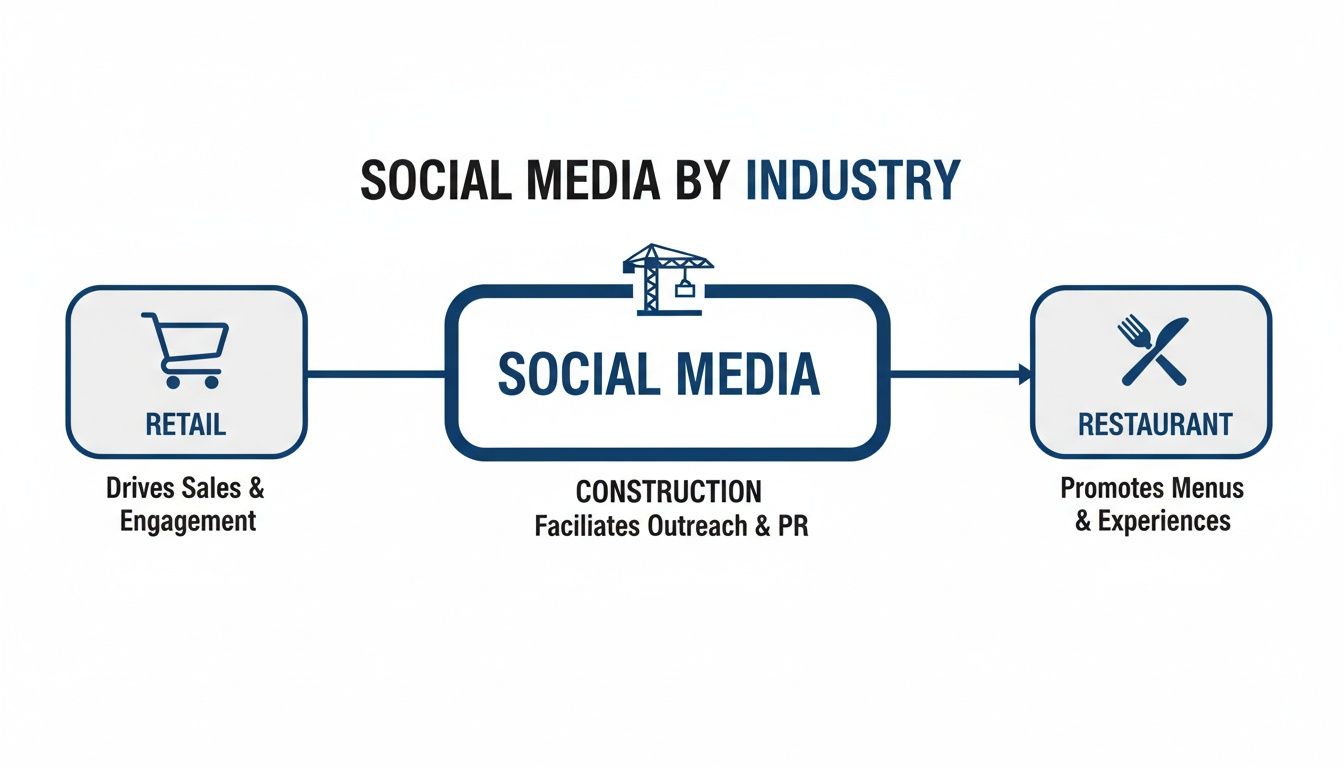
This map shows how a social media management consultant adapts their approach for different industries, whether it's retail, construction, or restaurants.
It’s a great reminder that effective social media management is never a one-size-fits-all solution; it always needs to be customised to the industry.
Comprehensive Reporting and Analysis
A true professional won't just send you a spreadsheet of numbers. They'll provide regular, easy-to-understand performance reports, usually on a monthly basis. These reports should offer context and actionable insights—explaining what the numbers mean and what should be done next. This continuous feedback loop is what drives strategic adjustments and long-term improvement.
This analysis is more critical than ever, especially given the explosive growth of social media in Australia. With a projected 20.9 million active users in 2025—that’s 77.9% of the entire population—the fight for attention is intense. Since Australians spend almost two hours a day on these platforms, a consultant’s ability to analyse data helps you cut through the noise and connect directly with your ideal customer.
What Does a Social Media Consultant Cost in Australia?
Investing in a social media management consultant is a big business decision, and the first step is figuring out what it’s going to cost. In Australia, there’s no single price tag. The final figure really depends on who you hire, how much help you need, and what specific services you’re after.
Think of it like hiring a builder. A simple bathroom reno isn't going to cost the same as a full custom-built home. It’s the same with social media. A basic plan to just schedule a few posts is far more affordable than a full-blown strategy with paid ads, deep-dive analytics, and daily community management.
How Consultants Usually Charge
Consultants in Australia typically structure their fees in one of three ways. The best model for your business comes down to your budget, what you need them to do, and how much flexibility you’re looking for.
Monthly Retainer: This is the most popular option. You pay a set fee each month for a specific list of services. It’s perfect for ongoing management because it gives you predictable costs, which makes budgeting a whole lot easier.
Project-Based Fees: Got a one-off goal, like a product launch or a major campaign? A project-based fee is what you want. You pay a flat rate for the entire project, with clear deliverables and a firm deadline from start to finish.
Hourly Rates: Some consultants charge by the hour, which gives you maximum flexibility. This is ideal if you just need some occasional advice, a few training sessions, or help with smaller, one-off tasks.
What Pushes the Price Up (or Down)?
The final quote you get will be shaped by a few key things. An experienced consultant with a killer track record of getting results for businesses like yours will naturally charge more than someone just starting out.
The scope of work is another massive factor. Managing five social media accounts with a paid ad budget is a much bigger job than just handling one platform with organic posts.
To give you a real-world idea, the average daily rate for a social media manager consultant in Australia is around $534. Of course, this can swing quite a bit. Data shows that 95% of consultants charge somewhere between $264 and $804 per day, with the price reflecting their expertise and how complex the job is. You can dig deeper into these numbers with Australian consultant rate guides to get a clearer picture of the investment.
Remember, this is usually one piece of a much bigger marketing puzzle. To see how this role fits into your wider strategy, you might find it helpful to read our guide on what a digital marketing consultant can do for your business. Once you understand the pricing structures and what influences them, you can set a realistic budget and find a consultant who’s a perfect match for your goals.
How to Find and Hire the Right Consultant for Your Business
Bringing a social media consultant on board is more than just outsourcing a task; it's like adding a key strategic player to your team. The right person can genuinely move the needle on your growth, but the wrong fit can be a costly detour. This isn't about finding someone who just makes pretty posts—it’s about finding a partner who gets your business, your industry, and what you’re trying to achieve.
So, where do you start looking? Professional networks like LinkedIn are an obvious first stop, but don't overlook industry-specific forums or even local business groups. These places can be goldmines for finding specialists who already have runs on the board in your sector.
Assessing a Candidate's Expertise
Once you’ve got a shortlist, it’s time to move beyond the sales pitch and see what they've actually done. A great consultant doesn’t need to talk themselves up; their portfolio should do it for them.
When you're digging into their past work, don't get distracted by flashy graphics. You need to focus on the results.
What to look for in their portfolio:
Case Studies: Look for detailed breakdowns of their work with other clients. A solid case study will walk you through the problem they were hired to solve, the strategy they used, and—most importantly—the measurable results.
Industry Relevance: Have they worked with businesses like yours before? A consultant who has already navigated the social media landscape for a law firm or a construction company will have a head start on understanding your audience and challenges.
Strategic Variety: You don't want a one-trick pony. Their portfolio should show they can adapt their approach, not just apply the same cookie-cutter formula to every client. This shows they actually think strategically.
Key Questions to Ask in an Interview
The interview is where you get a feel for how they think. Ditch the generic questions and ask things that reveal their problem-solving process. You're hiring a strategist, not just an operator.
Try asking these critical questions:
"Walk me through how you'd develop a strategy for our business from scratch." A good answer will start with research, audience analysis, and competitor reviews—long before they even mention creating content.
"Tell me about a campaign that didn't work out. What happened, and what did you learn from it?" This question tests their honesty and resilience. Marketing involves trial and error; what matters is how they learn and adapt.
"How do you tie social media metrics back to our actual business goals, like generating leads or sales?" This tells you if they're focused on vanity metrics or the numbers that actually impact your bottom line.
A good interview also helps you see if they're a good cultural fit for your team and if your communication styles will mesh well.
Finalising the Partnership
Once you've found your ideal social media management consultant, the final steps are all about setting the relationship up for success. This means getting everything down in writing to make sure everyone is on the same page from day one.
A clear contract and a well-defined onboarding process are the foundations of a successful, long-term consulting relationship. They eliminate ambiguity and ensure both parties are aligned on expectations and deliverables.
Your contract needs to spell out the scope of work, deliverables, payment terms, and how often they'll report back to you. After that, a smooth onboarding process—where you hand over brand assets, customer insights, and business goals—will give your new consultant everything they need to hit the ground running. If you're thinking bigger, learning more about the role of a social media marketing agency can also provide some useful context.
Got Questions About Hiring a Consultant?
Deciding to bring in a social media management consultant is a big move, and it's totally normal to have a few questions rattling around. Getting straight answers helps you feel confident you're picking the right strategic partner for your business.
Let's dive into the most common queries business owners have, from setting realistic timelines to figuring out if a consultant or an in-house hire is the better fit.
How Long Does It Take to See Results?
While you’ll see an immediate difference in things like the quality and consistency of your posts, the real business results take a bit of time to build. Think of it like planting a garden; you won't get fruit overnight.
Generally, you can expect to see early signs of progress, like better engagement and more followers, within the first 1-3 months.
But for the bigger wins—like a steady stream of leads or a noticeable jump in sales—you're typically looking at 6-12 months. That's because building real trust and authority with an audience doesn't happen with a few posts; it’s a gradual process built on consistent, valuable conversations over time.
Consultant vs. In-House Manager: What’s the Difference?
The choice between a consultant and an in-house manager really boils down to your specific needs, budget, and where you want to take your business. Each option has its own clear advantages.
An in-house social media manager is a dedicated employee who lives and breathes your company culture. They're on deck full-time to handle things as they happen and can work hand-in-glove with your other departments.
A social media management consultant, on the other hand, brings specialised expertise and a fresh, outside perspective. They've often worked across multiple industries, so they come armed with proven strategies you might not have thought of—all without the overheads of a full-time employee, like benefits and equipment.
Hiring a consultant gives you access to high-level strategic thinking on a flexible basis. It’s a cost-effective way to tap into expert knowledge exactly when you need it most.
What Information Do I Need to Provide to Get Started?
To make sure your new consultant can hit the ground running, it’s a great idea to have some key information ready to go. A smooth start is the foundation of a successful partnership.
Try to have this ready to share:
Brand Guidelines: Your logo, colour palettes, fonts, and the tone of voice you use.
Target Audience Details: Any customer profiles or market research you've already done.
Business Goals: What you're aiming for (e.g., "increase online sales by 20%").
Access Credentials: Logins for your social media accounts and any analytics tools you're using.
Handing this over upfront lets your consultant get their strategy aligned with your brand right away and start delivering value from day one.
At Titan Blue Australia, we build digital strategies that deliver measurable growth. With over 25 years of experience, we provide expert social media management to help Australian businesses connect with their customers and achieve their goals. Get in touch with us to discuss your business needs.
Titan Blue is your go-to digital partner for smart, results-driven solutions. We blend strategy, creativity and tech to grow your brand and get real results fast.