Web Design for Tradies Your Guide to Winning More Jobs Online
Relying on word-of-mouth referrals alone in this day and age is just leaving money on the table. Think of it this way: a well-designed, strategic website acts as your hardest-working apprentice. It's out there qualifying leads and winning you jobs 24/7, long after you've packed up the tools for the day.
The right web design for a tradie business turns your online presence from a simple digital flyer into a lead-generation machine that actually works.
Why Your Website Is Your Hardest-Working Apprentice
Let's cut straight to it—the way customers find and hire tradies has completely changed. The days of someone flipping through the Yellow Pages are long gone. Today, when a homeowner has a burst pipe or decides they want a new deck, their first move is to grab their phone and search for a local expert.
This shift means a basic, clunky webpage just doesn't cut it anymore. Your website is your digital handshake, your portfolio, and your sales pitch all rolled into one powerful first impression. A professional, easy-to-use site instantly builds trust and shows you're reliable before you've even had a chance to speak with a potential client.
Moving Beyond Just Word-of-Mouth
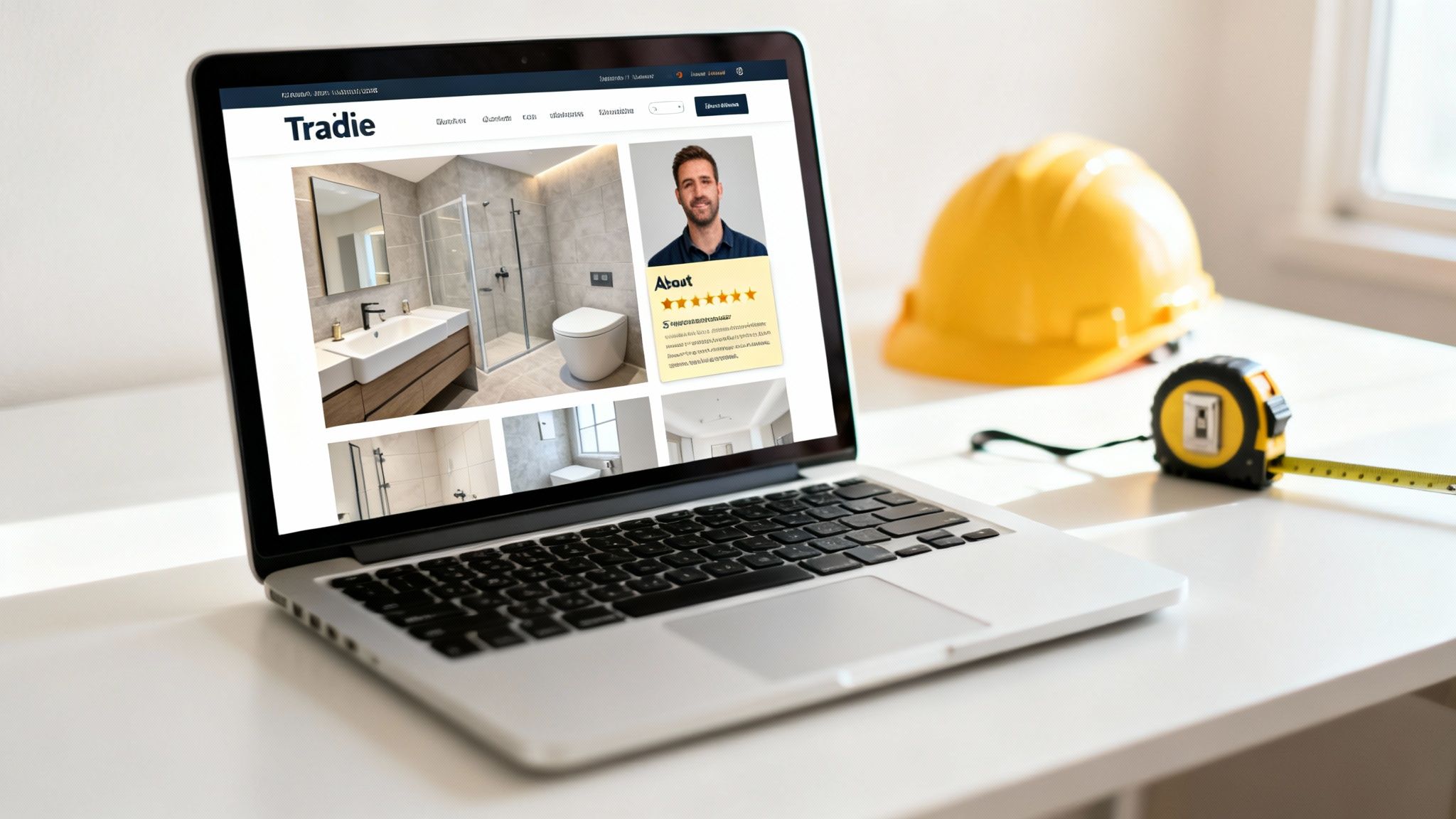
A strong referral is gold, no doubt about it. But even the best word-of-mouth network has its limits. A website, on the other hand, works tirelessly to expand your reach. It’s the perfect place to show off your best work with high-quality photos, build trust with genuine customer testimonials, and make it dead simple for people to get in touch or request a quote.
The data below shows how Australian tradies are currently getting their name out there. You'll notice a clear opportunity for anyone willing to step up their online game.
The Untapped Digital Opportunity
Recent industry data reveals a massive gap in the market. While a huge 70% of Australian tradies still lean heavily on personal recommendations, an overwhelming 76% also see their website as a key marketing tool.
Here's where it gets interesting. Very few are taking it to the next level with things like SEO (17%) or Google Ads (29%). This is a golden opportunity. For tradies who properly invest in a quality website, you can get miles ahead of the competition. You can dig deeper into these numbers in the full Australian tradies market report.
Your website isn't just an online brochure; it's a lead qualification tool. It filters out the tyre-kickers and brings you serious customers who have already seen your work, read your reviews, and are ready to talk business.
This guide is designed to help you do exactly that—transform your website from a passive placeholder into an active, lead-generating asset. We'll walk through everything you need to know, from initial planning to getting found in local search and converting those visitors into quoted jobs.
Blueprint for a Website That Attracts the Right Clients
Before you even think about colours or code, a winning website starts with a solid plan. Think of it as the foundation for your digital worksite; get this part right, and everything else falls into place. A good plan ensures your website actually generates leads instead of just sitting there looking pretty.
The whole process kicks off with one critical question: who are you trying to attract?
Your answer to that question dictates every single decision you make, from the words on your homepage to the photos in your gallery. A sparky chasing large-scale commercial fit-outs needs a completely different message than one focusing on residential switchboard upgrades.
Likewise, a plumber who specialises in emergency hot water repairs will build a site that feels urgent and helpful. On the other hand, a renovation expert targeting high-end bathroom makeovers will focus on showcasing premium finishes and telling detailed project stories.
Defining Your Ideal Customer
Getting crystal clear on your target client is the most important thing you can do. Don't just say "homeowners." You need to dig deeper and paint a picture of the exact person you want calling you.
Are you targeting:
Time-poor professionals in affluent suburbs who value quick communication and will happily pay a premium for reliability?
Property managers who need a dependable contractor for ongoing maintenance across multiple sites?
Young families in new housing developments who are looking for affordable, trustworthy tradies for smaller jobs?
Pinpointing this helps you tailor your site's language, visuals, and overall vibe to connect directly with them. Your entire online presence should speak their language and solve their specific problems, making you the only logical choice.
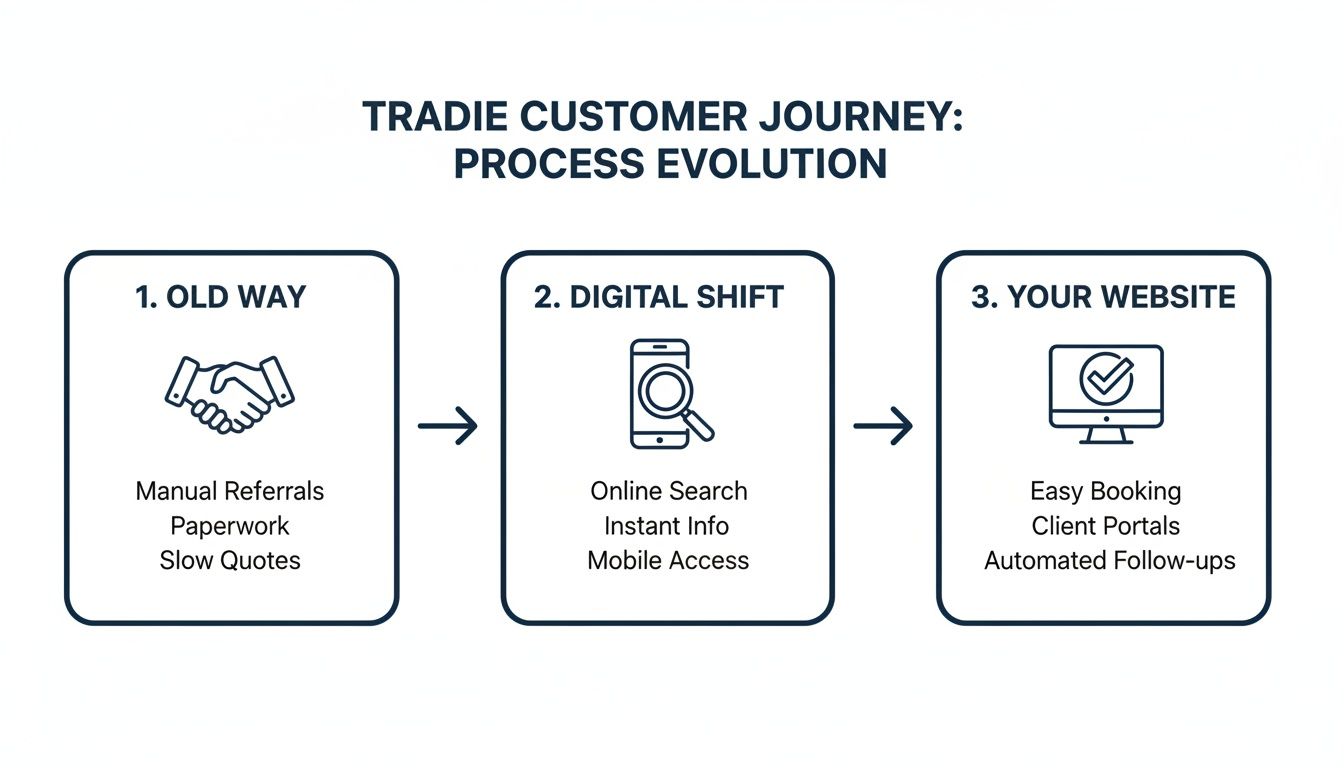
The way a potential customer goes from needing a job done to finding your website has changed dramatically. The old handshake and word-of-mouth method has been replaced by a digital-first approach.
This evolution makes it obvious that your website isn't just an optional extra anymore. It's the central hub where modern customers decide whether to trust you with their job.
Structuring Your Site for Success
Once you know exactly who you're talking to, you can start mapping out the pages your website needs. A confusing site is a dead end for potential clients. Your goal is to make it incredibly easy for visitors to find what they're looking for in just a couple of clicks.
Every tradie website should have a core set of pages that build trust and guide visitors towards picking up the phone.
A well-structured website acts like a helpful receptionist. It greets visitors, understands what they need, and directs them to the right person—or in this case, the right information—without any fuss.
Here are the non-negotiable pages your site has to include:
A Compelling Homepage: This is your digital storefront. It needs to immediately tell people who you are, what you do, and where you work, all while grabbing their attention.
Detailed Service Pages: Don't just lump all your services onto one page. Create dedicated pages for your key offerings like 'Emergency Plumbing', 'Gas Fitting', or 'Kitchen Renovations'. This helps you show up for more specific searches.
An 'About Us' Page: This is your chance to tell your story. Share your experience, introduce your team, and explain why you're passionate about your trade. It’s how you build a real connection.
A Project Gallery or Portfolio: Show, don't just tell. High-quality photos of your finished work are powerful proof of your skills and professionalism.
An Easy-to-Find Contact Page: Make it dead simple for clients to get in touch. Include your phone number, email, and a straightforward contact form that doesn't ask for their life story.
Mapping these pages out is a crucial part of the planning stage. For a more detailed guide to get you organised, our comprehensive website planning checklist gives you a step-by-step framework to make sure you've covered all your bases. Proper planning now prevents costly changes later and sets you up for a website that actually works for your business.
Designing for Trust and Showcasing Your Best Work
Your website is your digital handshake. Before a potential client reads a single word, they’ve already made a snap judgement based on how your site looks and feels. A professional, clean design instantly signals that you’re reliable, you take pride in your work, and you’re serious about your business.
That first impression is everything. It’s what separates you from the competition down the road and gives a homeowner the confidence to pick up the phone. The visual side of your site isn't just about looking good; it's about building immediate, crucial trust with every single visitor.
Ditch Stock Photos for Authentic Project Images
Nothing screams "generic" louder than a stock photo of a smiling actor in a hard hat. Your customers can spot these a mile away, and they do absolutely nothing to prove your skills. The most powerful way to build credibility is by showing off your actual work with high-quality, authentic photos.
Your project gallery is your proof. It's where you show, not just tell, people the quality you deliver day in and day out. You don't even need a fancy camera; modern smartphones take brilliant photos.
Just focus on capturing:
Clean, well-lit shots of the finished project from a few different angles.
Before-and-after comparisons that dramatically highlight the transformation.
Close-ups of the details—think perfect tile work, clean paint lines, or neatly installed fixtures.
These images are tangible evidence of your craftsmanship and are a core part of effective web design for tradies. They prove you have the experience and attention to detail clients are looking for. To take this a step further, our guide on construction company website design offers more specific tips on building a portfolio that genuinely wins contracts.
Leverage Social Proof with Testimonials and Reviews
What you say about your business is important, but what your past customers say is ten times more powerful. Displaying genuine testimonials and reviews provides the social proof needed to convince hesitant visitors you’re the real deal.
People trust other people. When a potential client sees that you've consistently delivered great results for others in their community, their confidence in hiring you skyrockets.
Think of your testimonials as your digital word-of-mouth referrals. They answer a visitor’s biggest question: “Can I trust this person to do a good job?”
Make sure your testimonials are specific. A generic "great job" is fine, but a review that says, "John was always on time, left the site spotless every day, and his team finished our bathroom reno a week ahead of schedule" is far more compelling. If they're comfortable, including the customer's name and suburb adds another layer of authenticity.
Build a Compelling Portfolio That Tells a Story
A great portfolio page does more than just display a grid of photos. It should walk a potential client through the story of a project, helping them envision what it would be like to work with you. This is your chance to really highlight your problem-solving skills and professionalism.
For each key project, create a mini-case study that includes:
The Challenge: Briefly describe the client's problem or what they wanted to achieve (e.g., "an outdated 1980s kitchen that lacked storage and flow").
Your Solution: Explain your process and how you tackled the challenge (e.g., "We redesigned the layout to open up the space and installed custom cabinetry to maximise storage").
The Result: Showcase the final outcome with a gallery of stunning before-and-after photos and maybe even a glowing testimonial from the client.
This storytelling approach elevates your work from a simple service to a valuable, well-thought-out solution.
Customer expectations for online experiences are higher than ever. With Australian eCommerce reaching AU$69 billion and 95% of Aussies now shopping on mobile, your website needs to function like a professional virtual shopfront. It has to be easy to navigate and build trust instantly, especially since 77% of site visits now come from phones. Your site's design isn't just a nicety—it's a critical business tool for winning more work.
Getting Found By Local Customers On Google
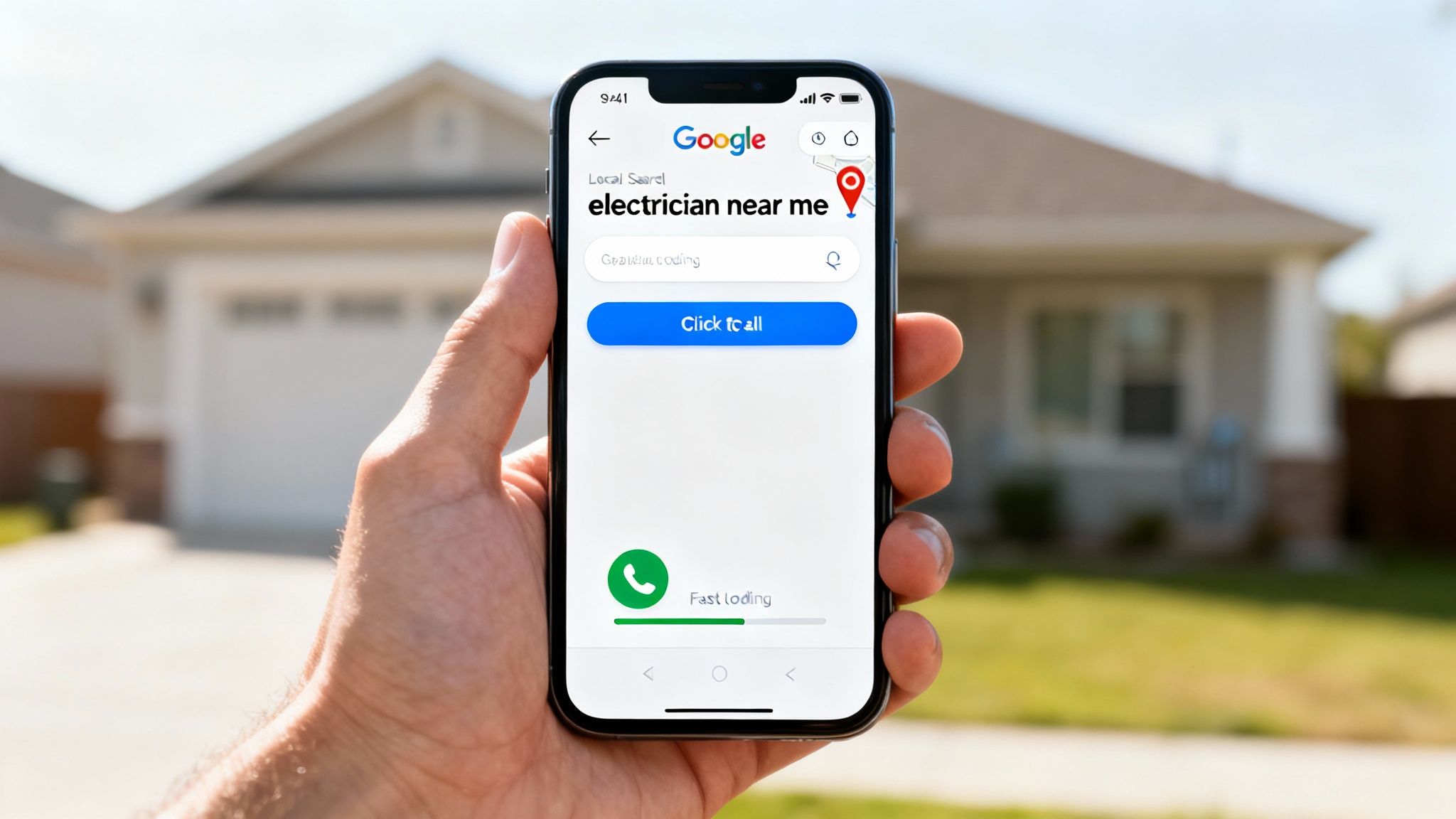
When a pipe bursts or a fuse blows, your potential customers don't mess around. They grab the nearest device—almost always their phone—and search for a local tradie who can fix their problem, fast.
If your website isn't built to show up in that exact moment of need, you’re basically invisible to a huge chunk of your market.
This is where a mobile-first approach and local Search Engine Optimisation (SEO) become your most powerful tools. It’s not about some complex marketing wizardry; it’s about making sure you’re the first and best option when someone in your service area searches for what you do.
Build For Mobile Before Anything Else
For a minute, forget how your website looks on a big desktop monitor. The vast majority of your customers will find you on their phone, often while standing right in the middle of a home emergency.
If your site is slow, hard to read, or a pain to navigate on a small screen, you've lost the job before they even find your phone number. A mobile-first web design for tradies means creating an experience that feels natural on a smartphone. This isn't just a "nice-to-have"—it's an absolute non-negotiable for winning local work.
Here’s what that looks like in the real world:
Responsive Design: Your site needs to automatically adjust to fit any screen, from a small phone to a massive desktop. Text should be easy to read without pinching and zooming, and buttons need to be big enough for a thumb to tap easily.
Fast Loading Pages: Every second counts. A website that takes longer than three seconds to load will lose a huge number of potential customers. This means optimising your images and keeping the back-end code clean.
Click-to-Call Buttons: This is probably one of the most important features you can have. Your phone number should be a big, obvious button right at the top of the site, letting a stressed-out customer call you with a single tap.
Dominate Local Search Results
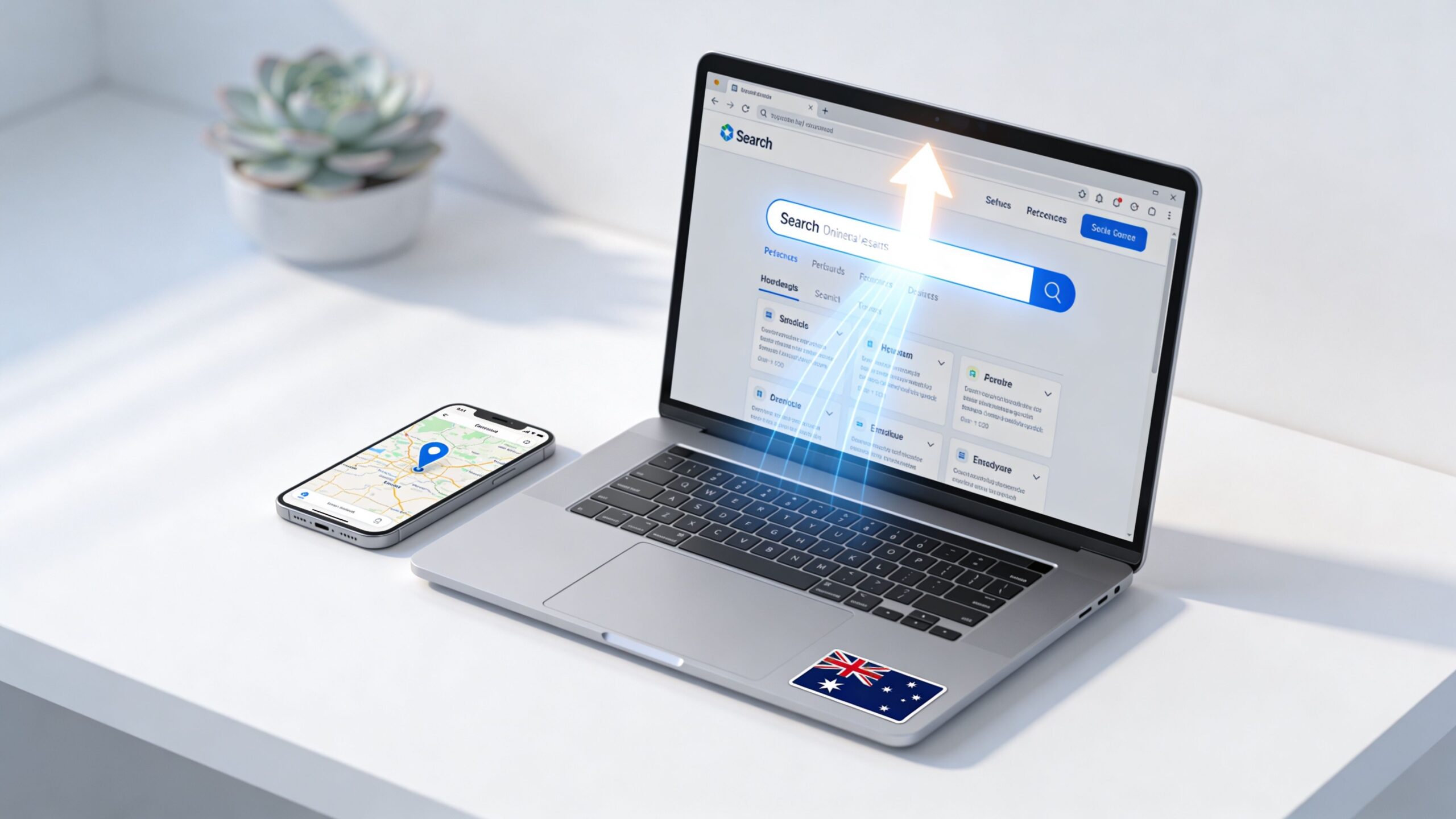
Being mobile-friendly gets you in the game, but local SEO is how you win it. The goal is simple: show up at the very top of Google—ideally in the 'map pack'—when someone searches for "plumber in Parramatta" or "sparky near me".
You get there by sending strong signals to Google that you're a relevant, trustworthy, and local expert in your trade. You can get a deeper dive into what makes a winning strategy in this complete guide to https://titanblue.com.au/local-seo-for-businesses/.
Think of local SEO as digital signposting. You’re putting up clear, consistent signs all over the internet that point straight back to your business, telling both customers and Google exactly who you are, what you do, and where you do it.
Your Google Business Profile Is Your Digital Shopfront
Your Google Business Profile (GBP) is arguably more important than your website's homepage. It’s that info box that pops up in Google Maps and local search results, showing your business name, reviews, phone number, and service area.
Optimising your GBP is the single most effective thing you can do to pull in local customers.
Claim and Verify: First things first, make sure you have full control over your listing.
Complete Every Section: Fill out every single field you can—services, hours, service areas, photos, and a business description. The more info you give Google, the better.
Encourage and Respond to Reviews: Don't be shy about asking happy customers for a review. Positive reviews are a massive trust signal and a key ranking factor. And always reply professionally to all feedback, good and bad.
Create Location-Specific Service Pages
If you work across multiple suburbs, you need to create dedicated pages on your website for each one. For example, instead of a single "Tiling Services" page, make separate pages like "Tiling Services Bondi" and "Tiling Services Coogee."
This simple tactic helps you show up for those super-specific local searches and proves to potential customers you genuinely work in their neck of the woods. Each page should have unique content, maybe mentioning local landmarks or the types of jobs common in that suburb, to show you’re a true local.
This level of detail is a cornerstone of effective web design for tradies aiming for local dominance. For anyone thinking about bringing in some outside help, understanding the pros and cons of hiring an SEO company for small businesses is a great next step. Getting these local signals right is a specialised skill, but it’s one that delivers a huge return by putting you right in front of customers who are ready to hire.
Turning Your Website Visitors Into Quoted Jobs
A great-looking website is only half the battle. If it doesn't actually bring in work and help you land more quotes, it's just a slick-looking digital business card. This is where we get serious about turning those website visitors into paying customers.
It all comes down to making it incredibly easy for them to take the next step.
The entire goal is to remove friction. When a potential customer lands on your site, they should know exactly what to do next without a moment's thought. This process of guiding visitors toward a specific action is the core of effective web design for any tradie who wants to grow their business.
Crafting Calls To Action That Actually Get Clicks
A call to action (CTA) is exactly what it sounds like: a prompt telling the user what you want them to do. But weak, vague CTAs like "Learn More" or "Contact Us" just don't cut it. They don't create any urgency or excitement. You need clear, compelling, and benefit-driven commands that speak directly to your customer's immediate needs.
Your CTAs should be impossible to miss—think brightly coloured buttons that pop right off the page.
Here are a few powerful CTA examples I’ve seen work wonders for tradies:
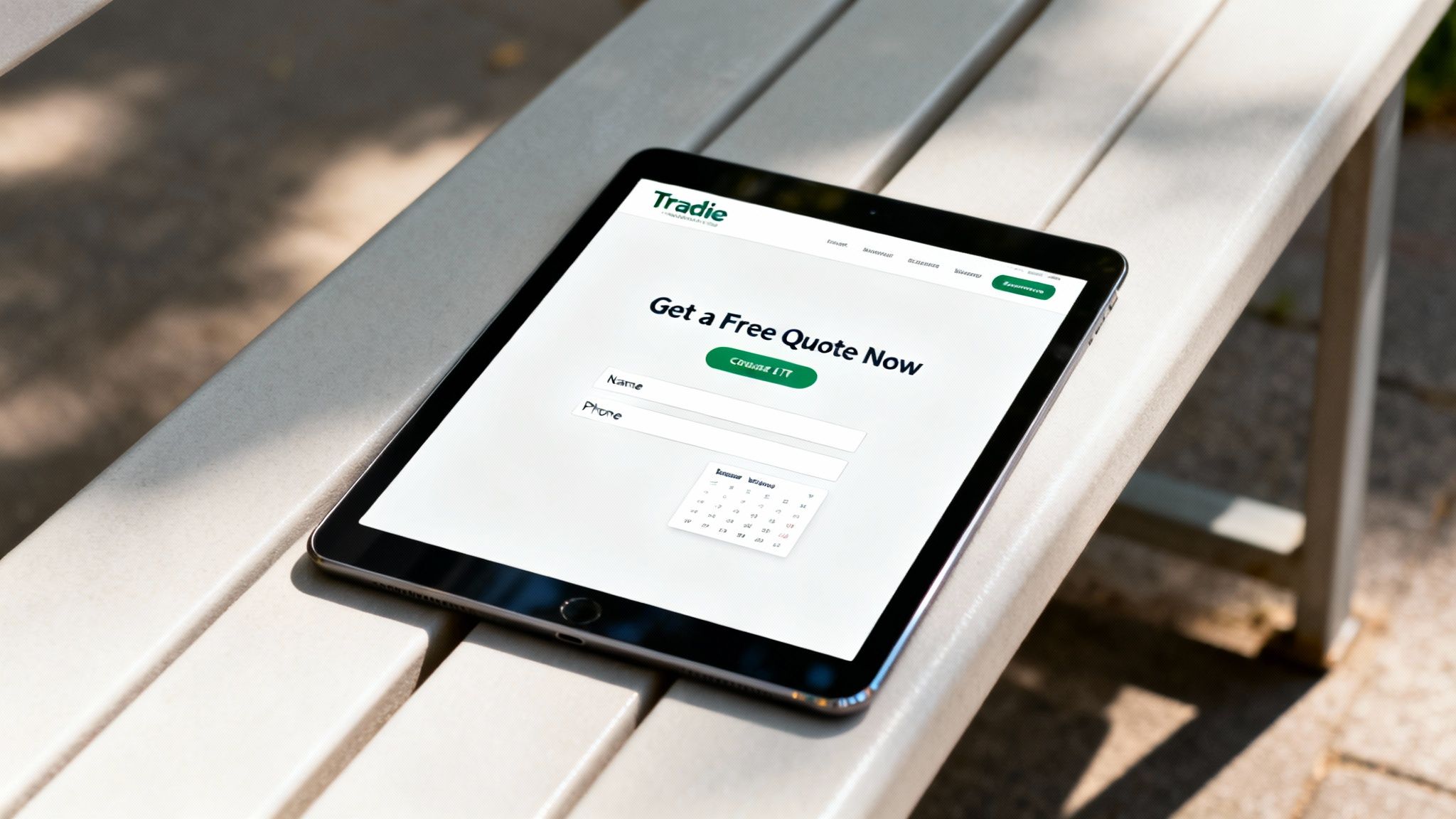
Get a Free Quote Now: This is a classic for a reason. It’s direct, offers value ('Free'), and creates a sense of urgency ('Now').
Book a Site Inspection: Perfect for bigger jobs like renovations or landscaping. It sounds professional and implies a more detailed, personalised process.
Call for 24/7 Emergency Service: For plumbers or sparkies, this is a lifesaver for customers in a panic. It gets them on the phone immediately when they need you most.
Download Our Price Guide: A great way to capture email addresses from customers who are still in the research phase, giving you a chance to follow up.
The trick is to place these CTAs strategically throughout your site. Put one right at the top of your homepage, another after you describe a service, and of course, on your contact page. The more clear opportunities you give a visitor to connect, the higher the chance they actually will.
Keep Your Contact Forms Simple
Let's be honest, nobody wants to fill out a ten-field form just to ask a question. The more information you ask for upfront, the fewer people will bother completing it. This is a critical point where so many businesses accidentally lose perfectly good leads.
Your goal is to make getting in touch completely painless.
A simple contact form respects your customer's time. By only asking for the essentials, you signal that you're easy to deal with, which is a massive selling point for any tradie.
Stick to the absolute basics needed to start the conversation:
Name: So you know who you're talking to.
Phone Number: The most direct way to follow up on a hot lead.
A simple message box: For them to briefly describe the job.
That's it. You can get all the other details like their address or specific project requirements once you've actually made contact. This focus on streamlining user actions is a fundamental part of what's known as conversion rate optimisation. You can get a detailed breakdown of these principles by exploring this guide on what is conversion rate optimisation and how it can turn more of your website clicks into clients.
Use Modern Tools To Capture Leads Instantly
In many cases, customers want answers right away. If they have to wait for you to call back, they might just click over to the next tradie on the Google results page. Modern tools can help you capture these leads before they get away.
Consider adding a live chat widget to your site. This lets visitors ask quick questions and get instant responses, even if it's just an automated reply letting them know you'll call back shortly.
Another powerful option is an online booking system. This lets potential clients schedule a quote or a site inspection directly on your website at a time that works for them, completely eliminating the annoying back-and-forth of phone tag. Once your website starts bringing in leads, effective call handling is crucial. For many tradies on the tools, answering every call is impossible, which is where learning how a call handling service can boost conversions for your home service business becomes a real game-changer.
These tools don't just capture leads; they make you look more professional and organised, making the entire process smoother for everyone involved.
Keeping Your Website Working for You Long Term
Getting your new website live is a massive milestone, but it's the starting line, not the finish. A great website isn't a "set and forget" tool; it’s a living asset that needs regular attention to keep performing at its peak and bringing in new work.
Think of it like servicing your ute—a bit of ongoing maintenance prevents major, costly breakdowns down the track.
This means keeping everything secure and running smoothly. Regular software updates are non-negotiable, as they patch security holes that could leave your site vulnerable to hackers. Paired with consistent backups, this ensures your digital worksite is always safe and can be quickly restored if anything goes wrong.
Understanding Your Website's Performance
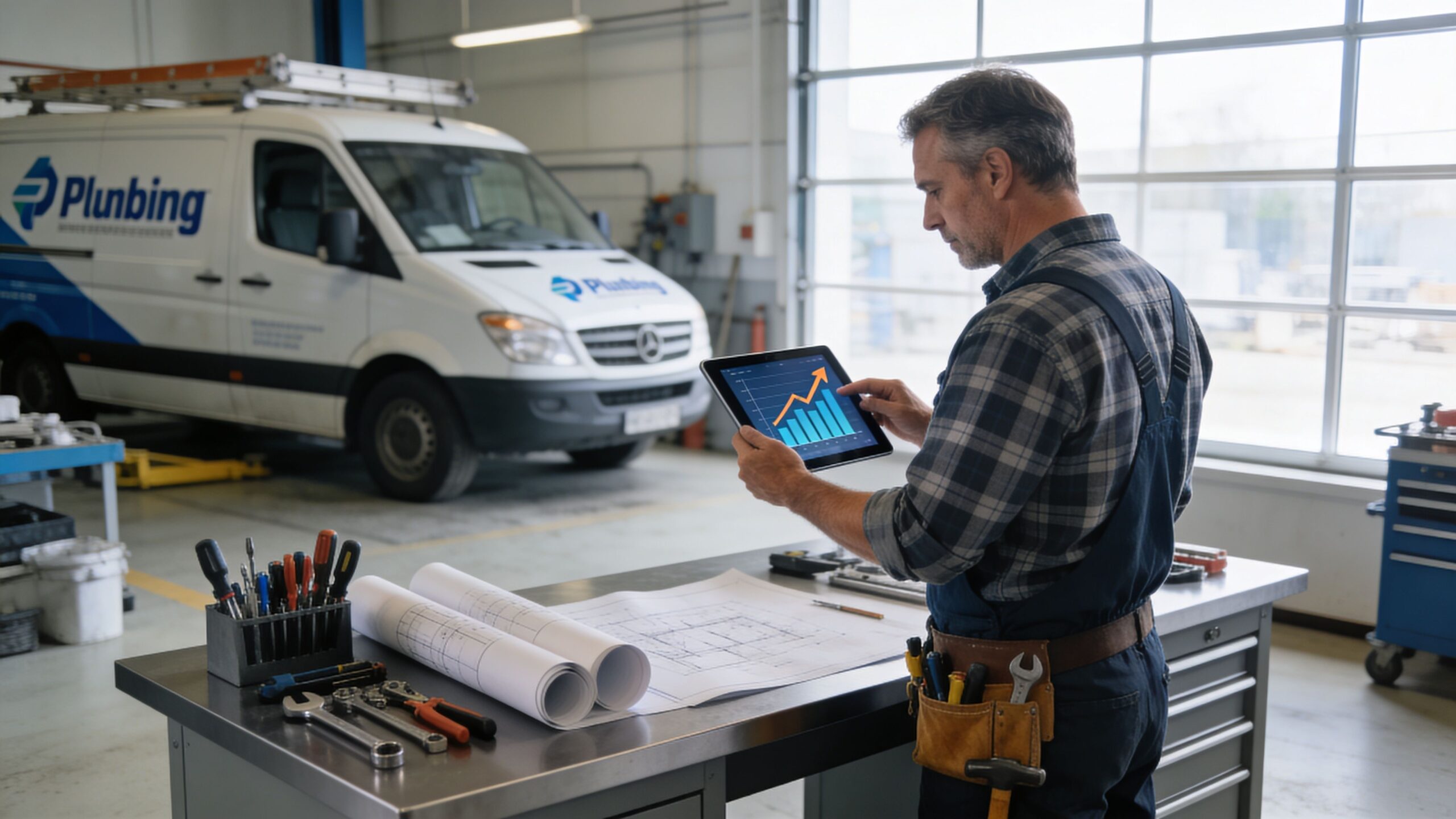
So, how do you actually know if your website is pulling its weight? You have to look at the data. Free tools like Google Analytics are like a dashboard for your website, showing you exactly how many people are visiting, which pages they’re looking at, and where they're coming from.
This information is pure gold. It helps you understand what's connecting with your potential customers and what's falling flat.
For example, if you see that your 'Bathroom Renovations' portfolio page gets a tonne of traffic, you know that's a service worth promoting more heavily. Tracking this data lets you make smart, informed decisions instead of just guessing what your customers want.
A Simple Plan for Growth
Keeping your site fresh is crucial for both your customers and for Google. An active, updated website signals to search engines that your business is current and relevant, which helps improve your rankings over time. The good news is, it doesn't need to be a massive chore.
A simple content plan could be as straightforward as this:
Add new project photos to your gallery once a month to show off your latest work.
Write a quick blog post answering a common customer question, like "How do I choose the right paint finish for our Queenslander?"
Update your testimonials page with a new glowing review from a happy client.
This consistent activity keeps your site relevant and continuously builds trust with new visitors.
For busy tradies who are short on time (and let's be honest, who isn't?), exploring a professional website maintenance package can be a smart move. It ensures all the essential updates, security checks, and backups are handled for you, freeing you up to focus on what you do best—delivering top-quality work for your clients.
Got Questions? We've Got Answers
Stepping into the world of web design can feel like a minefield of questions. We get it. To clear things up, here are some straight-shooting answers to the questions we hear most from tradies just like you.
What's the Real Cost of a Tradie Website?
Look, you can get anything from a few hundred bucks for a DIY job to a $10,000+ custom build. But for a solid, professional website that actually gets you leads, most tradies in Australia should budget somewhere in the $3,000 to $7,000 range.
What pushes the price up or down? It really comes down to a few things:
How many pages you need.
Whether you want a unique custom design or a clean template.
If you need special features, like a proper online booking system.
Whether SEO and professional copywriting are bundled in (they should be).
Think of it this way: you're not just buying a website; you're investing in a 24/7 sales tool that brings in quality jobs month after month.
Do I Genuinely Need a Blog on My Website?
Honestly? It's not a must-have for every single tradie out there. But if you want to seriously boost your local SEO, a blog is one of the best tools in your arsenal. It’s a game-changer.
By writing helpful articles that answer the questions your customers are already Googling—like 'Signs you need a switchboard upgrade'—you attract people who need your expertise.
This positions you as the local authority, builds massive trust, and helps your site show up for a much wider net of keywords. You'd be surprised what one helpful post a month can do for bringing in new customers before they've even decided to call someone.
How Long Does It Take to Build a New Website?
For a professional tradie website, you’re typically looking at a timeline of four to twelve weeks from start to finish. What makes it faster or slower? A lot of it depends on the complexity of the job and how quickly you can get things like text, photos of your work, and feedback to your designer.
A straightforward five-page site might be up and running in a month. But if you’re after something more complex, like a site with a client portal, you could be looking at three months or more. Good, clear communication with your web developer is the absolute key to keeping things moving and hitting that launch date.
At Titan Blue Australia, we build high-performance websites that work as hard as you do. If you're ready to make your website your number one source for leads, let's have a chat. Contact us today for a free consultation and quote.
Titan Blue is your go-to digital partner for smart, results-driven solutions. We blend strategy, creativity and tech to grow your brand and get real results fast.