

Last updated:
So, how much does a website actually cost in Australia? You can expect to see prices ranging from around $5,000 for a basic site to well over $25,000+ for a complex, custom-built digital platform. The final figure really comes down to the scope of your project, its complexity, and the specific features you need to hit your business goals.
Your Quick Guide To Website Design Costs In Australia
Trying to nail down a single price for a website is a bit like asking for the cost of a vehicle without saying if you want a scooter or a semi-trailer. Both get you from A to B, but their purpose, complexity, and capabilities are worlds apart. A website is exactly the same; it’s a core business asset, not just another expense.
The investment you make should reflect the strategic value it’s designed to deliver. Is its main job to pull in leads for a local tradie? Or does it need to handle intricate bookings and payments for a national service provider? The answers to those questions are what really shape the final cost.
Why Prices Vary So Much
That huge price range comes down to the labour, skill, and technology needed to get the job done right. A simple "brochure" website built from a template requires far less time and specialist expertise than a custom e-commerce platform that needs to integrate with your inventory and shipping systems.
To make sense of the quotes you’ll get, it helps to understand what’s actually involved in building a professional online presence. It’s not just one thing; it’s a blend of several disciplines all working together to create a seamless experience that gets results.
These core components include:
- Strategic Planning: This is the foundational work—defining your audience, your goals, and the customer journey before a single line of code is written.
- User Experience (UX) Design: Architecting a site that feels intuitive, is dead simple to navigate, and guides visitors towards taking a specific action (like calling you or making a purchase).
- User Interface (UI) Design: Crafting all the visual elements—colours, fonts, and imagery—that bring your brand’s personality to life online.
- Development and Coding: The technical build of the site, making sure it’s fast, secure, and works perfectly on every device, from a phone to a desktop.
More Than Just a Digital Brochure
At the end of the day, a modern website is a powerful sales and marketing engine. Think of it as your hardest-working employee, operating 24/7 to attract customers, answer their questions, and generate revenue.
When you invest in professional web design and development, you’re not just buying a design. You’re investing in a strategic tool built to grow your business. This guide will pull back the curtain on website design costs, breaking down exactly what drives the price so you can move forward with confidence.
Key Factors That Drive Your Website Design Cost
What's the real difference between a $5,000 website and one that costs $25,000? It’s not just about how it looks—it’s about the engine under the bonnet. Several key components directly shape the scope, performance, and ultimately, the final cost of a website build.
Understanding these drivers is crucial to seeing where your investment is really going. Think of it like buying a suit. You can get one off the rack, or you can have one tailored just for you. Both do the job, but only one is crafted to fit your specific shape, goals, and style perfectly.
Let's dive past the buzzwords and look at the real factors that influence your quote, from the visual design right through to the technical nuts and bolts that make sure your site works hard for you from day one.
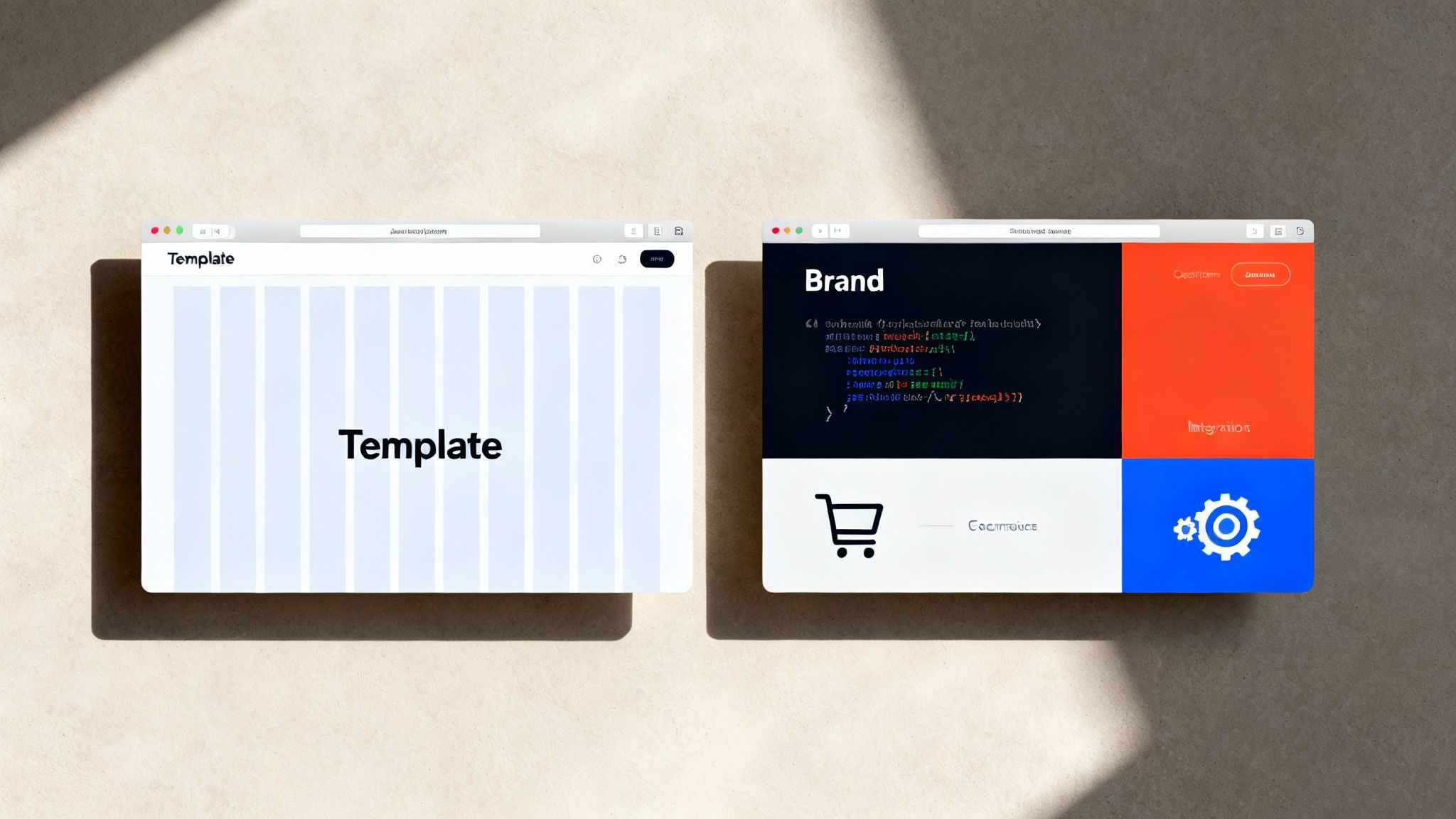
Custom Design vs Template-Based Builds
One of the biggest forks in the road—and a huge cost driver—is choosing between a pre-made template and a fully custom design. A template is like a project home; the floor plan is already set, which makes it faster and cheaper to get started. The catch? You’re boxed in by its layout, which can stifle your brand's unique identity and the exact customer journey you need.
A custom design, on the other hand, is an architectural blueprint created just for your business. It starts with a deep dive into strategy to map out a customer journey that actually converts. Every button, image, and interaction is intentionally designed to hit your business goals. You can learn more about this strategic approach in our article on what is user experience design. While it’s a bigger upfront investment, the result is a one-of-a-kind, high-performing asset that leaves the competition behind.
Development Complexity and Integrations
Next up is the technical complexity. A simple brochure website built on a standard system like WordPress is fairly straightforward. The costs start to climb when you need custom features and connections to other software to make it all work.
Just think about what you need your website to do. Does it need to talk to other systems?
- E-commerce platforms: These need secure payment gateways, inventory management, and clever product filtering to work smoothly.
- Booking systems: For any service business, a seamless booking and scheduling tool is a must-have, but it adds another layer of complexity.
- Client portals: A secure login area for customers to download documents or manage their accounts is a serious development task.
- API integrations: Need your website to feed data into your CRM or marketing software? That requires specialised development to build the bridge between them.
Each of these features adds hours of development, testing, and security work, all of which directly influences the final price.
Foundational SEO and Mobile Responsiveness
A stunning website is completely useless if no one can find it. That’s why foundational Search Engine Optimisation (SEO) isn't an optional "add-on"—it’s a non-negotiable part of any professional build. It has to be baked in from the very beginning.
This means creating a logical site structure, obsessing over page speed, and writing clean code that search engines can easily crawl and understand. On top of that, with most web traffic now coming from phones, a responsive design that looks and works perfectly on any screen is absolutely essential.
For example, a professional 6-10 page website for a small business on the Gold Coast, like a restaurant or local retailer, typically ranges from $5,000 to $10,000. A big reason for this cost is ensuring it’s mobile-responsive, which is vital when over 60% of Australian web traffic is mobile.
AI Optimisation For Future Growth
A forward-thinking website build now includes getting it ready for Artificial Intelligence. As AI-powered search becomes the norm, your website needs to be structured to give clear, direct answers to user questions.
This involves using specific code (known as schema markup) that helps search engines understand the context of your content. When done right, it makes your site far more likely to be featured in AI-driven search results. Building a website that’s ready for this next wave isn’t just a nice-to-have; it’s about future-proofing your digital investment.
Choosing Your Path: Freelancer, Agency, Or DIY?
Deciding who builds your website is a massive business decision. It directly shapes your brand's future, how well you can scale, and, of course, your website design cost. This isn’t about just picking someone to build a few pages; it’s about choosing a partner whose skills match your long-term goals.
The path you take—DIY, freelancer, or a full-service agency—comes with its own trade-offs. Each option is a bit like choosing a vehicle. Sometimes a scooter is perfect for a quick trip, but if you're hauling valuable cargo across the country, you’ll want a dedicated logistics team. Your website is no different.
The DIY Website Builder Route
Do-it-yourself (DIY) platforms are an accessible starting point, especially if your budget is tight or your needs are incredibly simple. With drag-and-drop tools and pre-made templates, a business owner can get something online fast without a big upfront investment.
But that convenience often comes with hidden costs. Many DIY platforms have walls you only hit when you try to grow. You might discover that adding essential features, like advanced e-commerce tools or custom software integrations, is either impossible or requires a pricey plan upgrade. And trying to customise the design to truly reflect your brand can be a real struggle, leaving you with a generic look that just doesn't stand out.
- Best For: Hobbyists, new businesses testing an idea, or anyone needing a basic online brochure.
- Key Consideration: The initial savings can get eaten up by long-term limitations and the huge amount of time you or your team will need to sink into it.
Hiring a Freelance Web Designer
Hiring a freelancer is a solid middle-ground option. A skilled freelancer can bring specialised expertise to the table—like amazing graphic design or sharp front-end development—often for less than an agency would charge. This works really well for projects that are clearly defined and don't have too many moving parts.
The challenge? You're typically hiring just one specialist. If your project needs a broader skill set—say, strategic SEO, professional copywriting, and backend development—you'll end up having to hire and manage multiple freelancers yourself. This can quickly turn into a coordination nightmare, creating gaps if one person's work doesn't mesh with another's. Ultimately, you're the one responsible for making sure all the pieces fit together.
Partnering With a Digital Agency
For businesses with complex needs and serious growth ambitions, a digital agency offers a complete, integrated solution. An agency isn't just one person; it's a dedicated team of specialists all under one roof—strategists, designers, developers, SEO experts, and project managers. This collaborative approach ensures every single part of your website is working towards one unified strategy.
In sectors like industrial manufacturing, multi-location retail, or professional services, an agency's strategic oversight is invaluable. They don’t just build a website; they design a digital asset engineered for performance, scalability, and long-term ROI. The entire process is managed for you, giving you a single point of contact and clear accountability from start to finish. If you're leaning this way, our guide on the 6 steps to finding a genuine marketing agency is a great next step.
An agency's real value is in handling complexity. They deliver a comprehensive digital solution that grows with your business, turning your website from a simple online presence into a powerful engine for growth.
Realistic Website Budgets For Australian Businesses
Theory is one thing, but seeing how website costs play out in the real world is far more useful. Let's ground these numbers and look at typical investment levels based on what you actually need your website to do for your business.
This isn't about picking a generic package; it's about aligning your budget directly with your goals. Every dollar should be a strategic investment. Whether you're a local tradie needing more quote requests or a manufacturer needing a robust digital presence, the right budget depends entirely on the job at hand.
This diagram shows the common paths businesses take, from DIY builders right up to specialised agency partners.
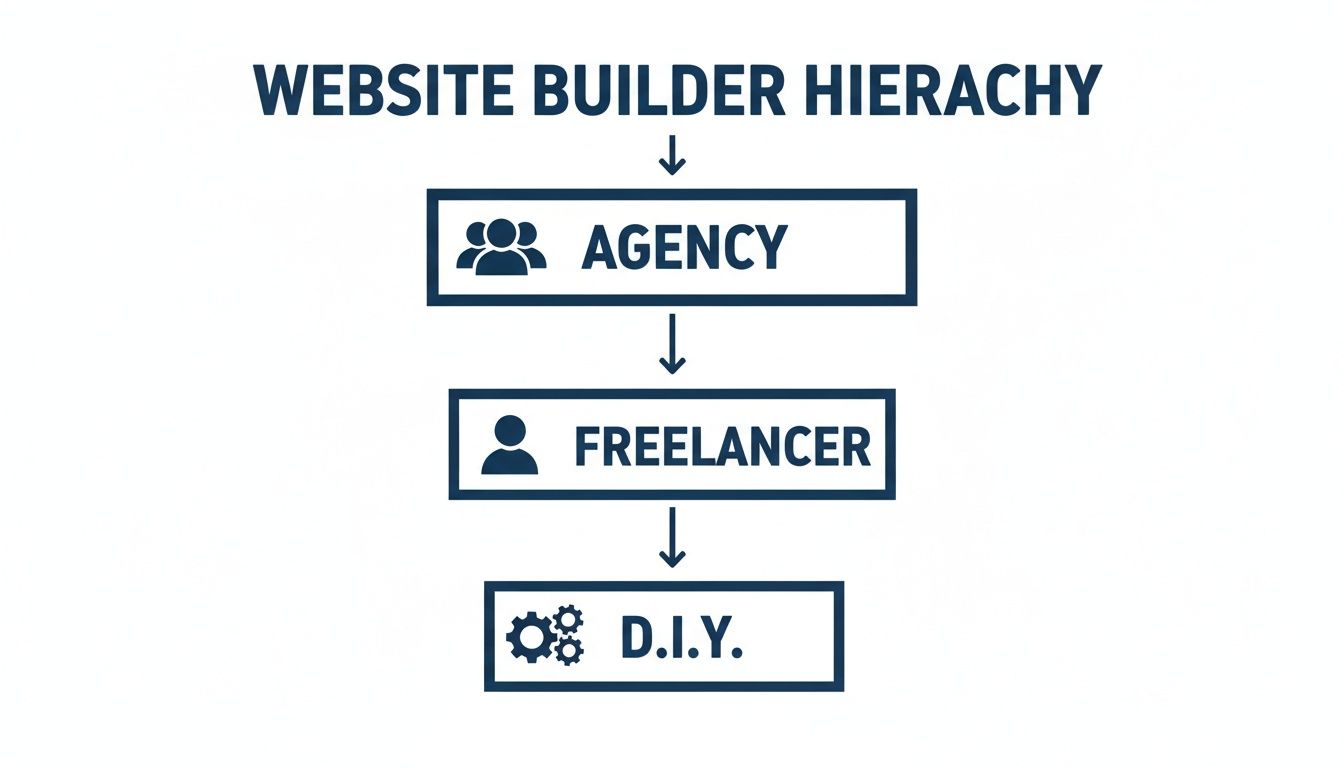
As you can see, the level of expertise, team size, and strategic thinking grows as you move up the ladder. This directly influences both the cost and the potential outcome of your project.
The Lead Generation Engine
For service-based businesses like tradespeople, consultants, or law firms, a website has one primary mission: generate a steady stream of high-quality enquiries. This site is a true workhorse, built from the ground up to drive conversions.
At this level, you’re looking at a professional, custom-designed website focused on getting visitors to take action. Key features will include prominent calls-to-action, easy-to-find contact forms, and click-to-call buttons that make it effortless for customers to get in touch. The design is clean, professional, and built to establish trust and credibility almost instantly. Foundational SEO is also non-negotiable here, ensuring the site is structured to rank for local service keywords from day one.
- Typical Investment: $7,000 – $15,000
- Core Focus: Driving phone calls, form submissions, and direct enquiries.
- Essential Features: Custom UX/UI design, conversion-optimised forms, mobile-first responsiveness, and foundational on-page SEO.
The Online Storefront
When you’re a retailer or a product-based business, your website becomes your digital shopfront. This is where things move beyond simple lead capture into full e-commerce functionality, which naturally brings a new layer of complexity and cost.
An effective online store is much more than a product catalogue. It needs a secure and reliable payment gateway, a solid inventory management system, and an intuitive checkout process to keep cart abandonment low. Features like product filtering, customer accounts, and shipping integrations are no longer optional—they’re expected. The design has to be visually appealing to show off your products while being dead simple to navigate.
- Typical Investment: $15,000 – $30,000+
- Core Focus: Driving online sales and managing product inventory.
- Essential Features: E-commerce platform setup, secure payment integration, inventory systems, and a seamless user checkout experience.
The Corporate And Industrial Hub
For businesses in sectors like manufacturing, construction, or corporate services, a website acts as a powerful hub for credibility and information. The goal here is less about immediate online sales and more about building trust with high-value B2B clients and showcasing deep industry expertise.
These sites often feature detailed service pages, downloadable tech specs, in-depth case studies, and extensive "About Us" sections that tell a strong corporate story. Security is absolutely critical, as is a highly professional and polished design that reflects the company's established reputation. The user journey is carefully mapped to guide procurement managers and decision-makers to the exact information they need to make an informed choice.
And as you're putting together your website budget, don't forget to consider potential tax benefits. Understanding the available tax deductions for small business owners can make a real difference to your project's overall affordability.
- Typical Investment: $20,000 – $40,000+
- Core Focus: Building digital credibility, showcasing expertise, and supporting complex sales cycles.
- Essential Features: In-depth service and project pages, robust security protocols, resource libraries, and a design that reinforces industry leadership.
Looking Beyond The Launch: Ongoing Website Expenses
The moment your new website goes live isn't the finish line; it’s the starting line. A high-performing website is a living digital asset. It needs continuous care and investment to deliver a real return, making the initial design cost just the first step. Budgeting for what comes next is crucial to keep your site secure, fast, and effective long after launch.
Think of it like buying a new work ute. The purchase price is the big upfront cost, but you still have to budget for fuel, insurance, and regular servicing to keep it on the road and earning you money. Your website works on the same principle; it needs ongoing attention to perform at its peak.
Essential Recurring Website Costs
There are a few non-negotiable costs just to keep your website online and accessible to customers. While they aren’t the most glamorous part of your budget, they are the absolute foundation your digital presence is built on. Without them, your site simply won’t function.
These foundational expenses include:
- Website Hosting: This is like the rent you pay for your website's plot of land on the internet. Reliable hosting ensures your site loads quickly and stays online, which is critical for both user experience and your SEO rankings.
- Domain Name Renewal: Your domain is your website's street address (e.g., yourbusiness.com.au). This is typically an annual fee required to keep ownership of that unique name.
- SSL Certificate: This provides the little padlock in the browser bar, encrypting data between your site and its visitors. It's essential for security, building user trust, and is a confirmed Google ranking factor.
The Value of Proactive Maintenance
Beyond the absolute basics, ongoing website maintenance is your digital insurance policy. The software that powers your website—like WordPress and its plugins—is constantly being updated to patch security vulnerabilities and add new features. Ignoring these updates is one of the main reasons websites get hacked.
A professional maintenance plan handles all of this for you. It ensures your software is always current, regular backups are taken in case of disaster, and any bugs are squashed promptly. This proactive approach stops small issues from turning into catastrophic failures that could take your site offline and wreck your brand's reputation. Learn more about how a professional website maintenance package protects your investment.
Fuelling Growth With SEO and Content
Finally, for your website to keep generating new business, you need to invest in attracting new visitors. This is where ongoing Search Engine Optimisation (SEO) and content marketing come in. SEO is not a "set and forget" activity; it’s a continuous effort to improve your rankings and stay ahead of competitors.
This involves creating fresh, valuable content like blog posts, updating existing pages, and building your site's authority over time. It’s this consistent activity that signals to search engines that your website is a relevant and active resource, helping you attract new customers month after month. For many Australian businesses, especially in competitive sectors like manufacturing or retail, these ongoing costs are significant. First-year totals can often reach $35,000+ when you factor in the initial design, hosting, maintenance, and crucial integrations. You can find more insights on Australian website development costs on codewave.com.
How To Get An Accurate And Honest Website Quote
Getting a quote you can actually trust starts long before you even speak to a web designer. The truth is, the accuracy of any proposal hinges entirely on the quality of information you bring to the table. If you send out a vague request, you're guaranteed to get a vague, unreliable price back.
To get a real figure, you need to do a bit of homework first. This is about moving past "I need a new website" and getting laser-focused on what you actually want to achieve. Being prepared not only helps agencies give you a realistic quote but also gives you the power to properly compare different proposals side-by-side.
Define Your Project Scope
Before you even think about picking up the phone, you need to outline the core pieces of your project. This is single-handedly the most important step you can take to control your website design cost and get a quote that truly fits your needs. A solid brief lets a potential partner see your vision clearly and price it without guesswork.
Your initial brief should nail down these points:
- Your Core Business Goals: What’s the number one job for this website? Is it about generating direct sales, capturing leads for your team, or simply building brand credibility in your industry?
- Your Target Audience: Get specific. Who are you actually trying to talk to? A website built for mining executives will look, feel, and function completely differently from one targeting local shoppers on their lunch break.
- A List of Essential Features: What are the "must-have" functions? This might include e-commerce capabilities, a secure client login area, a booking system, or integration with your existing CRM software.
Provide Clear Direction and Examples
To sharpen the quoting process even further, come prepared with some real-world examples. When designers and developers can see what you’re picturing, they can estimate the work involved with much greater precision. To get a foundational idea of project costs, a Software Development Cost Calculator can be a useful tool for initial budgeting.
On top of your brief, have these ready to share:
- Inspirational Websites: Pull together a list of 2-3 websites you admire. They don’t even have to be in your industry. Just make a few notes on what you like about their design, layout, or specific features.
- A Basic Sitemap: Sketch out a simple hierarchy of the pages you’ll need. Think: Home, About Us, Services (with sub-pages for each), Case Studies, and a Contact page. It doesn’t have to be fancy.
Taking these steps transforms the conversation from a simple price check into a strategic discussion. To make sure you’ve covered all your bases, grab our comprehensive website planning checklist.
Your Top Questions About Website Costs, Answered
When you're looking into website design, a few questions always pop up. Getting straight answers is the best way to budget properly and really understand what you’re investing in. Here, we're tackling the most common queries we get from business owners just like you.
Our goal is to give you clear, practical answers that build on what we've already covered, so you can move forward with confidence.
How Long Does It Take To Build A Custom Website?
The timeline for a custom website really comes down to its complexity. For a standard small business site designed to generate leads and showcase services, you're generally looking at 6 to 10 weeks. That covers everything from the initial strategy chats right through to design, development, content, and final testing before launch.
If you’re after something more advanced, like an e-commerce store with unique features or complex software integrations, the timeline will naturally stretch. These bigger projects often take 12 to 20 weeks to make sure every single piece is built, tested, and works perfectly. No matter the project size, clear communication and quick feedback are what keep the wheels turning and everything on schedule.
Why Is Ongoing Website Maintenance So Important?
Think of website maintenance as the regular service for your car—it’s essential preventative care for your most valuable digital asset. It’s all about protecting your investment. Regular maintenance means keeping your software and plugins updated, which is your first line of defence against security holes and digital threats.
It also involves running regular backups, so if the worst happens, your site can be restored in a flash. Skipping maintenance is a huge gamble. It can lead to a slow, insecure, or completely broken website, which quickly erodes customer trust and can absolutely wreck your search engine rankings.
Can I Supply My Own Website Content And Images?
You absolutely can! In fact, we encourage it. Providing your own professionally written content and high-quality images is the best way to make sure your brand’s unique voice and personality shine through on the site.
The only catch is making sure the content is written with some basic SEO principles in mind and that the images are optimised for the web so they don't slow things down. A good agency partner will guide you on this, helping you polish your materials to get the most impact online and support your long-term SEO goals.
Ready to get a clear, accurate quote for your new website? The team at Titan Blue Australia has over 25 years of experience building high-performing digital assets that drive real business growth. Let's discuss your project.
Make Titan Blue a preferred source in Google
One click tells Google to surface our articles more often in Top Stories, AI Overviews and AI Mode.

Best Dental Website Design Agencies in Australia: 7 Compared
Best dental website design agencies in Australia 2026: seven compared on dental proof, booking, AHPRA…

Childcare Centre Website Design Australia: The 2026 Guide
Childcare centre website design Australia: show hours, ages and enrolment as text so parents and…

Electrician Website Design Australia: The 2026 Guide
Electrician website design Australia: what to build, what we found on eight Gold Coast electrician…