what is social media management? A Practical Guide to Growing Your Brand
Social media management is all about strategically building and looking after a brand's entire online community to get real business results. It’s so much more than just throwing up a few posts here and there; it’s a fully coordinated effort that covers everything from planning and content creation to engaging with your audience and analysing what actually works.
Think of it as the complete process of handling your company’s conversations with both current and potential customers across all your social platforms.
What Social Media Management Really Means
Imagine a social media manager as the conductor of an orchestra. Each platform—whether it's Facebook, Instagram, or LinkedIn—is a different instrument. The manager's job is to make sure they all play together in perfect harmony, creating something amazing for the audience. Without that coordination, you just get a bunch of noise, not a powerful brand story that helps you grow.
This process transforms your social media from a simple broadcast channel into a lively, two-way street for communication. It’s about building genuine relationships at scale, turning people who just passively follow you into passionate advocates for your brand.
Ultimately, good social media management makes sure every single action you take is tied to a measurable business goal, ensuring your efforts are actually helping your bottom line.
Core Pillars of Effective Management
So, what does this actually look like day-to-day? It all breaks down into a few key areas that work together to create a winning strategy. These aren't just one-off tasks but a constant cycle of planning, doing, and refining.
A professional approach weaves all these elements together seamlessly:
Strategic Planning: This is the blueprint. It's about setting clear, achievable goals, figuring out exactly who your target audience is, and picking the right platforms where they hang out.
Content Development: This is the creative heart of your social media. It involves creating and sourcing posts, videos, and stories that your audience will love and that perfectly capture your brand’s personality.
Community Engagement: This is the hands-on work of replying to comments, answering questions, and starting conversations. It's about building real connections, not just chasing follower counts.
Performance Analysis: This is where we track the key numbers, dig into the data to see what’s hitting the mark, and create clear reports to show the return on your investment and guide what we do next.
Paid Advertising: This involves running targeted ad campaigns to get your message in front of the right people at the right time, helping to expand your reach, generate leads, and drive sales.
By getting these pillars right, businesses can stop posting randomly and start building a genuinely powerful online presence. For anyone looking to put these strategies into action, a professional social media marketing service can bring the expertise and resources needed to see significant growth and engagement.
The Five Pillars of Modern Social Media Management
So, what is social media management, really? To get past the textbook definitions, we need to break it down into its core moving parts. Think of these five pillars as the essential functions that work together to build a powerful and effective online presence.
Each one is a critical piece of the puzzle. Getting them right is what separates a business that just posts randomly from one with a strategic, results-driven approach.
It’s a bit like building a house. Each pillar is a foundational support beam; if one is missing, the whole structure feels wobbly. A strong social media presence relies on the combined strength of strategy, content, community, advertising, and analytics.
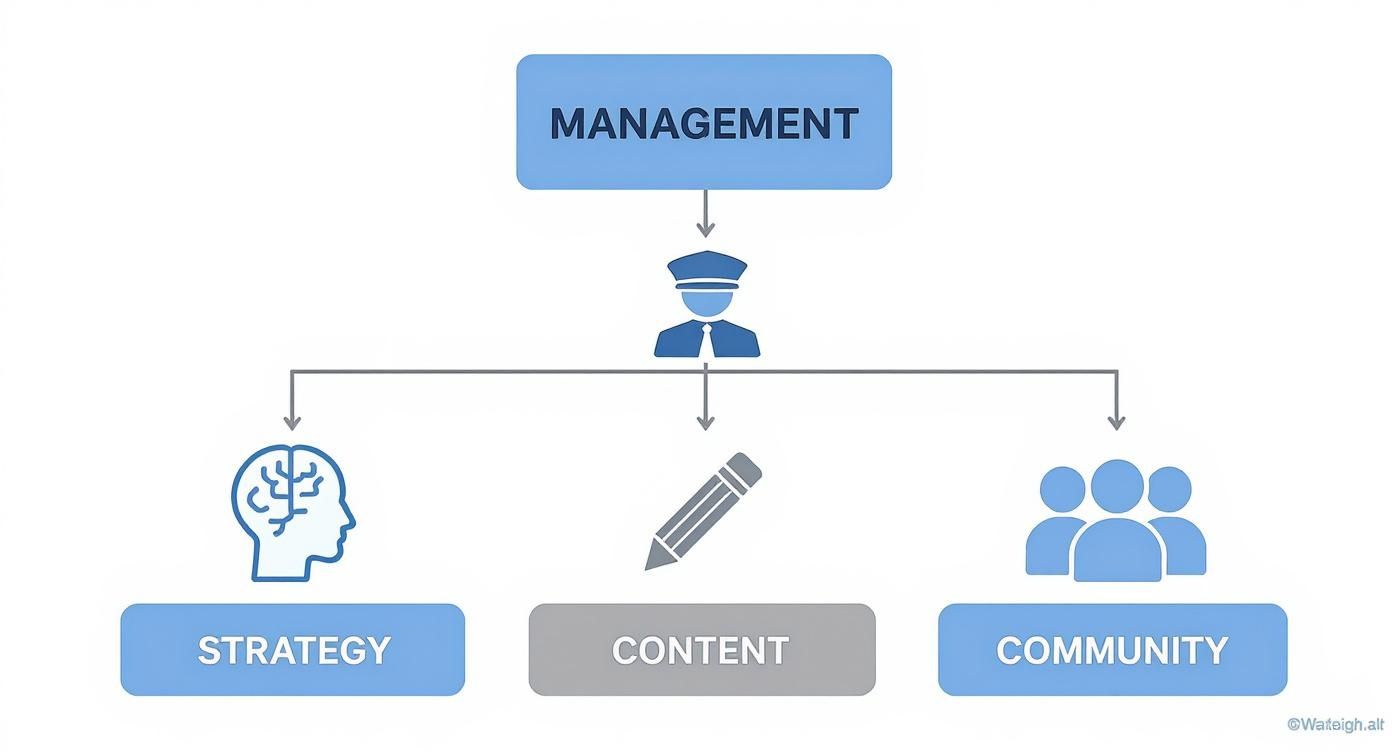
This diagram shows you how it all fits together—with overall management directing the strategy, content, and community efforts to make sure they’re all pulling in the same direction.
Without a conductor—the management function—the individual parts just don’t have the coordination or purpose they need to make a real impact.
Pillar 1: Strategic Development
Strategy is the bedrock of everything you do on social media. It’s the "why" behind every single post, comment, and campaign. Without a clear game plan, your efforts are just noise—disconnected actions that don’t lead anywhere.
A solid strategy starts with defining clear, measurable goals. Are you trying to build brand awareness, drive more traffic to your website, or generate direct sales? Each of these goals requires a totally different approach, different types of content, and different ways of measuring success.
From there, it’s all about getting to know your audience on a deeper level. Knowing who you're talking to isn't optional. It means creating detailed profiles of your ideal customers, figuring out their pain points, their interests, and where they spend their time online.
Pillar 2: Content Creation and Curation
If strategy is the blueprint, then content is the actual material you use to build your brand’s presence. It’s what your audience sees, interacts with, and remembers you by. Great content delivers real value, sparks conversation, and shows off your brand's unique personality.
This pillar is really about two key activities:
Content Creation: This is all about making your own original stuff—from eye-catching graphics and compelling videos to insightful articles and witty captions. It’s your chance to tell your brand’s story in a way that truly connects with your audience.
Content Curation: This involves finding and sharing relevant, high-quality content from other trusted sources. Sharing other people’s great content positions your brand as a helpful authority in your industry and keeps your feed fresh without you having to create everything from scratch.
The aim is to keep a consistent flow of valuable content going so your audience has a reason to keep coming back. A well-organised content calendar is your best friend here, helping you plan your posts and maintain a healthy mix of promotional, educational, and entertaining material.
Pillar 3: Community Management
This is where your brand stops being a broadcaster and starts being a conversation partner. Community management is the hands-on work of building genuine relationships with your followers. It’s all about listening, responding, and creating a space where people feel like they belong.
Good community management means keeping an eye on brand mentions, replying to comments and messages quickly, and starting conversations. A core part of this is always working to improve social media engagement and foster a community that feels alive and interactive.
By actively joining in on conversations, you show your audience that there are real people behind the logo. That human touch builds trust and loyalty in a way no advertisement ever could.
This pillar is what turns passive followers into active advocates for your brand, creating a loyal base that supports and promotes your business all on its own.
Pillar 4: Paid Social Advertising
While building an organic following is fantastic, paid social advertising is the accelerator. It lets you get super specific, targeting particular demographics, interests, and behaviours to make sure your message lands in front of the people most likely to become customers.
Paid campaigns can be used for all sorts of goals, from boosting brand awareness with a new audience to driving sales for a specific product. Platforms like Facebook, Instagram, and LinkedIn have powerful advertising tools that let you get incredibly precise with your targeting, so you know your budget is being spent wisely. It’s a crucial part of the best social media marketing strategies because it guarantees you get seen where organic efforts might not be enough.
Pillar 5: Analytics and Reporting
This final pillar ties everything together. Analytics and reporting are how you figure out what’s working, what isn’t, and how you can do better next time. It’s the process of tracking your key performance indicators (KPIs) and turning all that data into smart, actionable insights.
This means keeping a close watch on metrics like:
Reach and Impressions: How many people are actually seeing your content.
Engagement Rate: How many people are interacting with your posts through likes, comments, and shares.
Click-Through Rate (CTR): How many people are clicking on the links in your posts.
Conversion Rate: How many people are taking the action you want them to, like making a purchase.
Regular reporting shows the return on investment (ROI) from your social media efforts and helps guide your strategy moving forward. It creates a continuous cycle of tweaking and improving. Without this data-driven feedback loop, you’re basically just flying blind.
Why Your Business Needs a Professional Touch
Ever wonder if just posting here and there on social media is actually doing anything for your business? The honest answer is that a sporadic approach usually gets you sporadic results. This is where professional social media management comes in—it’s what bridges the gap between just being online and actually growing your business.
Think of it like this: you wouldn't build your own office without a proper blueprint. In the same way, professional management acts as the strategic blueprint for your brand’s digital presence. It ensures every single post, comment, and campaign is built with a purpose, all working towards a bigger business goal.
This is how you turn a passive audience into an active community. It's about looking past vanity metrics like follower counts and focusing on what really moves the needle—building a brand that people know, like, and genuinely trust.
Build Brand Awareness and Authority
To cut through the noise, you need to be seen where your customers are spending their time, and you need to be seen consistently. A professional manager makes sure your brand shows up day in and day out, not with random posts, but with valuable content that solves problems, answers questions, and cements your expertise. That consistency is what builds brand recall.
Do this long enough, and something powerful happens: your business becomes the go-to authority in your industry. When potential customers need a solution, your name is the first one that pops into their head. That’s a massive competitive advantage.
Turn Followers Into Customers
Great social media management does more than just rack up likes; it creates a clear path that guides people from being casual followers to becoming paying customers. This journey, often called a sales funnel, is carefully built to nurture potential customers at every single stage.
Here’s how it works:
Attracting the Right People: We use targeted content and smart advertising to reach individuals who are genuinely interested in what you have to offer. No more shouting into the void.
Building Real Trust: Value is the currency of social media. By consistently providing helpful posts, engaging stories, and authentic interactions, we build the credibility needed to earn their business.
Prompting Action: We create clear and compelling calls-to-action that make it effortless for followers to take the next step, whether that’s visiting your website, joining your email list, or hitting 'buy now'.
This methodical process transforms your social media profiles from a simple online presence into a reliable lead-generation engine, consistently feeding new prospects into your sales pipeline and driving real, measurable revenue.
Foster Unshakeable Customer Loyalty
In a market this crowded, customer loyalty is everything. Professional community management is the art of building genuine relationships that turn one-time buyers into lifelong fans. It’s about more than just broadcasting your message—it’s about listening, responding thoughtfully, and making your audience feel truly heard and valued.
This means jumping into conversations, celebrating your customers’ wins, and handling feedback with grace. When people feel a real connection to your brand, they’re far more likely to stick with you, recommend you to their friends, and even defend your reputation. You end up with a powerful, self-sustaining community built around your business.
By turning your social media into a hub for customer care and genuine connection, you build an emotional investment that goes way beyond a simple transaction. This is how brands create the kind of loyalty that lasts.
Gain Invaluable Market Insights
Your social media channels are a goldmine of live, unfiltered market research. Through a process called social listening, a professional manager can tap into conversations happening right now about your brand, your competitors, and your entire industry. It’s like having a direct line to the thoughts and feelings of your target audience.
These insights are incredibly powerful for making smarter business decisions. You can spot emerging trends before they take off, understand what your customers are struggling with, and get fresh ideas for new products or services. This data-driven approach takes the guesswork out of your strategy and aligns it with what the market actually wants.
The potential here is huge, especially in Australia, where 77.9% of the population are active social media users, spending an average of 1 hour and 51 minutes scrolling every day. You can dive deeper into the numbers in this detailed report from Meltwater.
A Day in the Life of a Social Media Manager
The term "social media management" can feel a bit vague. So, what does a social media manager actually do all day? To make the concept more concrete, it helps to see the role in action. It’s a whole lot more than just posting a few updates here and there; it's a constant cycle of creative thinking, sharp analysis, and strategic planning.
Let's pull back the curtain and walk through what a typical day, week, and month look like for a professional social media manager. This behind-the-scenes look reveals just how much structured effort goes into building and maintaining a strong online presence.
The Daily Grind: What a Manager Does Each Day
The day usually kicks off with a deep dive into the digital pulse of the brand. This isn’t about mindlessly scrolling; it’s a focused check-in to gauge community health and spot any immediate opportunities or fires that need putting out.
This morning routine is crucial. It sets the tone for the day and involves scanning all platforms for urgent messages, comments, and brand mentions that need a quick response.
A typical daily to-do list includes a few key activities:
Social Listening: This means actively monitoring social channels for mentions of the brand, its key competitors, and relevant industry keywords. It’s all about tuning into real-time conversations to find opportunities or tackle potential issues before they blow up.
Community Engagement: Responding to comments, DMs, and questions is a massive priority. This daily interaction builds a sense of community and trust, showing there are real, caring people behind the brand.
Content Scheduling: The manager makes sure the day’s content is lined up to go live at the best possible times for maximum reach and engagement. This involves one last check of the copy, visuals, and links to make sure everything is spot on.
Ad Performance Monitoring: If there are paid campaigns running, daily checks are a must. The manager keeps an eye on key metrics like click-through rates and cost-per-conversion, making small tweaks to get the best performance and ensure the budget is being spent wisely.
The Weekly Rhythm: Strategic Planning and Review
While daily tasks are often reactive and immediate, the weekly routine is much more proactive. This is the time to zoom out, analyse what’s been happening, and plan for the week ahead.
This rhythm stops the work from becoming purely tactical and makes sure every action ties back to the bigger marketing goals. It’s the bridge between the day-to-day grind and the long-term strategy.
Key weekly activities often include:
Creative Content Planning: This is where the team gets together to brainstorm and map out content ideas for the coming weeks. For anyone who hits a wall during this process, knowing how to push past creative hurdles is key. You can find some great strategies for resolving social media content creation blocks in our detailed guide.
Performance Analysis: The manager digs into the data from the past week. Which posts did well? What resonated most with the audience? How are engagement trends looking? These insights shape the content strategy for the following week.
Progress Reporting: A quick, easy-to-digest weekly report is often put together for stakeholders. This report highlights key wins, tracks progress against KPIs, and gives a snapshot of the brand's social media health.
This weekly review is where the art of social media meets the science. It’s about using hard data to refine creative instincts and make smarter decisions for the future.
The Monthly Outlook: Big-Picture Strategy
On a monthly basis, the focus shifts again—this time from day-to-day tactics to a much broader strategic overview. It’s the moment to evaluate the overall impact of social media efforts and plan for major campaigns and initiatives.
This long-term perspective is vital for showing a return on investment and making sure the social media strategy stays locked in with the overarching business goals.
Monthly responsibilities typically cover:
In-Depth Reporting: A comprehensive monthly report is created, breaking down performance across all channels. This analysis goes much deeper than the weekly check-in, looking at things like audience growth, conversion tracking, and the ROI from paid campaigns.
Strategic Review Meetings: The social media manager meets with the wider marketing team or business leaders to present the monthly results. This is a chance to talk about what worked, what didn’t, and any strategic changes needed for the upcoming quarter.
Major Campaign Planning: The focus moves to planning larger campaigns, like product launches, seasonal promotions, or brand awareness pushes. This involves setting clear goals, defining the creative direction, and allocating the right budget to make it happen.
How to Choose the Right Social media Management Partner
Deciding to hand over the reins of your social media is a pretty big step. Whether you’re looking to hire someone in-house or team up with an agency, getting it right is crucial for your brand's future. The goal is to find a partner who does more than just schedule posts—you need someone who clicks with your business goals and feels like a genuine extension of your team.
This isn’t a decision to be rushed. You’ll need to look past the slick presentations and dig into their track record. Find the proof of real-world success, strategic thinking, and a cultural fit that just feels right. A great partner will be upfront, guided by data, and genuinely invested in seeing you grow.
Check Out Their Industry Experience
First things first, look for a proven track record in your industry or at least a similar niche. A partner who already gets the specific challenges and opportunities in your sector can hit the ground running and deliver better results, faster. They’ll know the lingo, understand your audience’s pain points, and have a handle on the competitive landscape.
Let's be real: managing social media for a local Gold Coast restaurant is a completely different ball game than handling the national presence of a manufacturing company. Each needs its own unique strategy. How much a business relies on social media varies wildly between sectors, and a skilled partner knows exactly how to adapt.
The numbers back this up. While about 95% of Australian retail businesses use social media for marketing, the hospitality and tourism sectors are close behind at around 90% for engagement. This widespread reliance across different industries just goes to show why specialised expertise is so important. You can dig deeper into these platform trends and see how different Australian industries perform online.
Scrutinise Their Portfolio and Case Studies
A solid portfolio is completely non-negotiable. Don’t be shy about asking to see detailed case studies that show their work with businesses similar to yours in size and industry. You want to see tangible results and clear proof of how they got there.
Pay close attention to the metrics they brag about. Are they fixated on vanity metrics like follower counts, or are they reporting on things that actually matter to your business, like lead generation, website traffic, and sales? A results-focused partner will always tie their work back to your bottom line.
Understand Their Strategic Approach
A top-tier social media partner is a strategist, not just an order-taker. When you’re chatting with them, they should be firing off insightful questions about your business objectives, target audience, and brand voice. Their whole focus should be on building a custom plan that lines up perfectly with what you want to achieve.
Here are a few key questions to throw their way:
How do you build a social media strategy from the ground up?
What’s your process for creating and getting content approved?
How do you measure success, and what do your reports look like?
How will you make sure your work truly reflects our brand’s unique personality?
Finding the right team is about more than just skills; it’s about finding a shared vision for your brand’s growth. For businesses wanting a partner with both local and national know-how, exploring what a dedicated social media marketing agency offers can provide the strategic firepower you need to win.
How AI Is Shaping the Future of Social Media
Artificial Intelligence isn't some far-off concept anymore; it's right here, fundamentally changing how professional social media management gets done. Think of AI as a powerful co-pilot for human strategists, taking over the repetitive tasks and digging up deep insights that were almost impossible to find before. It’s all about working smarter to deliver better results.
AI has become an indispensable assistant, supercharging every part of the management process. From brainstorming new content ideas to pinpointing the perfect time to post for maximum impact, these tools are no longer optional. They allow managers to ditch the guesswork and make decisions backed by solid data, with more speed and precision than ever.
This shift isn't about replacing human creativity. It’s about enhancing it. AI is brilliant at crunching massive amounts of data, which frees up managers to focus on what humans do best: building real relationships, understanding subtle nuances, and crafting brilliant, high-level strategies.
Enhancing Efficiency and Insights
One of the first things you’ll notice with AI is how it streamlines workflows. Those routine tasks that used to eat up hours—like figuring out the best posting times for different audience segments—can now be handled automatically. This frees up a huge amount of time for managers to pour back into strategic planning and creative work.
On top of that, AI-driven tools can analyse audience sentiment in real-time. They can sift through thousands of comments and mentions in seconds to get a clear picture of how the public feels about a brand, giving you instant feedback on campaigns. This means you can make quick adjustments to your strategy based on what the community is actually saying and feeling. Artificial intelligence is also revolutionising brand interactions, offering sophisticated AI personalization capabilities that deliver highly targeted and engaging content.
Powering Smarter Content and Strategy
AI is also a massive help when it comes to creating content and planning your strategy. It can spot trending topics, suggest the right hashtags, and even help draft initial post copy, helping you smash through creative blocks and keep your content relevant. Modern agencies, like us, rely on these tools to maintain a consistent and engaging presence for our clients.
The technology driving this change often involves complex systems that can understand and generate text that sounds completely human. You can get a deeper look into what are large language models to see exactly how this tech works. By using AI, social media management becomes more predictive, personalised, and effective, which ultimately leads to a much higher return on investment for businesses.
Got Questions About Social Media Management?
If you're thinking about getting professional help with your social media, you probably have a few questions. That's a good thing. Getting straight answers is the only way to make a decision that feels right for your business and your budget.
Let's dive into some of the most common questions we get from business owners just like you.
How Much Does It Cost in Australia?
The honest answer is: it varies. The cost of social media management in Australia isn't a one-size-fits-all number. It really depends on what you need—how many platforms you're on, how much content needs to be created, and whether you want to run paid ads.
You'll find basic packages starting from a few hundred dollars a month, while a full-scale, multi-platform strategy can run into the thousands. The most important thing is to find a partner who is completely transparent about their pricing and what's included. No hidden surprises.
How Long Until I See Results?
While you might see a quick jump in likes or comments, the results that really matter to your business take a bit of time. Building a genuine community and creating a reliable stream of leads doesn't happen overnight. It’s definitely a marathon, not a sprint.
As a general rule, you should start seeing real, tangible momentum within three to six months. This gives us enough time to gather data, fine-tune the strategy, and build a solid foundation of trust with your audience.
Which Platforms Are Right for My Business?
This is a big one. The right platforms for your business are simply the ones where your customers are already hanging out. It's that simple. A B2B engineering firm will get far more traction on LinkedIn, while a local boutique will probably find its tribe on Instagram and TikTok.
A good social media manager won’t try to put you on every single platform. Instead, they'll dig into who your ideal customer is and focus your efforts on the channels that will give you the best return. Don’t follow the trends; follow your audience.
Can't I Just Do My Own Social Media?
Of course you can, and many business owners do, especially when they're just starting out. The real question isn't can you do it, but is it the best use of your time?
Bringing in a professional gives you access to strategic expertise, day-in-day-out consistency, and powerful tools that most busy business owners simply don't have the time to master. It's worth weighing the cost of an expert against the value of your own time and the potential to grow faster and smarter.
Ready to see what professional, AI-driven social media management can do for your business? At Titan Blue Australia, we combine over 25 years of industry experience with modern strategies to deliver real results. Let's build your brand's future together. https://titanblue.com.au
Titan Blue is your go-to digital partner for smart, results-driven solutions. We blend strategy, creativity and tech to grow your brand and get real results fast.