


TL;DR:
- Improving website navigation, trust signals, and checkout flow can significantly reduce cart abandonment.
- Localized content and technical SEO boost search visibility for Australian retail websites.
- Treat your website as a live asset, making continuous, data-driven improvements to stay competitive.
Cart abandonment is one of the biggest challenges facing Australian retail businesses online. In fact, the average abandonment rate hit 70.19% in 2024, meaning roughly seven out of ten shoppers leave without buying. That is a staggering amount of lost revenue sitting right there in your checkout. The good news? Most of it comes down to fixable design and usability issues. This guide walks you through the most effective website design improvements for Australian retailers, covering navigation, trust signals, checkout optimisation, and SEO, so you can turn more visitors into paying customers.
Table of Contents
- Prioritise intuitive navigation for easy browsing
- Build trust instantly with social proof and transparency
- Streamline checkout to reduce cart abandonment
- Supercharge SEO with unique content and structured data
- Why most retailers get web design wrong and how you can stand out
- Next steps: transform your retail website for results
- Frequently asked questions
Key Takeaways
| Point | Details |
|---|---|
| Simplify navigation | Easy-to-find categories and short paths help shoppers and search engines. |
| Show trust signals | Reviews, security badges, and policy clarity boost customer trust quickly. |
| Optimise checkout process | Reducing steps and allowing guest checkout minimises abandoned baskets. |
| Focus on SEO basics | Unique content and technical SEO increase your visibility in Australia. |
Prioritise intuitive navigation for easy browsing
Once you recognise the impact of cart abandonment, your site’s structure and navigation are the first levers to address. Poor navigation is a silent sales killer. If customers cannot find what they are looking for within seconds, they leave. It is that simple.
Good navigation is not just about user experience either. It directly supports how well Google can crawl and index your pages, which feeds straight into your search visibility. Getting this right is one of the most valuable things you can do for your store.
Intuitive navigation with clear categories, a working search bar, filters, and breadcrumbs, combined with a flat site architecture where any product is reachable in three clicks or fewer, significantly improves both user experience and Google crawlability. This is often called the “three-click rule” and it is a practical benchmark for retail sites of any size.
Here are the key navigation elements every retail website should have:
- Clear top-level categories that match how your customers think, not how your warehouse is organised
- A prominent search bar with autocomplete and typo tolerance
- Filters and sorting options on category pages (by price, size, colour, brand)
- Breadcrumb trails so shoppers always know where they are
- A flat URL and page structure to keep crawl depth low
| Navigation element | Benefit for users | Benefit for SEO |
|---|---|---|
| Category menus | Quick product discovery | Distributes link equity |
| Search with filters | Faster, targeted browsing | Reduces bounce rate |
| Breadcrumbs | Clear site orientation | Structured crawl paths |
| Flat architecture | Fewer clicks to product | Faster indexing |
For Australian retailers, using local terminology matters. Spelling “colour” correctly, referencing “postcode” instead of “zip code”, and using familiar local category names builds trust with your audience and supports SEO basics for retailers by aligning with how Australians actually search.
Pro Tip: Audit your navigation by asking someone unfamiliar with your store to find three specific products. Watch where they get stuck. Real user feedback is far more revealing than any analytics report.
If you are building or rebuilding your store, working with a specialist in Australian ecommerce web design ensures your structure is built for both conversion and search from day one.
Build trust instantly with social proof and transparency
With navigation making browsing easy, the next step is fostering customer confidence so users feel safe purchasing. Trust is not built slowly online. Research shows that first impressions form in as little as 50 milliseconds. That means your credibility signals need to be visible immediately, not buried in a footer.
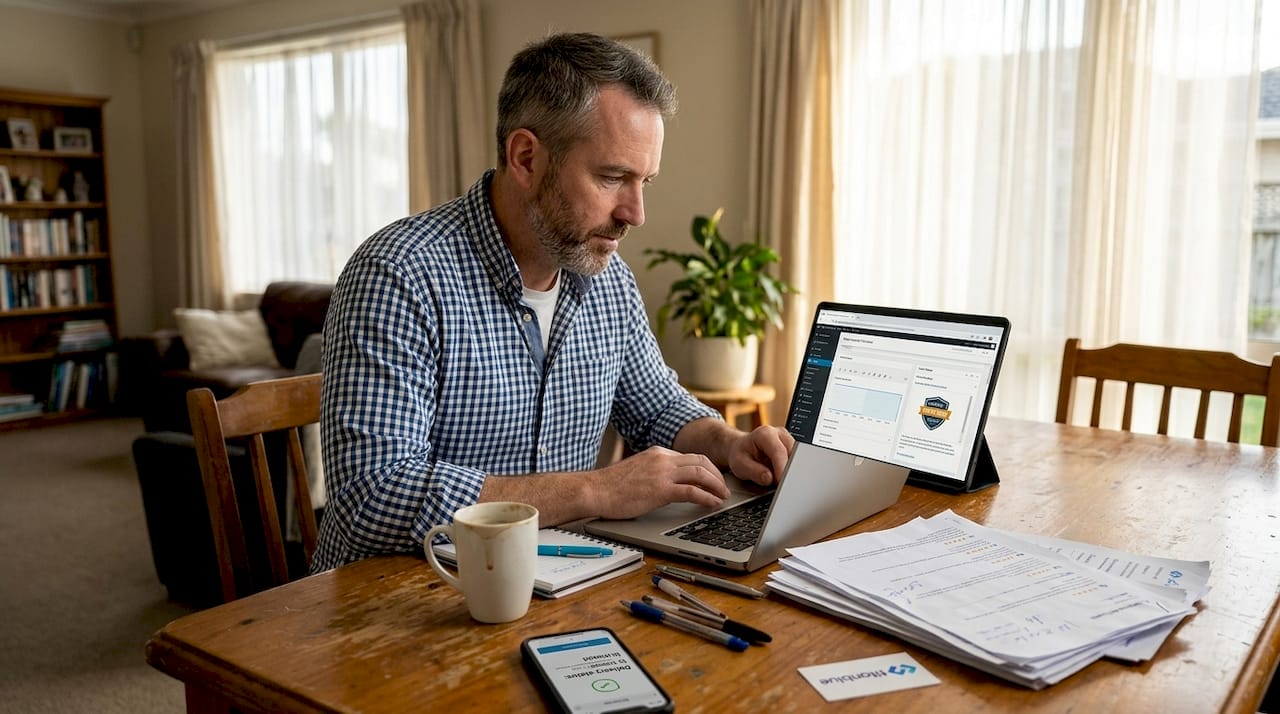
For retail websites, trust comes from several directions at once. Verified customer reviews and star ratings on product pages reassure shoppers that others have bought and been happy. Security badges near the checkout reduce anxiety about payment safety. Clear, easy-to-find policies on delivery, returns, and contact details remove the uncertainty that causes hesitation.
Here is what to display and where:
- Customer reviews and ratings on every product page, ideally verified through a third-party platform
- Security badges (SSL, payment provider logos) prominently near the add-to-cart and checkout buttons
- Shipping costs and estimated delivery times shown early, ideally on product pages
- A clear returns policy linked in the header or footer and repeated at checkout
- Contact details that are easy to find, including a phone number or live chat option
“Credibility is built or broken in the first few seconds. Shoppers scan for reasons to trust you before they even read a product description.”
Transparency is especially important for Australian shoppers. Hidden fees revealed late in checkout are a leading cause of abandonment. If you charge for delivery, say so upfront. If returns are free, make that a selling point. Showing these details early does not scare customers off. It does the opposite. It builds the confidence needed to increase online sales consistently.
Do not overlook your About page either. A genuine story about your business, your team, or your values adds a human element that large marketplaces cannot replicate. That is a real competitive advantage for independent Australian retailers.
Streamline checkout to reduce cart abandonment
Earning a visitor’s trust is only half the battle. Now, you need to ensure they actually complete the purchase. The checkout process is where design decisions have the most direct impact on revenue.
The cart abandonment rate of 70.19% in 2024 is largely driven by friction in the checkout flow. Long forms, forced account creation, surprise shipping costs, and limited payment options all contribute. Fixing these is not complicated, but it does require deliberate attention.
Follow these steps to tighten up your checkout:
- Reduce the number of steps to the absolute minimum. Aim for one or two pages, or a single-page checkout where possible.
- Offer guest checkout as the default option. Do not force account creation before purchase.
- Display total cost including delivery as early as possible, ideally in the cart before checkout begins.
- Support Australian payment methods including credit cards, PayPal, Afterpay, and Zip Pay.
- Invite account creation after purchase, not before. This keeps the path to payment clear.
- Auto-fill address fields using postcode lookup to reduce typing errors and save time.
On the question of guest checkout versus forced registration: 28% of shoppers abandon when required to create an account. Offering both options, with guest checkout as the prominent choice, removes a significant barrier.
| Checkout approach | Abandonment risk | Recommended action |
|---|---|---|
| Forced account creation | High | Replace with guest checkout |
| Multi-page long forms | High | Consolidate to 1-2 pages |
| Hidden delivery costs | Very high | Show costs in cart |
| Limited payment options | Medium | Add Afterpay, PayPal |
| Guest checkout available | Low | Make it the default |
Pro Tip: Run a test order on your own site every month. You will quickly spot friction points that your regular customers are silently tolerating. For more detail, explore these checkout optimisation tips tailored for retail stores.
Supercharge SEO with unique content and structured data
With your shop primed for conversion, the final booster is attracting quality traffic with sound SEO. Many retail websites focus heavily on design and checkout but neglect the content and technical work that brings shoppers to the site in the first place.
Unique content on category and product pages, combined with schema markup and Australian-specific keywords, along with technical fixes like canonical tags for filtered pages, are the foundations of strong ecommerce SEO. Without these, even a beautifully designed store will struggle to rank.
Here is what to prioritise:
- Write unique descriptions for every major category and product. Do not copy manufacturer text. Google penalises duplicate content and shoppers find it unhelpful.
- Use schema.org product markup to help search engines display prices, ratings, and availability directly in search results.
- Target Australian search terms by using local spellings (colour, flavour, organise) and regionally familiar phrases.
- Apply canonical tags to filtered and sorted pages to prevent duplicate content issues from URL parameters.
- Optimise page titles and meta descriptions for both keywords and click-through appeal.
| SEO task | Impact level | Difficulty |
|---|---|---|
| Unique category content | High | Medium |
| Product schema markup | High | Medium |
| Australian keyword targeting | High | Low |
| Canonical tags for filters | Medium | Low |
| Meta title and description | High | Low |
For a deeper look at how search optimisation fits into your overall strategy, the guides on ecommerce SEO marketing and SEO in ecommerce cover the technical and content sides in detail. If you want to connect SEO with your broader retail growth plan, the digital marketing for retailers resource is a strong starting point.
Why most retailers get web design wrong and how you can stand out
Equipped with the best practices above, here is an industry insider’s take on where most retail websites go wrong in Australia. The pattern we see repeatedly is this: retailers invest in a new website, launch it, and then leave it untouched for two or three years. Navigation that made sense at launch becomes confusing as the product range grows. Content goes stale. Trust signals get outdated.
Real improvement comes from treating your website as a living asset, not a finished project. The retailers who see consistent growth are the ones making small, iterative changes based on actual customer feedback and behaviour data. Not chasing the latest design trend.
Transparency and simplicity beat aesthetics every time. A clean, fast, honest website will outperform a visually impressive one that confuses or frustrates users. We have seen this with ecommerce website design projects across Australia. The sites that convert best are rarely the flashiest. They are the clearest.
Standing out in Australian retail online is not about being the most sophisticated. It is about serving real, local customer needs better than your competitors. That starts with the fundamentals covered in this guide.
Next steps: transform your retail website for results
Ready to put best practice into action and see real business impact? Start by auditing your current site against the principles in this guide. Check your navigation depth, review your trust signals, test your checkout as a new customer, and assess whether your product pages have unique, keyword-rich content.
If you want professional support to move faster, Titan Blue specialises in exactly this work. From expert web design help to targeted SEO web page design, we build retail websites that are designed to convert and rank. Get in touch with our team today and let us help you turn your website into your best-performing sales channel.
Frequently asked questions
How can I reduce cart abandonment on my retail website?
Cart abandonment rates drop when you allow guest checkout, simplify the steps, and show all costs including delivery before the final payment screen.
What is the best way to organise categories for a retail website?
Keep categories simple, logical, and no more than three clicks from the home page. Flat architecture is best for both user experience and Google crawlability, so use names your customers already recognise.
How do trust signals improve online sales?
Visible trust badges, verified reviews, and clear shipping policies build credibility fast. First impressions form within 50 milliseconds, so these signals need to be prominent from the moment a shopper lands on your page.
What are the top SEO tips for Australian retail websites?
Focus on unique content, schema markup, and technical fixes like canonical tags for filtered pages, combined with Australian keyword targeting to match how local shoppers search.
Recommended
- 6 Features for a High-Performing eCommerce Website Design
- Maximise business growth: 5 website design benefits
- Gold Coast Business Website Design Tips
- 5 tips for your E-Commerce website checkout | Titan Blue
- Master sales funnel optimization steps for 67% better conversions
Make Titan Blue a preferred source in Google
One click tells Google to surface our articles more often in Top Stories, AI Overviews and AI Mode.

Solar Installer Website Design Australia: The 2026 Guide
How solar installer websites in Australia should show CEC accreditation, real install proof and AI-ready…
Hotel & Hospitality Website Design Australia: 2026 Guide
Hotel and hospitality website design in Australia explained: booking flow, schema, AEO and what actually…

Restaurant Website Design Australia: The 2026 Guide
What a restaurant website in Australia needs: HTML menus, bookings, GBP sync, schema, and AI-ready…