


Last updated:
Growing a retail business on the Gold Coast brings real challenges when every advertising dollar must stretch further and compete for attention. Defining goals and understanding who your audience is can set your store apart and keep campaigns focused where they matter most. By starting with a clear plan and investing in defining and understanding your advertising audience, you avoid wasted spend and connect with the customers most likely to buy from you.
Table of Contents
- Step 1: Define Advertising Goals And Audience
- Step 2: Select Platforms And Set Budgets
- Step 3: Create Targeted Ad Campaigns
- Step 4: Monitor Results And Optimise Performance
Quick Summary
| Key Message | Explanation |
|---|---|
| 1. Define clear advertising goals | Identify measurable objectives tied to business outcomes to ensure accountability and effective resource allocation. |
| 2. Understand your target audience | Conduct in-depth research on customer demographics and behaviours to create tailored advertising strategies that resonate. |
| 3. Select appropriate advertising platforms | Choose platforms based on where your target audience spends their time to maximise effectiveness and return on investment. |
| 4. Create targeted ad campaigns | Develop clear, segmented campaigns with tailored messaging for different audiences to increase engagement and conversions. |
| 5. Monitor and optimise campaigns continuously | Analyse performance metrics regularly to adjust strategies, maximise effectiveness, and improve overall return on ad spend. |
Step 1: Define advertising goals and audience
You cannot run a successful advertising campaign without clarity on two things: what you want to achieve and who you want to reach. This step sets the foundation for every decision you’ll make moving forward, from budget allocation to creative messaging. Getting this right saves time and money. Getting it wrong wastes both.
Start by identifying your primary advertising goals. Are you trying to increase foot traffic to your Gold Coast retail store? Drive online purchases? Build brand awareness amongst a specific demographic? Grow your customer email list? Each goal requires different strategies, so be precise.
Your goals should be measurable and tied to business outcomes. Instead of “increase sales,” aim for “increase online sales by 25% within three months” or “generate 150 qualified leads per month.” Specific targets keep your campaigns accountable.
Next, define your target audience with depth. This is where many retailers stumble. You cannot advertise effectively to “everyone.” You need to understand:
- Age range and generation of your ideal customers
- Location (suburb or broader Gold Coast region)
- Income level and spending capacity
- Shopping habits and preferences
- Pain points your products or services solve
- Where they spend time online
Consider conducting audience research and measurement activities to gather insightful data about potential customer groups. This transforms guesswork into strategy.
Think about your existing customers. Who buys from you most frequently? Which products generate the highest revenue? Which customers have the highest lifetime value? These patterns reveal your most profitable audience segments.
Your advertising goals and audience definition directly determine your platform choice, budget distribution, and creative direction. Invest time here, and everything that follows becomes easier.
You might discover you have multiple target audiences. That is common. A Gold Coast retailer selling activewear might target both local gym enthusiasts and tourists looking for beachwear. Each segment needs slightly different messaging and advertising placement.
Document your findings in a simple format: business objective, target audience characteristics, and specific metrics you will track. This becomes your campaign roadmap.
Here’s a summary of primary advertising goals and their ideal success metrics for Gold Coast retailers:
| Advertising Goal | Ideal Success Metric | Business Impact |
|---|---|---|
| Drive foot traffic | Number of store visits | Increased on-site sales |
| Grow online purchases | Online sales growth percentage | Expanded e-commerce revenue |
| Build brand awareness | Reach and impressions | Enhanced market visibility |
| Grow email subscriber base | Qualified new sign-ups | Larger customer database for remarketing |
Professional tip: Create buyer personas for each target audience segment, including their name, age, occupation, interests, and specific problems your business solves for them. Revisit these personas regularly as customer behaviour and market conditions change, especially when seasons shift and tourist demographics vary on the Gold Coast.
Step 2: Select platforms and set budgets
Not all advertising platforms are created equal, and not all are right for your business. Choosing where to spend your budget is just as important as how much you spend. The wrong platform wastes money. The right one multiplies it.
Start by considering where your target audience actually spends time online. Are they scrolling through Facebook and Instagram? Searching on Google? Watching videos on YouTube? Shopping on TikTok? Your audience’s behaviour dictates your platform strategy, not the other way around.

The major platforms dominate for good reason. Google and Facebook advertising command substantial budgets across Australia because they deliver measurable results. Google Ads reach people actively searching for products like yours. Meta Ads (Facebook and Instagram) reach people based on interests and behaviours.
Consider your business type when selecting platforms:
- Google Ads: Perfect for retail businesses targeting local Gold Coast customers searching for specific products or services
- Facebook and Instagram: Ideal for building brand awareness and reaching customers through visual content and detailed targeting
- TikTok: Effective if your audience includes younger demographics
- LinkedIn: Best for B2B retail or premium services targeting business professionals
Once you’ve chosen your platforms, set your budget strategically. Start by determining your total monthly advertising spend. This depends on your business goals, current revenue, and growth targets. A small retail business might allocate £500 to £2,000 monthly. A growing operation might spend £2,000 to £5,000 or more.
Divide your budget across platforms based on expected performance and audience concentration. If 70% of your target customers use Facebook, allocate 70% of your budget there. Test smaller amounts on new platforms before committing heavily.
Your platform selection and budget allocation should flex with your results. Monitor performance weekly and reallocate funds towards your highest-performing channels.
Budget also varies by campaign type. Brand awareness campaigns typically cost less per impression than conversion-focused campaigns. Test different allocations to find your optimal mix.
Analytics plays a crucial role here. Assessing digital marketing channels’ effectiveness helps you understand which platforms deliver actual returns. Track cost per click, conversion rates, and return on ad spend for each platform.
Professional tip: Start with a modest test budget on your chosen platforms (roughly £200 to £500 per platform) for the first two weeks, then analyse which generates the best results before scaling up spending to your full monthly budget.
Compare major digital advertising platforms for Gold Coast retail campaigns:
| Platform | Best Audience Segment | Key Strength | Typical Campaign Types |
|---|---|---|---|
| Google Ads | Local shoppers, searchers | Intent-driven targeting | Product searches, store visits |
| Facebook/Instagram | Visual, broad audience | Detailed demographic targeting | Brand awareness, promotions |
| TikTok | Younger demographics | Engaging short-form content | Trend-driven, youth-oriented ads |
| Business professionals | Professional network targeting | B2B, premium retail, services |
Step 3: Create targeted ad campaigns
A well-structured ad campaign is the difference between ads that convert and ads that vanish into the noise. This step transforms your goals and platform choices into actual campaigns that reach the right people with the right message at the right time.
Start by naming your campaign clearly. Use a naming convention that describes the product, audience, and date. For example, “Gold Coast Summer Activewear Campaign Jan 2025” tells you exactly what it is months later. Unclear names lead to confusion and wasted budget.
Next, build your audience segments within your chosen platform. This is where targeting precision matters. Use the platform’s audience tools to narrow down who sees your ads. You might create separate campaigns for different customer groups: locals versus tourists, new customers versus returning customers, or different age ranges.
When targeting on Google Ads or Facebook, consider these layers:
- Location targeting (Gold Coast suburbs, radius around your store)
- Age and gender demographics
- Interest and behaviour data
- Custom audiences (your existing customer list)
- Lookalike audiences (people similar to your best customers)
Your ad creative comes next. This includes headlines, descriptions, images, and videos. Test multiple versions to see what resonates. A Gold Coast retail business selling fashion might test lifestyle images alongside product shots. One version might emphasise local authenticity, another premium quality. Platform data for audience targeting helps you understand which creative elements drive engagement.
Set your campaign duration and schedule. Are you running ads continuously or for specific promotional periods? Winter months might require different scheduling than summer on the Gold Coast. Seasonal changes affect both customer behaviour and tourism patterns.
Targeted campaigns fail when messaging doesn’t match audience intent. Your ads for locals should differ from ads targeting holiday visitors.
Budget allocation within campaigns matters too. If you’re running multiple campaigns simultaneously, distribute your total budget across them based on expected performance. Allocate more to campaigns targeting high-value customer segments.
Privacy compliance is non-negotiable. When designing multi-channel campaigns, ensure you comply with privacy legislation like the Privacy Act. Only use customer data you’ve collected legitimately, and always offer opt-out options.
Professional tip: Launch each campaign with a modest daily budget (£10 to £20 daily) for three to five days, monitor performance metrics closely, then scale spending on campaigns showing promising cost-per-click and engagement rates.
Step 4: Monitor results and optimise performance
Launching your ads is only half the battle. The real work happens after they go live, when you monitor performance and make adjustments that transform mediocre campaigns into profitable ones. Hands-off advertising wastes money. Active management multiplies returns.
Check your campaign metrics daily during the first week. You’re looking for early signals of success or failure. Key metrics to track include clicks, impressions, cost per click, conversion rate, and return on ad spend. Each platform provides these in their native dashboards.
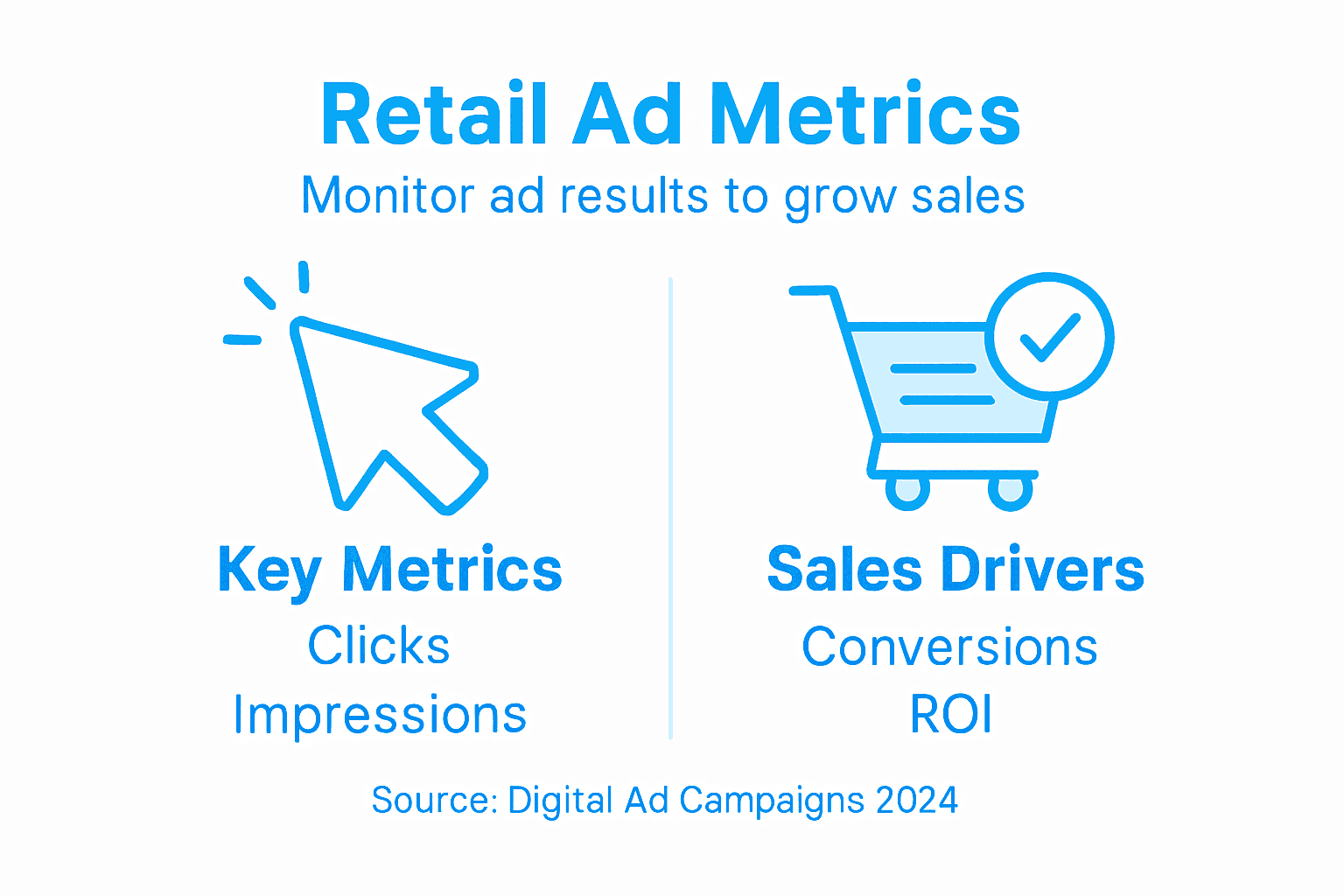
Understand what these metrics actually mean for your business. Cost per click shows how much you pay each time someone clicks your ad. Conversion rate reveals the percentage of clicks that result in a purchase or desired action. Return on ad spend compares profit generated against total advertising cost.
The metrics that matter most depend on your goals:
- Brand awareness campaigns: Focus on impressions and reach
- Website traffic campaigns: Monitor clicks and cost per click
- Sales campaigns: Track conversions and return on ad spend
- Lead generation: Measure cost per lead and lead quality
Monitoring across multiple digital touchpoints is essential. Australians interact with ads across devices and platforms throughout their day. Tablet browsing, mobile searching, and desktop shopping all contribute to your overall campaign performance. Understanding digital device usage patterns helps you appreciate how your audience encounters your ads.
Once you’ve identified what’s working, optimise aggressively. If one ad creative outperforms others by 40%, pause the weaker versions and scale the winner. If a specific audience segment converts at triple the rate of others, allocate more budget there. If a particular time of day drives better results, concentrate spending during peak hours.
Use AI-powered analytics and customer insights to refine your approach. Modern advertising leaders employ business analytics and AI tools to continuously assess performance and optimise brand connections across channels. Test new elements regularly: different headlines, images, landing pages, and audience segments.
Optimisation never stops. Campaign performance changes weekly. What works today may need adjustment next week as seasons shift and competition intensifies.
Document what you learn. Track which audience segments respond best, which creatives drive conversions, and which platforms deliver lowest cost per acquisition. This knowledge compounds over time.
Professional tip: Allocate 15 to 20 percent of your advertising budget as a dedicated testing fund for experimenting with new audiences, creatives, and platforms, keeping the remaining 80 to 85 percent focused on proven high-performers.
Elevate Your Retail Sales with Expert Digital Advertising Support
The article highlights critical challenges in defining clear advertising goals and reaching the right audience effectively through platforms like Google Ads and Meta Ads. If you struggle with selecting the best platforms, crafting targeted campaigns, or optimising your digital marketing budget, you are not alone. Many Gold Coast retailers face the frustration of wasted spend and underperforming ads despite investing time and money. Understanding your specific goals such as increasing foot traffic or boosting online sales, and reaching precise audience segments is the foundation of success.
At Titan Blue, we specialise in turning these challenges into growth opportunities. With our comprehensive digital marketing services including custom website design, advanced SEO techniques, and expert management of targeted advertising campaigns, we help your business connect with the right customers at the right moment. We combine local Gold Coast expertise with strategic, results-driven solutions that deliver measurable ROI. Let us guide you through creating campaigns that resonate and convert effectively.
Ready to transform your retail advertising approach and see real growth? Explore how Titan Blue’s tailored strategies can optimise your digital presence and amplify sales today.
Discover our premium services at Titan Blue. Whether you need help defining your audience, choosing the best advertising platforms, or managing your campaigns for peak performance, our team is your trusted digital partner. Visit Titan Blue Digital Marketing and start your journey towards higher sales and stronger brand presence now.
Frequently Asked Questions
How can I define clear advertising goals for my retail business?
Define clear advertising goals by identifying what you want to achieve, such as increasing online sales by 25% within three months. Document these goals to create a roadmap for your advertising campaigns, ensuring each target goal is measurable and linked to your business outcomes.
What factors should I consider when defining my target audience?
Consider factors like age range, location, income level, and shopping habits to accurately define your target audience. Using this detailed information, create buyer personas that reflect their interests and specific needs to craft tailored advertising messages.
Which advertising platforms are best for retail businesses?
The best advertising platforms for retail businesses depend on where your target audience spends time online. Evaluate platforms such as Google Ads for search-driven marketing, Facebook and Instagram for visual content, or TikTok for reaching younger demographics, and allocate your budget accordingly.
How do I create targeted ad campaigns that yield results?
Create targeted ad campaigns by naming them clearly and segmenting your audience based on specific traits. Use the platform’s targeting tools for precise audience selection, and regularly test different creatives to see which combinations resonate best, adjusting based on performance data.
What metrics should I monitor after launching my advertising campaigns?
Monitor key metrics such as clicks, impressions, cost per click, conversion rate, and return on ad spend after launching your campaigns. Daily evaluation during the initial week can help identify performance trends and optimise your campaigns for better outcomes.
How can I optimise my advertising campaigns for better performance?
Optimise your advertising campaigns by closely analysing performance data to identify what works and what doesn’t. Regularly adjust your budget towards high-performing ads and testing new creatives to improve overall return on investment, aiming for a 15 to 20 percent increase in engagement or sales where applicable.
Recommended
- Digital Marketing Strategy Steps for Retail Success
- Smart Google Ads Tips: Quieter Times – Titan Blue Australia
- Role of Web Design – Driving Gold Coast E-Commerce
- Australian E Commerce SEO Services a Guide to Driving Growth
Make Titan Blue a preferred source in Google
One click tells Google to surface our articles more often in Top Stories, AI Overviews and AI Mode.

This Week in Australian AI Search: Google’s UGC Data Program
Google's UGC Fresh Data Program and Indexing API quota update, plus our Google AI Mode…

Google AI Mode Adds Official Links: What It Means for Australia
Google is adding more links to AI Mode and testing an official websites section. Here…

Best AEO and GEO Agencies in Australia (2026): 7 Compared
Best AEO agency and GEO agency in Australia, compared: seven agencies, what their own pages…