How to optimise SEO for Australian small businesses in 2026
Competing for visibility online feels overwhelming when you’re managing a small business with limited time and budget. Many Australian entrepreneurs know they need search engine optimisation but don’t know where to start or how to make it work locally. This guide breaks down practical, actionable SEO strategies designed specifically for small to medium-sized businesses across Australia, helping you improve local search rankings, attract qualified customers, and grow your digital presence without needing a marketing degree or enterprise-level resources.
Targeting Australian location terms and local intent keywords improves relevance and conversion rates
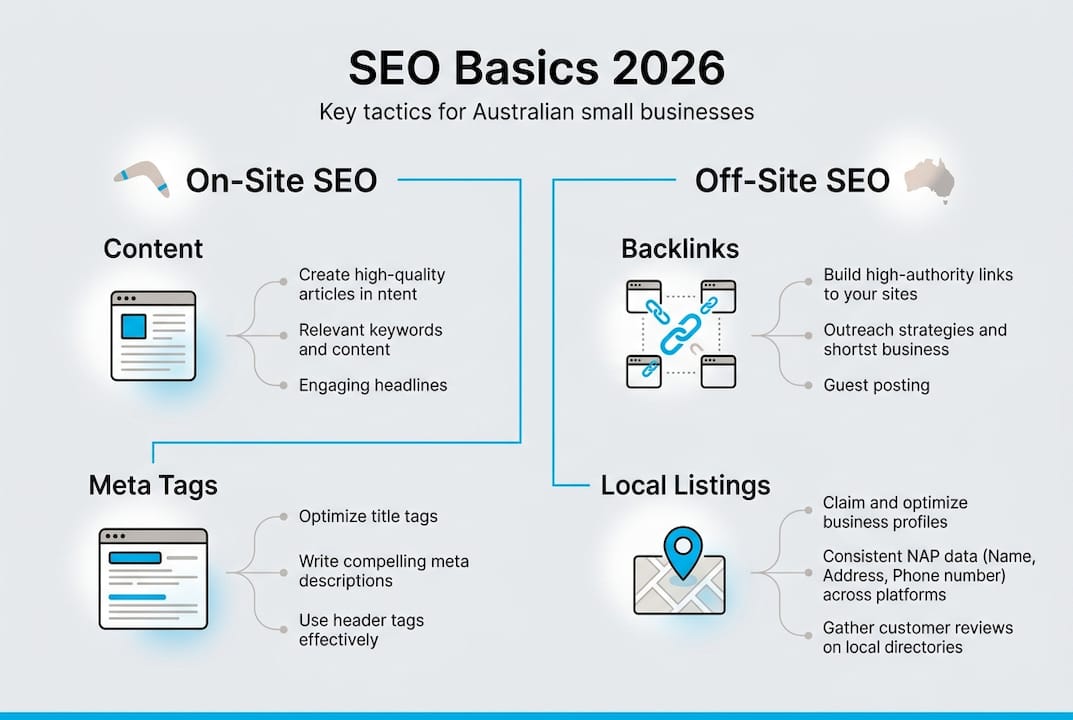
On-site and off-site work together
Optimising your website content whilst building quality backlinks maximises ranking potential
Tools simplify the process
Free platforms like Google Analytics and Search Console provide essential insights for small budgets
Regular monitoring sustains growth
Monthly performance reviews and quarterly strategy updates keep your SEO effective as algorithms evolve
Understanding SEO fundamentals for small businesses
Search engine optimisation determines whether potential customers find your business when searching online. Search engines like Google crawl billions of web pages, analyse their content and structure, then rank them based on relevance and authority for specific queries. For small Australian businesses competing in local markets, SEO is a key driver of online visibility, especially against larger competitors with bigger marketing budgets.
Three core elements shape how search engines evaluate your site. Keywords are the phrases customers type when searching for products or services you offer. On-page factors include your website’s content quality, structure, meta descriptions, headings, and technical performance. Off-page signals encompass backlinks from other websites, online reviews, and local directory listings that signal your business’s credibility and relevance.
Small businesses face distinct SEO challenges that require tailored approaches:
Limited budgets restrict access to premium tools and professional services
Time constraints make consistent content creation and optimisation difficult
Local competition from established businesses with stronger online authority
Understanding these fundamentals helps you prioritise efforts where they matter most. Rather than trying to compete nationally with enterprise brands, focusing on seo marketing for small businesses means targeting your local area, serving customers within your geographic reach, and building authority within your specific niche. This strategic focus levels the playing field, allowing you to outrank larger competitors for location-specific searches that drive actual foot traffic and qualified leads.
Preparing for SEO optimisation: tools and keyword research
Before making changes to your website, you need the right tools and a clear understanding of what your customers are searching for. Google Analytics tracks visitor behaviour, showing which pages perform well and where users drop off. Google Search Console reveals which keywords already bring traffic, identifies technical issues, and monitors your search performance over time. Both tools are free and essential for any business serious about SEO.
Keyword research forms the foundation of effective optimisation. Start by brainstorming terms customers use when looking for your products or services, then validate these with keyword research tools. Focus on keywords tailored to local contexts by including Australian city names, suburbs, or regional identifiers. A plumber in Brisbane should target “emergency plumber Brisbane” rather than just “emergency plumber,” dramatically improving relevance and reducing competition.
Balancing keyword types maximises your reach. Short-tail keywords like “accountant” have high search volume but intense competition and vague intent. Long-tail keywords like “small business tax accountant Gold Coast” attract fewer searches but convert better because they match specific customer needs. Target both types strategically, using short-tail terms for broader awareness and long-tail phrases for conversion-focused pages.
Tool
Key features
Cost
Google Analytics
Traffic analysis, user behaviour, conversion tracking
Comprehensive keyword research, backlink analysis, site audits
Paid
Pro Tip: Add location modifiers to every primary keyword you target. Instead of optimising for “web design,” use “web design Broadbeach” or “web design Gold Coast.” This simple adjustment dramatically improves local visibility whilst reducing competition, making it easier to rank on page one for searches that actually drive business. Review digital marketing tips for small businesses and explore important seo strategies to refine your approach further.
Executing on-site and off-site SEO optimisation
With keywords identified and tools in place, you’re ready to optimise. On-site SEO involves changes directly on your website to improve search engine understanding and user experience. Start with these essential steps:
Optimise title tags and meta descriptions with target keywords whilst keeping them compelling for human readers
Structure content with clear H1, H2, and H3 headings that include relevant keywords naturally
Create clean, descriptive URLs that reflect page content rather than random strings of numbers
Ensure mobile responsiveness since over 60% of searches now occur on smartphones
Improve page load speed by compressing images and minimising unnecessary code
Add alt text to images describing their content for accessibility and search visibility
Off-site SEO builds your website’s authority through external signals. Quality backlinks from reputable Australian websites tell search engines your content is trustworthy and valuable. Focus on earning links through guest posting on industry blogs, getting featured in local news articles, and creating genuinely useful content others want to reference. Avoid buying links or participating in link schemes, as these tactics risk penalties.
Local business listings amplify your visibility in location-based searches. Claim and optimise your Google Business Profile with accurate information, high-quality photos, and regular posts. List your business in Australian directories like True Local, Yellow Pages, and industry-specific platforms. Consistency matters across all listings, so ensure your business name, address, and phone number match exactly everywhere they appear.
Aspect
On-site SEO
Off-site SEO
Primary focus
Website content and structure
External authority signals
Control level
Complete control
Partial influence
Key activities
Content optimisation, technical fixes
Link building, citations, reviews
Results timeline
Faster initial impact
Longer-term authority building
Common mistakes derail even well-intentioned SEO efforts:
Keyword stuffing that makes content unnatural and triggers penalties
Ignoring mobile users despite their dominance in search traffic
Neglecting local SEO elements like Google Business Profile optimisation
Creating thin content that provides minimal value to readers
Building low-quality backlinks from irrelevant or spammy websites
Pro Tip: Regularly update existing content to maintain SEO relevance. Search engines favour fresh, current information, so revisiting top-performing pages every six months to add new insights, update statistics, and refine keywords keeps them competitive. This strategy often delivers better returns than constantly creating new content. On-site SEO combined with effective off-site link building maximises search engine ranking potential, particularly when you integrate seo in web design from the start. Explore strategies for effective seo traffic growth and review the comprehensive seo marketing for small businesses guide for deeper implementation tactics.
Monitoring SEO performance and ongoing improvement
Optimisation means nothing without measuring results. Establishing key performance indicators helps you understand what’s working and where to focus improvements. Track organic search traffic to see how many visitors find you through search engines. Monitor keyword rankings for your target terms, noting movement up or down in search results. Measure conversion rates to determine whether traffic translates into enquiries, sales, or other business goals.
Google Analytics reveals user behaviour patterns that inform strategy refinements. Check which pages attract the most traffic and keep visitors engaged longest. Identify high bounce rate pages where users leave immediately, signalling content or relevance issues. Analyse traffic sources to understand whether visitors come from search, social media, or referrals, helping you allocate resources effectively.
Google Search Console provides search-specific insights unavailable elsewhere. The Performance report shows which queries trigger your site in search results, your average position, and click-through rates. Coverage reports identify indexing issues preventing pages from appearing in search. The Mobile Usability section flags problems affecting smartphone users, who represent the majority of your audience.
Reviewing and adjusting your strategy ensures sustained results:
Identify underperforming pages and diagnose issues like thin content, poor keywords, or technical problems
Analyse competitor strategies to discover new keyword opportunities or content gaps
Update target keywords quarterly as search trends and business priorities evolve
Test different meta descriptions and title tags to improve click-through rates from search results
Document what works and what doesn’t to build institutional knowledge over time
Staying current with SEO best practices protects your investment. Search engines continuously refine algorithms, changing how they evaluate and rank websites. Follow reputable industry blogs, attend webinars, and participate in local business networks to learn about updates affecting Australian businesses. Regular monitoring is essential to adjust SEO tactics and improve ROI, particularly as you implement digital marketing tips for small businesses and apply local seo tips 2025 to your unique market conditions.
Key SEO reports to review monthly include:
Organic traffic trends showing growth or decline patterns
Top performing keywords driving qualified visitors
Pages with the highest engagement and conversion rates
Backlink acquisition showing new sites linking to your content
Technical issues flagged by Search Console requiring attention
Consistent monitoring transforms SEO from a one-time project into an ongoing competitive advantage. Small improvements compound over time, gradually building authority and visibility that larger competitors struggle to displace. The businesses that succeed with SEO treat it as a long-term investment, making incremental progress each month rather than expecting overnight transformation.
Explore specialised SEO services and web design solutions
Whilst this guide equips you with foundational knowledge, implementing comprehensive SEO strategies demands significant time and expertise. Many small business owners find partnering with specialists accelerates results whilst freeing them to focus on core operations. Titan Blue offers customised seo services designed specifically for Australian small to medium-sized businesses, combining local market knowledge with proven optimisation techniques that drive measurable traffic growth.
Professional web design gold coast australia services ensure your website foundation supports SEO success from day one. Technical elements like site architecture, mobile responsiveness, and page speed directly impact search rankings, and getting them right initially prevents costly rebuilds later. Whether you’re starting fresh or enhancing an existing site, expert guidance helps you avoid common pitfalls whilst implementing strategies proven to work in competitive Australian markets. Explore the complete seo marketing for small businesses guide to see how professional services complement your in-house efforts.
Frequently asked questions
What is SEO and why is it important for small businesses?
SEO improves your website’s visibility in search engine results, making it easier for potential customers to find your business when searching for products or services you offer. For small businesses competing locally, effective SEO levels the playing field against larger competitors by targeting location-specific searches that drive qualified traffic and actual sales.
How do I find the best keywords for my Australian small business?
Start with keyword research tools like Google Keyword Planner or Ubersuggest, focusing on terms that include Australian location modifiers relevant to your service area. Prioritise long-tail keywords matching specific customer intent, such as “affordable wedding photographer Sydney” rather than just “photographer,” as these convert better despite lower search volumes.
What are the common mistakes to avoid when optimising SEO?
Ignoring local SEO elements like Google Business Profile optimisation costs you valuable visibility in map results and local searches. Keyword stuffing creates unnatural content that search engines penalise whilst frustrating readers. Neglecting mobile optimisation and site speed alienates the majority of users who search on smartphones, directly harming both rankings and conversions.
How often should I check and update my SEO strategy?
Review SEO performance metrics at least monthly to identify trends, spot issues early, and measure progress towards your goals. Update your broader strategy quarterly or whenever significant algorithm changes occur, adjusting keyword targets, content priorities, and technical optimisations based on performance data and evolving business objectives.
Titan Blue is your go-to digital partner for smart, results-driven solutions. We blend strategy, creativity and tech to grow your brand and get real results fast.