


Last updated:
TL;DR:
- Local SEO focuses on making your business visible to nearby searchers, significantly increasing foot traffic and local trust. Implementing a fully optimized Google Business Profile, consistent NAP information, local reviews, and area-specific content are essential first steps. Genuine trust-building and community relevance are key to outranking competitors and achieving measurable local search success.
You have a website. You have a Google presence. Yet when someone two streets away searches for the service you offer, your business is nowhere to be found. This is the reality for thousands of Australian small business owners who assume that good general SEO will bring in local customers automatically. It does not. Local SEO is the practice of optimising and promoting a business’s digital assets to increase visibility for searches tied to a specific geography, and it requires a completely different approach from standard search optimisation. This article explains exactly what local SEO is, how it works, and what you can do right now to start winning local searches.
Table of Contents
- What is local SEO and why does it matter?
- How does local SEO work? Key components explained
- Local SEO in action: Practical strategies for Australian businesses
- Measuring what matters: Tracking local SEO success
- The truth about local SEO most businesses overlook
- Take the next step: Expert help with local SEO
- Frequently asked questions
Key Takeaways
| Point | Details |
|---|---|
| Local intent matters | Optimising for searches by nearby customers drives the most relevant traffic to your business. |
| Google Business Profile is critical | A complete, optimised business profile makes you visible in Maps and the local pack. |
| Trust and relevance win | Positive reviews and matching what searchers want are essential for outranking competitors. |
| Track real results | Measure key actions like calls and direction requests to assess your true local SEO impact. |
What is local SEO and why does it matter?
Local SEO is not simply adding your suburb to a few page titles. It is a focused discipline designed to make your business visible to people searching for products or services in your area, whether they type “plumber near me” or “best café Broadbeach.” The strategies involved are distinct from general SEO, and the results are far more targeted.
Standard SEO tries to rank your website for broad search terms across the entire internet. Local SEO focuses on a much smaller, more valuable audience: people who are close to you, ready to buy, and searching right now. Local SEO includes traditional SEO tasks plus an additional layer focused on appearing prominently for searchers located near the business or with geography implied in the query.
Consider this scenario. A plumber operating on the Gold Coast has a solid website and solid content. But without local SEO, they will not appear when someone in Burleigh Heads searches “emergency plumber near me.” That customer will call whoever shows up in the map results at the top of the page. That is the local pack, and it is the most valuable piece of real estate in local search.
A core goal of local SEO is to help businesses appear in Google’s local results, including Maps and the local pack, when people search for nearby products or services. This matters because the local pack sits above standard organic results. It gets seen first. Businesses that appear there receive dramatically more calls, visits, and enquiries.
The core benefits of local SEO for small Australian businesses include:
- Increased foot traffic from customers who are physically nearby and ready to act
- Greater trust through reviews, verified business information, and a prominent map presence
- Higher relevance because your business appears for searches that actually match your service area
- More qualified leads since local searchers typically have immediate purchase intent
- Competitive edge over businesses that have not yet invested in local optimisation
Understanding the importance of local SEO for your community presence is the first step. Acting on it is what separates thriving local businesses from invisible ones.
“You do not need to outrank the whole internet. You just need to outrank the businesses in your postcode.”
How does local SEO work? Key components explained
With the basics and value of local SEO clear, let us uncover how it really works and what you need to focus on first.
Google uses a specific set of signals to decide which businesses appear in local results. Understanding these signals helps you focus your efforts where they will count most.
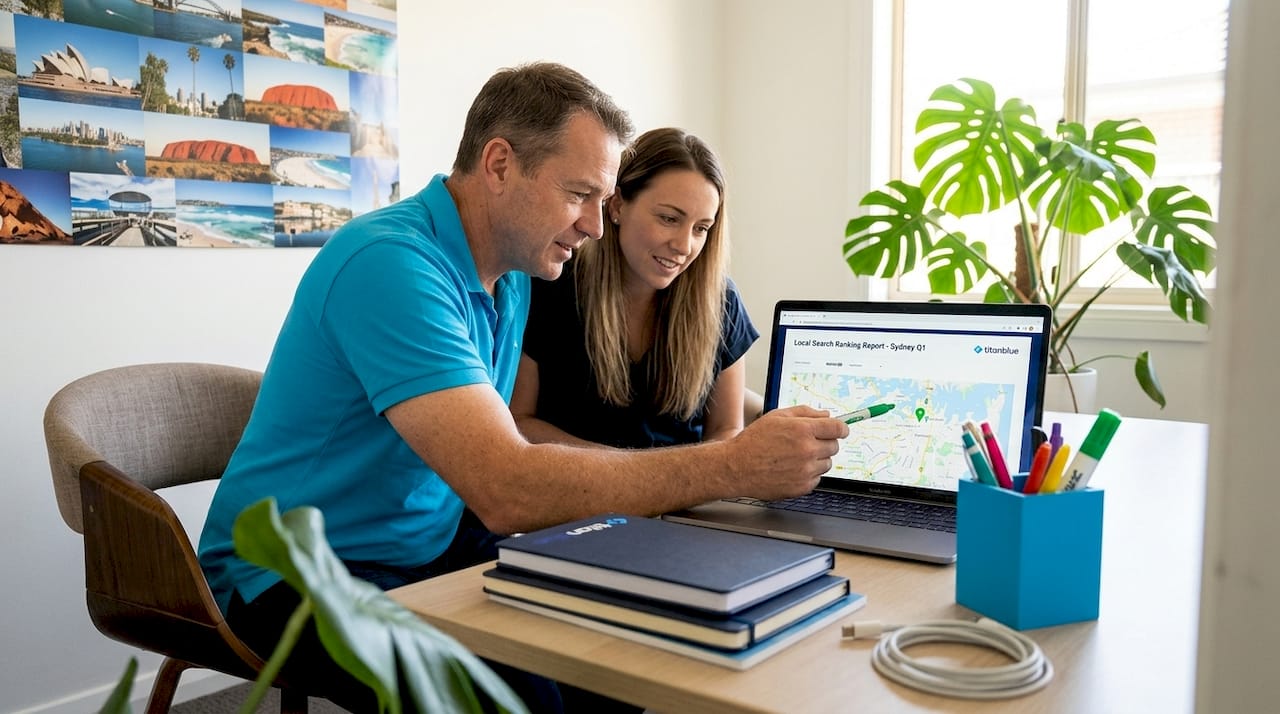
Google Business Profile is central to local SEO because it is a primary foundation and lever for local visibility, especially in Maps and the local pack. If you have not claimed and fully optimised your Google Business Profile, that is your single most important first step. This free tool from Google controls how your business appears in search and on Maps, including your address, hours, photos, services, and customer reviews.
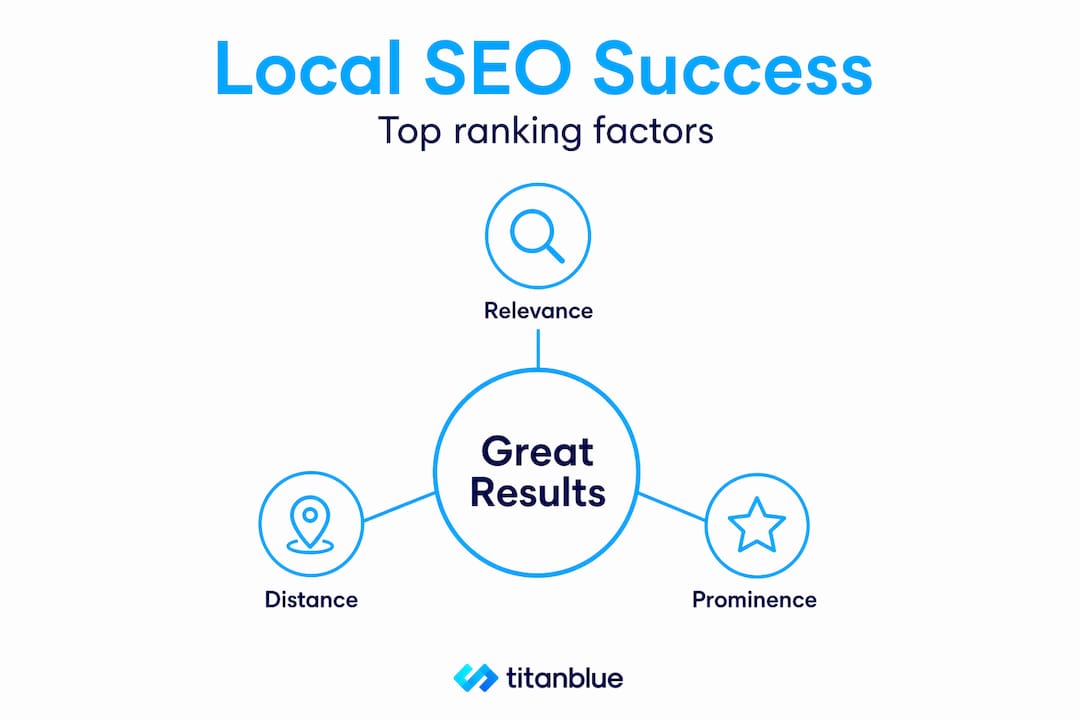
Beyond Google Business Profile, Google weighs three main ranking factors for local results:
- Relevance: How closely your business matches what the person searched for
- Distance: How far your business is from the searcher or the location they searched for
- Prominence: How well-known and trusted your business is, based on reviews, links, and citations
Here is a breakdown of the core components that drive improving local search rankings:
| Component | What it involves | Why it matters |
|---|---|---|
| Google Business Profile | Full profile, photos, categories, hours | Primary visibility in Maps and local pack |
| NAP consistency | Name, address, phone number across all listings | Builds trust and authority with Google |
| Online reviews | Volume, recency, and responses | Influences prominence and customer decisions |
| Local citations | Mentions in directories like Yellow Pages, True Local | Strengthens your local authority |
| On-page SEO | Location-specific content, title tags, schema | Signals relevance to Google |
| Local backlinks | Links from local news, councils, organisations | Boosts prominence in your area |
| Location pages | Dedicated pages for each suburb or service area | Targets specific local searches |
To get started, follow these steps:
- Claim and verify your Google Business Profile if you have not already
- Fill out every single field in your profile, including services, description, and business category
- Add high-quality photos of your premises, team, and work
- Ensure your business name, address, and phone number are identical across all online platforms
- List your business in reputable Australian directories such as True Local, Yellow Pages, and Yelp Australia
- Begin actively asking satisfied customers to leave Google reviews
- Create location-specific pages on your website for each area you serve
- Build content that answers questions your local customers are actually asking
Pro Tip: Many businesses leave half their Google Business Profile blank. Every unfilled field is a missed opportunity. Complete your profile in full, including attributes, Q&A, and regular posts, to signal to Google that your business is active and relevant.
These local SEO tips form the foundation. Once these basics are solid, you can focus on more advanced tactics.
Local SEO in action: Practical strategies for Australian businesses
You know how local SEO works, so what steps can you take today, and how do strategies differ for Australian businesses?
The gap between a business that ranks locally and one that is invisible often comes down to a handful of practical decisions. In Australia, local searches often include suburb-level intent, meaning people search for “electrician Surfers Paradise” rather than simply “electrician Gold Coast.” Optimising for the right geographic level makes a significant difference.
Here is how local SEO strategies compare to national SEO strategies:
| Strategy element | Local SEO | National SEO |
|---|---|---|
| Target audience | Nearby customers with immediate intent | Broad audience across all regions |
| Keyword focus | Suburb, city, and region-specific terms | Generic industry or product terms |
| Google Business Profile | Essential and actively managed | Less critical |
| Reviews | High priority, drives local trust | Useful but less decisive |
| Location pages | Created for each service area | Not typically relevant |
| Backlinks | From local organisations and media | From high-authority national sources |
| Content strategy | Local guides, community topics | Broad industry content |
For Australian businesses, particularly in trades, hospitality, health, and retail, applying these local-specific strategies consistently creates results. Local ranking is commonly described as a mix of relevance, distance, and prominence, so two businesses can both be near each other, but the one with stronger trust signals and a better match to the query tends to win.
Practical actions to take right now:
- Optimise for your suburb, not just your city. A restaurant in Palm Beach, Gold Coast, should target “restaurant Palm Beach” alongside “restaurant Gold Coast.”
- Create individual location pages on your website if you serve multiple areas. Each page should include locally relevant content, not just a change of suburb name.
- Ask for reviews consistently. Send a follow-up message to every customer after a job is complete. A simple, friendly request works well. Volume and recency both matter.
- List in Australian directories. True Local, Hotfrog, and the local council business directory are all worth pursuing for citations.
- Keep your NAP consistent. If your phone number or address varies across listings, Google loses confidence in your business details.
Ways to boost local search performance also include avoiding common pitfalls. Keyword stuffing, where you cram suburb names repeatedly into your content unnaturally, triggers penalties rather than rankings. Inconsistent business details across different platforms confuse both Google and potential customers.
Pro Tip: Focus on winning genuine reviews from local customers rather than volume alone. A recent five-star review from a customer in your target suburb carries more weight than ten generic reviews from unknown locations. Encourage your happiest clients to mention the specific suburb and service in their review for maximum impact.
These SEO tips for small businesses apply whether you are a Gold Coast tradie or a Melbourne-based retailer. The principles are consistent; the execution is local.
Measuring what matters: Tracking local SEO success
Implementing local SEO is one thing. Knowing whether your efforts actually deliver results is another. Here is how to measure real local impact.
Without tracking, you are working in the dark. The good news is that Google Business Profile provides free, detailed insights on how people are finding and interacting with your business listing. These metrics give you a clear picture of what is working.
Key metrics to monitor for local SEO:
- Search impressions: How often your business appears in local search results and on Maps
- Clicks to your website: How many people click through from your profile or listing
- Direction requests: How often someone asks Google Maps for directions to your location
- Phone calls: How frequently a customer calls directly from your listing
- Photo views: Engagement with your profile images, which signals active interest
- Review count and rating: Growth in reviews and your average star rating over time
- Local keyword rankings: Where your website ranks for suburb-specific search terms
Statistic to note: Businesses with complete and optimised Google Business Profiles receive significantly more direction requests and website visits than those with incomplete listings. A core goal of local SEO is to help businesses appear in Google’s local results, including Maps and the local pack, when people search for nearby products or services. Appearing in those results consistently, and then converting that visibility into real customer actions, is what makes local SEO worth every effort.
Use your Google Business Profile Insights dashboard monthly. Look at which search terms triggered your listing to appear, and check whether calls or direction requests are increasing over time. If impressions are high but calls are low, your profile may need stronger photos, a more compelling description, or fresher reviews.
Tools beyond Google Business Profile Insights include Google Search Console, which shows you which search queries drive traffic to your website. You can filter these by location to see your local performance clearly. Track a shortlist of your target local keywords monthly using a ranking tracker. Progress is rarely instant, but the trend over three to six months will tell you clearly whether your strategy is working.
For SEO for small businesses, data-led decision-making is the difference between wasted budget and measurable growth.
The truth about local SEO most businesses overlook
Here is what most guides and tactics miss about winning local customers online.
Most local SEO content focuses on checklists: claim your profile, get reviews, build citations. These steps matter. But they are tools, not strategy. The businesses that consistently outrank competitors are not just completing a list. They are building genuine local trust, and that is harder to replicate than any technical tactic.
Many small businesses waste budget by chasing visibility without credibility. They invest in directory listings across hundreds of sites, automated citation tools, and generic link-building packages. These tactics have value, but if your Google Business Profile has three reviews and a half-filled description, no volume of directory listings will move you meaningfully in the results.
Local ranking depends on relevance, distance, and prominence, with the most trusted and relevant businesses usually winning. The word “trusted” is the one most businesses underestimate. Trust is built through reviews, through consistent business information, through quality website content, and through your reputation in the community. It cannot be automated or shortcuts into existence.
There is also a challenge most guides skip over entirely: competing with national chains and aggregator websites. A tradie in Brisbane searching for their own services will often see large comparison platforms and franchise directories dominating the top results. Beating these requires specific tactics, including suburb-level content, highly specific services pages, and a steady stream of genuine local reviews that aggregator sites simply cannot replicate.
Our honest advice is this. Before you spend another dollar on digital advertising, make sure your local SEO foundation is solid. Your Google Business Profile should be completely filled out. Your reviews should be recent and real. Your website should speak directly to your suburb, your community, and your specific services. Winning with SEO locally is not about gaming an algorithm. It is about being the most relevant, most trusted, most visible business in your area.
Authenticity wins. A genuine review from a local customer, a photo of a real job completed in the suburb, a blog post answering a question your customers actually ask. These signals build the kind of prominence that Google rewards and customers trust.
Take the next step: Expert help with local SEO
Local SEO takes time, consistency, and expertise to get right. Doing it yourself will always be better than doing nothing, but the businesses that grow fastest in competitive local markets are the ones that get professional support.
At Titan Blue, we work with Australian small and medium businesses to build local SEO strategies that deliver real, measurable results. Whether you need a full SEO services package or want to start with our practical SEO marketing guide, we have the tools and local expertise to help you show up when it matters most. Get in touch with our team on the Gold Coast today and let us help you become the business your community finds first.
Frequently asked questions
How long does it take to see results from local SEO?
Most local businesses see measurable improvements in visibility within three to six months, though this depends on your level of competition and how thoroughly you optimise your profiles and website.
What is the difference between local SEO and traditional SEO?
Local SEO targets searches with a geographic intent to connect businesses with nearby customers, while traditional SEO aims for broader online visibility without a location focus. Local SEO includes traditional SEO tasks plus an additional layer focused on appearing prominently for searchers located near the business or with geography implied in the query.
Is Google Business Profile required for local SEO?
Yes, a fully optimised Google Business Profile is essential for appearing in local map results. Google Business Profile is central to local SEO because it is a primary foundation and lever for local visibility, especially in Maps and the local pack.
What are the most important local SEO ranking factors?
Relevance to the search, distance from the searcher, and your business’s overall prominence online are the three main factors Google uses to determine local rankings. Local ranking is commonly described as a mix of relevance, distance, and prominence.
Can I do local SEO myself, or do I need an expert?
You can absolutely start by managing your Google Business Profile and asking for reviews, but a professional can accelerate your results through technical optimisation, competitor analysis, and localised content strategies tailored to your specific market.
Recommended
- How to boost local SEO for Australian businesses
- Effective SEO for Small Business Australia | Boost Your Online Presence – Titan Blue Australia
- How to Boost Local SEO for Sydney Businesses
- Why use SEO for business: boost growth and visibility
Make Titan Blue a preferred source in Google
One click tells Google to surface our articles more often in Top Stories, AI Overviews and AI Mode.

ChatGPT GPT-6 Search Upgrade: What It Means for Australia
OpenAI rolled out GPT-6 to ChatGPT on 7 October 2026 with faster search. Here is…

Best Dental Website Design Agencies in Australia: 7 Compared
Best dental website design agencies in Australia 2026: seven compared on dental proof, booking, AHPRA…

Childcare Centre Website Design Australia: The 2026 Guide
Childcare centre website design Australia: show hours, ages and enrolment as text so parents and…