

Last updated:
You finish a job, jump back in the ute, and miss two calls from people who found you on Google. They tap through to your site, can’t tell if you service their suburb, can’t see recent work, and give the job to the next tradie who looks easier to trust.
That is the primary job of a trade website. It should help you win work while you are on the tools.
A lot of trade businesses have some kind of site already. The problem is the setup behind it. Some were built years ago and never improved. Some came bundled with software. Some sit on a monthly plan that keeps the lights on but does little for rankings, enquiries, or job quality.
The question is not whether you need a website. The pertinent question is which website model fits the way you run your business.
If you want the fastest and cheapest path online, a DIY builder or software add-on might do the job. If you want someone else to handle updates, hosting, and edits, a monthly subscription service can be a sensible middle ground. If you want your site to support suburb-based SEO, ad traffic, stronger conversion rates, and future growth, a custom build usually gives you more control. That is the gap between a website that exists and one that pulls its weight.
This guide looks at seven providers through that lens. It compares the business model behind each option, not just the homepage design. That matters because the wrong setup often creates a ceiling. You either pay for features you will never use, or save money upfront and end up rebuilding once the business grows.
I have seen that happen often with trade websites. The cheap option gets a logo, phone number, and a few stock photos online. Six months later, the owner wants separate service pages, better local rankings, call tracking, faster load times, and cleaner enquiry flow. At that point, the original setup starts getting in the way.
Some providers are built for speed. Some are built for convenience. Some are built to become a proper growth asset, which is the territory covered by custom tradie website design services.
The goal here is simple. Help you choose the right path for your budget, your time, and where you want the business to go.
1. Titan Blue Australia
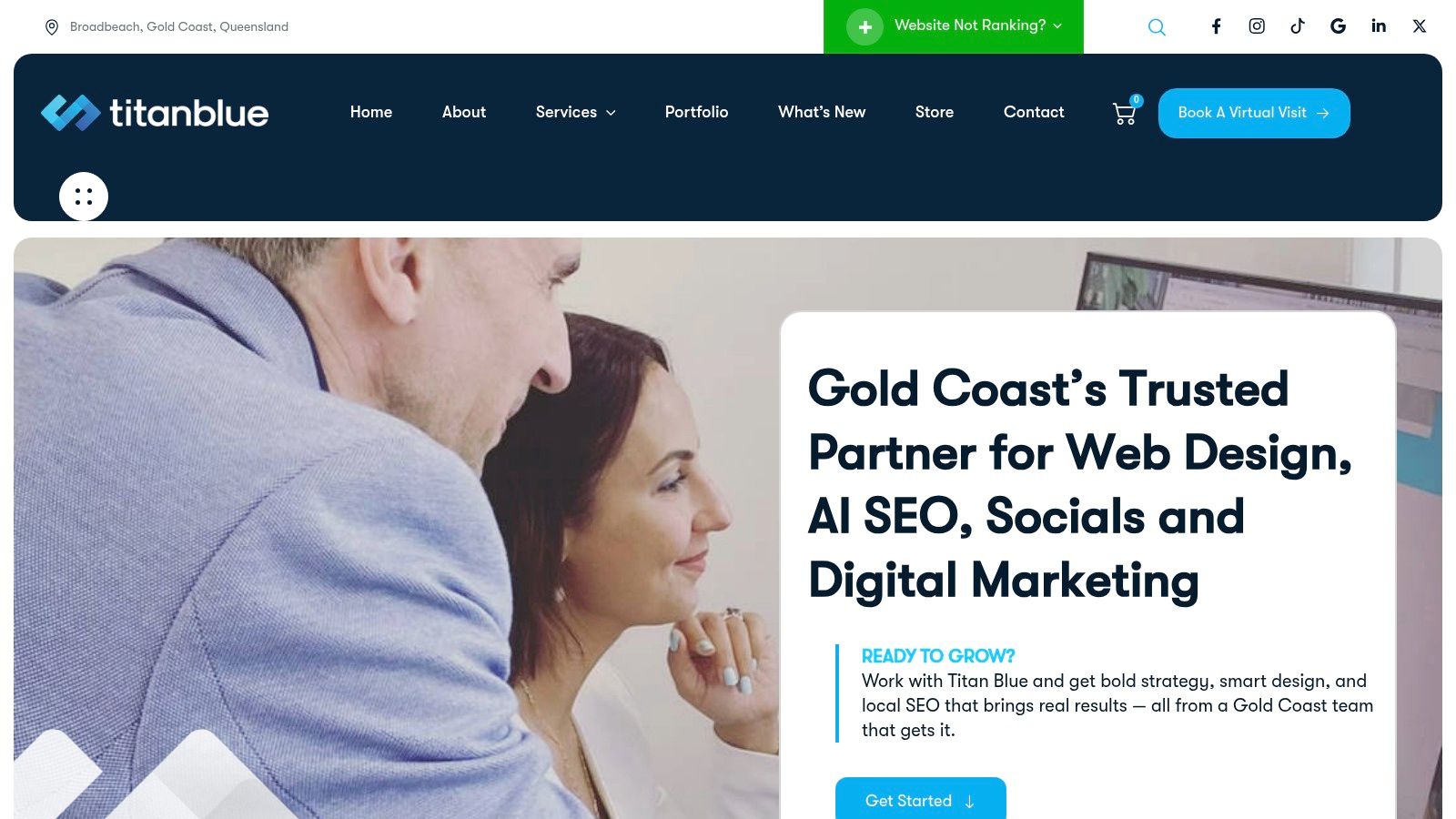
A trade business picks Titan Blue Australia when the website needs to do more than give customers a phone number.
Titan Blue Australia sits at the custom-build end of the market. The model is different from a DIY builder or fixed monthly package. You are paying for strategy, design, development, SEO, and the wider digital setup around lead generation. That gives you more control, but it also means a bigger decision upfront.
Where it fits best
This option suits established or growing trade businesses that want the site to support better jobs, stronger visibility, and expansion into more suburbs or service lines. Plumbing, electrical, construction, hospitality, and solar businesses are a natural fit because they often need more than a basic brochure site. Titan Blue works from Broadbeach on the Gold Coast and services businesses across Australia.
The value in a custom build is not the design alone. It is the structure behind it. Trade websites usually underperform for the same reasons. Key service pages are missing. Mobile users have to work too hard. Tracking is weak. SEO, ads, and conversion paths are handled as separate jobs instead of one system.
That is where Titan Blue is stronger than a standard web shop. The work is built around business goals, not a fixed page allowance.
For tradies who want suburb-level visibility, their approach to local SEO for tradies is a useful indicator of how the website fits into the wider marketing plan.
What stands out
A few things separate Titan Blue from template-first providers.
- Custom strategy: Site structure can match the business, whether that means separate pages for services, locations, or higher-margin work.
- Broader digital delivery: Website design, SEO, paid ads, social media, and eCommerce are handled in one place.
- AI search focus: GEO and AEO work are part of the offer, which matters if you want visibility beyond standard Google rankings.
- Local service understanding: Gold Coast roots help, especially for service businesses targeting specific suburbs and nearby regions.
I have seen custom builds make sense when a tradie is already getting leads and wants better ones. In that situation, the website stops being a placeholder and starts acting like a filter. It helps qualify the job, build trust faster, and push more enquiries toward profitable work.
The trade-off
The main drawback is simple. Pricing is not published.
Some business owners prefer a clean package price they can compare in five minutes. Titan Blue asks for a conversation first, which can feel slower. In practice, that is often the cost of getting a site that fits the business instead of forcing the business into a preset package.
If the goal is long-term ROI, this model is a strong fit. If the goal is the cheapest possible launch, it probably is not.
2. MateFlow
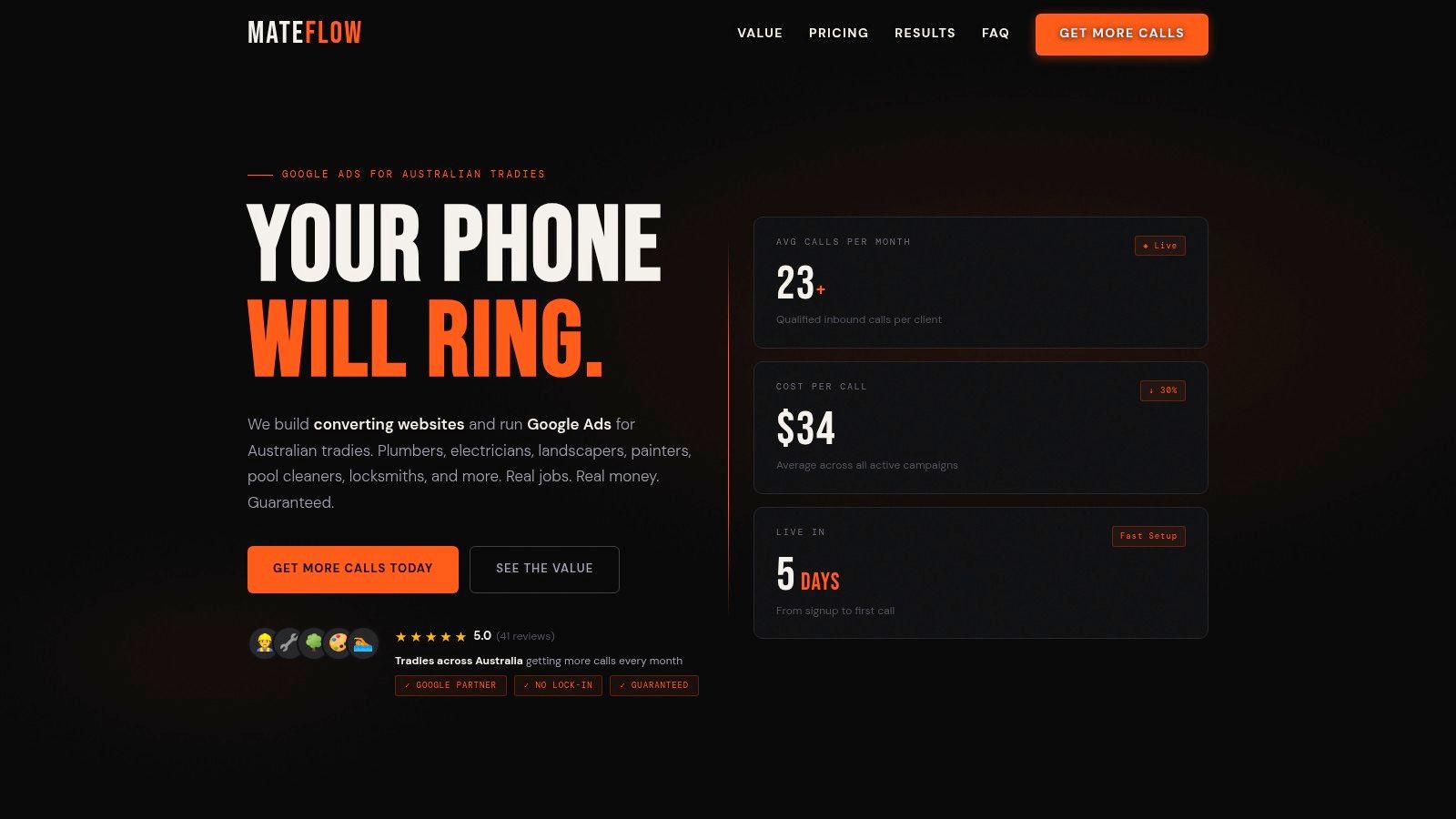
MateFlow is built for tradies who don’t want to stitch together a website, ad account, reporting tool, and call tracking on their own.
It’s a bundled monthly model. You get a five-page website, Google Ads setup and management, call tracking, reporting, on-page SEO, and Google Business Profile support. That makes it a lead-generation package first, and a website package second.
Why some tradies will like it
This is a practical fit for businesses that need enquiries now and are happy to pay monthly for a managed setup.
The attraction is clarity. You can see the offer, understand the monthly commitment, and launch without a big upfront build project. For plenty of service businesses, that’s enough. Especially if the owner is flat out and wants calls coming in sooner rather than later.
MateFlow also leans into accountability through call tracking and monthly reports. That’s useful because a lot of tradies have no idea which leads came from the website, which came from ads, and which came from profile searches.
If you’re trying to improve visibility in your local area, Titan Blue’s take on local SEO for tradies is worth comparing against this more ads-led approach.
Where the model gets limiting
The catch is in the business model itself. When Google Ads sits at the centre, you’re depending on paid traffic to do the heavy lifting.
That can work well. It can also become expensive if your market gets crowded or if the website underneath isn’t strong enough to convert the traffic you’re paying for. A tradie who wants a content-driven site, strong service pages, and long-term organic growth may find this model too narrow.
Paid leads can fill gaps fast. They rarely replace the need for a solid website and proper local search visibility.
There’s also the scope issue. Five pages is enough for a simple operator with one or two services. It gets tight if you cover multiple service lines or multiple locations.
MateFlow is a good fit when speed, simplicity, and paid-lead flow matter more than deep customisation. It’s less suitable if you want the website itself to become a larger business asset over time.
3. Tradie Studio
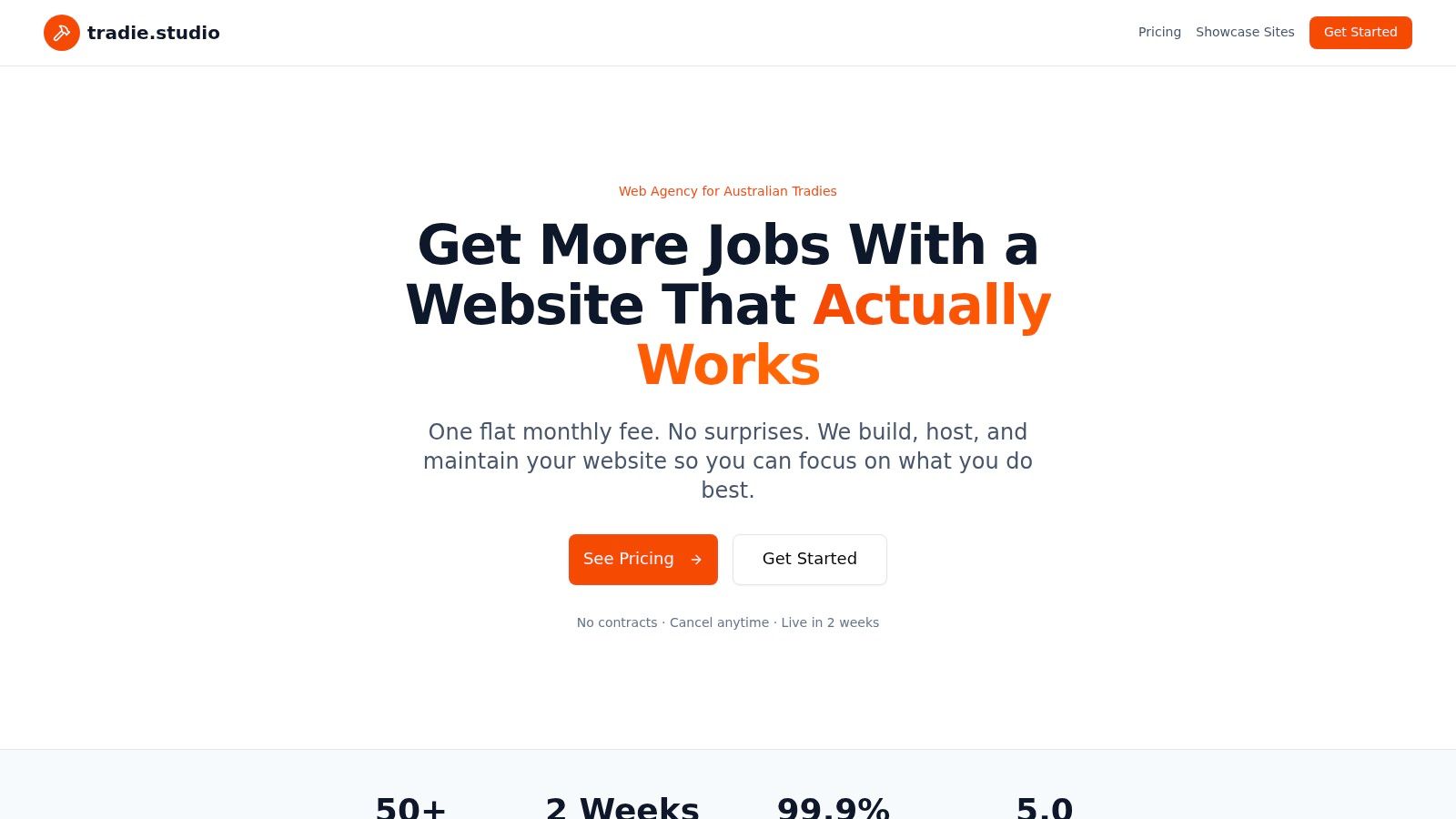
A lot of tradies get to the same point. The old site is outdated, nobody wants to deal with hosting or WordPress updates, and every small website fix turns into another job on the to-do list. Tradie Studio is built for that situation.
Tradie Studio offers a managed monthly website model. Hosting, SSL, backups, updates, support, and ongoing edits sit under one fee. For a busy operator, that removes a common failure point. The site stays live, current, and looked after without the owner having to chase freelancers or sort technical issues after hours.
Best for operators who want a managed website, not another system to run
The value here is less about custom development and more about operational simplicity.
That matters if the website is there to win enquiries, show past work, and give people confidence to call. It matters less if you want unusual functionality, complex integrations, or full control over the technical setup.
Tradie Studio also focuses on mobile-first design and unlimited updates. That suits how trade customers browse. They are often on a phone, comparing a few businesses quickly, and making a decision based on whether the site looks current, clear, and easy to contact.
If your work is plumbing, comparing this model with a more customized website design for plumbers approach can help you decide how much flexibility you really need.
Where the model can get restrictive
Monthly website services solve one set of problems and create another.
You get predictability. You also accept the limits of a packaged offer. Some owners are fine with that because they want the website handled. Others eventually want more control over page structure, content strategy, integrations, or ownership terms than a subscription service usually gives them.
That is the trade-off.
Tradie Studio makes sense for businesses that want a clean web presence with support included and no technical admin hanging over them. It is less suitable for a trade business treating the website as a long-term asset that will expand into multiple service pages, location pages, content work, and more customised lead generation over time.
A proper website still matters because customers judge legitimacy fast. Tradie Studio gives smaller operators a practical way to cover that base without taking on a full custom build too early.
4. FreshSites
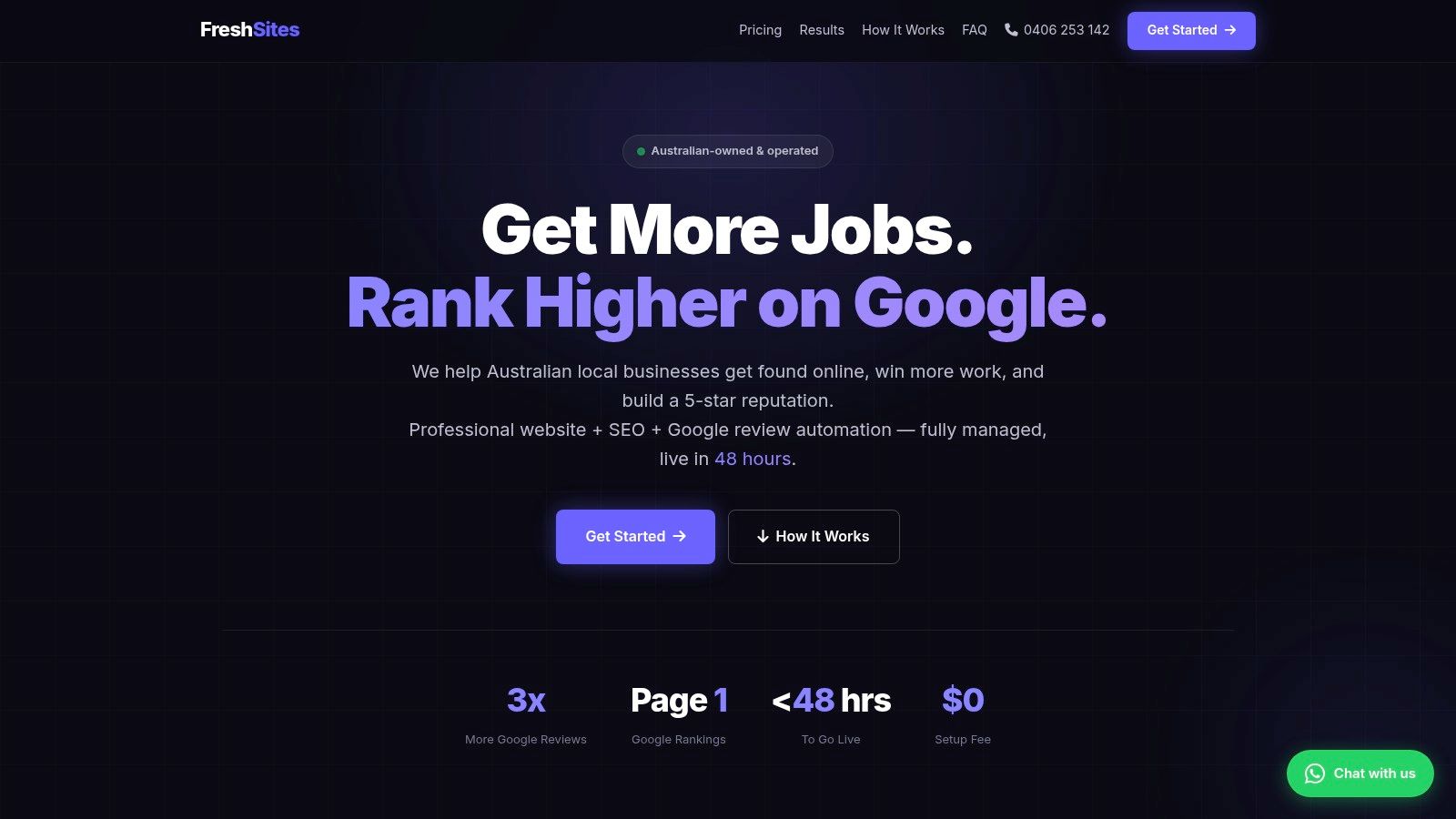
FreshSites is one of the more flexible business models in this space because it gives tradies two ways in. You can go with a managed plan, or you can buy the site outright.
That split matters.
A lot of providers force you into subscription forever. FreshSites at least gives owners a decision. Pay monthly for convenience, or make a one-time purchase if you’d rather reduce ongoing platform costs.
Why the offer is practical
The speed promise is a big part of the appeal. Demo and go-live in about 48 hours works for businesses that need a credible website fast. Maybe the old site is broken. Maybe the business has just rebranded. Maybe the owner has relied on social media and referrals and now needs something more solid.
The managed plans include hosting, SSL, on-page SEO, maintenance, and unlimited updates. There are also optional review and automation features that can help after the enquiry comes in.
That’s where this provider gets interesting. A lot of websites for trades stop at the contact form. FreshSites tries to extend into follow-up, review collection, and quote or invoice reminders.
For plumbers especially, comparing this style of managed site with a more custom approach like Titan Blue’s website design for plumbers helps clarify what you’re paying for. One is speed and convenience. The other is depth and scale.
The real trade-off
The one-time purchase option is useful, but buyers need to read it properly. Owning the site once doesn’t mean you automatically get all the automation benefits that come with the ongoing plans.
A cheap launch is only cheap if the site still works for you six months later.
That’s the main caution here. If your team is disciplined with follow-up and already has internal systems, the one-time model can make sense. If you need the website provider to help manage reviews, reminders, and ongoing tweaks, the monthly plan is the better fit.
FreshSites is strong for owners who want low-friction launch, clear pricing, and the option to avoid lock-in. It’s weaker for businesses that need a heavily customised website strategy from the start.
5. Constructaweb
A builder gets an enquiry very differently from a blocked-drain plumber. The client usually wants to inspect past work, compare project types, and decide whether the business looks capable of handling a bigger job. That changes what the website needs to do, and it explains why Constructaweb sits in a narrower lane than several other providers on this list.
Constructaweb is aimed at construction and building companies. That matters because a builder’s site often needs to sell trust before it asks for contact. Good project pages, clear service categories, and a professional visual standard do more work here than a basic lead form on a generic template.
Better suited to firms that win work on proof
For builders, renovators, and construction firms, a portfolio is part of the sales process. The website needs to show workmanship, explain the type of jobs you take on, and help a prospect decide whether you’re the right fit before they pick up the phone.
That is the practical advantage of a sector-specific provider. A general website company might give you something clean and functional, but still miss the way construction businesses convert enquiries into signed work. If project galleries are weak, service pages are vague, or the structure does not separate renovations from new builds or commercial from residential, the site can look fine and still underperform.
Constructaweb also promotes fast turnaround on responsive websites. For a business that needs a credible online presence without waiting through a long custom build, that can be a sensible middle option between a cheap DIY setup and a more involved agency project.
If you’re comparing quote-based options, it helps to benchmark them against a broader guide to website creation cost for Australian businesses. That makes it easier to see whether you’re paying for real strategy, design depth, or just packaging.
Where the fit gets narrower
I would not put this near the top of the list for every trade.
A solo electrician, locksmith, or plumber chasing local service calls usually needs speed, clarity, suburb targeting, and strong conversion paths more than a portfolio-led presentation. Constructaweb looks better aligned to businesses with longer sales cycles and stronger visual proof, especially builders and renovation firms.
The other watch-out is pricing transparency. There’s no public pricing, so you need a consult before you can judge value. For some owners, that is fine. For others, especially those comparing DIY, subscription, and custom-build models, it slows the buying decision.
- Strong fit: Builders, renovators, and construction firms with completed projects worth showcasing
- Less suited: Small service trades focused on fast local enquiries
- Main strength: A website model built around credibility, project proof, and longer sales cycles
The main risk is assuming a polished portfolio will do the whole job. It won’t. Construction websites still need clear service intent, local visibility, and straightforward enquiry paths, or the site becomes an online brochure that looks good and produces very little.
6. Websites for Tradies (AU)
A lot of tradies hit the same point. The jobs are there, the phone is busy enough, but the website keeps slipping because nobody has time to write pages, chase photos, or organise a full brief.
Websites for Tradies (AU) is built for that buyer.
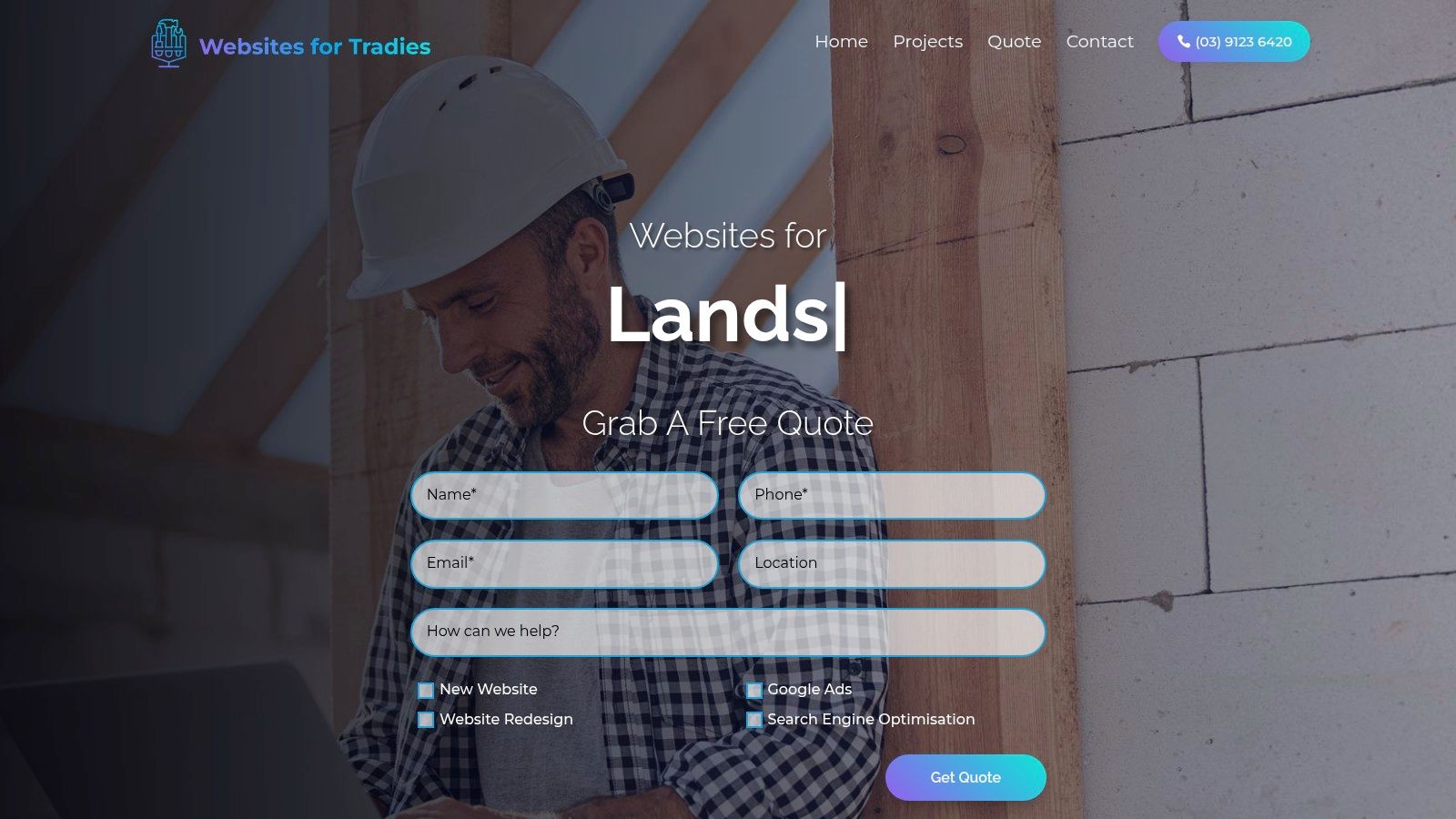
The offer is straightforward. A claimed seven-day turnaround, content writing included, and a willingness to pull usable photos from Facebook or Instagram. That lowers the setup burden, which is often the main blocker with trade websites. It is not just cost. It is the time and headspace needed to get the thing live.
That makes this a clear example of the done-for-you subscription-style model sitting between DIY and a full custom build. You hand over less material than you would with a custom agency, get online faster than a bespoke process usually allows, and accept some limits in strategy depth and flexibility in return.
For the right business, that trade-off makes sense.
I can see the appeal for a plumber, sparky, cleaner, or handyman who needs a credible web presence up quickly and does not want to spend nights writing service pages. Using existing social content is practical too. Many tradies already have enough job photos on their socials to build trust, even if those images were never shot for a website.
The part to assess carefully is what happens after launch.
Fast production helps if your current alternative is no website at all. It does not automatically produce strong rankings, better suburbs visibility, or higher-quality leads. Those results usually depend on the structure underneath the build. Clear service pages, location targeting, trust signals, mobile usability, and enquiry flow still do the heavy lifting.
The hosting tier options matter here. If one tier includes more SEO support, ask what that means. It could mean basic setup and maintenance. It could mean ongoing content, page expansion, technical fixes, and local search work. Those are very different offers, and tradies often get caught by vague wording in this part of the sale.
So the value of this model is speed plus reduced admin. The weakness is ceiling.
If you need a practical first site and want someone else to do the writing, this is a sensible option. If you are aiming to build a stronger lead engine across multiple suburbs or service lines, you may outgrow it and need a more strategic build later.
- Strong fit: Time-poor tradies who want a site live quickly with minimal input
- Less suited: Businesses chasing aggressive SEO growth or a highly customized conversion strategy
- Main strength: Done-for-you setup that reduces admin and gets a credible site online fast
7. Tradify Instant Website
A common trade business setup looks like this. Jobs already run through software, quotes go out from the same system, invoices are handled there too, but the website is weak or missing. In that situation, Tradify Instant Website makes sense because it connects the front end of the business to the tools already handling the work.
That is the main value of this model.
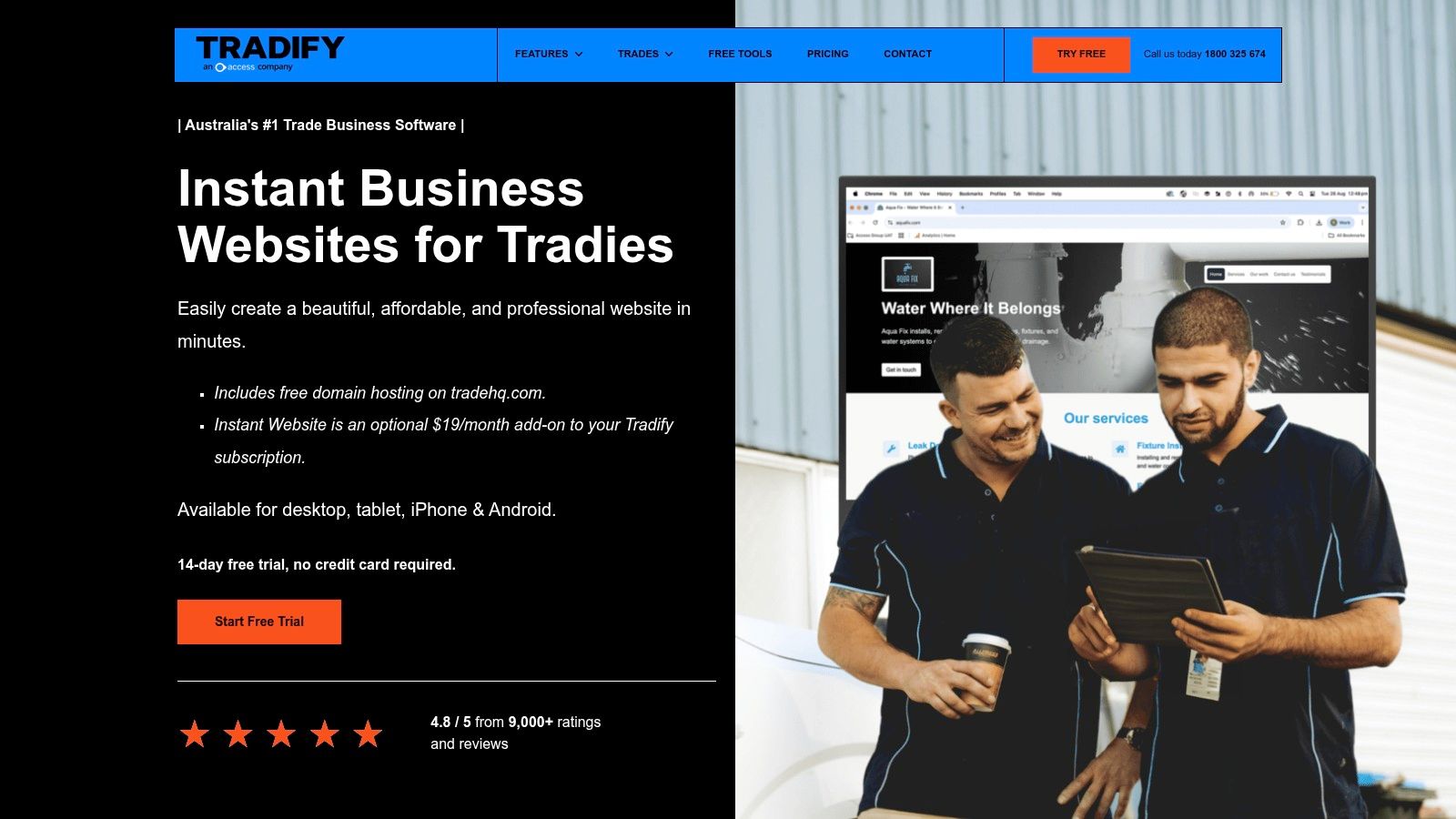
Tradify sits at the DIY add-on end of the website spectrum, not the custom build end. You are using a website layer attached to your job management platform. For some tradies, that is a smart decision. It keeps setup simple, keeps costs down, and pushes new enquiries straight into the system the office already uses.
The gain is less admin. A lead comes in, and it enters the same workflow used for quoting, scheduling, and invoicing. That matters more than design polish for owner-operators and small teams who lose time jumping between inboxes, forms, and job software.
There is a trade-off. You are buying convenience and integration, but giving up control.
Design flexibility is limited. Content structure is more constrained. SEO options are narrower than what you would get from a custom agency build or a more open managed platform. If your goal is to rank across multiple suburbs, build dedicated service pages, or shape a tighter conversion path for higher-value work, this model can feel restrictive fairly quickly.
That does not make it a bad option. It makes it a specific option.
I would treat Tradify Instant Website as a practical operations-first website. It is a good fit if the main job is to give customers a credible place to find you and send enquiries into your existing system without extra handling. It is a weaker fit if the website needs to become a serious lead-generation asset that grows with the business over time.
There is also platform dependency to factor in. The website depends on an active Tradify subscription, so your website setup is tied to that software choice. That is fine if you are already committed to Tradify and happy with it. It is less attractive if you want more freedom later.
For tradies choosing between business models, this is the low-friction add-on path. You get speed, lower setup effort, and direct operational value. You accept a lower ceiling in return.
Top 7 Trades Websites Comparison
A tradie choosing a website provider is usually choosing a business model, not just a design style.
Some options buy speed. Some buy support. Some buy control and growth room. The right choice depends on whether the website only needs to get you online fast, feed leads into software you already use, or become a proper sales asset that helps you win better work over time.
| Service | Website model | Setup complexity | Ongoing input required | Best fit | Main upside | Main trade-off |
|---|---|---|---|---|---|---|
| Titan Blue Australia | Custom agency build with strategy, SEO, and AI search work | High | Medium to high. You still need to provide business input, approvals, and job insight | Established trade businesses that want the site to drive growth, not just exist | Stronger control over structure, content, conversion paths, and long-term search visibility | Higher cost and longer setup than templated or subscription options |
| MateFlow | Packaged website plus paid ads service | Low to medium | Monthly budget and steady lead handling | Tradies who need enquiries quickly and are happy to use Google Ads | Fast path to lead generation with clear monthly pricing and call tracking | Results depend heavily on ad spend and lead quality management |
| Tradie Studio | Managed subscription website | Low | Low | Small trade businesses that want predictable monthly costs and minimal website admin | Hosting, updates, backups, and edits are handled for you | Less design and platform freedom than a custom build |
| FreshSites | Fast-launch managed site with optional one-time purchase | Very low | Low | Businesses that need a site live quickly without a big setup process | Quick turnaround, clear pricing, and the option to buy outright | Faster launch usually means a simpler structure and less strategic depth |
| Constructaweb | Specialized construction website build | Medium | Medium. Project photos, service details, and quote-stage input matter | Builders and construction firms that need project-led marketing | Good fit for showcasing completed work and building a stronger sector-specific presence | Narrower fit if your business is more service-call driven than project-led |
| Websites for Tradies (AU) | Done-for-you rapid launch site | Low to medium | Low to medium | Time-poor tradies who need copy, images, and a basic site sorted quickly | Faster production with content support included | Broader SEO growth usually needs extra work beyond the starter setup |
| Tradify, Instant Website (add-on) | Software-linked website add-on | Very low | Very low | Tradify users who want a direct website tied to their workflow | Low effort, low cost, integrated enquiry handling | Limited control, lighter SEO options, and dependency on the Tradify platform |
The gap between these providers is not just price. It is ceiling.
If the goal is to look credible online and give customers a simple way to call or enquire, a fast-launch or software-linked option can do the job. If the goal is to rank across multiple services and suburbs, shape stronger landing pages, and support business growth over the next few years, custom or strategy-led builds usually justify the extra investment. That is the comparison to make. Not just what the site costs this month, but what it can help the business do next.
Your Blueprint for a High-Performing Tradie Website
A homeowner finds your business at 8:30pm after a burst pipe, a dead switchboard, or a blocked drain. They are on their phone, they need help quickly, and they are comparing you with two or three other tradies. If your site is slow, vague, or hard to contact, you lose the lead before the phone rings.
That is why the right website is not just about getting online. It is about choosing a setup that fits how your business wins work.
A high-performing tradie website does four jobs well. It builds trust fast, makes enquiry easy, shows clear proof of work, and gives you room to grow. The last part matters more than many owners expect. A cheap site that gets you online this month can be a fair choice. It can also become a limit if you later want to rank for more services, target more suburbs, or improve lead quality.
Start with trust. Customers want to know three things straight away. What do you do, where do you work, and can they rely on you? Good job photos, licence details where relevant, reviews, service areas, and a clear value proposition all help. So does a site that loads properly on mobile and does not look dated.
Next comes conversion. Your number should be visible without scrolling. Forms should ask only what you need to qualify the job. Service pages should answer the questions people have before they call. If you handle emergency work, say it clearly. If you only take larger installs or renovation jobs, say that too. Better filtering means better leads.
Then there is the build model itself. That is the part many tradies skip past.
- DIY or software add-on: Best for low cost and speed. Fine if you need a basic web presence tied to existing job management software, but control is limited.
- Monthly subscription site: Better if you want support, updates, and someone else handling the tech. Check what happens if you leave, who owns the site, and how much SEO work is included.
- Custom build: Higher upfront cost, but stronger if the website needs to support suburb pages, multiple service lines, better search visibility, and long-term lead generation.
Each path has a trade-off. Low-cost options save time and cash now. Custom builds usually give you more control over content, search performance, and future changes. The right choice depends on whether the website only needs to validate your business or actively help you win better jobs.
The best sites are also built for how search works now. That means clear service pages, strong local relevance, fast mobile performance, and content structure that helps both search engines and AI-driven discovery understand what you do. A brochure site can still look tidy and underperform.
Keep the shortlist practical. Can a customer contact you in seconds? Can they see recent work quickly? Can you add new services or locations later without rebuilding the whole thing? Does the site support the way you quote, book, and follow up? If operations matter as much as marketing, tools like online scheduling tools can complement the website nicely.
Titan Blue Australia sits at the custom end of the market. That makes sense for trade businesses that want the website to become a lead asset, not just a placeholder. The upside is greater flexibility, stronger search foundations, and more room to improve results over time. The trade-off is a higher initial investment and a need for clearer strategy from the start.
Make Titan Blue a preferred source in Google
One click tells Google to surface our articles more often in Top Stories, AI Overviews and AI Mode.

Law Firm Website Design Australia: The 2026 Guide
Real, practical guidance on law firm website design in Australia for 2026, built for trust,…

Real Estate Website Design Australia: The 2026 Guide
What a real estate website design in Australia needs in 2026: listings, suburb pages, sold…

Dental Website Design Australia: The 2026 Guide
Dental website design Australia in 2026: what to include, AHPRA compliance, booking flow and how…