


Last updated:
You should expect a Gold Coast web design agency to do far more than make pages look polished. The right agency should clarify your goals, understand your customers, plan the user journey, create original design, build a fast and accessible website, prepare it for search and AI discovery, test it properly, and support it after launch. It should also explain its process, show relevant evidence and give you ownership clarity. A capable agency connects design decisions to enquiries, sales, trust and long-term visibility.
That distinction matters because a website is not just a creative asset. It is often the place where a potential customer decides whether your business feels credible, understands their problem and can deliver the right solution. It is also a source that search engines and AI systems may use to understand who you are, what you offer and where you operate.
This guide explains what a strong agency should contribute, how a good web design process works, which questions to ask and why AI readiness now belongs in the website brief from day one.
What should a Gold Coast web design agency actually do?
A good agency should combine strategy, content, user experience, visual design, development, search foundations, quality assurance and ongoing care. If it only discusses colours, layouts and a home page mock-up, the scope is probably too narrow.
The work should start with your business rather than a preferred template. Your agency needs to understand:
- which services or products matter most
- who the priority customers are
- what questions those customers ask before making contact
- which locations and markets the website needs to serve
- what actions count as a successful visit
- which systems, forms, bookings or ecommerce functions are required
- how success will be measured after launch
From there, the agency should translate commercial goals into a useful site structure. That includes deciding which pages are needed, how people move between them and what each page needs to communicate. For service businesses, a generic Services page is rarely enough. Clear individual service pages can answer specific questions, establish relevance and create more focused paths to enquiry.
The finished scope may include research, sitemap planning, copy guidance, wireframes, custom interface design, mobile layouts, content management system development, integrations, analytics, technical search setup, structured data, testing and training. Not every business needs every feature, but every feature should have a reason.
Titan Blue’s Gold Coast website design service takes this wider view: the website is planned as a working business platform, not an isolated visual exercise.
Why does local Gold Coast knowledge help?
Local knowledge helps an agency understand the market, geography and customer expectations behind your brief. It should not be used as a substitute for research, but it can make discovery faster and recommendations more relevant.
The Gold Coast is not one uniform market. A hospitality business in Broadbeach, a professional service in Southport, a trades business serving multiple suburbs and an ecommerce brand selling nationally may all be based in the same region, yet need very different websites.
A locally experienced team can ask better questions about service areas, seasonal demand, visitor and resident audiences, local trust signals and the balance between Gold Coast visibility and national growth. It can also plan location information carefully so customers and search systems receive a consistent picture of the business.
However, proximity alone does not prove capability. A local agency should still demonstrate rigorous strategy, thoughtful design, reliable development and measurable outcomes. The advantage comes from pairing regional understanding with strong digital practice.
What does a professional web design process look like?
A professional process should move through discovery, architecture, content, design, development, testing, launch and improvement. Each stage should have a clear purpose, deliverable and decision point.
1. Discovery and business goals
The agency should interview the people who understand the business, review existing performance and agree on priorities. Useful goals are specific. “Modernise the website” is a preference. “Help commercial clients find the right service and submit a qualified enquiry” is a business objective that can guide the project.
2. Sitemap and user journeys
The sitemap organises the information customers need. The user journey then connects those pages in a logical sequence. Someone comparing providers may need proof and process information, while someone with an urgent need may want a direct service answer and an easy contact route.
Important pages should be reachable through normal crawlable links, not hidden behind search boxes or interactions. Google’s SEO guide for web developers recommends that every page be reachable from another findable page and that links use relevant text or image alt attributes.
3. Content planning
Content should be planned before polished screens make everyone reluctant to change the layout. The agency needs to identify the questions, proof points, service details and calls to action each page requires. Clear content also reduces the risk of beautiful pages filled with vague claims.
4. Wireframes and visual design
Wireframes test hierarchy and flow without the distraction of final colours and imagery. Visual design then applies the brand, creates emphasis and makes the experience distinctive. Desktop and mobile behaviour should both be considered, rather than treating mobile as a compressed afterthought.

5. Development and integrations
Development turns the approved design into a maintainable website. The build may need forms, booking tools, customer relationship management connections, ecommerce, payment systems, analytics, email platforms or other business tools. Integrations should be documented and tested, including what happens when a submission or connection fails.
6. Quality assurance and launch
Testing should cover common devices and browsers, navigation, forms, links, redirects, accessibility basics, search controls, analytics, security and performance. A launch checklist should also protect existing traffic when an old site is replaced. Changed URLs need appropriate redirects, and important metadata should not disappear during migration.
💡 Is your website brief ready for the next step?
We can review your goals, customer journeys, search foundations and AI readiness before design decisions lock the project in.
How can you judge the quality of an agency’s work?
Judge quality through relevant evidence, clear reasoning and the condition of live websites, not through attractive screenshots alone. A portfolio can show visual range, but it should also help you understand the problem, the choices made and the result.
When reviewing an agency’s website portfolio, look for:
- Relevant complexity: Has the team solved projects with similar services, audiences or technical requirements?
- Clear hierarchy: Can a first-time visitor quickly understand the business and find the next step?
- Mobile usability: Do menus, forms, buttons and content remain practical on a small screen?
- Originality: Does each site reflect its organisation, or do projects feel like the same template with different colours?
- Live quality: Do the actual websites still work well, load securely and present current information?
- Proof beyond aesthetics: Are there credible reviews, case studies or explanations of outcomes?
Ask the agency to walk you through one or two relevant projects. A strong explanation should connect the brief to the architecture, content and interface decisions. If every answer comes back to visual taste, you still do not know whether the team can solve a commercial problem.
References and reviews can add confidence, especially when they mention communication, reliability and support after launch. Read the detail, not just the rating. Titan Blue’s client reviews provide another view of how the team works across ongoing digital relationships.
Which technical standards should be built in?
A modern website should be secure, responsive, accessible, crawlable and maintainable. It should also have a sensible performance baseline rather than relying on a last-minute optimisation plugin to repair a heavy build.
Mobile usability
Mobile design should prioritise the tasks customers perform on smaller screens. That means readable text, clear tap targets, useful navigation, efficient forms and key information that does not disappear. The Australian Government’s guide to setting up a business website recommends mobile compatibility, accessibility, security and clear content as core considerations.

Performance and page experience
Google describes Core Web Vitals as measures of real-world loading performance, responsiveness and visual stability. Its current good-experience thresholds are Largest Contentful Paint within 2.5 seconds, Interaction to Next Paint under 200 milliseconds and Cumulative Layout Shift below 0.1.
Those metrics are useful, but Google also says there is no single page experience signal that guarantees rankings. The broader objective is a secure, mobile-friendly experience where the main content is easy to access and intrusive elements do not get in the way. Your agency should design and build for people first, then measure performance on representative pages and devices.
Accessibility and inclusive design
Accessibility improves the experience for people with visual, hearing, motor and cognitive disabilities. It can influence colour contrast, keyboard navigation, headings, form labels, focus states, image alternatives and content clarity. Ask whether the agency follows recognised accessibility guidance and how it checks the final build.
Security, privacy and ownership
The agency should explain hosting, updates, backups, user access and security responsibilities. If the website collects personal information, the project also needs appropriate privacy handling and accessible policies. Business Queensland notes that online businesses should make privacy, terms, security measures and consumer information easy to access.
Ownership should never be vague. Confirm who owns the domain, website files, design assets, written content, analytics accounts and third-party licences. Your business should have the access it needs, with administrative accounts managed securely.
What makes a website ready for search and AI discovery?
A website becomes easier to understand when important information is crawlable, clearly structured, specific, consistent and supported by appropriate structured data. These foundations help conventional search and also make the site more useful as a source for systems that extract direct answers.
This is where Answer Engine Optimisation, or AEO, belongs in web design. It should influence architecture and content from the beginning, rather than being added after the site is built.
Clear entities and service information
Each important page should make its subject obvious. The website should clearly state the business name, services, locations, expertise and contact information using natural language. Service pages should answer real customer questions with enough detail to be genuinely useful.
Answer-first content
Important questions should receive concise answers before the page expands into evidence and explanation. Useful headings help readers scan, while logical question and answer sections make individual facts easier to retrieve. The objective is not to write for a robot. It is to remove ambiguity for both people and machines.
Semantic structure and crawlability
Headings should reflect the hierarchy of the page. Links should describe their destination. Essential content should exist as accessible text rather than being trapped in images, videos or interactions that require a click before loading. Pages should be connected through meaningful navigation and internal links.
Structured data
Structured data gives search systems an explicit vocabulary for certain page information. Google says it uses structured data to understand page content and, for supported types, make pages eligible for richer search appearances. Depending on the website, relevant markup may include Organisation, LocalBusiness, Product, Article and Breadcrumb data.
Structured data must accurately reflect visible content. It is not a shortcut to rankings and does not guarantee a rich result or an AI citation. It is one part of a broader, technically sound and trustworthy website.
Evidence and trust
Strong websites support claims with clear service detail, real projects, qualified team information, genuine reviews and consistent business facts. Google recommends creating helpful, reliable, people-first content and identifies trust as the most important aspect of E-E-A-T. An AEO-ready build therefore needs credible substance, not just extra code.
An AI-ready website check can identify gaps in these foundations, including vague service information, weak question coverage, confusing structure and missing technical signals.
What should be included in the handover and ongoing support?
A proper handover should give your team the access, documentation and training needed to operate the website confidently. Ongoing support should then protect security, compatibility and performance as the website changes.
Before launch or final handover, confirm you will receive:
- domain and hosting access or a clear management arrangement
- content management system accounts with suitable permissions
- analytics and search platform access
- instructions for common updates
- records of integrations, licences and renewal responsibilities
- backup and recovery information
- a list of outstanding improvements, if any
- a defined process for support requests
Websites are not static. Browsers, plugins, content, integrations and business priorities change. A website care plan can cover maintenance, backups, security checks and practical support, but you should understand what is included and how urgent issues are handled.
Support is also about improvement. Once real visitors use the site, analytics and enquiry quality can reveal where content, navigation or calls to action need refinement. The best agency relationship does not end the moment the launch announcement goes out.
Which questions should you ask before choosing an agency?
Ask questions that reveal the agency’s reasoning, responsibilities and process. You are looking for clear answers and constructive questions in return, not a rehearsed sales script.
- How will you learn about our customers and business goals?
- Who will plan the sitemap and customer journeys?
- Who is responsible for content, and when is it developed?
- Will the design be original, and how many key layouts are planned?
- How do you approach mobile usability, accessibility and performance?
- What search and AEO foundations are included in the build?
- How do you test forms, integrations, analytics and redirects?
- Who owns the domain, content, design assets and website accounts?
- What training and documentation are provided?
- What happens after launch?
- Can you explain a relevant project from problem to outcome?
- How will we measure whether the website is working?
The strongest answers should feel connected. Strategy should shape content, content should shape design, design should guide development, and testing should confirm that the entire experience works.
What warning signs should you watch for?
Warning signs include a vague process, design-first conversations with no business discovery, unclear ownership, weak testing and promises that cannot be responsibly guaranteed.
Be cautious if an agency:
- recommends a solution before asking about customers or goals
- cannot explain who will complete each part of the work
- shows only mock-ups and avoids sharing live websites
- treats mobile design, accessibility or performance as optional extras
- expects content to be poured into finished layouts at the end
- cannot explain launch redirects or analytics setup
- uses vague AI terminology without showing how architecture, content and structured data will change
- guarantees a particular Google position or AI citation
- keeps domain, hosting or key account ownership unclear
- has no practical plan for support after launch
A good agency should be confident without pretending every outcome is under its control. Search visibility, customer behaviour and commercial results depend on many factors. What the agency can control is the quality of its research, decisions, implementation, communication and improvement process.
Frequently Asked Questions
Is a local Gold Coast web design agency better than a remote agency?
A local agency can offer useful regional knowledge and easier in-person collaboration, but location alone does not determine quality. Compare strategy, relevant work, technical capability, communication and support. The best fit is the team that understands your market and can deliver the complete brief reliably.
Should web design include SEO?
Web design should include essential SEO foundations such as crawlable architecture, mobile usability, page performance, metadata controls, redirect planning and analytics. Ongoing SEO is a wider discipline, but the website must not create preventable barriers to search visibility.
Should AEO be part of the original website brief?
Yes. AEO is most effective when clear entities, question coverage, semantic structure, internal linking and structured data are planned into the architecture and content. Adding these after launch is possible, but it may require rewriting pages or changing the site structure.
What platform should a web design agency use?
The right platform depends on your publishing needs, integrations, ecommerce requirements, internal skills and growth plans. Ask the agency to explain why its recommendation fits your business, how updates will be managed and whether the solution creates avoidable lock-in.
How involved should our business be during the project?
Your team should provide expertise, decisions and timely feedback at agreed checkpoints. The agency should lead the process and convert your knowledge into a coherent digital experience. Clear roles and one accountable decision-maker usually keep the project moving.
How do we know whether the new website is successful?
Define success before design starts. Measures may include qualified enquiries, sales, bookings, calls, engagement with priority pages, organic visibility, form completion and reduced customer confusion. The right metrics should reflect the website’s actual job.
Ready to Build a Website That Works Harder?
Titan Blue has helped Gold Coast businesses grow their digital presence since 2001.
Let’s plan a website around your customers, commercial goals and visibility across search and AI discovery.
Choosing a web design agency on the Gold Coast
The best agency for your business will connect strategy, content, design, technology and visibility into one accountable process. It will challenge unclear assumptions, explain decisions plainly and leave you with a website your team can own and improve.
Start with the business problem. Then look for evidence that the agency can understand customers, create useful architecture, deliver original design, build to modern technical standards and prepare the content for both search and AI discovery. That is how a website becomes more than a brochure. It becomes a durable platform for trust, enquiries and growth.
Make Titan Blue a preferred source in Google
One click tells Google to surface our articles more often in Top Stories, AI Overviews and AI Mode.

Dental Website Design Australia: The 2026 Guide
Dental website design Australia in 2026: what to include, AHPRA compliance, booking flow and how…
Tradie Website Design Australia: The 2026 Guide
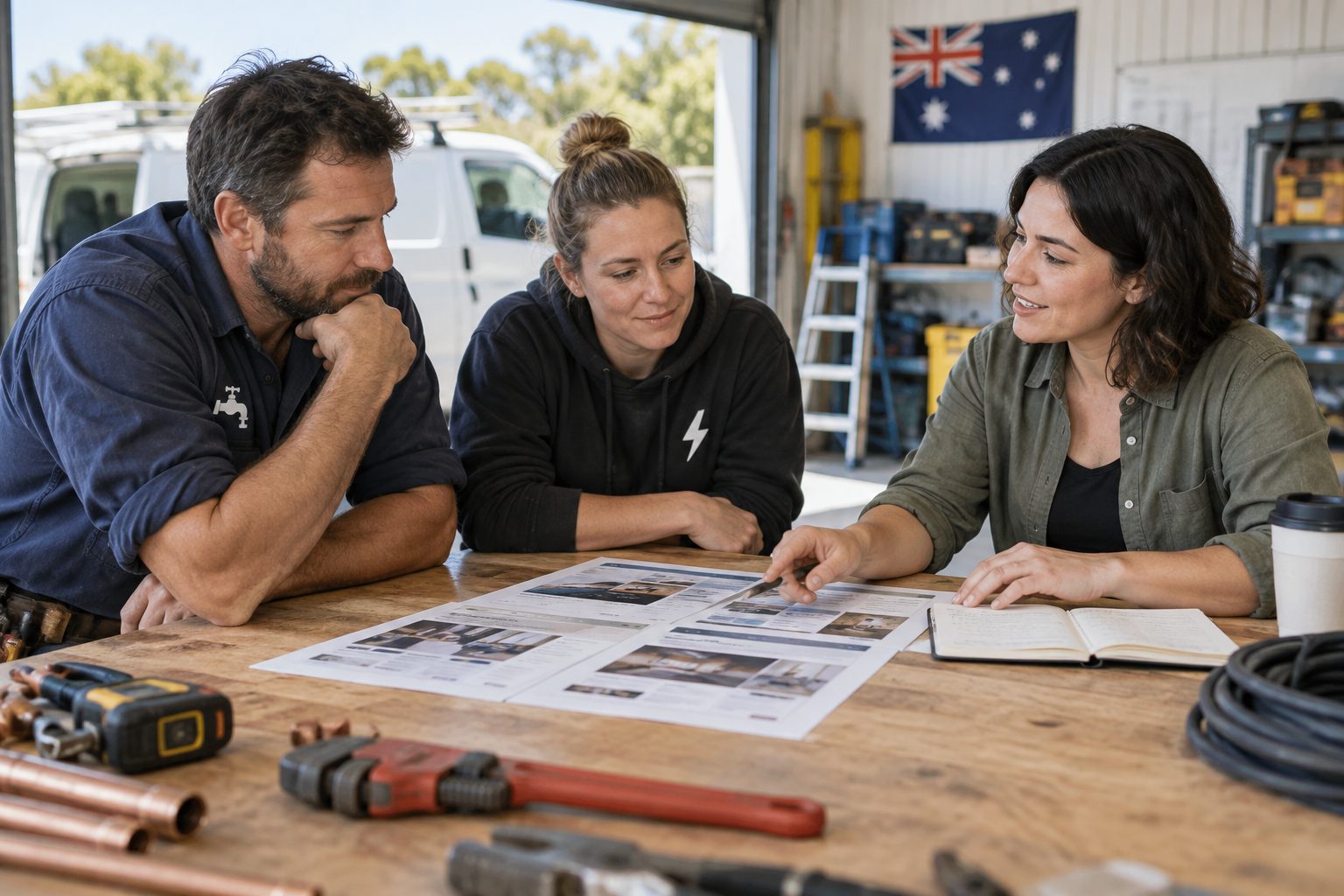
Tradie website design in Australia: plan service pages, mobile enquiries, local search and AI readiness…

WooCommerce Website Design Australia: The 2026 Guide
WooCommerce website design Australia guide: platform choice, build process, structured data, and what makes a…