

TL;DR:
- Professional web design builds trust, credibility, and improves user experience for Australian SMBs.
- Integrating SEO into design significantly boosts Google rankings and organic traffic.
- Well-designed, locally tailored websites convert visitors into loyal customers and support long-term growth.
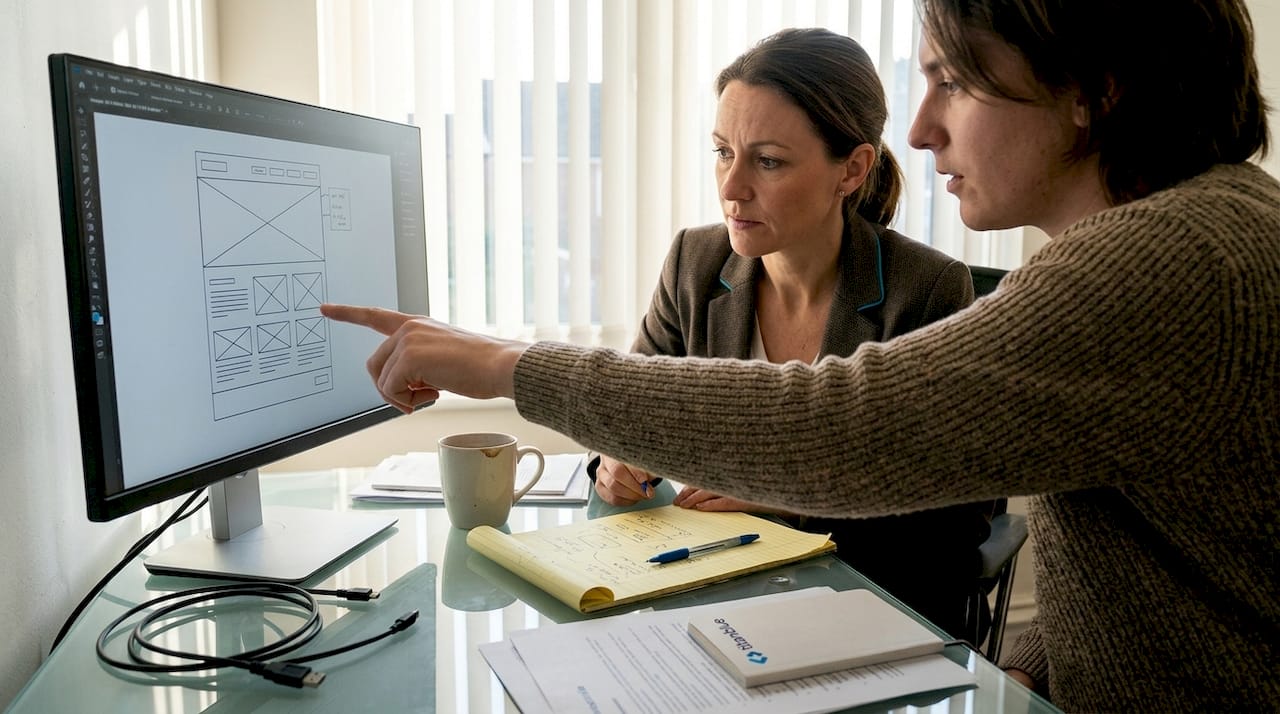
Australian small and medium businesses are competing harder than ever for attention online. Your potential customers are searching, clicking, and making snap judgements before you even know they visited. A poorly designed website does not just look bad. It actively costs you leads, rankings, and revenue. Professional website design is no longer optional for growth-oriented businesses. It is a core business asset. This article breaks down the key benefits of quality website design, from building trust and boosting Google rankings to converting visitors into loyal customers and capturing local search traffic.
Table of Contents
- How professional website design builds trust and credibility
- Boosting your Google rankings through integrated SEO design
- Engagement and conversions: turning visits into loyal customers
- Local relevance: why tailored design matters for Australian SMBs
- Why website design is your best investment for growth in 2026
- Accelerate your growth with professional website design and SEO
- Frequently asked questions
Key Takeaways
| Point | Details |
|---|---|
| First impressions matter | Quality design builds immediate trust and credibility with potential customers. |
| SEO boosts discoverability | Integrating SEO at the design stage greatly improves your Google visibility and traffic. |
| Conversion rates increase | Modern design with strong CTAs and personalisation tools converts more visitors into customers. |
| Focus on local relevance | Australian SMBs benefit by tailoring their site and SEO to their area. |
| Long-term asset | Website design is an investment that delivers growth and value for years to come. |
How professional website design builds trust and credibility
First impressions happen fast. Research shows visitors form a visual judgement of your website in just 0.05 seconds. That is before they read a single word. If your design looks outdated, cluttered, or untrustworthy, they are gone. And they are unlikely to come back.
For Australian SMBs, this matters enormously. Local consumers are savvy. They compare you to competitors instantly. A professional design signals that you are legitimate, established, and worth their time.
So what does a trust-building design actually include? Here are the key elements:
- Mobile responsiveness: Over 60% of Australian web traffic comes from mobile devices. If your site does not adapt to smaller screens, you lose credibility immediately.
- Clear branding: Consistent colours, fonts, and logo placement tell visitors you are a real business with a real identity.
- Security badges: SSL certificates and trust seals reassure customers their data is safe, particularly on e-commerce or contact pages.
- Fast load times: A slow site signals neglect. Visitors expect pages to load in under three seconds.
- Easy navigation: If people cannot find what they need quickly, they leave. Simple menus and logical page structures keep them engaged.
Improving your website user experience across all these areas has a direct impact on how long visitors stay and whether they enquire.
“Professional website design is linked to higher trust and conversion rates, with well-designed sites consistently outperforming poorly designed competitors in customer acquisition.”
When visitors trust your site, bounce rates drop. Enquiry rates climb. The design is doing the selling before you even speak to a prospect.
Pro Tip: Ask a friend or colleague who does not know your business to navigate your website for 60 seconds. Watch where they get confused. Their experience reflects what new visitors encounter every day.
Boosting your Google rankings through integrated SEO design
Having addressed credibility, the next major benefit ties design directly to your business’s online visibility.
Many SMB owners treat SEO and web design as separate projects. That is a costly mistake. When SEO is baked into the design from the start, the results are significantly stronger. Google rewards sites that are fast, mobile-friendly, and structured correctly. These are all design decisions.
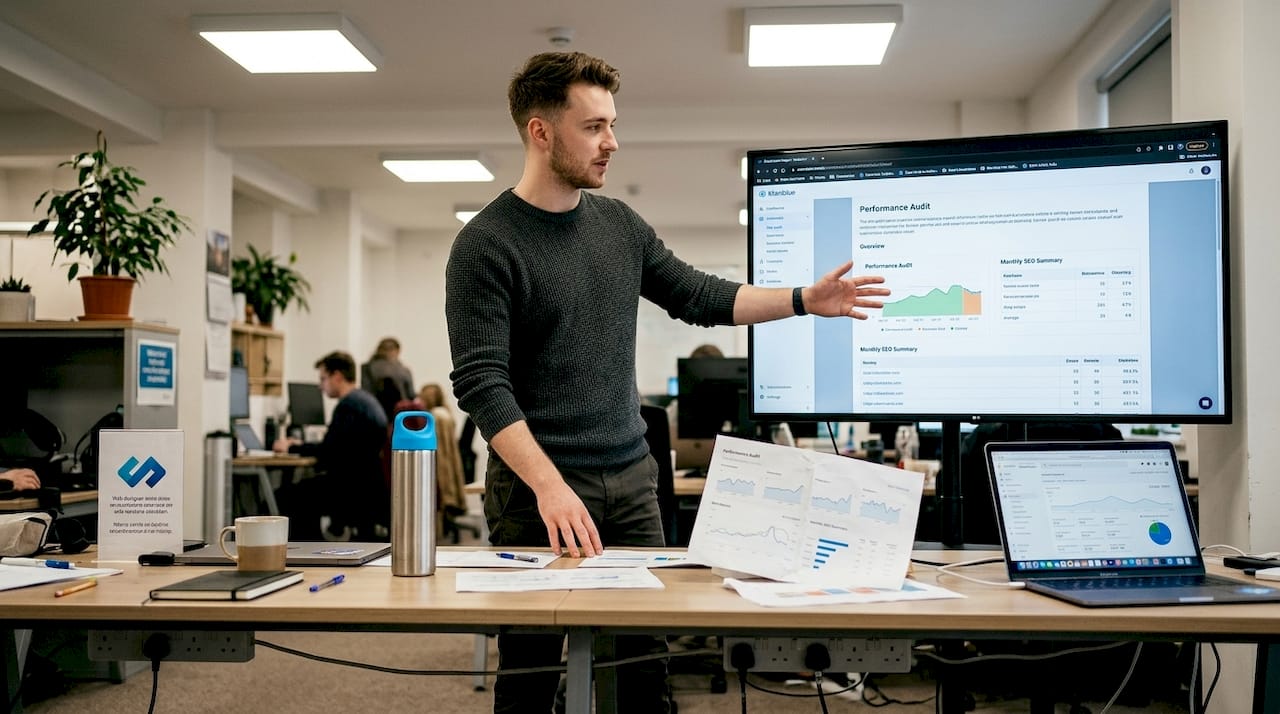
The evidence is clear. A meta-analysis on SEO effectiveness found an effect size of d=1.049, which is classified as high, confirming that SEO-integrated design has a substantial impact on organic rankings and traffic for SMBs.
Here is what integrated SEO design looks like in practice:
- Structured data markup: Helps Google understand your content, products, and services clearly.
- Mobile-first layouts: Google indexes the mobile version of your site first. If it is not optimised, your rankings suffer.
- Fast load speeds: Page speed is a confirmed Google ranking factor.
- Clean URL structures: Logical, keyword-rich URLs help both users and search engines navigate your site.
The difference between a standard site and an SEO-optimised redesign is significant. Here is a realistic comparison:
| Metric | Before redesign | After SEO-optimised redesign |
|---|---|---|
| Google ranking (target keyword) | Page 4 | Page 1 |
| Monthly organic visits | 180 | 1,400 |
| Monthly leads from organic | 3 | 28 |
| Bounce rate | 74% | 41% |
These kinds of results are achievable when small business SEO strategies are built into the design process from day one. If you are relying on SEO services in Australia to fix a poorly designed site, you are working against yourself.
The bottom line: Design and SEO are not separate disciplines. They work together. Build them together.
Engagement and conversions: turning visits into loyal customers
Now that your website is discoverable and credible, let’s see how thoughtful design elements convert your visitors into real customers.
Getting traffic is only half the job. The other half is turning that traffic into enquiries, bookings, and sales. This is where engagement design becomes critical.
AI personalisation combined with strong design boosts engagement by 15 to 30%. Features like AI-powered chat, dynamic content based on visitor behaviour, and personalised product recommendations keep users on your site longer and push them toward action.
Here is how standard and modern designs compare on key engagement metrics:
| Metric | Standard design | Modern, optimised design |
|---|---|---|
| Average time on site | 1 min 10 sec | 3 min 45 sec |
| Pages per session | 1.8 | 4.2 |
| Conversion rate | 0.9% | 3.4% |
| Return visitor rate | 12% | 31% |
To audit your own site’s engagement design, follow these steps:
- Check your call-to-action buttons. Are they visible above the fold? Do they use action-oriented language like “Get a free quote” rather than “Submit”?
- Test your navigation. Can a new visitor find your core service or product within two clicks?
- Review your page speed. Use Google PageSpeed Insights to identify bottlenecks.
- Assess your mobile layout. Open your site on a phone. Is the experience smooth and readable?
- Look at your contact options. Do you offer multiple ways to get in touch, such as phone, form, and chat?
For a deeper look at the fundamentals, reviewing website design basics is a practical starting point.
Pro Tip: Place your primary call-to-action in the top right corner of your header and repeat it at the bottom of every page. Most visitors scan in an F-pattern, so these positions get the most attention.
Local relevance: why tailored design matters for Australian SMBs
Beyond generic improvements, let’s focus on how Australian SMBs can capitalise on local opportunities through design.
A website built for everyone often converts no one. Australian consumers respond to local cues. They want to know you understand their market, their suburb, and their needs. Generic templates and stock imagery from overseas do not build that connection.
Local SEO is especially important for Australian SMBs seeking relevant search traffic, as localised signals directly influence how Google ranks businesses in geographic searches.
Here are the key localisation features every Australian SMB website should include:
- A .com.au domain: This signals local credibility to both users and search engines.
- Local imagery: Photos of your team, your location, and your community build genuine connection.
- Suburb and city-specific copy: Mentioning your service areas throughout the site helps Google match you to local searches.
- Google Maps integration: Embedding a map on your contact page improves local SEO and makes it easier for customers to find you.
- Customer reviews from local clients: Displaying Google reviews or testimonials from recognisable local businesses builds trust fast.
- Local business schema markup: This structured data tells Google exactly where you operate, boosting your visibility in map results.
“Businesses that invest in localised web design and local SEO consistently outperform generic competitors in suburb-level and city-level search results across Australia.”
For practical steps to strengthen your local visibility, explore these local SEO tips tailored for the Australian market.
Local design is not just about aesthetics. It is about relevance. And relevance drives clicks, calls, and customers.
Why website design is your best investment for growth in 2026
Here is an uncomfortable truth many marketing consultants will not tell you: spending money on Google Ads or social media campaigns without a solid website foundation is wasteful. You are paying to drive traffic to a site that cannot convert it.
We see this pattern constantly. A business spends $3,000 a month on ads, gets clicks, and wonders why enquiries are thin. The issue is rarely the ads. It is the website they land on.
Professional website design is an evergreen asset. Unlike ad spend, which stops the moment you pause your budget, a well-designed site keeps working for you around the clock. Small improvements today, such as faster load times, clearer calls to action, or better mobile layouts, compound over months and years into significantly more traffic and leads.
Our strong recommendation: prioritise a design overhaul before you scale your ad or SEO budget. Fix the foundation first. Then pour fuel on it. If you are weighing up your options, understanding the case for investing in SEO alongside design will sharpen your thinking considerably.
Accelerate your growth with professional website design and SEO
If you are ready to realise these website design benefits for your business, the next step is straightforward. Work with people who understand both design and search, and who know the Australian market.
At Titan Blue, our web design experts build websites that are fast, credible, and optimised for Google from day one. We combine design with integrated SEO so your site works harder from the moment it launches. Whether you need a full redesign or targeted improvements, we offer SEO help for small business that delivers measurable results. Get in touch today and let’s build something that actually grows your business.
Frequently asked questions
How does website design impact Google rankings?
Modern website design improves load times, mobile usability, and site structure, all of which are factors Google uses to determine rankings. Research confirms that SEO-integrated design has a high-impact effect on organic visibility for SMBs.
What are the must-have features for an Australian SMB website?
Essentials include mobile responsiveness, fast loading speeds, strong local keywords, a .com.au domain, and clear contact options across every page.
How important is local SEO in website design?
For Australian SMBs, local SEO built into your design boosts visibility in nearby search results and drives targeted traffic from customers ready to buy. Local SEO signals are critical for ranking in suburb and city-level searches.
Does investing in website design yield long-term benefits?
Yes. A professionally designed website increases credibility, generates more leads, and positions your business for sustained growth without the ongoing cost of paid advertising.
Recommended
- Website Design in 2024: Future-Proof Your Business
- Custom website design benefits for Australian SMBs 2026
- Why Invest In Website Design: Transforming Gold Coast Business
- Easy Website Design Tips for Small Businesses – Titan Blue Australia
Make Titan Blue a preferred source in Google
One click tells Google to surface our articles more often in Top Stories, AI Overviews and AI Mode.
Solar Installer Website Design Australia: The 2026 Guide
How solar installer websites in Australia should show CEC accreditation, real install proof and AI-ready…
Hotel & Hospitality Website Design Australia: 2026 Guide
Hotel and hospitality website design in Australia explained: booking flow, schema, AEO and what actually…
Restaurant Website Design Australia: The 2026 Guide
What a restaurant website in Australia needs: HTML menus, bookings, GBP sync, schema, and AI-ready…