


TL;DR:
- Social media offers Australian SMBs a $4.50 return per $1 invested, surpassing traditional advertising.
- Focused, authentic content to a targeted audience yields higher ROI than mass posting or follower growth.
- Proper strategy, analytics review, and professional support unlock social media’s full business potential.
Most Australian small and medium business owners assume social media marketing is either too expensive or too unpredictable to justify serious investment. That assumption is costing them real money. Australian SMBs average $4.50 back for every $1 spent on social media marketing in 2026. That figure alone should prompt a rethink. Yet many business owners still hesitate, unsure which platforms to use, how to measure results, or whether the effort is worth it. This guide cuts through the noise. You will find the facts, the comparisons, and the practical steps you need to make social media work for your business.
Table of Contents
- The measurable ROI of social media marketing for Australian SMBs
- Social media versus traditional advertising: The cost-effectiveness test
- Unlocking real business benefits: Beyond the numbers
- The main challenges: What holds SMBs back from maximising ROI?
- Why the usual ROI advice on social media misses the mark for SMBs
- Unlock your social ROI with tailored support
- Frequently asked questions
Key Takeaways
| Point | Details |
|---|---|
| Proven high ROI | Australian SMBs typically earn $4.50 for every $1 spent on social media marketing. |
| Cost over effectiveness | Social media outperforms traditional advertising on both price and business results for most small businesses. |
| Multiple business benefits | Beyond financial returns, social media boosts brand trust, customer loyalty, and opens up new revenue streams. |
| Know the pitfalls | Common obstacles include algorithm shifts, compliance, and noise, but clear goals and analytics help overcome them. |
| Focus beats FOMO | Sustainable ROI comes from targeted, authentic strategies tailored to your brand’s audience instead of trying to be everywhere at once. |
The measurable ROI of social media marketing for Australian SMBs
Let’s start with what actually matters: the numbers. Social media marketing is no longer a nice-to-have for Australian SMBs. It is a proven revenue driver, and the data backs this up clearly.
Australian SMBs average $4.50 return for every $1 invested in social media marketing. That is a stronger return than most traditional advertising channels can offer. And it is not just a handful of lucky businesses achieving this. It reflects a broad trend across industries and regions.
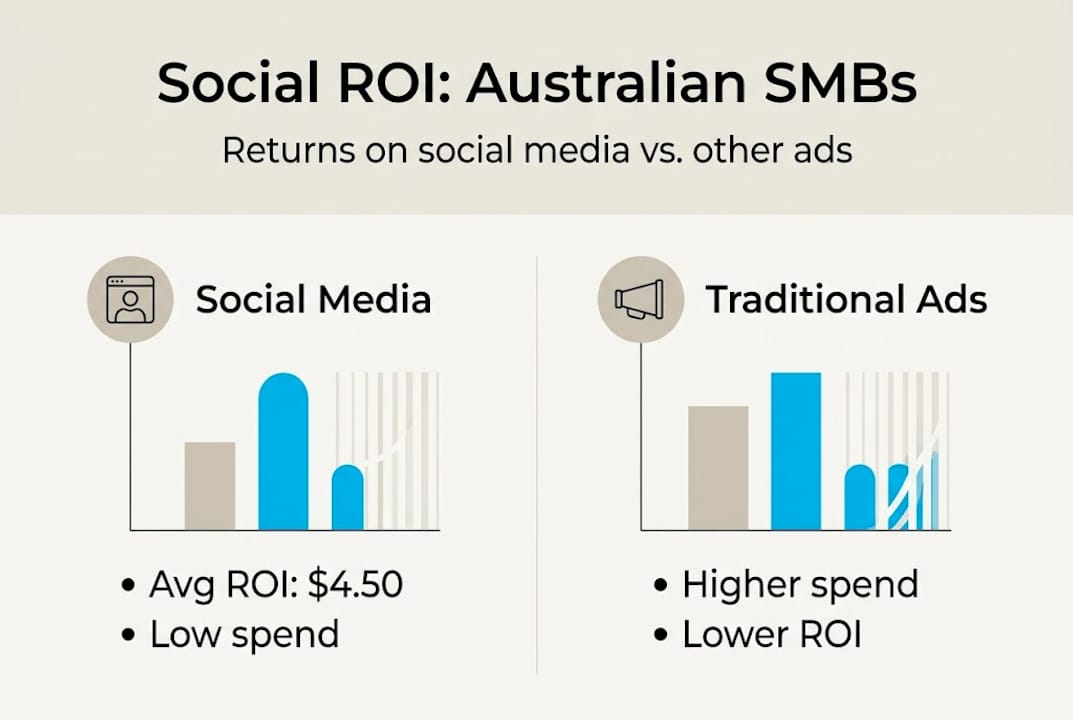
Here is a snapshot of the key figures shaping social media marketing for Australian SMBs in 2026:
| Metric | Figure |
|---|---|
| Average ROI per $1 spent | $4.50 |
| Social commerce market value (Australia) | A$1.8 billion |
| SMB share of digital ad market | 44% |
| Annual ad spend growth rate | 7.74% |
These numbers tell a clear story. Social commerce alone is worth A$1.8 billion in Australia this year, and SMBs are capturing nearly half of the entire digital advertising market. That is not a niche opportunity. That is a mainstream business channel.
The metrics SMBs track most closely include:
- Revenue generated from social campaigns
- Lead volume and quality from targeted posts or ads
- Website traffic driven by social referrals
- Engagement rates including shares, comments, and saves
One of the biggest advantages social media has over traditional advertising is trackability. When you run a print ad or a radio spot, measuring its direct impact on sales is genuinely difficult. With social media, every click, impression, and conversion can be attributed. You know exactly what is working and what is not.
For businesses looking to sharpen their approach, exploring digital ad strategies tailored for Australian SMEs can reveal quick wins. If you are newer to the space, the growth guide for digital marketing offers a solid foundation. And if you are considering outside help, understanding what to look for when choosing a social media agency will save you time and money.
With these ROI figures setting the stage, let’s compare social media marketing’s value to other channels small businesses might consider.
Social media versus traditional advertising: The cost-effectiveness test
Traditional advertising still has its place. But for most Australian SMBs working with limited budgets, the comparison is stark.
Print, radio, and television advertising typically require significant upfront investment. A single local newspaper ad can cost hundreds of dollars with no guarantee of reach or response. A radio campaign might run into thousands before you see any measurable result. And tracking the direct impact on your sales? Often impossible.
Social media flips this model entirely. A 25x ROI on low budgets is achievable. A $200 spend on a well-targeted Facebook or Instagram campaign can generate $5,000 in revenue. That kind of return is simply not realistic with most traditional channels at the same price point.
Here is a direct comparison:
| Channel | Typical monthly spend | Trackability | Average SMB ROI |
|---|---|---|---|
| Social media ads | Under $500 | High | Up to $4.50 per $1 |
| Print advertising | $500 to $2,000+ | Low | Difficult to measure |
| Radio | $1,000 to $5,000+ | Very low | Difficult to measure |
| TV | $5,000+ | Low | Very difficult to measure |
The majority of Australian SMBs spend under $500 per month on social media and still see real gains in foot traffic, enquiries, and online leads. That accessibility is a genuine game-changer for small businesses that cannot compete with large corporate advertising budgets.
Here is a simple process for shifting your budget strategically:
- Audit your current advertising spend across all channels.
- Identify which channels provide the least trackable or lowest return.
- Reallocate even a small portion of that budget to social media.
- Set clear campaign goals before spending a single dollar.
- Review results monthly and adjust based on real data.
Pro Tip: Start by redirecting just 20% of your traditional ad budget to social media for 90 days. Track the results honestly. Most SMBs find the comparison compelling enough to shift more budget across.
Understanding digital advertising explained in plain terms can help you make smarter decisions. And if you are still weighing up whether to commit, reading about the importance of digital ads for Australian businesses provides useful context.
Having seen how social compares in cost and return, it is crucial to understand the specific business benefits your company can unlock.
Unlocking real business benefits: Beyond the numbers
ROI figures are convincing. But the practical benefits of social media marketing go well beyond what shows up in a spreadsheet.
Brand awareness is one of the most immediate gains. Even a modest budget, when directed at the right audience with targeted content, can put your business in front of thousands of potential customers in your local area. For a Gold Coast café, a Brisbane tradie, or a Sydney boutique, that visibility can translate directly into new customers walking through the door.
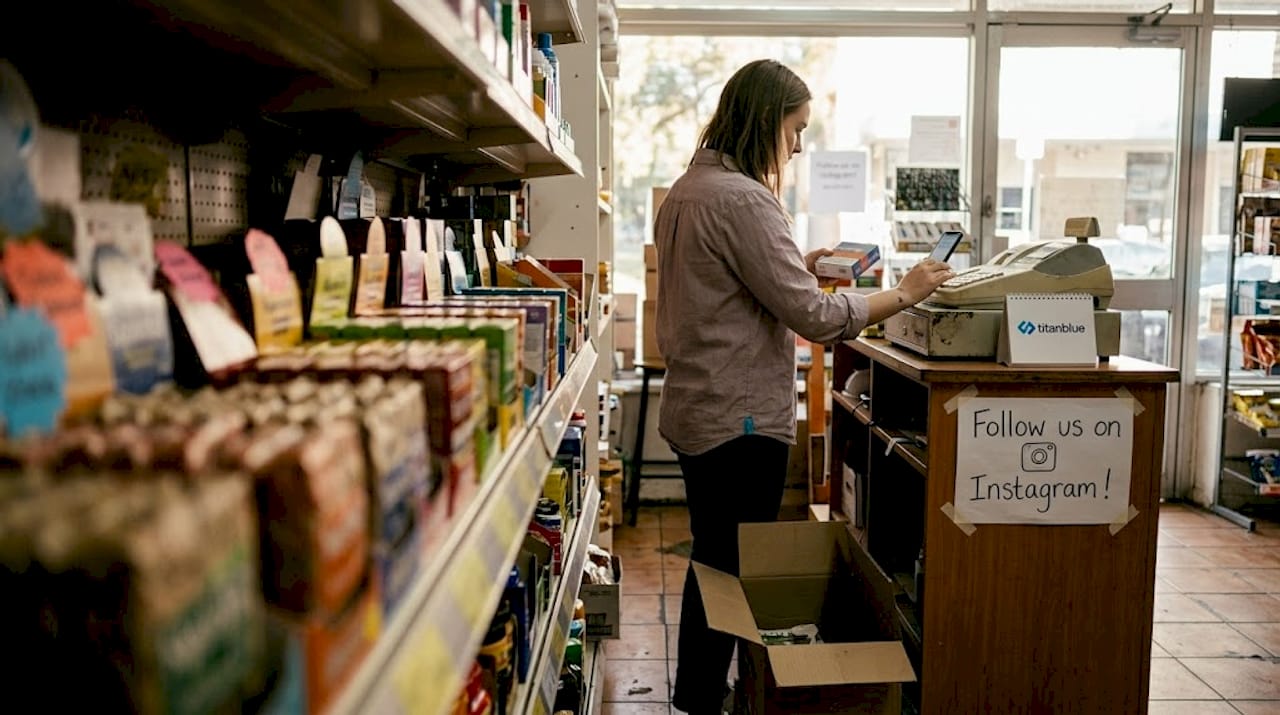
Customer trust is built through consistent, authentic interaction. When you respond to comments, address feedback publicly, and share genuine behind-the-scenes content, you humanise your brand. Customers buy from businesses they trust. Social media creates the opportunity to build that trust at scale.
Australian SMBs are also seeing social media create entirely new revenue streams through social selling. Platforms like Instagram and Facebook now support direct purchasing, meaning your followers can move from discovery to checkout without ever leaving the app. The social commerce market in Australia is growing rapidly, and SMBs that set up these pathways early are reaping the rewards.
Here are the core business benefits SMBs consistently report:
- Increased brand recognition in their local market
- Higher customer retention through regular, valuable content
- More referral business driven by shareable posts
- Stronger in-person sales supported by digital discovery
- New revenue from social commerce and direct messaging enquiries
“Regular, authentic posting on social media has become one of the most cost-effective ways for Australian SMBs to build loyalty and drive referral business without a large marketing budget.”
For businesses ready to act on this, exploring mastering social media advertising can sharpen your paid strategy. And if you sell products online, integrating social commerce with your e-commerce setup is a logical next step.
While these benefits are evident, business owners also need to consider the challenges and how to overcome them effectively.
The main challenges: What holds SMBs back from maximising ROI?
Social media is not without its friction points. Understanding the real barriers helps you plan around them rather than be blindsided.
44% of Australian SMEs view social media as a brand obstacle rather than an asset. That is a significant proportion, and it reflects genuine frustrations rather than unfounded fear.
The key challenges include:
- Algorithm changes: Platforms like Meta and Instagram regularly update how content is ranked and distributed. What worked last quarter may not work today.
- Negative public feedback: A single critical comment or review, visible to all followers, can feel damaging. Managing this requires a clear, calm response strategy.
- ACCC compliance: Australian Consumer Law applies to social media marketing. Misleading claims, undisclosed paid partnerships, and certain promotional mechanics can attract regulatory scrutiny.
- Information overload: The sheer volume of content on social platforms makes it harder to stand out, particularly for businesses without dedicated marketing resources.
- AI and automation complexity: 39% of SMBs cite concerns about keeping up with AI-driven tools and automated ad systems, which are evolving quickly.
None of these challenges are insurmountable. Regular platform audits keep your strategy current. Transparent, professional responses to negative feedback often turn critics into advocates. And working with specialists who understand ACCC requirements removes compliance risk entirely.
For situations where things go wrong publicly, knowing about handling social crises is genuinely valuable preparation. And if managing all of this feels like too much alongside running your business, expert social management is worth considering. Understanding the role of social media manager can also clarify what professional support actually involves.
Pro Tip: Before launching any campaign, define three specific goals and the metrics you will use to measure them. Vague goals produce vague results. Clear targets make it far easier to assess what is working and where to improve.
Having addressed the challenges, let’s step back and consider what the industry usually gets wrong about social media ROI and what actually works for real-world SMBs.
Why the usual ROI advice on social media misses the mark for SMBs
Most advice tells SMBs to be on every platform, post daily, and grow their follower count as fast as possible. This is largely wrong, and following it wastes both time and money.
The data consistently shows that ROI comes from focused, authentic content delivered to a well-chosen audience. Quality beats quantity every time. A business with 800 genuinely engaged local followers will outperform one with 10,000 passive ones almost every time.
The biggest missed opportunity we see is businesses ignoring their analytics. Every platform provides data on what content performs best, when your audience is active, and which posts drive actual clicks or enquiries. Most SMBs look at this data occasionally, if at all. The businesses generating the strongest returns are the ones reviewing analytics weekly and doubling down on what works.
Vanity metrics, follower counts, likes, and impressions feel good but rarely pay the bills. Revenue, leads, and conversions do. If you are working with an agency, make sure they are reporting on outcomes, not just activity. Choosing an agency wisely means asking the right questions upfront about how success is measured.
Your success on social media is not built on doing everything. It is built on doing the right things for your brand and your specific customer community.
Unlock your social ROI with tailored support
Social media marketing delivers real, measurable returns for Australian SMBs. But getting there consistently requires the right strategy, the right platforms, and the right support.
At Titan Blue, we work with small and medium businesses across Australia to build social media strategies that actually move the needle. From content planning to paid campaigns and analytics, our social media management solutions are built around your goals, not generic templates. If you are unsure where to start, our guide to social media management explains exactly what professional management involves and how it translates into real business growth. Get in touch today for a tailored consultation and find out what your social media ROI could look like with the right team behind you.
Frequently asked questions
How much should an Australian SMB budget for social media marketing?
Most Australian SMBs see meaningful results spending under $500 per month, with some achieving 25x returns on very modest budgets when campaigns are well targeted.
How quickly can social media deliver ROI for small businesses?
Many businesses see increases in leads or sales within two to three months of consistent activity, particularly when campaigns are targeted and goals are clearly defined from the start. Averaging $4.50 per $1 is achievable sooner than most expect.
What’s the biggest risk for SMBs on social media?
The primary risks are negative public feedback and platform algorithm changes, both of which can be managed effectively with proactive planning. 44% of SMEs cite these as their main concerns, but a clear response strategy removes most of the risk.
How do I measure success on social media as an Australian SMB?
Focus on revenue, leads, website traffic, and engagement rather than follower counts. Tracking ROI metrics consistently and adjusting your strategy based on real data is what separates businesses that grow from those that stall.
Recommended
- SEO for Australian SMBs: 748% ROI in 2026
- Digital advertising strategies for Australian SMEs in 2026
- Digital marketing checklist for Australian SMBs in 2026
- Social media marketing firm: How to choose the right partner in 2026
Make Titan Blue a preferred source in Google
One click tells Google to surface our articles more often in Top Stories, AI Overviews and AI Mode.

Solar Installer Website Design Australia: The 2026 Guide
How solar installer websites in Australia should show CEC accreditation, real install proof and AI-ready…

Hotel & Hospitality Website Design Australia: 2026 Guide
Hotel and hospitality website design in Australia explained: booking flow, schema, AEO and what actually…

Restaurant Website Design Australia: The 2026 Guide
What a restaurant website in Australia needs: HTML menus, bookings, GBP sync, schema, and AI-ready…