

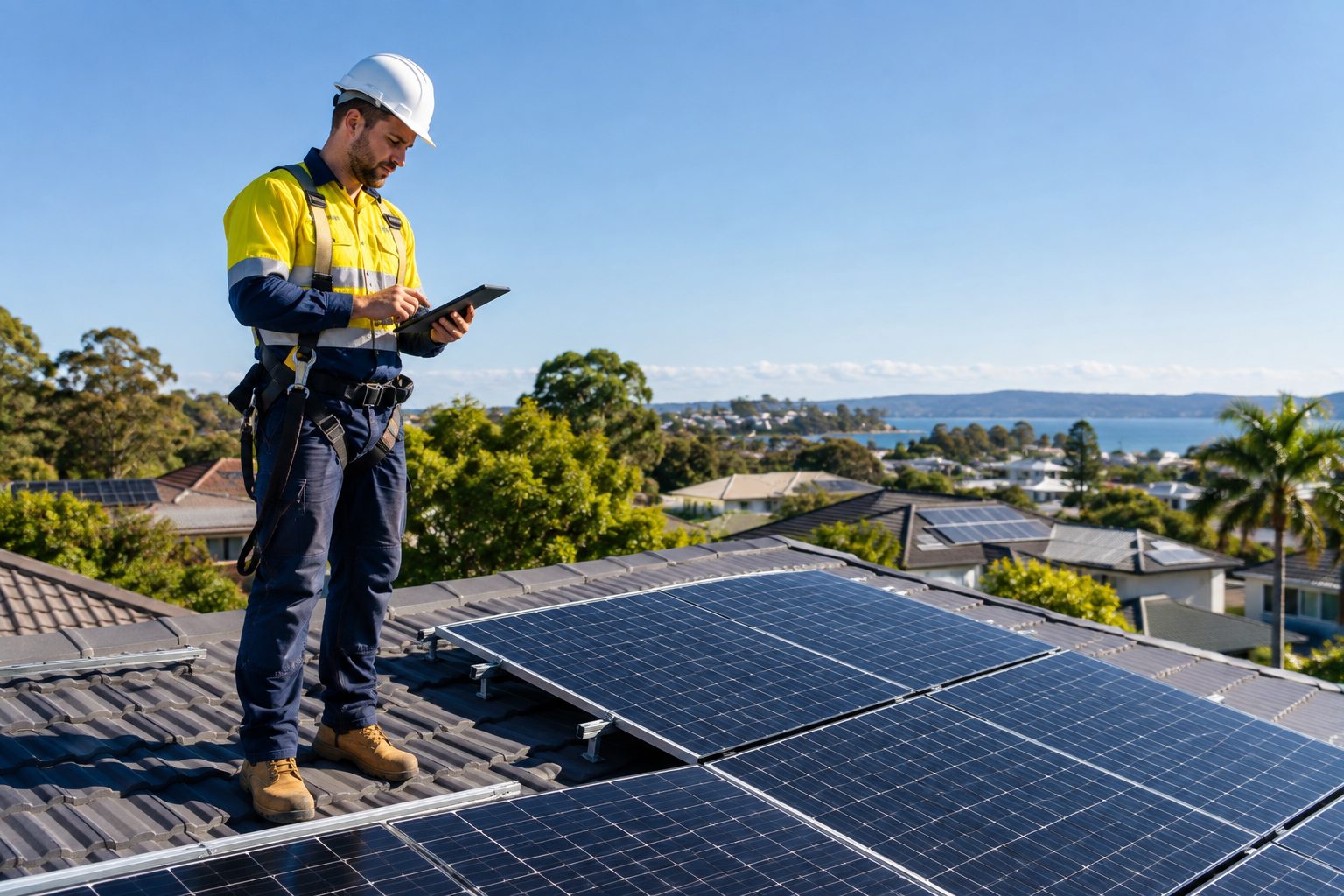
Last updated:
A solar installer’s website needs three things working together: fast-loading proof of Clean Energy Council (CEC) accreditation, real install photography with system specs, and enough structured data for AI search tools to describe the business accurately when someone asks “who installs solar near me”. Most solar company sites get the first two right and skip the third entirely, which is the gap this guide closes. This is the same web design discipline that applies to any trade or service business, adapted to what a solar buyer specifically needs to verify.
Solar is one of the most trust-sensitive purchases a homeowner or business makes online. The buyer is comparing installers on accreditation, warranty length, panel and inverter brand, and whether the last customer’s system actually performed as promised. A website that can’t answer those questions in the first screen loses the enquiry to a competitor’s site, or increasingly, never gets mentioned at all when the buyer asks ChatGPT or Google AI Overviews to shortlist installers.
Key Takeaways
- A live audit of six CEC-accredited Australian solar sites found only one used LocalBusiness schema and none used industry-specific schema.
- Most solar buyers spend two to six weeks comparing installers and revisit a shortlisted site three or four times before booking.
- Above the fold should show the CEC accreditation badge, a one-line value proposition, brand logos and a quote button.
- Three of the six audited sites mentioned CEC accreditation in visible text, but none encoded it as machine-readable structured data.
- Site structure should separate residential, commercial and battery storage pages, plus dedicated pages for each suburb served.
What does a solar installer’s website actually need to do?
A solar company website has one job above all others: convert a visitor who is comparing three to five quotes into a booked site assessment. Everything on the page should serve that, in this order: prove accreditation, show real work, quantify the outcome, and make it trivial to request a quote.
- CEC accreditation displayed prominently, not buried in an About page footer. The Clean Energy Council’s own guidance for consumers tells buyers to check for accreditation before accepting a quote, so a site that hides it is fighting its own industry body’s advice
- Panel and inverter brands named (Tesla Powerwall, Sungrow, SolaX, BYD and similar), because buyers search by brand as often as by installer
- Real install galleries with system size, generation data and payback detail, not stock photography
- A visible finance and rebate explainer covering STCs and state schemes, since incentive confusion is the single biggest reason quotes stall. The Clean Energy Regulator’s own explainer on the Small-scale Renewable Energy Scheme is the authoritative reference most installer sites should link to rather than paraphrase
- A fast, simple quote form that asks for postcode and roof type up front, not a ten-field lead form
How should a solar installer structure their site for both suburbs and services?
Structure the site around service area and system type, not a single flat homepage. A Gold Coast, Brisbane or regional installer typically needs a service page for residential solar, a separate page for commercial and business installs, a battery storage page (a fast-growing search category on its own), and individual location pages for the main suburbs served, for example Southport, Robina, Burleigh Heads or Coolangatta on the Gold Coast.
Each location page should carry a genuinely local detail, a recent install in that suburb, a note on typical roof types in the area, or a mention of the relevant council’s solar approval process, rather than the same paragraph with the suburb name swapped out. Search engines and AI answer engines both penalise templated location pages that carry no unique information.
Commercial solar is worth separating from residential rather than folding it into one generic “solar solutions” page, because the buyer, the decision process and the proof points are all different. A business owner comparing commercial solar quotes wants to see system sizing against a business’s actual load profile, expected payback measured in years against operating costs rather than a household power bill, and case studies from comparable business types, retail, hospitality, warehousing, rather than residential rooftops. A single blended page forces a commercial buyer to wade through residential content to find relevance, which reads as a lack of commercial experience even when that is not true.
Site structure should also make the service area explicit rather than implied. If an installer covers the Gold Coast, Brisbane and the Northern Rivers, the navigation and footer should say so plainly, and each region should have at least a dedicated section, if not a full page, naming the suburbs served. This is as much for AI answer engines as for human visitors: an assistant asked “does [installer] service Ipswich” needs an explicit, extractable answer rather than an inference from a Google Maps pin.
What should the homepage include above the fold?
Above the fold on a solar installer’s homepage needs the CEC accreditation badge, the core value proposition in one sentence, the main brands supplied, and a quote button. A visitor deciding within seconds whether to stay should not have to scroll to find out the business is actually accredited to install solar in Australia.
| Element | Why it matters |
|---|---|
| CEC accreditation badge | Required for STC rebate eligibility; buyers actively check for it |
| One-line value proposition | Tells the visitor in under 10 words what makes this installer different |
| Brand logos (panels, inverters, batteries) | Buyers search and compare by brand as much as by installer name |
| Quote or assessment CTA | The single conversion goal of the page |
| Recent install proof (photo + system size) | Substitutes for the in-person trust a tradie visit would build |
What does the buying journey look like, and how long should the site support it?
Most solar buyers spend two to six weeks comparing installers before requesting a site visit, and they revisit a shortlisted installer’s site three or four times during that window, checking reviews, brand pages and the finance calculator each time. The website needs to reward a second and third visit with genuine detail, not the same landing page copy.
- Discovery. The buyer searches “solar installer [suburb]” or asks an AI assistant to compare local options.
- Shortlisting. They check accreditation, reviews, and whether the installer supplies their preferred brand.
- Comparison. They request two to four quotes and compare system size, price per watt, warranty and finance terms.
- Site assessment. The chosen installer visits to confirm roof suitability and shading.
- Install and handover. The website’s job here is documentation, install photos, generation dashboards, and a review request.
The website has to serve every one of those five stages, not just the first. Most solar installer sites are built almost entirely for stage one, discovery, with a homepage and a contact form, and treat everything after as a phone call or an in-person conversation. That leaves stages two and three, shortlisting and comparison, with almost nothing to work from when the buyer returns to the site a second or third time to make the final decision.
A brand comparison page, a finance and rebate calculator, and a warranty comparison table are the pieces most installer sites skip, and they are exactly the content a buyer needs during the comparison stage. Building them once and keeping them current is cheaper than losing quotes to a competitor whose site simply answers more of the buyer’s questions before the phone call happens.
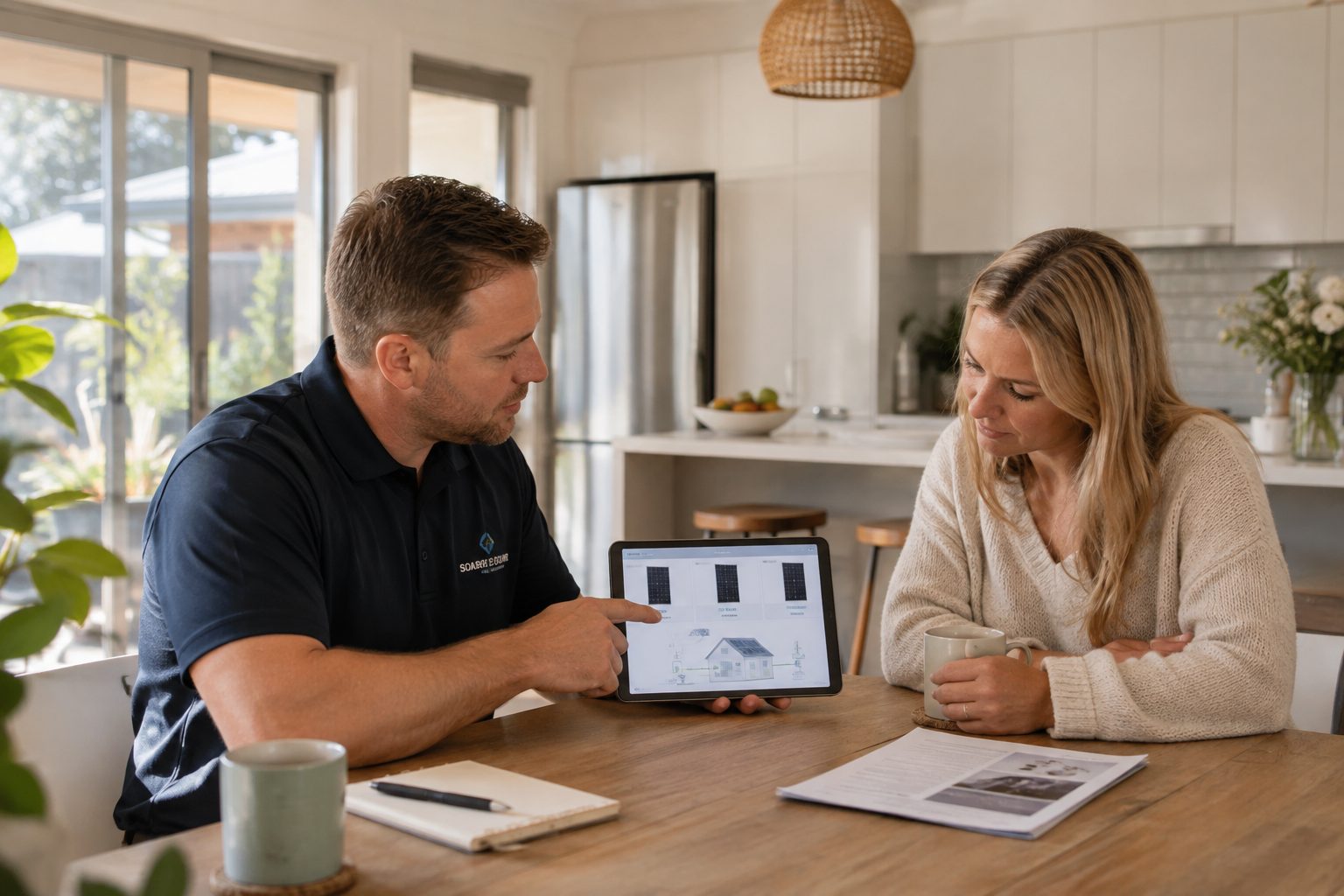
Want to know where your solar company’s website stands?
We audit solar and trade websites for AI search readiness every week, checking accreditation display, structured data and how the site answers a buyer’s real questions. It takes 15 minutes and it’s free.
How AI-ready are Australian solar installer websites right now?
We ran a live browser audit of six real, CEC-accredited Australian solar installer websites, covering NSW, WA and Sydney’s Hills District, checking each site’s actual JSON-LD structured data rather than its visible copy. All six sites loaded successfully.
Every one of the six carried basic WebSite, WebPage or Organization schema, the boilerplate most website builders and themes generate automatically. Only one of the six used the more specific LocalBusiness type, and none used an industry-specific business schema at all. Three of the six mentioned Clean Energy Council accreditation somewhere in the visible page text, but in every case that accreditation existed only as a sentence a human could read, not as a machine-readable fact an AI engine could extract and cite with confidence.
That gap matters more for solar than almost any other trade. When someone asks an AI assistant “which solar installers near me are CEC accredited and supply Tesla Powerwall”, the assistant is working from whatever structured, extractable facts it can find. A sentence buried in an About page paragraph is far weaker evidence than the same fact encoded as structured data the engine can lift with confidence.
It is worth being precise about what this audit does and does not show. Six sites, checked once, with a browser user agent, is a small and specific sample, not a claim about the whole Australian solar industry. What it demonstrates reliably is that generic website-builder schema, the kind every modern CMS or page builder ships by default, is not the same thing as schema built for the specific facts a solar buyer needs verified. None of the six sites had done that extra, deliberate work, regardless of how strong their visible content and photography were.
This is a pattern that shows up across trade and service industries generally, not something specific to solar. A business can have an excellent reputation, real accreditation and a strong install record, and still be functionally invisible to an AI system extracting structured facts, because nobody encoded those facts in a format a machine can read. The visible page and the machine-readable page are not the same document, and most sites only build the first one.
How does schema markup help a solar installer get found and recommended?
Schema markup, written as JSON-LD in a site’s <head>, gives search engines and AI systems structured facts about a business rather than making them infer facts from prose. For a solar installer, the schema worth prioritising includes:
- LocalBusiness or a specific sub-type with name, address and service area, per Google’s own LocalBusiness structured data documentation, built on the vocabulary defined at schema.org
- Service schema listing residential install, commercial install and battery storage as distinct offerings
- Review or aggregateRating schema, where genuine third-party reviews exist and the markup follows Google’s guidelines exactly
- structured FAQ markup answering the accreditation, rebate and warranty questions buyers actually ask
None of this is exotic. It is the same structured-data discipline any AEO-focused build applies, adapted to the facts a solar buyer needs verified: accreditation, brand, service area and proof of past work.
What content actually converts a solar shopper into a booked assessment?
Content that converts is specific, not aspirational. “Award-winning” and “trusted” convince nobody; a real system size, a real generation figure and a real payback estimate do. The install case study format below is the single highest-converting content type we see across trade websites generally, and it applies directly to solar.
| Case study element | Why buyers respond to it |
|---|---|
| System size and panel/inverter brand | Lets the buyer compare directly against their own quote |
| Install date and suburb | Confirms recency and local relevance |
| Generation since install | The single number every solar buyer wants to see proven, not promised |
| Bill before and after | Turns an abstract saving into a concrete, comparable figure |
| Customer’s own words | Independent proof the installer delivers on the sales pitch |
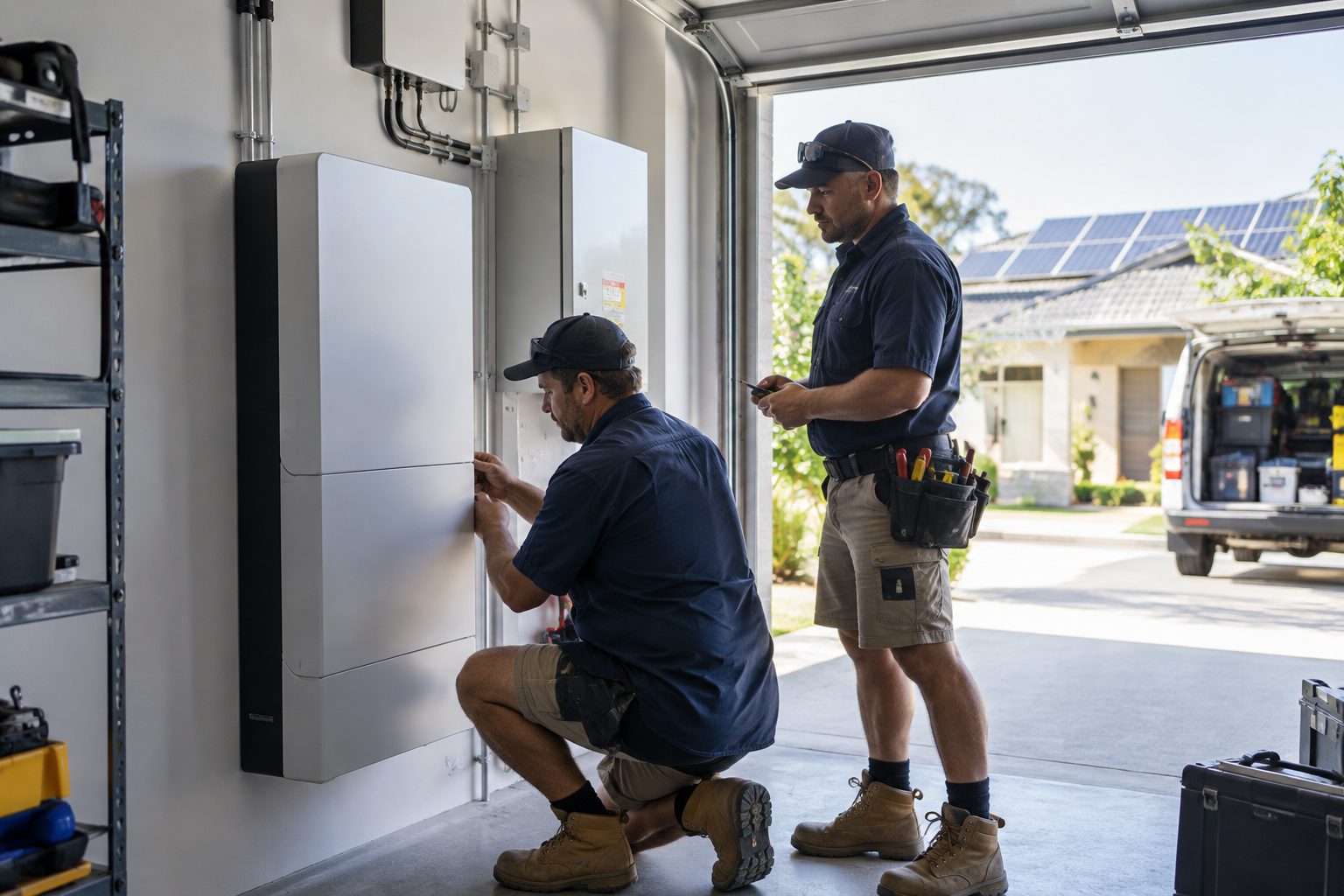
What are the most common mistakes solar installer websites make?
The most common mistake is treating the website as a digital brochure rather than a quoting tool. Close behind: burying accreditation, using stock photography instead of real installs, and skipping structured data entirely because “the theme already has SEO built in”. A theme’s default schema is rarely more than the generic WebSite and Organization blocks our audit found on all six sites checked. It is not built for the specific facts a solar buyer, or an AI engine answering on their behalf, needs to verify.
Slow-loading install galleries are another recurring problem. Genuine site photography is a conversion asset, but unoptimised, uncompressed images dragging page load past a few seconds cost more enquiries than they generate in trust. Core Web Vitals performance and rich photography are not in tension when images are compressed and lazy-loaded properly; they only conflict when nobody has done the compression work.
A related mistake is writing every page for the search engine instead of the person reading it. Keyword-stuffed service pages that repeat “solar installer [suburb]” a dozen times read as spam to a human visitor and increasingly get devalued by AI systems that reward genuinely useful, specific content over repetition. The fix is the same fix that works everywhere else in web design: answer the actual question a buyer has, in plain language, with real detail, and the keyword relevance follows naturally rather than needing to be forced.
Finally, many solar sites treat the FAQ section, when they have one at all, as an afterthought bolted on for SEO rather than a genuine extension of the buyer’s decision process. A well-built FAQ answers the exact questions a buyer types into Google or asks an AI assistant, accreditation, warranty length, finance options, install timeframes, in the installer’s own words, backed by structured FAQ markup so the structure is machine-readable as well as human-readable.
How does Titan Blue approach a solar installer website build differently?
Richie Zengoski, who co-founded Titan Blue on the Gold Coast in 2001 with his wife Angela, has watched the same pattern repeat across trade industries for two decades: businesses invest heavily in the install quality and the sales process, then hand the website to whichever agency built the last one fastest, treating structured data and AI visibility as an afterthought if they consider it at all.
Titan Blue builds solar and trade websites the same way it builds any client business website design project: with the structured data, schema markup and answer-first content that let Google, ChatGPT, Perplexity, Gemini and Claude describe the business accurately when a buyer asks. This is the core of our answer engine optimisation approach. Our full AEO web design guide for Australian businesses sets out the framework in detail. For a solar installer that means the accreditation, brand and service-area facts sit in the page’s structured data from launch, not as a retrofit six months later when a competitor starts showing up in AI-generated shortlists and this one does not.
Building or rebuilding a solar company website?
A site that shows CEC accreditation, real install proof and machine-readable structured data converts better and gets recommended by AI search tools more often. Let’s talk about your build.

What platform should a solar installer build on?
WordPress with a properly built theme, rather than a page-builder template, is the right foundation for most Australian solar installers, because it supports custom schema, fast image handling for large install galleries, and the content structure AI answer engines respond to. WooCommerce becomes relevant if the business also sells accessories, monitoring hardware or EV chargers directly online; otherwise a lead-generation build without an ecommerce layer is simpler and faster to load.
Elementor and similar builders are fine tools when the underlying build discipline, clean markup, compressed images, correct schema, is still applied. The platform matters less than whether whoever built the site understood that a solar installer’s website has to do real evidentiary work: prove accreditation, prove past performance, and make that proof legible to both humans and AI systems.

Frequently Asked Questions
Do solar installer websites need to display CEC accreditation?
Yes. Clean Energy Council accreditation is a prerequisite for STC rebate eligibility on most residential and commercial installs in Australia, and buyers actively check for it before requesting a quote. It should appear above the fold, not only in an About page paragraph.
What is the difference between a solar installer website and a solar retailer website?
An installer website centres on the physical install process, accreditation, workmanship warranty and site assessment, while a retailer or distributor site centres on product catalogues and pricing. Most Australian solar businesses are installers first, so the site should lead with accreditation and install proof rather than a product-first layout.
Should a solar installer have separate pages for each suburb they service?
Yes, provided each page carries genuinely unique local detail, a recent install, a note on local roof types, or a council-specific approval process, rather than the same paragraph with the suburb swapped. Templated location pages with no unique content are treated poorly by both search engines and AI answer engines.
Does battery storage need its own page separate from solar panels?
Yes. Battery storage searches, covering brands like Tesla Powerwall, Sungrow and BYD, have grown quickly enough to justify a dedicated page rather than a subsection of the main solar page, particularly for installers who supply and install batteries as a standalone service.
What structured data should a solar installer’s website include?
At minimum: LocalBusiness or a specific business sub-type with name, address and service area; Service schema for residential, commercial and battery installs; genuine review or aggregateRating schema where real reviews exist; and structured question-and-answer markup for accreditation, rebate and warranty questions.
How is AEO different from standard SEO for a solar installer?
AEO is not a separate discipline from SEO; Google has confirmed AI Overviews and AI Mode run on the same Search index. The practical difference is emphasis: structured data, direct-answer formatting and entity-rich content that let an AI system extract and cite a fact confidently, rather than only ranking a page in a list of blue links.
Can a solar installer’s website use real customer generation data as proof?
Yes, with the customer’s permission. System size, generation since install and bill before-and-after figures are the single most persuasive content format for solar buyers, far more effective than generic testimonials or stock imagery.
Ready to Turn Visibility into Enquiries?
Titan Blue has helped Gold Coast and Australian businesses grow their digital presence since 2001.
If your solar company’s website isn’t showing accreditation clearly or isn’t structured for AI search, we can fix that. Let’s talk about your website.
Make Titan Blue a preferred source in Google
One click tells Google to surface our articles more often in Top Stories, AI Overviews and AI Mode.

Electrician Website Design Australia: The 2026 Guide
Electrician website design Australia: what to build, what we found on eight Gold Coast electrician…

Plumber Website Design Australia: The 2026 Guide
Plumber website design Australia: what to build, what we found on seven Gold Coast plumber…

Beauty Salon Website Design Australia: The 2026 Guide
Beauty salon website design Australia: how to get bookings, show services as text and be…