


Last updated:
Australian online retail hits AU$65B annually, with 18 million shoppers spending online every year. Yet only 39% of small businesses have an ecommerce presence. That gap is a real opportunity. Building an online store can feel overwhelming, especially when you factor in compliance, platform choices, and marketing. This guide walks you through every step, from legal groundwork to launch and growth, tailored specifically for Australian small and medium-sized businesses ready to sell online with confidence.
Table of Contents
- Before you start: what you need to build an ecommerce site
- Choosing the right platform: Shopify, WooCommerce, or BigCommerce?
- Step-by-step: building your ecommerce site for the Australian market
- Optimising product pages and user experience for Australian shoppers
- Australian rules: privacy, GST, and compliance for ecommerce
- Launching and growing: SEO, marketing and ongoing success
- Expert help to launch, grow, and optimise your ecommerce business
- Frequently asked questions
Key Takeaways
| Point | Details |
|---|---|
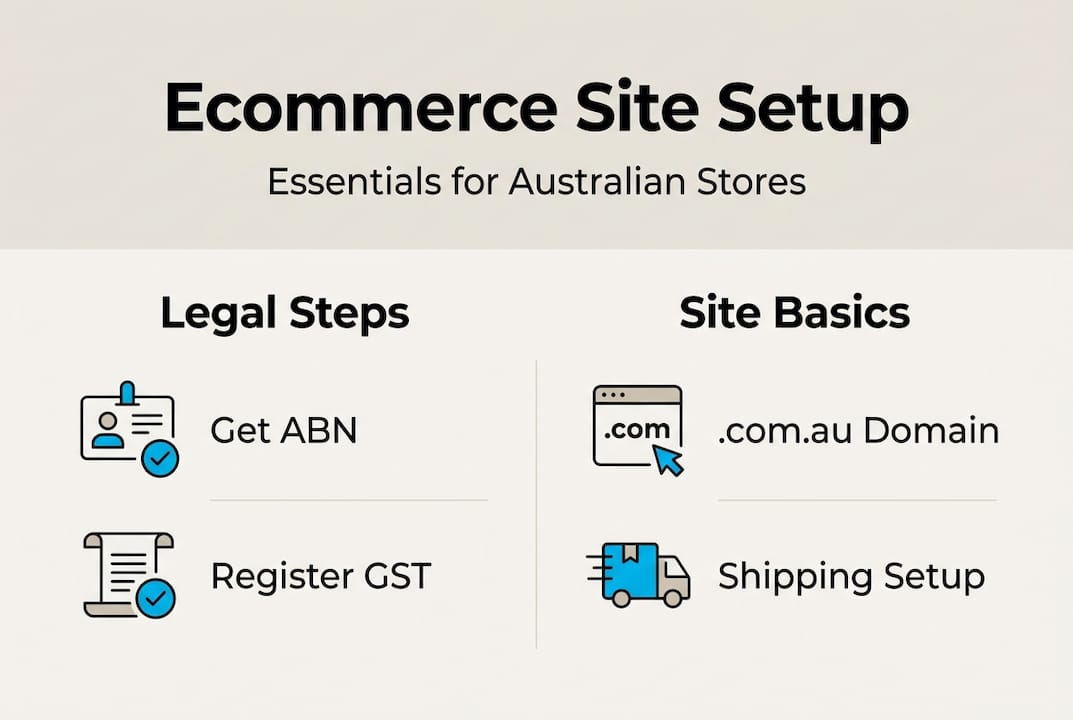
| Australian setup checklist | You’ll need an ABN, a .com.au domain, and GST registration if your turnover is above $75,000. |
| Platform choice matters | Choose the ecommerce platform that balances cost, features, and control for your business needs. |
| Mobile experience is essential | With over 68% of orders on mobile, a fast, mobile-optimised site will boost your sales. |
| Compliance protects your business | Meet legal requirements like privacy and GST to avoid penalties and build customer trust. |
| Ongoing marketing drives growth | Use SEO, content, and social media to grow sales after launch and stay competitive. |
Before you start: what you need to build an ecommerce site
Before you touch a single platform or pick a theme, you need your foundations sorted. Skipping this stage is one of the most common and costly mistakes new online store owners make.
Here is what you must have ready before you build:
- ABN registered and active
- Business structure confirmed (sole trader, company, partnership)
- Product catalogue ready with descriptions, pricing, and images
- Basic branding in place (logo, colours, fonts)
- Domain name chosen, ideally a .com.au for local trust
- Business bank account set up for payment processing
On the legal side, Australian ecommerce requirements include having an ABN, registering for GST if your turnover exceeds $75,000, complying with the Australian Consumer Law, publishing a Privacy Policy under the Privacy Act, and following the Spam Act for any marketing emails. You also need clear Shipping, Returns, Terms and Conditions, and FAQ pages.
Your GST obligations apply at 10% on Australian sales, but exports are GST-free. Getting this right from day one saves you from audits and penalties later.
| Requirement | Detail |
|---|---|
| ABN | Mandatory for all online stores |
| GST registration | Required if turnover exceeds $75,000/year |
| Privacy Policy | Required under the Privacy Act |
| Returns policy | Required under Australian Consumer Law |
| Spam Act compliance | Required for all marketing emails |
A .com.au domain signals to Australian shoppers that you are a legitimate local business. It builds trust immediately. Pair that with a mobile-first design, given that 68% of orders in Australia come from mobile devices.
Pro Tip: Set a free shipping threshold, for example free shipping on orders over $75. This single tactic consistently lifts average order values and reduces cart abandonment for Australian stores.
Strong ecommerce SEO growth starts here too. Getting your site architecture and content right from the beginning makes ranking far easier later.
Choosing the right platform: Shopify, WooCommerce, or BigCommerce?
With your groundwork in place, selecting the right ecommerce platform is the next critical decision. There is no single best answer. It depends on your budget, technical comfort, and growth plans.
The main choice is between SaaS platforms like Shopify and BigCommerce, which are hosted and managed for you, and self-hosted options like WooCommerce, which run on WordPress and give you more control but require more technical effort.
| Platform | Best for | Monthly cost (approx.) | Technical skill needed | AU integrations |
|---|---|---|---|---|
| Shopify | Fast setup, scaling | $49 to $399+ | Low | Afterpay, AusPost, Stripe |
| WooCommerce | Flexibility, control | $20 to $100+ (hosting) | Medium to high | Full plugin library |
| BigCommerce | Growing SMBs | $39 to $399+ | Low to medium | Afterpay, AusPost, Zip |
Shopify is the most popular choice for Australian SMBs wanting a fast, polished launch. WooCommerce suits businesses that already use WordPress or need deep customisation. BigCommerce is a strong middle ground with robust built-in features.

All three support Australia Post integration, Afterpay, and local payment gateways. That matters. Australian shoppers expect these options at checkout.
Pro Tip: Watch your SaaS platform costs as you grow. Transaction fees and plan upgrades can add up quickly, especially if you expand internationally or hit high order volumes. Factor this into your long-term budget.
For a professionally built store that performs from day one, explore ecommerce web design options that handle platform setup, design, and integration for you.
Step-by-step: building your ecommerce site for the Australian market
Once you have chosen your platform, it is time to build your store step by step, ensuring compliance with Australian business standards.
- Create your business plan and register your ABN. If your projected turnover exceeds $75,000, register for GST immediately.
- Choose your platform from Shopify, WooCommerce, or BigCommerce based on your needs and budget.
- Register a .com.au domain through an accredited registrar. This builds local credibility.
- Design your storefront using a mobile-responsive theme. Most platforms offer quality free themes.
- Add your products with high-quality images, clear descriptions, pricing, and stock levels.
- Set up payments and shipping. Connect Stripe, Afterpay, and Australia Post for a seamless checkout.
- Add all legal pages: Privacy Policy, Returns Policy, Terms and Conditions, and Shipping information.
- Test everything on multiple devices and browsers before going live. Then launch with an SEO and marketing plan ready.
This step-by-step process is the foundation every successful Australian online store is built on.
Speed is non-negotiable. 68%+ of orders come from mobile, and your site must load in under three seconds. Anything slower and you are losing sales.
Critical legal pages checklist: Every Australian ecommerce store must publish a Privacy Policy, a Returns and Refunds Policy, Terms and Conditions, and a Shipping Policy before accepting any orders. These are not optional.
Must-haves for Australian stores specifically:
- Fast load times on mobile (under 3 seconds)
- Australia Post shipping integration
- Afterpay or Zip as a buy-now-pay-later option
- Localised content (Australian spelling, pricing in AUD, local contact details)
- SSL certificate for security
Once live, focus on strategies to increase online sales through conversion optimisation and targeted marketing.
Optimising product pages and user experience for Australian shoppers
Your site structure is complete. Now it is about making each product page sell, building trust and conversion with every visitor.
Product pages are where buying decisions happen. A weak product page loses the sale even when your traffic is strong. Here is what every page needs:
- Multiple high-quality images from different angles, including lifestyle shots
- Short video demonstrating the product where relevant
- Clear, benefit-focused description written for your Australian audience
- Specifications and sizing information where applicable
- Customer reviews and star ratings prominently displayed
- Returns and refund information visible on the page
- Trust seals (SSL, secure payment badges)
- Afterpay or Zip payment options shown at checkout and on product pages
For local SMBs, a .com.au domain and AusPost integration builds immediate trust with Australian shoppers. Displaying a free shipping threshold on every product page is one of the highest-impact conversion tactics available.
Pro Tip: Test your product pages on a real mobile device, not just a browser simulator. Australian shoppers browse and buy on their phones. If your images are slow or your add-to-cart button is hard to tap, you will lose them.
For more on what makes converting product pages work, and the high-performing ecommerce features that separate average stores from great ones, these resources are worth your time.
Australian rules: privacy, GST, and compliance for ecommerce
As you build, do not miss the legal fine print. Australian compliance is a must for lasting success.
Here is your compliance checklist:
- ABN: Required for all online stores operating in Australia
- GST registration: Mandatory if annual turnover exceeds $75,000
- Privacy Policy: Required under the Privacy Act 1988
- Returns and refunds policy: Required under the Australian Consumer Law
- Terms and Conditions: Protects your business and sets customer expectations
- Spam Act compliance: All marketing emails must include an unsubscribe option
- ACL compliance: No misleading product claims or deceptive pricing
Edge cases matter too. If you are dropshipping, GST on dropshipping applies differently depending on whether your supplier is local or overseas. Imports under $1,000 now attract GST at the border, which affects pricing for international product sourcing.
The legal requirements for ecommerce in Australia are clear: ABN required, GST at 10% on local sales, exports GST-free, and full ACL and Privacy Act compliance at all times.
Non-compliance consequences: Failing to meet Australian ecommerce regulations can result in ACCC fines, GST audits, loss of your .com.au domain, and serious reputational damage. Get it right from the start.
For detailed GST for online business guidance, speak with an ecommerce accountant who understands Australian tax law.
Launching and growing: SEO, marketing and ongoing success
Once your shop is live and legal, it is time to let the world know with smart launch and growth strategies.
Before you press publish, run through this pre-launch checklist:
- All pages tested on mobile and desktop
- Google Analytics and Search Console connected
- SEO basics in place: page titles, meta descriptions, image alt text
- Test orders placed and payment confirmed
- All legal pages live and accessible
Early marketing tactics that work for Australian SMBs:
- Google My Business: Set up and optimise your listing for local search visibility
- Social media: Instagram and Facebook are strong channels for product-based businesses
- Google Shopping ads: Get your products in front of buyers actively searching
- Email marketing: Build your list from day one with a welcome offer
- Local partnerships: Collaborate with complementary local businesses for cross-promotion
- Content marketing: Blog posts and guides drive organic traffic over time
Post-launch, your focus shifts to ecommerce SEO marketing for sustainable organic growth. Strong content marketing best practices help you rank for the terms your customers are searching. Understanding digital marketing in Australia gives you the local context to make smarter decisions.
Paid channels like social media advertising for ecommerce can accelerate early sales while your organic presence builds. And investing in SEO for small business from the start compounds your results over time.
Measure everything. Use your analytics to understand where traffic comes from, which products convert, and where customers drop off. Then iterate.
Expert help to launch, grow, and optimise your ecommerce business
Building an ecommerce site yourself is absolutely possible. But getting it right the first time, without costly mistakes or wasted months, is where expert support pays for itself.

At Titan Blue, we work with Australian SMBs to design, build, and grow ecommerce stores that actually perform. From platform setup and web design solutions to ongoing SEO services and website care plans, we handle the technical and strategic side so you can focus on running your business. We are based on the Gold Coast and work with businesses across Australia. If you want a store that converts, get in touch with our team today.
Frequently asked questions
Do I need an ABN to run an ecommerce site in Australia?
Yes, an ABN is required to legally operate any online store in Australia. You must register before accepting payments from customers.
How much does it cost to start an ecommerce site?
Costs vary widely depending on your platform and design choices, but budget for platform fees, domain registration, SSL, design, and initial marketing. A basic store can launch for a few hundred dollars, while a custom build will cost more.
When must I register for GST?
You must register for GST once your annual turnover exceeds $75,000. GST is charged at 10% on Australian sales, while exports remain GST-free.
Which ecommerce platform is best for small businesses?
Shopify, WooCommerce, and BigCommerce are all strong options. Your best choice depends on your budget, technical confidence, and the features your business needs most.
What is the best way to attract customers to my new store?
Start with strong SEO foundations, publish useful content, stay active on social media, and build local partnerships. Paid advertising on Google and Meta can accelerate early traffic while your organic presence grows.
Recommended
- A Guide to Ecommerce Web Design in Australia – Titan Blue Australia
- Australian E Commerce SEO Services a Guide to Driving Growth
- Mastering seo in e commerce for Australian Businesses
- A Guide to Website Design Prices in Australia – Titan Blue Australia
Make Titan Blue a preferred source in Google
One click tells Google to surface our articles more often in Top Stories, AI Overviews and AI Mode.

Shopify Website Design Australia: The 2026 Guide
Shopify website design Australia: product pages, collections, delivery info and product data that win sales,…

Cleaning Company Website Design Australia: The 2026 Guide
Cleaning company website design Australia: the pages, quote forms and schema that win jobs, plus…

Is AI Search Just Google? What the Numbers Say for Australian Businesses (2026)
Is AI search just Google? Google reports 2.5B+ monthly AI Overviews users. Sourced figures, our…